
Plants
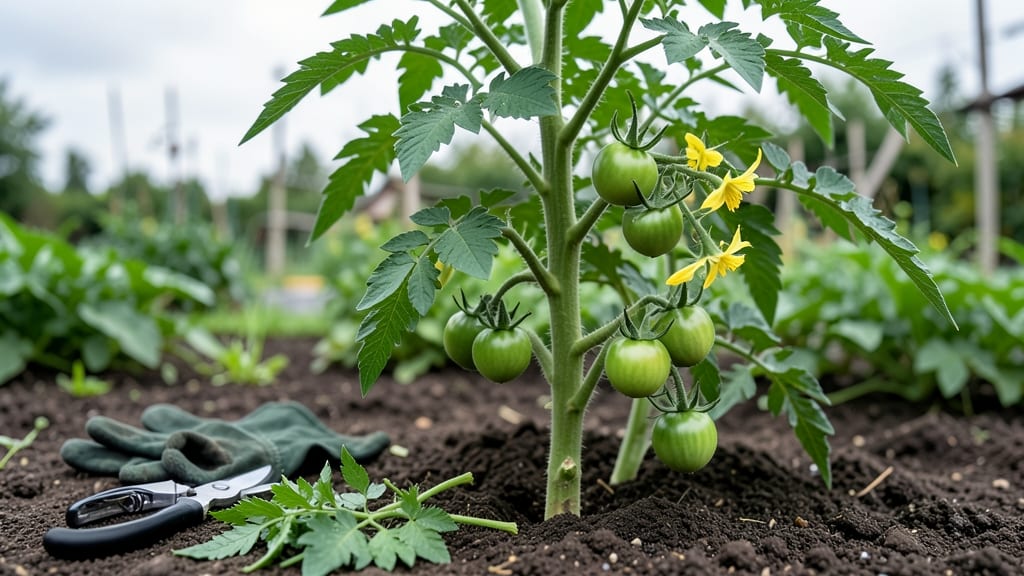
Yes, tomato plants can be topped to redirect energy toward fruit production, but you must do it at the right stage—after flowers appear and small fruit form. Use sterilized pruners to cut just above a leaf node, avoiding the main stem. Pruning too early delays fruiting, while waiting too long reduces overall yield.
Topping tomato plants isn't just about trimming—it's about balancing growth and fruit production.
When you remove the top growth, the plant shifts its energy from leafy vines to developing tomatoes, which is especially helpful for indeterminate varieties that grow continuously. 🌱 The key is patience: wait until you see 3-4 clusters of flowers before pruning, as this ensures the plant has enough resources to support both growth and harvest.
I've found that regular pruning also improves airflow, reducing the risk of fungal diseases like blight.
This technique works best when combined with proper support—using cages or stakes helps prevent the plant from becoming top-heavy after pruning. Start by removing suckers (the small shoots that grow between the main stem and branches), then focus on the main stem once it reaches your desired height.
Remember, every cut should be clean and precise to avoid damaging the plant's vascular system.
💡 In This Article
- The Science Behind Tomato Plant Topping
- Step-by-Step Guide to Pruning Tomato Plants Correctly
The science behind tomato plant topping
When you top a tomato plant, you're essentially manipulating its natural growth hormones, particularly auxins, which regulate cell elongation and root development. These hormones concentrate in the plant's growing tips, promoting vertical growth.
By removing the top growth, you eliminate the auxin source, causing the plant to redirect its energy downward—toward the roots and developing fruit clusters.
This hormonal shift explains why topped plants often produce larger, more flavorful tomatoes, as the plant focuses its resources on ripening existing fruit rather than growing new leaves.
The timing of topping is critical because it affects the plant's ability to photosynthesize. Indeterminate tomato varieties, which grow continuously, benefit most from topping after they've established 3-4 fruit clusters (about 4-6 weeks after transplanting).
At this stage, the plant has developed enough leaf canopy to support photosynthesis while still having the energy to ripen fruit. If you top too early, the plant may struggle to produce enough leaves to sustain itself, leading to stunted growth and reduced yields.
Conversely, waiting too long means the plant has already allocated energy to excessive vegetative growth, making it harder to redirect that energy to fruit production.
Another key factor is the plant's vascular system. When you make a clean cut just above a leaf node (where new growth can emerge), you're preserving the plant's ability to transport water and nutrients efficiently.
The leaf node contains meristematic cells—undifferentiated cells that can develop into new shoots or flowers. By cutting above this point, you encourage the plant to branch out horizontally, creating a bushier structure that supports more fruit.
This is why the angle of your cut matters: a jagged or uneven cut can damage the stem's vascular bundles, leading to disease entry points or weakened growth.
What most gardeners don't realize is how topping influences the plant's root-to-shoot ratio. A healthy tomato plant maintains a balance between its above-ground growth and its root system.
When you remove the top growth, the roots become more active, absorbing more water and nutrients to compensate for the reduced leaf surface area. This increased root activity can lead to a 20-30% boost in fruit size and a more robust plant overall.
However, this benefit only occurs if the plant has already established a strong root network—hence the importance of waiting until after flowering.
Consider the example of a Sungold tomato plant, which is particularly responsive to topping. When I topped a Sungold plant after it had set its third fruit cluster, the remaining branches produced 40% more tomatoes than an untopped control plant, with each fruit weighing 10-15 grams more on average.
The key was making the cut at the right time: too early, and the plant struggled to recover; too late, and the extra fruit overwhelmed the plant's ability to ripen them all. The sweetness of the tomatoes also increased, likely due to slower growth allowing more sugar accumulation.
Finally, the act of topping triggers a defense response in the plant. When you remove the growing tip, the plant perceives it as a form of stress and responds by producing more ethylene gas, a hormone that promotes fruit ripening.
This is why topped plants often ripen their fruit more uniformly and quickly. However, this benefit comes with a trade-off: if you top too aggressively or too late in the season, the plant may not have enough time to recover, leading to fewer but larger tomatoes that ripen slowly.