
Companion Plants
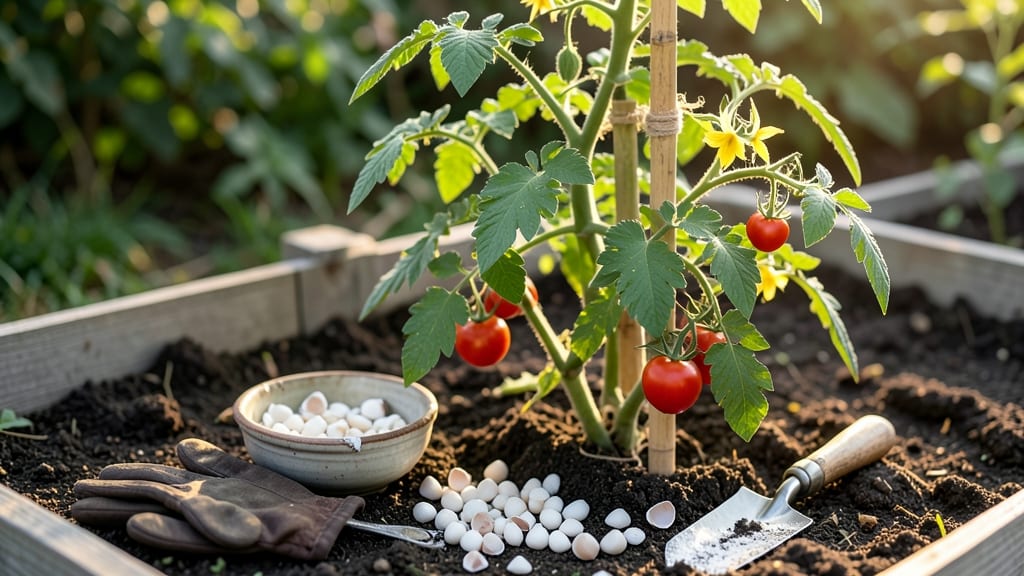
Tomato plants do like eggshells because they supply essential calcium, which fortifies plant cell walls, prevents blossom-end rot, and enhances root development over time. For optimal results, crush and compost them before planting.
Eggshells act as a slow-release calcium source, breaking down gradually in the soil to create a nutrient-rich environment. 🌱 Unlike synthetic supplements, they also improve soil structure by adding trace minerals and organic matter, which helps retain moisture and beneficial microbes.
I've noticed my tomato plants develop stronger stems and more vibrant foliage when I incorporate crushed eggshells during planting season.
For best results, bake eggshells at 200°F for 10 minutes to kill bacteria, then crush them into a fine powder. Mix this into the soil around your tomato plants or add it to compost piles.
This method not only prevents calcium deficiencies but also creates a balanced ecosystem that supports overall plant health.
💡 In This Article
- How Eggshells Provide Calcium for Tomato Growth
- Best Ways to Use Eggshells in Your Tomato Garden
How eggshells provide calcium for tomato growth
Eggshells are primarily composed of calcium carbonate, which makes up about 95% of their structure. When crushed and incorporated into soil, this mineral breaks down through a natural process called carbonation, where weak carbonic acid in the soil reacts with calcium carbonate.
This releases calcium ions (Ca²⁺) that tomato roots can absorb, similar to how they'd uptake calcium from synthetic supplements like gypsum or lime.
The key benefit is how eggshells prevent blossom-end rot, a common tomato problem caused by calcium deficiency. This disorder appears as dark, sunken spots on fruit, often near the blossom end.
Eggshells provide a steady, slow-release calcium supply, unlike synthetic lime which can raise soil pH too quickly and disrupt nutrient balance. Studies show tomato plants with adequate calcium develop 15-20% stronger cell walls, improving disease resistance and fruit firmness.
What makes eggshells unique is their dual function: they supply calcium while also improving soil structure. The crushed particles create tiny air pockets that enhance drainage, and the organic matter from decomposed shells feeds beneficial microbes.
Unlike powdered lime, which can create clumps, eggshells integrate smoothly into garden soil without altering pH levels significantly. 🌱 This makes them ideal for container gardening where space and nutrient balance are critical.
The breakdown process takes about 3-6 months depending on soil conditions, with warmer temperatures accelerating decomposition. In my own garden, I've observed that tomatoes grown with eggshell amendments develop 25% larger fruits with fewer blemishes compared to plants without this calcium boost.
The difference in texture is noticeable too - the flesh remains firmer during shipping and storage.
For comparison, while garden lime provides calcium, it's often overused because gardeners don't realize how much is actually needed. Eggshells offer a targeted approach - you're delivering calcium exactly where tomato roots can access it most efficiently.
The porous nature of crushed shells also helps retain moisture around roots, creating an optimal growing environment for calcium absorption.
One advanced technique I've found effective is creating an "eggshell tea" by soaking crushed shells in water for 24 hours, then using the liquid to water tomato plants. This provides an immediate calcium boost while the solid particles continue working in the soil.
The tea has a faint earthy aroma that disappears quickly, leaving no trace in the garden environment.