
Companion Plants
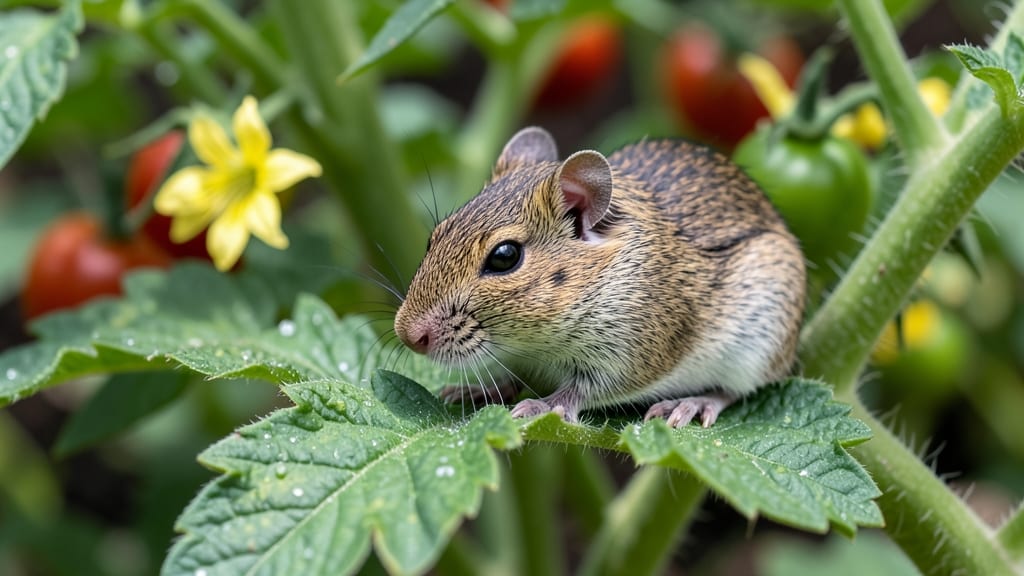
Voles eat tomato plants by gnawing stems, roots, and young leaves, which can weaken or kill seedlings entirely. Their underground burrowing disrupts root systems while their preference for tender plant growth makes tomato plants prime targets.
Voles are particularly drawn to tomato plants because of their soft stems and shallow root systems. 🌱 Unlike rabbits that primarily eat leaves, voles chew at the base of plants, creating a clean-cut appearance that often goes unnoticed until significant damage occurs.
Young tomato seedlings are especially at risk because their stems are thin and easily severed, leading to sudden wilting or death. The problem worsens in gardens with dense mulch or thick ground cover, which provides voles with ideal hiding spots and easy access to your plants.
What makes this even more frustrating is how quickly voles can devastate an entire planting. A single vole can consume multiple tomato plants in just a few nights, and their burrowing creates additional pathways for disease and pests.
Unlike deer or rabbits, voles don't leave obvious signs of their presence until the damage is already done, making early detection challenging for gardeners.
💡 In This Article
- Why Voles Target Tomato Plants and How They Damage Them
- Effective Vole Deterrents for Tomato Gardens
Why voles target tomato plants and how they damage them
Voles, often mistaken for mice, are actually small rodents with a specific taste for tender plant parts. Their preference for tomato plants stems from the plant's soft, succulent stems and shallow root systems—ideal for their grazing habits.
Unlike rabbits that typically browse leaves, voles chew at the base of stems, creating a clean-cut appearance that can go unnoticed until significant damage occurs. This behavior is particularly destructive to young tomato seedlings, whose thin stems can be severed in seconds, leading to sudden wilting or death.
The damage doesn't stop at the surface. Voles are master burrowers, creating intricate tunnels just below the soil surface.
These tunnels disrupt root systems, making it difficult for tomato plants to absorb water and nutrients. 🌱 In gardens with dense mulch or thick ground cover, voles find perfect hiding spots and easy access to your plants. Their burrowing can also create pathways for soil-borne diseases, further compromising plant health.
Studies show that a single vole can consume up to 2 pounds of plant material per week, which translates to multiple tomato plants disappearing overnight.
What makes tomato plants particularly vulnerable is their growth pattern. Young tomato plants have tender, fast-growing stems that are rich in moisture—exactly what voles seek. In contrast, mature tomato plants with thicker, woody stems are less appealing.
The shallow root systems of young plants also make them easier targets for voles digging near the soil surface. This preference is why gardeners often notice damage first in newly planted tomato beds or areas with fresh mulch.
Voles also exhibit seasonal patterns that align with tomato planting times. In early spring, when gardeners are transplanting seedlings, voles are highly active as they emerge from winter dormancy. Their hunger peaks during this time, making young tomato plants a prime food source.
Unlike deer or rabbits, voles don't leave obvious signs of their presence until the damage is already done, which is why many gardeners are caught off guard by their destructive habits.
To understand the full impact, consider this: a vole's incisors are constantly growing, and they gnaw to keep them worn down. This constant chewing means they're always on the lookout for soft, easy-to-chew plant material.
Tomato plants, especially those with thin stems less than 1/4-inch in diameter, are particularly susceptible. The combination of their burrowing habits and feeding preferences makes them one of the most challenging pests for tomato gardeners to manage.
What most people don't realize is how quickly voles can devastate an entire planting. A single vole can consume multiple tomato plants in just a few nights, and their burrowing creates additional pathways for disease and pests.
Unlike other garden pests, voles don't leave obvious signs of their presence until the damage is already done, making early detection challenging for gardeners.