
Watering
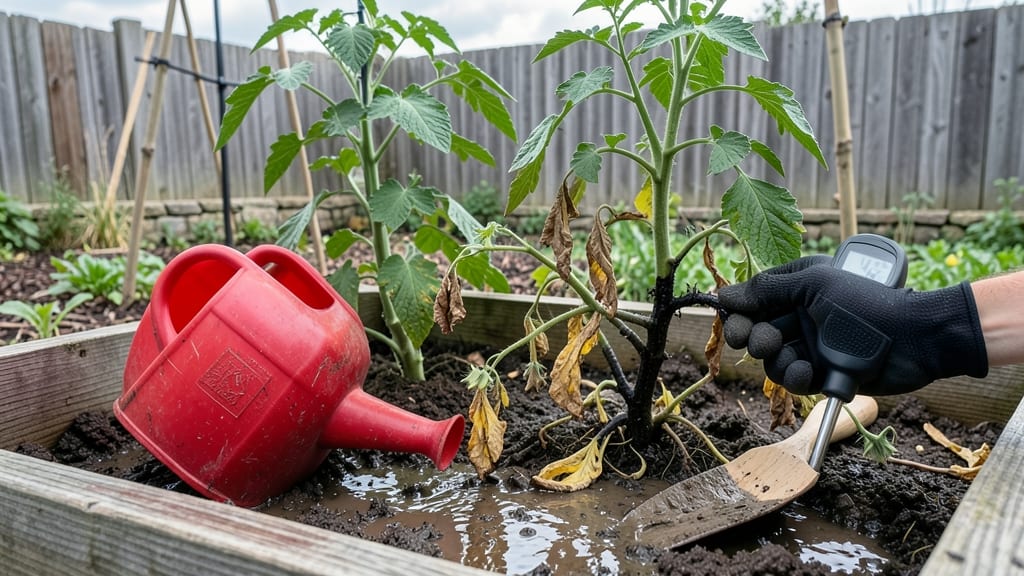
Overwatered tomato plants can look like they're drowning—yellowing leaves, mushy stems, and fruit that cracks under its own weight. 🌱 I’ve seen my own plants go from lush and green to sad and soggy in just a few days, and the good news is that you can often bring them back with the right care.
The problem starts when roots suffocate from too much water, cutting off oxygen and inviting fungus. You’ll spot it in the leaves first—yellowing at the bottom, then wilting even when the soil feels damp.
The fruit might split open or stay small, and the stems can feel soft to the touch.
With a 3-step fix, you’ll see improvement in just a few days: stop watering immediately, loosen the soil around the roots to dry it out, and adjust your watering schedule to deep soaks every 2-3 days instead of daily sprinkles. The plants will perk up faster than you think.
This works for both container-grown and in-ground tomatoes, and the key is patience—overwatered plants recover, but they need time to rebuild their roots. Let’s get those vines healthy again!
Root Causes of Overwatering
When your tomato plants start looking sad—droopy leaves, yellowing foliage, or even moldy stems—it’s often a sign they’re getting too much love in the wrong way. Overwatering isn’t just about dumping extra water; it’s a complex issue tied to soil science, plant biology, and even environmental factors.
Let’s break down the real reasons this happens, so you can fix it before your harvest turns to mush.
Tomatoes thrive in well-draining soil, but when soil stays soggy for too long, roots suffocate. Here’s why:
- Compacted or clay-heavy soil acts like a sponge that never dries out. Water pools around roots, cutting off oxygen—roots need air to absorb nutrients!
- Organic matter overload (like too much compost or peat moss) can create a dense, water-retentive environment. Think of it like a swamp: great for mosquitoes, terrible for tomato roots.
- Poor drainage systems—like raised beds without gravel or containers without drainage holes—trap excess water. If water sits for more than 24 hours, roots rot.
Pro Tip: 💡 Stick your finger 2 inches into the soil. If it’s damp but not soggy, it’s fine. If it’s wet like a sponge, cut back on watering.
Many gardeners water by habit—like a clock—rather than checking plant needs. Here’s how this backfires:
- Ignoring weather: A light rain can mean your plants don’t need extra water, but you might still water them. Tomatoes hate soggy shoes.
- Overhead watering (like sprinklers) wets leaves, encouraging fungal diseases (e.g., early blight). Wet leaves + humidity = a party for mold.
- Using the wrong tools: Drip irrigation is ideal, but a hose on high pressure can flood soil unevenly, creating waterlogged pockets.
Actionable Fix: ✨ Water early in the morning (6–8 AM) so foliage dries quickly. Use a moisture meter or the "squeeze test"—grab a handful of soil; if water drips out, wait.
Hot, humid days can trick you into thinking plants need more water—but the opposite might be true. Here’s the science:
- High humidity slows evaporation, so soil stays wet longer. In tropical climates, roots can drown even with "light" watering.
- Cold nights + wet soil = root stress. Temperatures below 50°F (10°C) reduce root activity, making plants less able to absorb excess water.
- Plastic mulch or thick mulch layers trap moisture, creating a greenhouse effect. Too much mulch = too much moisture.
Quick Check: 🌡️ If your area has consistent humidity over 70%, reduce watering by 30–50%. Remove mulch temporarily if soil feels clammy.
Overwatering doesn’t just drown roots—it invites pests. Fungi like Phytophthora and Pythium thrive in waterlogged soil, causing:
- Root rot: Black, mushy roots that smell foul. The plant can’t uptake water or nutrients, so it wilts even when "watered."
- Fungal leaf spots: Yellow/brown patches on leaves (early blight, septoria leaf spot). These spread faster in wet conditions.
- Damping-off: Seedlings collapse at the stem base. Overwatered seed trays are a fungal buffet.
Prevent It: 🔥 Use fungicide (copper-based or neem oil) if you see spots. Space plants for airflow—crowded vines = trapped moisture.
Potted tomatoes dry out faster than in-ground plants, but they’re also prone to overwatering because:
- Small pots dry unevenly: The outer soil may look dry, but the center stays soggy. Always check multiple spots in the pot.
- No drainage = disaster. If water pools at the bottom, roots sit in a permanent swamp.
- Fast-draining mixes (like cactus soil) can’t hold moisture long enough, leading to overcompensation—you water more, then the plant drowns.
Container Hack: ⏰ Water only when the top 1–2 inches are dry. Use terracotta pots (they wick moisture) and add perlite to improve drainage.
Revive Your Tomato Plants Now
If your tomato plants are looking drowned rather than thriving, don’t panic—revival is totally possible! The key is identifying the specific signs of overwatering and taking targeted action.
Below, we’ve mapped out the most common causes and their fixes, plus prevention tips to keep your plants happy and productive. Let’s get those vines back in shape!
Cause: Soggy soil cuts off oxygen to roots, leading to yellowing (especially lower leaves) and a foul smell.
Fix It: 🔥 Step 1: Stop Watering Immediately
- Let the soil dry out for 24–48 hours before watering again. Overwatering is often a habit—break it now!
🍳 Step 2: Improve Drainage
- Mix in coarse sand, perlite, or compost (1 part to 3 parts soil) to aerate the roots. If potted, repot into a container with drainage holes.
👨🍳 Step 3: Prune Damaged Foliage
- Snip off yellow or blackened leaves with clean scissors. This redirects energy to healthier growth.
🥘 Step 4: Water Deeply (But Less Often)
- Water only when the top 1–2 inches of soil are dry. Use a moisture meter or stick your finger in—if it’s damp, wait!
💡 Pro Tip: Mulch with straw or wood chips to regulate moisture and prevent soil compaction.
Cause: Excess water suffocates roots, causing them to rot. Wilting (even with wet soil) is a red flag.
Fix It: 🔪 Step 1: Inspect the Roots
- Gently remove the plant and check for mushy, brown, or black roots. Healthy roots are firm and white.
⏰ Step 2: Trim Rotten Roots
- Cut away any mushy or discolored roots with sterilized pruners. Healthy roots will regrow!
🌡️ Step 3: Repot in Fresh, Dry Soil
- Use a well-draining potting mix (avoid garden soil). If in-ground, amend the soil with compost and sand.
🎯 Step 4: Adjust Your Watering Schedule
- Water only when the soil is bone-dry at the base. Consider a self-watering system with a timer to avoid overdoing it.
✨ Prevention Hack: Elevate pots on feet or saucers to prevent water pooling at the bottom.
Cause: Too much water flushes out calcium, leading to those ugly dark, sunken spots on tomatoes.
Fix It: 📊 Step 1: Balance Soil pH & Nutrients
- Add crushed eggshells or calcium-rich fertilizer (like bone meal) to the soil. Aim for a pH of 6.0–6.8.
💪 Step 2: Water Consistently (Not Excessively)
- Keep soil evenly moist but not soggy. Drip irrigation or soaker hoses work best—they deliver water slowly.
🥗 Step 3: Prune for Better Airflow
- Remove suckers and lower leaves to improve circulation. This helps prevent fungal issues that worsen with overwatering.
💡 Quick Fix: Sprinkle crushed eggshells around the base of the plant for an instant calcium boost.
Once your plants are back on track, follow these long-term tips to avoid overwatering disasters:
- 🔍 Test Soil Moisture: Use a moisture meter or the "finger test" (stick your finger 1–2 inches deep).
- ☀️ Water Early: Water in the morning so foliage dries quickly, reducing fungal risks.
- 🌧️ Adjust for Weather: Reduce watering during rainy spells or high humidity.
- 🌱 Choose the Right Containers: Pots should have drainage holes, and saucers should be emptied after watering.
- 🌿 Monitor Growth: Healthy tomato plants have deep green leaves and firm stems—if they’re limp, act fast!
With these fixes, your tomato plants should bounce back in 1–2 weeks. Stay consistent with watering, and soon you’ll be harvesting juicy, sun-ripened tomatoes instead of dealing with soggy vines. Happy gardening! 🍅🌱
Frequently asked questions about overwatered tomato plants
How can I tell if my tomato plant is overwatered vs. underwatered?
Overwatered plants have yellowing leaves starting at the bottom, wilted stems that feel soft/mushy, and soil that stays damp even after watering. Underwatered plants show brown, crispy leaf edges and soil that pulls away from pot edges. The key difference? Overwatered plants wilt even when soil is wet.
Will my tomato plant recover from root rot caused by overwatering?
Yes, but you must act fast! Trim all mushy, black roots immediately, repot in fresh well-draining soil, and let the soil dry completely between waterings. Recovery takes 2-3 weeks—avoid watering until new white roots appear. Severe cases may need fungicide treatment.
Why are my tomato fruits cracking even though I'm watering less?
Cracking often happens when plants experience inconsistent moisture—like dry soil followed by sudden heavy watering. Maintain even moisture (not soggy) and mulch to prevent rapid drying. If cracks appear, harvest fruits promptly to prevent rot and improve airflow around plants.
Can I use hydrogen peroxide to fix overwatered tomato plants?
Yes! Mix 1 tablespoon of 3% hydrogen peroxide with 1 gallon of water and water your plants to help oxygenate roots and prevent fungal growth. Use this solution once weekly for 2-3 weeks, then return to normal watering. It won't replace proper drainage fixes but helps as a temporary boost.
What's the best way to water tomato plants to prevent overwatering?
Use the drip irrigation method—water deeply at the base (not leaves) for 10-15 minutes every 2-3 days instead of daily shallow watering. Check soil moisture with your finger: if top 1-2 inches are dry, it's time to water. Early morning is best to reduce fungal risks.