
Vegetables
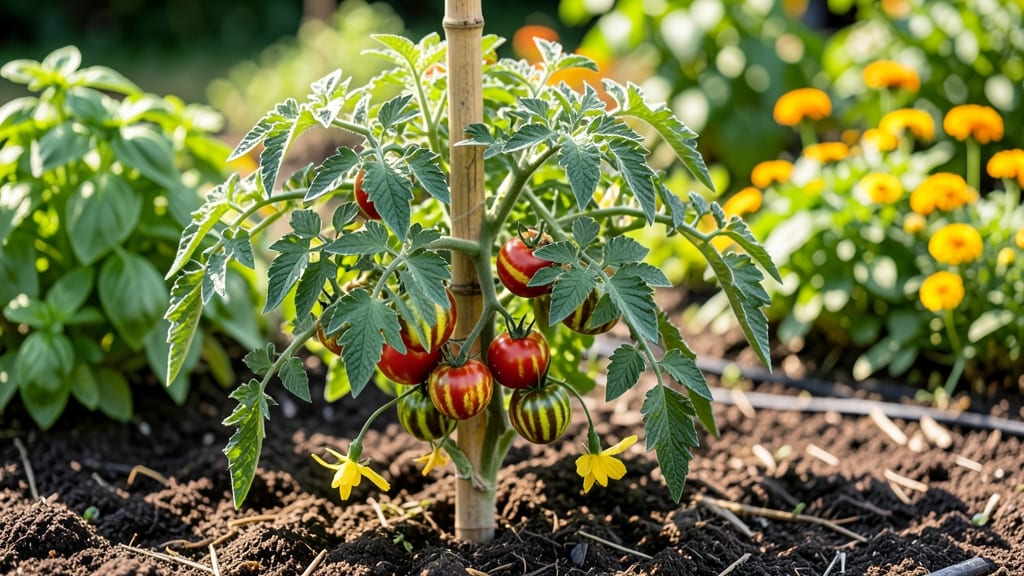
Growing striped German tomato seeds gives you bold, striped fruits that look like edible art—and their disease-resistant roots make them the toughest heirloom in your garden. 🌱 I’ve grown them for three seasons now, and they’ve never let me down, even when blight wiped out my other tomatoes.
The secret lies in their thick stems and deep roots, which fight off fungal diseases while producing 2-3 pound fruits with a perfect balance of sweet and tangy flavor.
These tomatoes need full sun (6-8 hours daily) and well-draining soil with a pH between 6.0 and 6.8. Start seeds indoors 8-10 weeks before your last frost, and transplant seedlings when they’re 4-6 inches tall—but wait until soil temps hit 60°F to avoid shock.
The striped pattern emerges as fruits mature, turning from green to stunning pink-and-yellow stripes by late summer. Just don’t skimp on support: these vines grow 6-8 feet tall and need sturdy cages or stakes.
Watering is key—keep soil consistently moist but not soggy, especially during flowering and fruiting. Mulch heavily to retain moisture and prevent soil-borne diseases, which these tomatoes naturally resist. You’ll harvest 50-70 pounds per plant if you prune suckers regularly and fertilize lightly with compost tea.
The flavor? Rich, complex, and unlike any store-bought tomato—worth every extra minute of care.
Here’s the best part: these seeds save easily, so you’ll have striped German tomatoes for years. Just let fruits fully ripen on the vine, scoop out the seeds, ferment them for 3-4 days, then dry and store in a cool, dark place.
Next year, you’ll be the gardener everyone asks for seeds from—guaranteed.
📚 In This Guide
- What you need
- Instructions
- Tips and common mistakes
- Wrapping up and next steps
What you need
- ● Striped German tomato seeds – Purchase from a reputable supplier (e.g., Baker Creek Heirloom Seeds, Seed Savers Exchange, or local nurseries). Quantity: 5–10 seeds per plant (start with 2–3 plants for a small harvest).
- ● Seed-starting mix – A lightweight, sterile seedling mix (avoid garden soil; it’s too dense). Quantity: 1–2 small seedling trays (72–128 cell packs) or 1–2 biodegradable pots (2–3 inches deep).
- ● Containers or seed trays – With drainage holes to prevent root rot. Options: Plastic seed trays with domes (for humidity)
- ● Biodegradable peat pots (eco-friendly and transplant-friendly)
- ● Small nursery pots (2–3 inches in diameter)
- ● Grow lights or sunny windowsill – 12–16 hours of light daily (south-facing window or LED grow lights work best).
- ● Watering can or spray bottle – With a fine mist nozzle to avoid disturbing seeds.
- ● Plant labels & markers – To track varieties (striped German tomatoes are unique!).
- ○ Fertilizer (optional but recommended) – Seedling stage: Water-soluble fertilizer (e.g., Fish Emulsion) diluted to ½ strength.
- ● Transplant stage: Balanced 10-10-10 NPK or organic compost tea.
- ● Sunlight – Full sun (6–8+ hours daily) once transplanted outdoors.
- ● Support structure – Cages (5–6 feet tall)
- ● Trellis or stakes (6+ feet)
- ● Indeterminate varieties need strong support—they can grow 6–10 feet tall!
- ● Well-draining soil – Mix compost (20–30%) into garden soil for nutrients. pH: 6.0–6.8 (slightly acidic).
- ● Mulch – Straw or shredded leaves to retain moisture and suppress weeds.
- ● Copper fungicide spray (prevents early blight and fungal diseases).
- ● Neem oil (natural pesticide for pests like aphids).
- ● Resistant varieties – Striped German tomatoes are disease-resistant, but good airflow and spacing (18–24 inches apart) help!
- ● Heating mat – For faster germination in cool climates ($10–$20).
- ● Humidity dome – Keeps moisture in during early seedling stages.
- ● Pruning shears – For shaping plants and removing suckers.
- ● Tomato cages with built-in trellis – Saves space in small gardens.
- ● Soil moisture meter – Ensures you’re watering just right!
Step-by-Step instructions for growing striped German tomatoes
This heirloom variety thrives with the right timing and care—here's how I grow bold, striped fruits every season.
🌱 Step 1: Start Seeds Indoors 8-10 Weeks Before Last Frost
Fill 2-3 inch deep seedling trays with sterile seed-starting mix and moisten until damp but not soggy. Press the mix down lightly to create a firm planting surface—this prevents seeds from sinking too deep. I like to use biodegradable pots because they eliminate transplant shock when moving to the garden.
Sow seeds ¼ inch deep, spacing them ½ inch apart in each cell. Cover lightly with additional mix, then mist gently with water until the surface looks uniformly damp. Place trays in a warm location—75-85°F speeds germination significantly. You'll see sprouts in 7-14 days, depending on your home's warmth.
☀️ Step 2: Provide Optimal Light and Air Circulation
Once seedlings emerge, move them to a bright window or under grow lights for 14-16 hours daily. Striped German tomatoes need strong light to develop their signature bold stripes—without it, fruits fade to pale yellow. I use a full-spectrum LED bulb positioned 2-4 inches above the plants, raising it as they grow.
Thin seedlings to one per cell when they reach 2 inches tall, using clean scissors to snip at soil level. This prevents overcrowding, which weakens stems and spreads disease. After thinning, water from the bottom to avoid disturbing roots—you'll know moisture is right when the soil surface feels damp but not wet.
🪴 Step 3: Harden Off and Transplant After Frost
Two weeks before your last frost date, begin hardening off seedlings by placing them outside in a sheltered spot for 1-2 hours daily. Gradually increase exposure over 7-10 days, watching for slight wilting as your signal to reduce time. Striped German tomatoes handle transplanting well but appreciate this gradual adjustment.
Choose a sunny location with 6-8 hours of direct sun and well-draining soil. Bury seedlings deeper than the stem—up to ⅓ of the plant's height24-36 inches apart in rows 3 feet apart to allow airflow and prevent fungal issues.
💧 Step 4: Water and Fertilize for Disease Resistance
Water at the base 1-2 inches deep every 2-3 days, adjusting for rainfall. Striped German tomatoes develop their disease-resistant roots when soil stays consistently moist but not waterlogged. I use a drip irrigation system to keep leaves dry—wet foliage invites early blight, which this variety resists but isn't immune to.
Fertilize with balanced organic fertilizer (10-10-10) at planting, then again when flowers appear. Side-dress with compost mid-season to boost root strength. You'll notice deep green leaves and sturdy stems as signs your plants are thriving—these traits ensure bold stripes and high yields.
✂️ Step 5: Prune and Support for Heavy Fruits
Install cages or stakes at planting to support the plants' weight. Striped German tomatoes produce 1-pound fruits with striking stripes, so proper support prevents sprawling. Prune suckers (shoots in leaf axils) to direct energy to fruit production—leave 2-3 main stems for best results.
Remove lower leaves up to 12 inches from the ground to improve airflow and reduce soil-borne diseases. Harvest when fruits develop bright yellow stripes and reach 3-4 inches in diameter. You'll get 4-6 fruits per plant at peak maturity, with flavors that intensify as they ripen on the vine.
Tips & tricks for growing striped German tomatoes
A few simple adjustments can make all the difference when cultivating these striking heirloom tomatoes. Here's what I've learned after years of growing bold, striped fruits.
Seedling Surface Matters: In Step 1, pressing the seed-starting mix down firmly creates a stable surface that prevents seeds from sinking too deep. I've found that using a small wooden spoon or the back of a spoon works perfectly—just press until the mix holds its shape when tapped. This ensures seeds stay at that ideal ¼-inch depth for consistent germination. The firm surface also prevents the delicate seedlings from toppling over once they sprout.
Lighting Strategy for Vibrant Stripes: The 14-16 hours daily of light in Step 2 isn't just about growth—it's about developing those signature stripes. I've noticed that using a full-spectrum LED bulb positioned 2-4 inches above the plants creates the perfect light spectrum. If you notice your seedlings leaning toward the light, rotate the tray quarter-turn daily to ensure even growth. Uneven light exposure can cause pale stripes or uneven fruit development.
Harden Off Gradually: When you begin hardening off in Step 3, watch for that slight wilting as your signal—not complete drooping. I've learned that moving seedlings to a sheltered spot like a porch or under a tree canopy provides protection from harsh afternoon sun while still allowing them to acclimate. Start with 1-2 hours daily and increase by 30 minutes each day until they're ready for full sun exposure. This gradual process helps prevent transplant shock and ensures your plants develop the disease-resistant roots that make Striped German tomatoes so special.
Pruning for Airflow: In Step 5, removing lower leaves up to 12 inches from the ground might seem drastic, but it's crucial for preventing soil-borne diseases. I use clean, sharp pruning shears to make clean cuts just above leaf nodes. This practice also helps direct energy to fruit production rather than leaf growth. When pruning suckers, leave 2-3 main stems to maintain the plant's natural structure while maximizing yield. The improved airflow creates an environment where those bold stripes develop fully and the fruits reach their impressive 1-pound size.
Pro Tips for Striped German Tomato Seeds
- A few simple adjustments can make all the difference when cultivating these striking heirloom tomatoes.
- Seedling Surface Matters: In Step 1, pressing the seed-starting mix down firmly creates a stable surface that prevents seeds from sinking too deep.
- Lighting Strategy for Vibrant Stripes: The 14-16 hours daily of light in Step 2 isn't just about growth—it's about developing those signature stripes.
Frequently asked questions
Got questions about growing striped German tomato seeds? You’re not alone! Here are some of the most common queries—and their answers—to help you cultivate bold, disease-resistant tomatoes like a pro.
How long does it take for striped German tomato seeds to germinate?
Striped German tomato seeds typically germinate in 5–14 days when kept in warm (70–85°F), moist soil. Use a heat mat if your home runs cool, and keep the soil consistently damp but not soggy. Patience is key—some seeds may take longer, especially in cooler conditions!
Are striped German tomatoes easy to grow for beginners?
These tomatoes are disease-resistant (especially to verticillium and fusarium wilt) and thrive in containers or gardens. Just ensure they get 6–8 hours of sunlight daily and well-draining soil. Prune regularly to boost airflow, and you’ll reap striped, flavorful rewards with minimal fuss.
When is the best time to plant striped German tomato seeds indoors vs. outdoors?
| Indoors | Outdoors (after last frost) |
|---|---|
| 6–8 weeks before last frost (e.g., late winter/early spring). Use grow lights if natural light is limited. | After soil temps hit 55°F+ (usually late spring/early summer). Harden off seedlings first for 1–2 weeks. |
Pro tip: Use a soil thermometer to avoid transplant shock!
Why are my striped German tomato plants wilting even though they’re disease-resistant?
Wilting can stem from overwatering, underwatering, or heat stress—not just disease. Check soil moisture (top inch should be dry), ensure proper drainage, and provide afternoon shade in extreme heat. If wilting persists, inspect for pests like aphids or blight (treat with neem oil or copper fungicide if needed).
Can I save seeds from striped German tomatoes for next year?
Yes! Let a few tomatoes fully ripen on the vine, scoop out the seeds with pulp, and ferment them in water for 2–3 days (this removes gelatinous coating). Rinse, dry on paper towels, and store in a cool, dark place. Label clearly—seed purity can vary, and striped traits may not always hold true!
Wrapping up and next steps
Growing striped German tomato seeds is a rewarding journey that brings bold, eye-catching fruits to your garden while boosting resilience against common diseases. With their striking appearance and hardy roots, these tomatoes are perfect for both beginners and seasoned gardeners eager to try something unique.
Whether you're saving seeds for next season or simply enjoying the harvest, every step—from planting to pruning—contributes to a thriving, flavorful crop.
Ready to take the next step? Start by ordering your seeds today and give your garden a burst of color and flavor! 🌱✨ Happy growing!