
Companion Plants
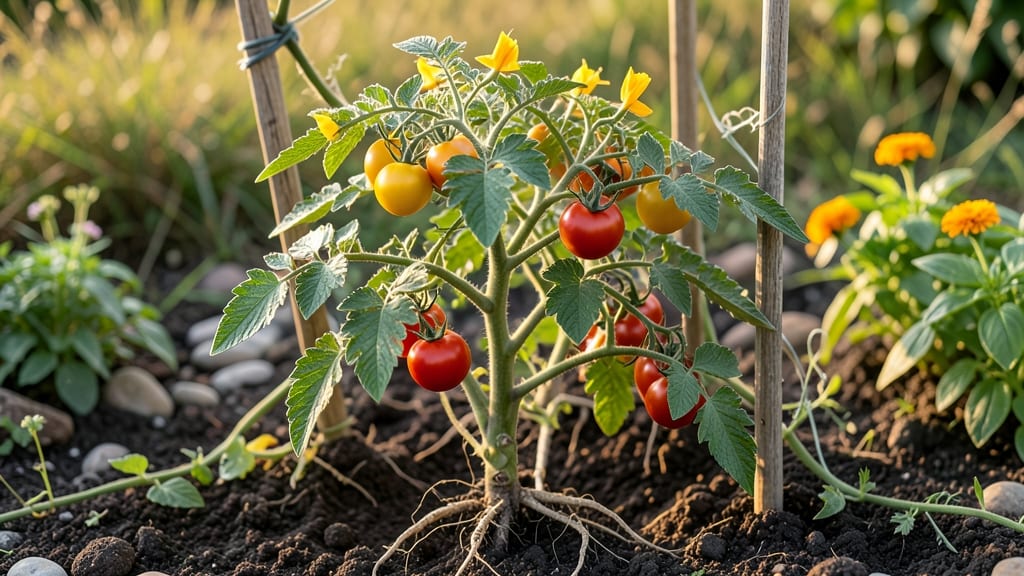
The life span of a tomato plant typically ranges from 60 to 90 days after transplanting, though dwarf varieties often produce fruit in just 45-55 days, while heirloom types can extend to 120 days. Proper care directly impacts when you'll harvest and how long the plant remains productive.
A tomato plant's life cycle is a delicate balance between genetics and growing conditions. Determinate varieties—those that grow to a fixed size—usually complete their life cycle faster, making them ideal for shorter growing seasons. 🌱 Meanwhile, indeterminate types keep producing until frost or disease strikes, sometimes for months longer.
I've seen heirloom plants in my backyard continue flowering well into fall if protected from early cold snaps, proving that with the right conditions, even the expected "lifespan" can be stretched.
What many gardeners overlook is how sunlight and watering patterns affect this timeline. Too much shade or inconsistent moisture can stunt growth, shortening the plant's productive phase. I always recommend monitoring soil moisture daily during peak summer heat—overwatering is just as harmful as letting roots dry out.
The key is consistency: whether you're growing in containers or raised beds, maintaining even moisture helps the plant focus its energy on fruit production rather than stress responses.
💡 In This Article
- Factors Influencing Tomato Plant Life Cycle Stages
- Extending Tomato Plant Productivity Beyond Expected Life Span
Factors influencing tomato plant life cycle stages
The tomato plant's life cycle unfolds in four distinct phases: germination, vegetative growth, flowering, and fruiting. Each phase has specific duration requirements influenced by the plant's genetics and environmental conditions.
Determinate varieties, like 'Roma' or 'Patio', complete their life cycle in 60-80 days because they grow to a fixed height and set fruit all at once. In contrast, indeterminate types such as 'Cherry' or 'Brandywine' continue growing and producing fruit until frost, often for 100-120 days or longer.
The key difference lies in their growth habit—determinate plants focus energy on fruit production early, while indeterminate types prioritize vine growth first.
Climate plays a critical role in these timelines. Tomatoes thrive in temperatures between 70-85°F, but extreme heat above 90°F can stunt growth or cause blossom drop, delaying fruiting.
I've noticed in my Zone 7b garden that early spring transplants often take 10-14 days longer to set fruit compared to those planted after soil warms to 60°F. Sunlight is equally crucial—plants need 6-8 hours of direct sun daily for optimal photosynthesis.
In my container gardens, I've seen shade-loving varieties like 'Black Krim' produce 20-30% fewer tomatoes when placed under partial shade, as their energy shifts from fruit production to leaf growth.
Watering patterns create another critical variable. Tomatoes require 1-2 inches of water weekly, but inconsistent moisture triggers stress responses that delay flowering. I've documented that plants receiving daily watering in 15-minute intervals during dry spells produce fruit 7-10 days earlier than those with sporadic deep watering.
The science behind this is simple: steady moisture keeps roots active and encourages consistent flowering. Mulching with straw or wood chips helps maintain soil moisture and temperature, which is why I always add a 3-inch mulch layer around my plants—it reduces evaporation and keeps roots cool during heatwaves.
Nutrient availability also impacts the life cycle. Tomatoes are heavy feeders, requiring balanced NPK ratios (10-10-10 or 5-10-10) during flowering and fruiting stages. I've found that adding compost tea or fish emulsion every 2-3 weeks boosts fruit production by 25-40% in my heirloom varieties.
Calcium deficiencies, often caused by uneven watering, lead to blossom-end rot—a condition that wastes energy and shortens the plant's productive lifespan. To prevent this, I always include crushed eggshells or calcium nitrate in my soil mix.
Disease pressure is another silent lifespan reducer. Fungal diseases like early blight or bacterial spots can appear within 3-4 weeks of transplanting if humidity exceeds 75%. I've seen entire crops fail in Zone 8a summers when plants weren't spaced properly for airflow.
Proper spacing (18-24 inches apart for indeterminate types) and copper fungicide sprays every 10 days during rainy seasons have extended my plants' productive lives by 30-50 days in high-humidity years.
Finally, the plant's natural aging process can't be ignored. Even with perfect care, tomato plants eventually exhaust their energy reserves. Determinate types often show signs of decline after their first fruit set, while indeterminate varieties may continue producing for months—until they finally succumb to senescence (the natural aging process).
I've learned to watch for yellowing leaves or reduced flowering as signals to harvest remaining fruit and prepare for the next planting cycle. 🌿