
Vegetables
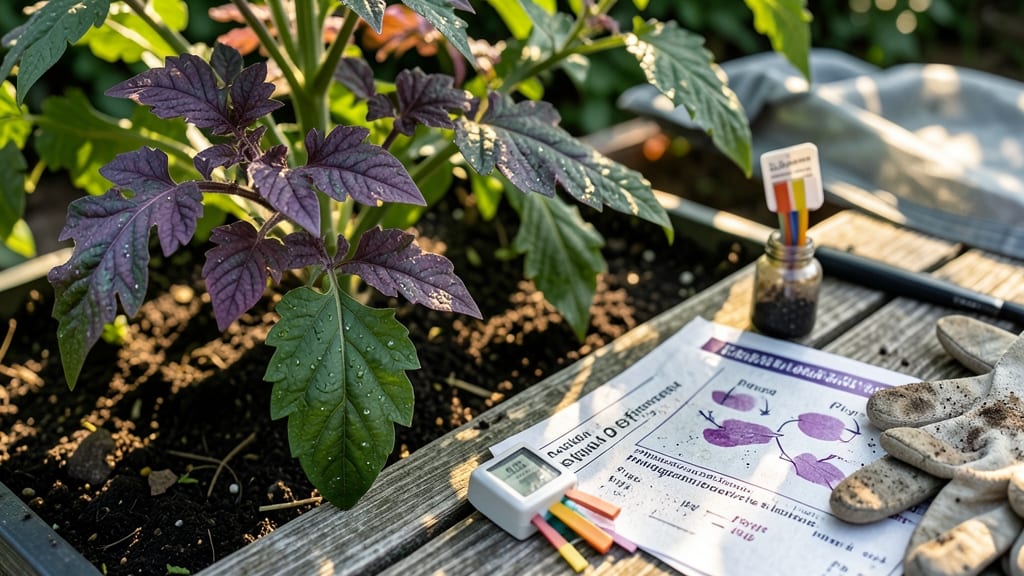
Your tomato plants shouldn’t look like they’ve been dipped in grape juice—tomato purple leaf disorder is fixable, and I’ll show you how in just three straightforward steps. 🌱 This isn’t just about saving your plants; it’s about understanding what’s really going wrong beneath the surface before it’s too late.
The purple hue usually means one of three things: nutrient imbalance (especially phosphorus or magnesium), viral infections like tomato mosaic virus, or environmental stress from heat or poor drainage. I’ve seen gardeners panic and over-fertilize, which only makes it worse—so let’s cut through the guesswork first.
You’ll start by testing your soil (yes, it’s easier than you think) and checking for pests like aphids or spider mites, which spread viruses. Then we’ll focus on targeted fixes: adjusting pH, adding the right amendments, or even pruning to reduce stress.
Within 2-4 weeks, those purple leaves will fade to healthy green.
This works for both backyard gardens and container growers—no fancy tools required. The key is acting fast, and I’ll walk you through every step so you can stop the spread before it ruins your harvest.
Root Causes Of Purple Leaves
Tomato plants developing purple or reddish leaves can be alarming, but understanding the underlying causes helps you take precise action. This issue usually stems from nutrient imbalances, environmental stress, or disease pressure—each requiring a different fix.
Below, we break down the most common culprits and why they trigger this discoloration.
Purple leaves often signal that your tomato plants are starving for essential nutrients, particularly phosphorus and potassium. While nitrogen deficiencies (yellowing leaves) are more common, phosphorus and potassium shortages manifest as purple or reddish hues, especially on older leaves.
- Phosphorus Deficiency (P) - Why it happens: Phosphorus is critical for energy transfer and root development.
When soil lacks available phosphorus (common in acidic or compacted soils), plants struggle to produce enough ATP (energy currency), leading to stunted growth and purple undertones. - Actionable clue: Check soil pH—phosphorus becomes less available below pH 5.5 or above pH 7.5. Conduct a soil test to confirm.
- Potassium Deficiency (K) - Why it happens: Potassium regulates water movement and stress responses. Without enough, leaves develop marginal scorch and purple edges, especially under heat or drought.
Overwatering or leaching (from heavy rain) can wash potassium out of the root zone. - Actionable clue: Purple edges + weak stems = classic potassium deficiency. Amend soil with potassium sulfate or wood ash (avoid overdoing it—excess potassium blocks magnesium uptake).
- Magnesium Deficiency (Mg) - Why it happens: Magnesium is the center of the chlorophyll molecule.
When soil lacks magnesium (common in sandy or heavily fertilized soils), older leaves turn purple between veins as chlorophyll breaks down. - Actionable clue: Epsom salt (magnesium sulfate) is a quick fix—dissolve 1 tbsp per gallon of water and spray foliage or drip into soil.
Tomatoes are sensitive to temperature swings, light exposure, and water extremes. When these factors spiral out of balance, purple leaves can appear as a survival response.
- Cold Stress or Night Chill - Why it happens: Tomatoes thrive in daytime temps of 70–85°F (21–29°C) but struggle with nighttime temps below 55°F (13°C). Cold slows nutrient uptake, causing purple discoloration (especially in heirloom varieties).
Frost damage is even worse—cells rupture, leading to blackened, purple-tinged leaves. - Actionable clue: Use row covers or black plastic mulch to moderate soil temps. Avoid planting tomatoes too early in cool climates.
- Excessive Heat or Sunburn - Why it happens: While tomatoes love sun, intense heat (above 90°F/32°C) + high light can scorch leaves, turning them purple or reddish.
This is common in greenhouse settings or during heatwaves. - Actionable clue: Provide afternoon shade cloth (30–50%) or mulch heavily to keep roots cool. Drip irrigation (not overhead) prevents leaf burn.
- Watering Woes (Too Much or Too Little) - Why it happens: Drought stress triggers anthocyanin production (the purple pigment) as a sunscreen for damaged cells.
Conversely, overwatering (leading to root rot) cuts off nutrient uptake, causing similar symptoms. - Actionable clue: Aim for 1–1.5 inches of water per week, delivered deeply 2–3 times per week. Use a moisture meter to avoid guesswork.
While nutrient issues are the most common cause, pathogens and pests can also induce purple leaves by disrupting plant metabolism.
- Verticillium or Fusarium Wilt (Fungal Invaders) - Why it happens: These soil-borne fungi clog xylem vessels, preventing water and nutrient transport. As the plant struggles, leaves turn purple or yellow before wilting. Common in tomatoes, peppers, and eggplants. - Actionable clue: Remove infected plants immediately.
Solarize soil (cover with clear plastic for 4–6 weeks in summer) or plant resistant varieties like ‘Defiant PhR’ or ‘Mountain Merit.’
- Early Blight or Septoria Leaf Spot - Why it happens: Fungal spores (from Alternaria or Septoria) create dark spots with purple halos as the plant’s immune system reacts.
Severe infections block photosynthesis, leading to purple-tinged leaves. - Actionable clue: Apply copper fungicide at first signs of spots. Improve airflow with pruning and mulch to reduce humidity.
- Aphids or Spider Mites (Sap-Sucking Menaces) - Why it happens: These pests inject toxins while feeding, causing leaves to curl, yellow, and develop purple patches.
Heavy infestations weaken the plant, making it more susceptible to nutrient deficiencies. - Actionable clue: Blast off pests with water spray or use neem oil (repeat every 5–7 days). Introduce ladybugs or lacewings for biological control.
Not all purple leaves are a red flag! Some tomato varieties naturally develop purple hues under specific conditions.
- Anthocyanin Production (The "Purple Power" Response) - Why it happens: Many heirloom and purple-fleshed tomatoes (like ‘Indigo Rose’ or ‘Black Krim’) produce anthocyanins—antioxidant pigments that protect leaves from UV stress, cold, or drought.
This is a healthy adaptation, not a deficiency. - Actionable clue: If your tomato is a known purple variety, check for other stress signs (wilting, stunted growth). If the plant is otherwise thriving, purple leaves are just its way of staying resilient!
- Fruit Maturation Triggers
- Why it happens: As tomatoes near ripeness, some varieties (like ‘Cherokee Purple’) develop purple stems and leaves due to higher sugar and pigment production. This is normal and doesn’t require intervention.
| Symptom | Likely Cause | First Aid Fix |
|---|---|---|
| Purple between veins | Magnesium deficiency | Epsom salt spray (1 tbsp/gal water) |
| Purple edges | Potassium deficiency | Potassium sulfate (1 tbsp/5 gal water) |
| Purple older leaves | Phosphorus deficiency | Bone meal or rock phosphate (follow label) |
| Purple new growth | Nitrogen deficiency | Balanced fertilizer (10-10-10) |
| Purple with spots | Fungal disease (early blight) | Copper fungicide + prune infected leaves |
| Purple after cold snap | Temperature stress | Row covers + mulch |
| Purple in heirlooms | Natural anthocyanins | Monitor plant health; no action needed |
Fixing Purple Leaf Issues Fast
Now that you know the root causes behind your tomato plants’ purple leaves, it’s time to take action! The good news? Most fixes are simple, cost-effective, and require minimal effort. Below, we’ve mapped out practical solutions for each common cause—plus prevention tips to keep your tomatoes thriving.
If your plants are starving for key nutrients, here’s how to revive them:
🍳 Boost Nitrogen for Lush Green Leaves
Purple leaves often signal a nitrogen deficiency, which weakens growth and reduces chlorophyll. Fix it with: - Quick Fix: Sprinkle blood meal (organic nitrogen) around the base of the plant (1 tbsp per plant).
Water lightly to activate. - Long-Term Fix: Use a balanced fertilizer (like 10-10-10) every 2-3 weeks during the growing season. - DIY Option: Brew a compost tea (steep compost in water for 24 hours, strain, and water plants).
👨🍳 Correct Phosphorus & Potassium Imbalance
Purple edges or stems? Your plants may need phosphorus (P) and potassium (K) for root and fruit development. - Solution: Apply a bone meal (for phosphorus) or wood ash (for potassium) around the soil.
Mix into the top 2 inches. - Liquid Boost: Use a tomato-specific fertilizer (high in P & K, like 5-10-10) every 4 weeks.
🥘 Fix Micronutrient Shortages (Magnesium, Calcium, Iron)
Yellowing between veins?
It’s likely a magnesium (Mg) or iron (Fe) deficiency. - Epsom Salt Rescue (Mg): Dissolve 1 tbsp Epsom salt in a gallon of water and spray on leaves (do this at dusk to avoid leaf burn). - Chelated Iron Spray (Fe): Use a liquid iron supplement (like iron sulfate) every 2 weeks until leaves green up. - Calcium Boost (for blossom-end rot): Mix 1 tsp calcium nitrate in a gallon of water and water plants at the base.
If purple leaves stem from temperature swings, light issues, or transplant shock, these fixes will help:
✨ Adjust Temperature & Light Exposure
- Too Hot? Move plants to a shadier spot (especially in peak afternoon sun).
Use shade cloth if needed. - Too Cold? Protect plants with row covers or black plastic mulch to retain heat. - Inconsistent Light? Rotate pots or relocate plants to ensure 6+ hours of direct sunlight daily.
💡 Prevent Transplant Shock & Water Stress
- Gradual Acclimation: If moving plants outdoors, harden them off over 7-10 days (expose to sunlight incrementally).
- Deep Watering Routine: Water deeply 2-3 times per week (instead of daily shallow watering) to encourage strong roots.
- Mulch Like a Pro: Apply 2-3 inches of mulch (straw or wood chips) to retain moisture and regulate soil temp.
If pests or pathogens are to blame, act fast to save your crop:
🔪 Combat Sap-Sucking Pests (Aphids, Spider Mites)
- Neem Oil Spray: Mix 1 tbsp neem oil + 1 tsp mild soap in a quart of water.
Spray early morning or evening (avoid direct sun). - Beneficial Insects: Release ladybugs or lacewings (natural predators) near affected plants. - Hose Them Off: Blast pests with a strong stream of water to dislodge them.
🌿 Treat Fungal & Bacterial Infections
- Copper Fungicide: Spray copper-based fungicide (like Bordeaux mixture) every 7-10 days to prevent spread.
- Prune & Destroy: Remove infected leaves/stems and sterilize pruners with rubbing alcohol.
- Improve Airflow: Space plants 18-24 inches apart and stake tall varieties to reduce humidity buildup.
Once your tomatoes recover, keep purple leaves at bay with these habits: - Test Your Soil: Use a home soil test kit (or send to a lab) to check pH and nutrient levels.
Aim for pH 6.0-6.8. - Rotate Crops: Avoid planting tomatoes in the same spot yearly—rotate with beans, peas, or lettuce to prevent nutrient depletion. - Feed Regularly: Use a slow-release fertilizer (like osmocote) at planting, then supplement with liquid feeds every 2 weeks. - Monitor Early: Check leaves weekly for color changes—catch issues before they spread!
Pro Tip: 💡 If purple leaves persist after 2-3 weeks of treatment, consider a soil test—sometimes hidden issues (like compacted soil or poor drainage) are the real culprits!
With these fixes, your tomato plants should bounce back in no time, giving you juicy, healthy fruits all season long. 🍅✨
Frequently asked questions about tomato purple leaf disorder
Why do my tomato leaves turn purple but the plant still looks healthy?
This is likely a natural anthocyanin response in heirloom varieties like 'Black Krim' or 'Indigo Rose'. These plants produce purple pigments as a protective sunscreen when exposed to UV stress, cold, or drought. If the plant is otherwise vigorous with no wilting or yellowing, it's probably just doing its thing!
Can I use Epsom salt if my tomato leaves are purple between the veins?
Purple between veins almost always signals a magnesium deficiency. Mix 1 tablespoon of Epsom salt in a gallon of water and spray it on the leaves at dusk. For best results, repeat every 7-10 days until the leaves green up. This works fast for both container and in-ground plants.
How do I tell if my tomato's purple leaves are from a virus or nutrient deficiency?
Check for these clues: Viral infections (like tomato mosaic virus) show purple leaves + stunted growth + distorted new leaves, while deficiencies cause purple only on older leaves with no growth issues. Test for viruses by sending leaf samples to a plant lab if you're unsure—nutrient fixes won't help viral problems.
Will fixing purple leaves improve my tomato fruit quality?
Yes! Purple leaves often mean your plant is stressed, which directly affects fruit development. Correcting the issue (whether it's nutrients, pests, or environment) helps the plant focus energy on producing bigger, sweeter tomatoes. You might even see improved flavor and color in your harvest within 4-6 weeks of treatment.
Can I save my tomato plant if the purple leaves have spread to most of the foliage?
It depends on the cause: For nutrient deficiencies, you can often revive the plant with targeted amendments. But if it's a viral infection or fungal wilt, the damage may be irreversible. Prune back severely affected leaves and focus on preventing spread to other plants. In worst cases, removal may be the kindest option.