
Companion Plants
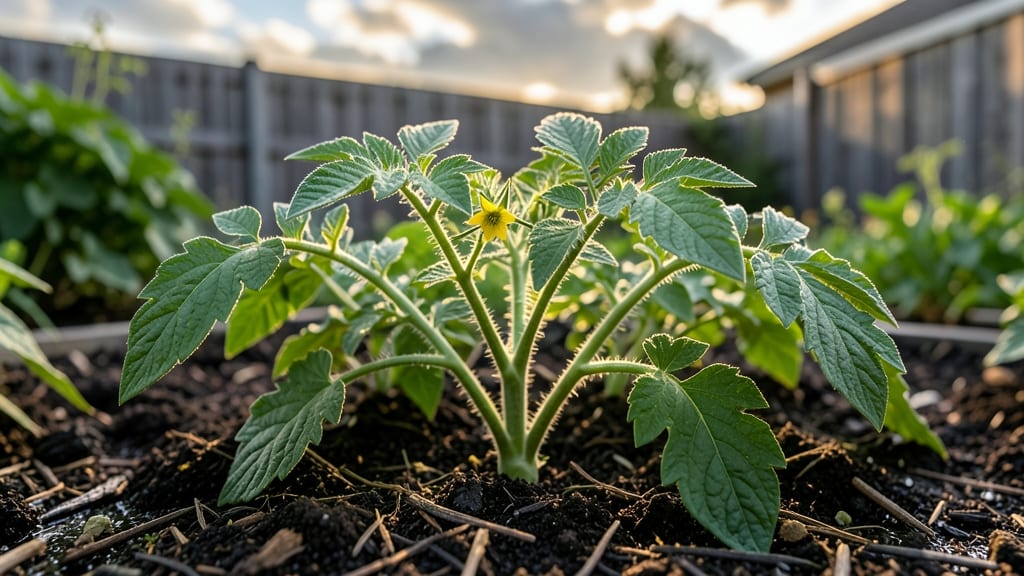
Young tomato plants start with two tiny, rounded leaves that look like miniature versions of mature foliage—except they're the size of a dime and bright emerald green with smooth edges. 🌱 The first true leaves appear after the initial seedling leaves, and they’re slightly larger with a more pronounced serrated edge, signaling the plant is ready to stretch toward the light.
Confusion often happens when seedlings look like weeds or other greens—look for the hairy stems and slightly fuzzy leaves that set tomatoes apart.
Early flowers (those tiny yellow blooms) might appear as soon as 4-6 weeks, but don’t deadhead them—they’re a sign of a healthy, vigorous plant preparing for its first harvest.
By the time your seedlings have 4-6 true leaves, they’re ready for transplanting, though they’ll still be small enough to fit in your palm. The roots will be dense and white, not tangled or leggy, meaning they’ve developed a strong foundation for the coming weeks of growth.
This is where most gardeners trip up—skipping the leaf-count check or mistaking them for volunteer tomatoes or other nightshades. A quick glance at the leaf shape and stem texture keeps you from pulling out your future dinner instead of weeds.
Understanding Young Tomato Growth
Young tomato plants are a sight to behold—vibrant, full of potential, and packed with tiny details that reveal their health and future productivity. But sometimes, their appearance can be confusing, especially if they don’t match the lush green leaves and delicate yellow flowers you’ve seen in gardening guides.
Understanding why tomato seedlings or young plants look a certain way helps you troubleshoot issues before they become problems. Let’s break down the key factors that influence their appearance, from genetics to environmental stressors.
Every tomato plant starts with its genetic code, which dictates its early growth patterns. Some varieties are bred to grow quickly with broad leaves, while others develop more slowly with finer foliage. For example:
- Determinate varieties (like 'Roma' or 'Celebrity') often have bushier, compact growth with smaller leaves and a more uniform appearance.
- Indeterminate varieties (like 'Cherry Tomatoes' or 'Beefsteak') may start with larger, lobed leaves and a more sprawling habit as they mature.
- Heirloom or hybrid traits can also play a role—some plants may inherit traits like purple or bronze-tinted leaves (common in heirlooms like 'Black Krim') or hairy stems (a defense mechanism in some wild types).
💡 Pro Tip: Check your seed packet or plant tag for variety descriptions. If your seedlings look drastically different from the expected image, genetics might be the reason!
Light is the fuel for photosynthesis, and young tomato plants are light-hungry. Without enough sunlight, they’ll stretch, weaken, and develop long, leggy stems with small, pale leaves—a condition called etiolation. Here’s how it happens:
- Insufficient light (less than 6–8 hours of direct sun daily) triggers cells to elongate rapidly, making stems thin and leaves sparse.
- Artificial lighting issues: Grow lights too far away or using the wrong spectrum (e.g., only red or blue light) can stunt growth or cause yellowing (chlorosis).
- Overcrowding: Seedlings competing for light may develop uneven growth, with some plants leaning toward the light source.
| Symptom | Cause | Fix |
|---|---|---|
| Pale, yellow-green leaves | Too little light | Move plants to a sunnier spot or supplement with a full-spectrum grow light (12–16 hours/day). |
| Stems taller than 6 inches with few leaves | Leggy growth from shade | Prune leggy stems to encourage bushier growth and transplant deeper into soil. |
| Leaning or "flopping" plants | Light competition | Thin seedlings to 12–24 inches apart and rotate pots weekly for even growth. |
Tomatoes are sensitive to moisture levels, and water stress—whether from drought or overwatering—can drastically alter their appearance. Here’s how:
- Underwatering:
- Leaves curl inward or turn crispy at the edges.
- Stems may darken or shrivel if roots dry out.
- New growth stops, and leaves may yellow (wilting).
- Overwatering:
- Leaves yellow and droop (a sign of root rot).
- Stems may soften or develop mold.
- Soil stays soggy, and roots suffocate.
- Inconsistent watering (e.g., drought followed by a flood) causes blossom-end rot later, but early signs include stunted growth and small, deformed leaves.
🌡️ Actionable Tip: Keep soil consistently moist (like a damp sponge) but not waterlogged. Use your finger to check the top 1–2 inches of soil—if it’s dry, water deeply. For containers, ensure pots have drainage holes.
Young tomato plants need a balanced diet of nitrogen (N), phosphorus (P), and potassium (K), along with micronutrients like magnesium and iron. A deficiency in any of these can change their appearance:
| Symptom | Likely Deficiency | Quick Fix |
|---|---|---|
| Yellowing between leaf veins (chlorosis) | Iron or magnesium (common in alkaline soil) | Add chelated iron or Epsom salt (1 tbsp per gallon of water). Test soil pH (aim for 6.0–6.8). |
| Purple or reddish stems/leaves | Phosphorus (P) deficiency | Apply a phosphate-rich fertilizer (e.g., bone meal) or use a balanced 10-10-10 formula. |
| Slow growth, small leaves | Nitrogen (N) deficiency | Use a high-nitrogen fertilizer (e.g., blood meal) or compost tea. |
| Brown spots on leaf edges | Potassium (K) deficiency | Add potassium sulfate or wood ash (sparingly). |
✨ Pro Tip: Start with a balanced fertilizer (like 5-5-5) when transplanting seedlings. Avoid over-fertilizing—young plants can burn from too many salts.
Tomatoes are warm-season crops and thrive in temperatures between 70–85°F (21–29°C). Outside this range, their growth can stall or change dramatically:
- Cold stress (<50°F/10°C or below):
- Leaves may develop black or brown patches (cold damage).
- Growth slows or stops until temperatures rise.
- Seedlings planted too early may look stunted with small, dark leaves.
- Heat stress (>90°F/32°C):
- Leaves curl upward or turn yellowish-white (heat bleaching).
- Flowers may drop off before pollination (a common issue in hot climates).
- New growth appears small and weak.
- Temperature swings
How to Fix Weak or Stunted Growth
When your young tomato plants aren’t thriving, quick action can turn things around. Below are practical fixes for common issues—each paired with prevention tips to keep your plants strong and healthy.
Symptoms: Yellowing leaves, slow growth, weak stems, or stunted height.
How to Fix It:
- 🔥 Test Your Soil – Use a simple at-home soil test kit to check pH (ideal: 6.0–6.8) and nutrient levels.
- 🍳 Amend the Soil – Mix in compost, aged manure, or worm castings (1–2 inches) to improve fertility. For a quick boost, use a balanced fertilizer (10-10-10) at half-strength.
- 👨🍳 Feed Regularly – Apply a liquid fertilizer (like fish emulsion or seaweed extract) every 2–3 weeks once plants are 6+ inches tall.
💡 Prevention Tips: ✔ Start with rich soil – Mix compost into garden beds or use high-quality potting mix for containers. ✔ Rotate crops – Avoid planting tomatoes in the same spot yearly to prevent nutrient depletion. ✔ Mulch well – Use straw or grass clippings to retain moisture and slow nutrient loss.
Symptoms: Wilting, yellowing leaves, mushy stems (overwatering) or crispy edges, drooping (underwatering).
How to Fix It:
- 🌡️ Check Moisture Levels – Stick your finger 1 inch into the soil; if dry, water deeply. If soggy, hold off until the top 2 inches feel dry.
- 🎯 Water Correctly – Water at the base (not leaves) early in the morning to reduce disease risk. Use drip irrigation or a soaker hose for consistency.
- 🔥 Improve Drainage – If in containers, ensure pots have drainage holes. For garden beds, raise soil mounds slightly to prevent water pooling.
💡 Prevention Tips: ✔ Use moisture meters for precise readings. ✔ Group plants with similar water needs together. ✔ Avoid overhead watering (especially in humid climates).
Symptoms: Leggy stems, pale leaves, slow growth, or plants stretching toward light.
How to Fix It:
- 🔥 Adjust Light Exposure – Move plants to a sunniest spot (6–8+ hours of direct sun). If indoors, use grow lights (12–16 hours/day).
- 🍳 Harden Off Seedlings – Gradually expose young plants to outdoor conditions (1–2 hours/day) over 7–10 days before transplanting.
- 🌡️ Protect from Heat Stress – In extreme heat (>90°F), provide shade cloth (30–50%) or mulch heavily to keep roots cool.
💡 Prevention Tips: ✔ Start seeds indoors 6–8 weeks before the last frost for a head start. ✔ Use reflective surfaces (like white walls or mirrors) to bounce light to shady areas. ✔ Plant in late spring (after soil warms) to avoid cold snaps.
Symptoms: Holes in leaves, chewed stems, mold, or sticky residue (aphids, whiteflies, blight).
How to Fix It:
- 🔪 Remove Infested Parts – Prune damaged leaves and dispose of them far from the garden.
- 🍳 Spray Natural Remedies –
- Soapy water (1 tsp mild soap + 1 quart water) for soft-bodied pests.
- Neem oil (1 tbsp + 1 quart water + drop of dish soap) for fungal issues.
- Beneficial insects (ladybugs, lacewings) to control aphids.
- 👨🍳 Prevent Fungal Spread – Water only at the base, avoid overhead sprinkling, and space plants for airflow.
💡 Prevention Tips: ✔ Rotate crops to disrupt pest life cycles. ✔ Inspect plants weekly for early signs of trouble. ✔ Use row covers to block pests before they start.
Symptoms: Wilting, yellowing, or stunted growth after moving plants.
How to Fix It:
- 🌡️ Keep Conditions Stable – Transplant on a cloudy day or in the late afternoon to reduce stress.
- 🍳 Water Thoroughly Before & After – Soak roots before digging and water deeply immediately after planting.
- 🔥 Support Weak Stems – Use stakes or cages to help plants stand upright while they recover.
💡 Prevention Tips: ✔ Avoid overcrowding – Give each plant 18–24 inches of space. ✔ Use root stimulators (like mycorrhizal fungi) at planting time. ✔ Mulch heavily to retain moisture and reduce shock.
Final Pro Tip: 🌟 Observe daily—catching issues early (like yellow leaves or wilting) means faster fixes and healthier plants! With these adjustments, your young tomato plants will soon be strong, bushy, and ready to flower. 🍅✨
Frequently asked questions about young tomato plants
1How can I tell the difference between tomato seedlings and weeds?
Look for hairy stems and slightly fuzzy leaves—tomato seedlings have these distinctive traits. Weeds often have smooth stems and more jagged leaf edges. Also, tomato seedlings develop two tiny rounded leaves first, then serrated true leaves that resemble miniature versions of mature foliage.
2Why do my tomato seedlings have yellow leaves?
Yellowing leaves often signal overwatering or nutrient deficiency. Check soil moisture—it should stay consistently damp but not soggy. If roots are waterlogged, yellowing occurs quickly. For nutrient issues, use a balanced fertilizer (5-5-5) at half-strength to avoid burning delicate roots.
3When should I transplant my young tomato plants?
Wait until seedlings have 4-6 true leaves and are at least 6 inches tall. The roots should be dense and white, not tangled. Transplant after the last frost when soil reaches 60°F (15°C)
4What do tomato flowers look like on young plants?
Early tomato flowers are tiny yellow blooms that appear in clusters near leaf joints. They’re delicate and star-shaped, about the size of a dime. Don’t remove them—they’re a sign of healthy growth! Just ensure plants get enough sunlight to support fruit development later.
5Can I grow tomato plants from grocery store tomatoes?
Technically yes, but results vary. Store-bought tomatoes are often hybridized to resist shipping damage, so seeds may not produce true-to-type plants. For reliable growth, use seeds from heirloom varieties or save seeds from homegrown tomatoes. Germination takes 7-14 days in warm, moist soil.