
Companion Plants
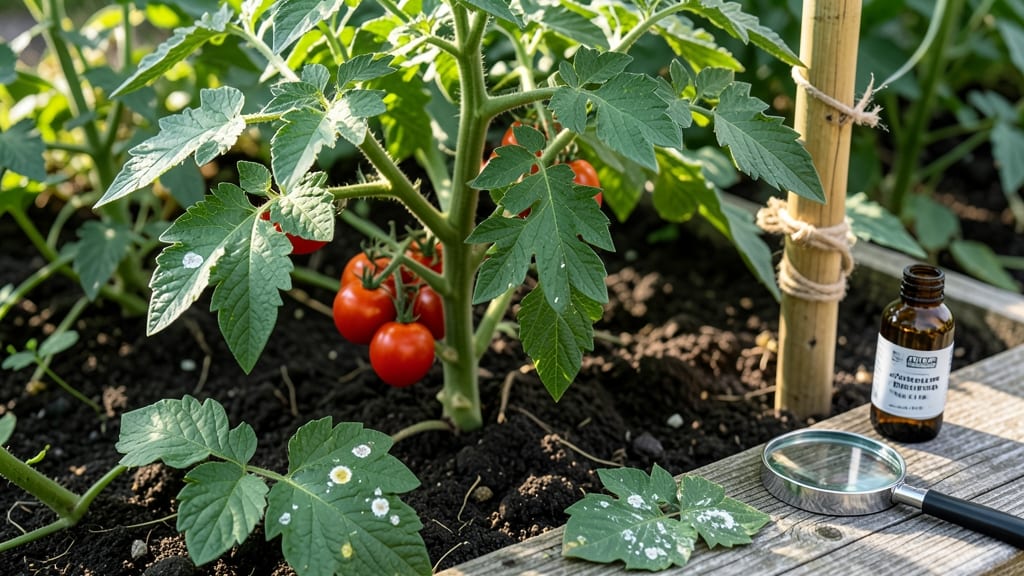
White spots on tomato plants mean your harvest is at risk—but it's fixable. 🌱 I've battled this exact problem in my backyard garden, and these three simple steps saved my plants and my summer's worth of tomatoes.
The culprits are usually powdery mildew or early blight, both fungal diseases that thrive in damp conditions. You'll spot white powdery patches on leaves or small brown spots with yellow halos.
The good news? Both respond to the same organic treatments—baking soda spray, neem oil, or copper fungicide—applied every 7-10 days.
Start by pruning infected leaves (don't compost them!) and improve airflow between plants. Within 10-14 days, you'll see new growth pushing through, and those spots will fade. The key is consistency—keep spraying until the threat passes, usually after 3-4 weeks of dry weather.
Prevent future outbreaks by spacing plants properly, watering at the base, and choosing disease-resistant varieties like 'Celebrity' or 'Mountain Merit.' My garden stays spot-free now, and I've learned to check leaves weekly once the heat hits.
Root Causes Behind White Spots
When you spot those mysterious white patches on your tomato leaves, it’s rarely a coincidence—it’s a sign your plants are under attack. Understanding the why behind these spots is the first step to saving your harvest.
Below, we break down the most common culprits, from fungal invaders to environmental stressors, and explain what’s really happening at a cellular level.
Fungal spores are everywhere, but they thrive in the right conditions—think moisture, warmth, and poor airflow. When these factors align, fungi like Oidium (powdery mildew) or Alternaria latch onto your tomato plants and start feasting.
- Powdery Mildew (Oidium): This fungus forms a white, powdery coating on leaves, blocking sunlight and stunting growth. It spreads via wind or splashing water, and unlike bacteria, it doesn’t need an open wound to infect—it land-and-germinates on healthy tissue. Fun fact: It prefers temperatures between 60–85°F (15–30°C), making it a year-round menace in many climates.
- Alternaria Leaf Spot: While Alternaria causes dark spots with white centers, its spores also produce a fuzzy white mycelium (the "body" of the fungus) that spreads rapidly in humid conditions. Unlike powdery mildew, Alternaria often enters through leaf wounds or stomata (tiny pores on leaves).
- Early Blight (Alternaria solani): Though it starts with concentric rings, early blight can leave a white, cottony residue on stems and leaves as it progresses. It loves overhead watering, which splashes spores onto lower leaves—perfect conditions for a fungal buffet.
💡 Pro Tip: Fungal spores can survive in soil or debris for years. Always rotate crops and remove infected plant material to break the cycle.
Not all white spots are fungal. Sometimes, your tomato plants are reacting to environmental extremes that weaken their defenses, making them susceptible to secondary infections.
- High Humidity + Poor Airflow: Tomato leaves are covered in tiny trichomes (hair-like structures) that normally repel water and spores. But in stagnant, humid air, these trichomes get clogged with moisture, creating the perfect petri dish for fungi. Solution: Prune plants for better airflow and avoid overcrowding.
- Overhead Watering: Water droplets act like tiny catapults, splashing fungal spores from soil or infected leaves onto healthy ones. This is how early blight and Alternaria spread so aggressively. Fix: Use a drip irrigation system or water at the base of the plant in the morning so leaves dry quickly.
- Temperature Fluctuations: Sudden drops in temperature (below 50°F/10°C) or heat stress (above 90°F/32°C) weaken tomato plants, making them more vulnerable to fungal attacks. Watch for: White, crinkled leaves in heat or yellowing with white edges in cold snaps.
- Chemical Burn or Nutrient Deficiency: Over-fertilizing with nitrogen (especially synthetic types) can lead to soft, white, powdery growth on leaves—a sign of excessive sap production (not a fungus). Conversely, a magnesium deficiency (common in alkaline soils) causes interveinal chlorosis (yellowing between veins) with white edges.
🌡️ Quick Test: If the white spots rub off like powder, it’s likely powdery mildew. If they’re sticky or oily, check for bacterial issues (like bacterial spot).
Some white spots aren’t from fungi at all—they’re pest byproducts. Tiny insects like aphids, spider mites, or whiteflies leave behind sticky residue (honeydew) that attracts sooty mold, a black or white fungal growth.
- Aphids & Whiteflies: These sap-sucking pests excrete honeydew, a sugary substance that ferments on leaves, creating a white, crusty film. Sooty mold then grows on this sticky mess, further stressing the plant.
- Spider Mites: While they don’t cause white spots directly, their fine webbing can look like a powdery residue on leaves, especially in dry conditions. Heavy infestations weaken plants, making them prone to fungal infections.
🕵️♂️ Spot the Difference:
Fungal Spots
Pest-Related Spots
White, powdery or fuzzy; spreads evenly
Sticky, crusty patches (honeydew); often near leaf veins
Rubs off like chalk
Wipes off but leaves a sticky residue
Worsens in humidity
Worsens in dry, dusty conditions
Sometimes, white spots are a chemical reaction rather than a biological one.
- Salt Burn (from Fertilizer or Irrigation): Over-salting soil (common with synthetic fertilizers or tap water high in chlorine) causes white, crispy edges on leaves. The excess salts disrupt cellular function, leading to necrosis.
- Chlorine or Fluoride in Water: Municipal water often contains chlorine or fluoride, which can bleach leaf tissue if used for foliar spraying. Always let water sit out for 24 hours before using it on plants.
✨ Key Takeaway: If the white spots appear suddenly after fertilizing or watering, chemical burn is likely. Flush the soil with rainwater or distilled water to dilute salts.
Quick Fixes for Tomato Plant Spots
Now that you know the root causes behind those pesky white spots on your tomato plants—whether it’s powdery mildew, bacterial speck, or environmental stress—it’s time to roll up your sleeves and get them under control!
The good news? Most issues are manageable with simple, garden-friendly solutions. Below, we’ve broken down the fixes by cause, so you can tackle the problem head-on without losing sleep over your tomato crop.
Fungi love humidity and crowded plants, so your first line of defense is prevention—but if spots are already appearing, act fast!
🔥 Step 1: Remove Infected Leaves
- 👨🍳 Snip and toss any leaves with white, powdery patches or yellowing spots.
- ⏰ Do this early in the morning when humidity is lower to reduce spore spread.
- 🔪 Sterilize pruners with rubbing alcohol between cuts to avoid cross-contamination.
🥘 Step 2: Boost Airflow & Light
- 🌬️ Space plants 18–24 inches apart (if possible) or prune nearby foliage to improve airflow.
- ☀️ Ensure 6+ hours of sunlight daily—fungi thrive in shady, damp conditions.
- 💡 Add a small fan (on low) near plants for 10–15 minutes daily to dry leaves faster.
🌿 Step 3: Apply Natural Fungicides
Mix one of these DIY sprays and apply in the early morning or late evening (avoid direct sunlight to prevent leaf burn): - 🍅 Baking Soda Spray: 1 tsp baking soda + 1 tsp dish soap + 1 quart water.
Spray every 7–10 days. - 🌿 Neem Oil Solution: 1 tbsp neem oil + 1 tsp mild soap + 1 quart water. Shake well and spray weekly. - 🍋 Copper Fungicide: Use a store-bought organic copper spray (like Bonide Copper Fungicide) every 10–14 days.
💡 Prevention Tip:
- 🌱 Rotate crops—don’t plant tomatoes in the same spot year after year.
- 🌧️ Water at the base (not overhead) to keep leaves dry.
- 🌿 Companion plants like marigolds, basil, or garlic repel fungal spores naturally.
Bacterial infections are trickier because they can’t be cured—only managed. Here’s how to slow them down:
🧪 Step 1: Clean Up Debris
- 🗑️ Remove and destroy all infected leaves (don’t compost them—burn or trash).
- 🧼 Sterilize tools and containers to prevent spreading bacteria.
💊 Step 2: Use Copper-Based Bactericides
- 🍋 Copper fungicide sprays (like those for fungi) work on bacteria too—apply every 5–7 days.
- 🌿 Avoid chemical sprays (like copper sulfate) if you’re growing organic—stick to copper hydroxide or fixed copper.
🚫 Step 3: Adjust Watering Practices
- 💧 Water deeply but infrequently—soggy soil spreads bacteria.
- 🕒 Water in the morning so leaves dry quickly.
- 🌧️ Use drip irrigation instead of sprinklers.
💡 Prevention Tip:
- 🌱 Buy disease-resistant varieties like ‘Mountain Merit’ or ‘Defiant PhR’.
- 🧤 Wear gloves when handling plants to avoid spreading bacteria via touch.
- 🌿 Avoid overhead watering—it splashes bacteria onto leaves.
If white spots are dry, crusty, or powdery (not fuzzy or slimy), they’re likely from sunburn or nutrient issues.
🌞 Step 1: Shield from Harsh Sun
- 🏖️ Provide afternoon shade with a lightweight shade cloth (30–50%) if temps exceed 90°F (32°C).
- 🌱 Mulch heavily to keep roots cool and retain moisture.
🍅 Step 2: Check Soil & Fertilizer
- 📊 Test your soil—white spots from calcium deficiency (blossom end rot) or magnesium deficiency (interveinal chlorosis).
- 🥛 Fix with:
- 🥛 Calcium: 1 tbsp crushed eggshells or calcium nitrate per plant, worked into soil.
- 🍫 Magnesium: 1 tbsp Epsom salt (magnesium sulfate) dissolved in 1 gallon of water, sprayed on leaves.
- 🚫 Avoid over-fertilizing with nitrogen—it burns roots and stresses plants.
💡 Prevention Tip:
- 💧 Keep soil consistently moist (not soggy) to prevent nutrient uptake issues.
- 🌱 Plant in well-draining soil mixed with compost for balanced nutrients.
- 🌿 Use row covers in early summer to protect young plants from intense sun.
If 50%+ of leaves are infected or spots are spreading rapidly:
- 🚜 Remove the entire plant (especially for bacterial issues) to prevent garden-wide contamination.
- 🔥 Solarize the soil (cover with clear plastic for 4–6 weeks in hot sun) to kill lingering pathogens.
- 🌱 Wait 2–3 years before replanting tomatoes in the same spot.
🎯 Pro Tip: Always monitor your plants weekly—catching issues early means less work and more tomatoes! With these fixes, your plants should bounce back in 2–4 weeks, and you’ll be back to harvesting juicy, spot-free tomatoes in no time. 🍅✨
Frequently asked questions
Why do my tomato leaves get white spots even after I prune infected areas?
Fungal spores can linger in soil or on tools, so sterilize pruners with rubbing alcohol and remove ALL infected debris (don't compost it). Even small spores survive and reinfect. Try copper fungicide sprays every 7-10 days for 4 weeks to break the cycle.
Can I still eat tomatoes from plants with white spots?
Only if the spots are on leaves/stems, not the fruit itself. Fungal spores rarely transfer to tomatoes, but remove heavily infected leaves first. For bacterial spots (often slimy), discard affected fruit immediately—it can spread disease.
What's the fastest way to stop white spots from spreading?
Combine these 3 immediate actions:
- Remove infected leaves,
- Spray with neem oil solution (1 tbsp oil + 1 tsp soap per quart water), and
- Improve airflow with a small fan. Repeat every 5-7 days until new growth appears.
Will baking soda really work for tomato plant spots?
Yes! The alkaline baking soda disrupts fungal growth while dish soap helps it stick. Mix 1 tsp baking soda + 1 tsp soap per quart water and spray leaves thoroughly. Reapply every 7-10 days during humid weather for best results.
Can I use the same fungicide spray on my tomatoes and other garden plants?
Most organic sprays (neem oil, copper fungicide) are safe for vegetables, but always check labels. Avoid copper on leafy greens like lettuce—it can leave residues. For mixed gardens, rotate between baking soda and neem oil to prevent resistance.