
Plants
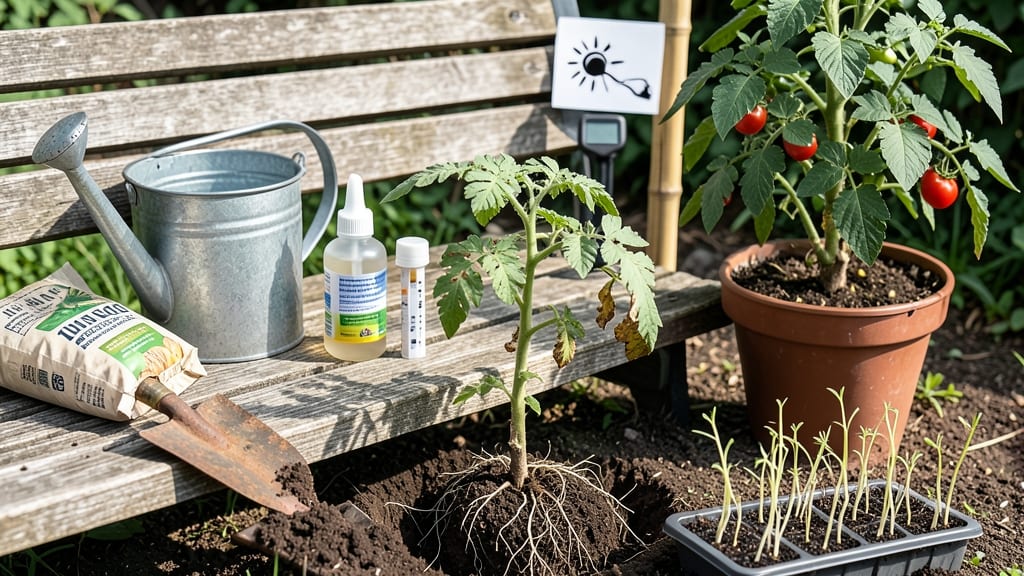
Your tomato plant isn’t growing because something fundamental is missing—often something you’ve overlooked. 🌱 I’ve nursed back more stunted tomato plants than I’d like to admit, and the fixes always come down to five key areas: light, soil, water, pests, and hidden stress.
The good news? Each one has a simple solution that can turn your plant around in just a few weeks.
Most gardeners assume stunted growth means underwatering, but it’s usually the opposite: soggy soil or poor drainage that chokes roots. Then there’s the light—tomatoes need 6+ hours of direct sun daily, and even partial shade slows them down.
Pests like aphids or blight can also drain energy before you even notice. The secret is checking these in order, starting with the most common culprits.
By the time you’re done, your plant will show new growth within 7-10 days—think dark green leaves pushing out, stronger stems, and maybe even the first hint of a flower.
The best part? These fixes work for both container and in-ground tomatoes, so no matter where your plant lives, we’ll get it thriving again.
Fair warning: if the roots are mushy or the stems are black, it’s time to call in backup (like a local extension office). But for 90% of cases, these steps are all you need. Let’s diagnose your plant’s exact problem and get it back on track.
Root Causes Of Stunted Growth
Tomato plants are resilient, but when they refuse to grow, it’s often because they’re silently screaming for help. Understanding the real culprits behind stunted growth is the first step to reviving your plant. Below, we break down the science—and the solutions—behind why your tomato plant might be struggling.
Tomatoes thrive in well-draining, nutrient-rich soil with a pH between 6.0 and 6.8. If your soil is compacted, waterlogged, or lacking essential nutrients, your plant’s roots can’t access what they need to grow.
- Compacted Soil 🪨: Heavy clay or overworked soil restricts root expansion, limiting water and oxygen uptake. Roots suffocate, leading to stunted shoots above ground. - Nutrient Deficiencies 🧪: Tomatoes are heavy feeders. Without enough nitrogen (N), phosphorus (P), or potassium (K), growth slows dramatically.
Yellowing leaves (nitrogen deficiency) or weak stems (phosphorus deficiency) are red flags. - Improper pH Levels 📉: Soil that’s too acidic (<5.5) or alkaline (>7.5) locks out nutrients like iron, zinc, and manganese, causing chlorosis (yellowing) and poor growth.
Quick Fix: Test your soil (kits are cheap and available at garden centers) and amend with compost, aged manure, or balanced fertilizer (10-10-10). For compacted soil, mix in perlite or sand to improve drainage.
Tomatoes are sun-worshippers—they need 6–8 hours of direct sunlight daily to photosynthesize efficiently. Without enough light, they grow weak, leggy, and slow.
- Insufficient Sunlight 🌑: Shady spots (under trees, north-facing windows) lead to etiolation—stretched, pale stems with few leaves. The plant expends energy reaching for light instead of growing fruit. - Overcrowding 🌿: Plants competing for light in dense gardens or containers produce smaller leaves and weaker stems.
This is nature’s way of saying, “I can’t feed everyone!”
Quick Fix: Move your plant to a sunnier location or supplement with grow lights (LED full-spectrum bulbs work best). If in containers, space plants 18–24 inches apart to reduce competition.
Tomatoes hate moisture extremes. Overwatering or underwatering stresses roots, halting growth and inviting disease.
- Underwatering 💦: Dry soil triggers osmotic stress, where roots struggle to absorb water. Leaves wilt, and new growth stalls.
Tomato plants in pots dry out faster—check soil moisture daily in summer. - Overwatering 🌊: Soggy soil cuts off oxygen to roots, leading to root rot (a fungal infection).
Yellow leaves, mushy stems, and a foul smell are telltale signs. - Inconsistent Watering ⏳: Fluctuating moisture levels confuse roots, causing transpiration stress. Plants grow slowly or stop altogether, conserving energy.
Quick Fix: Water deeply 1–2 times per week (more in extreme heat). Use drip irrigation or soaker hoses to keep soil evenly moist. If overwatered, pause watering and let the top 2 inches of soil dry out before resuming.
Pests and pathogens siphon nutrients and block sunlight, leaving your tomato plant weak and stunted.
- Aphids, Whiteflies, & Spider Mites 🐜: These sap-sucking insects inject toxins into leaves, causing curling, yellowing, and stunted growth.
Heavy infestations weaken the plant’s ability to photosynthesize. - Fungal Diseases (Early Blight, Fusarium Wilt) 🍄: Fungi like Phytophthora or Fusarium clog root systems or block vascular tissue, preventing water/nutrient transport.
Wilting, yellowing, and slow growth follow. - Nematodes 🐛: Microscopic worms feed on roots, causing galls (lumpy growths) that reduce absorption. Infested plants look healthy above ground but grow poorly.
Quick Fix:
- Pests: Spray with neem oil or introduce ladybugs/praying mantises. For severe cases, use insecticidal soap.
- Diseases: Remove infected leaves/fruit immediately. Apply copper fungicide preventatively. Rotate crops annually to prevent soil-borne pathogens.
Tomatoes are warm-season crops (55–85°F ideal). Outside this range, growth grinds to a halt.
- Cold Stress ❄️: Temperatures below 50°F slow metabolism. Young plants may stop growing entirely, and flowers/fruit can drop off (a process called flower drop). - Heat Stress 🔥: Above 90°F, tomatoes wilts and drop flowers (a survival mechanism).
Leaves may scorch, and new growth becomes small and brittle.
Quick Fix:
- Cold Protection: Use row covers or black plastic mulch to warm soil. Avoid planting until after the last frost.
- Heat Relief: Provide afternoon shade (use shade cloth) and mulch to keep roots cool. Drip irrigation helps regulate temperature.
Even after sprouting, tomatoes can halt growth if moved or stressed too soon.
- Root Disturbance 🌱: Transplanting too early or rough handling damages root hairs, reducing water/nutrient uptake. Plants may stop growing for 1–2 weeks while recovering. - Improper Hardening Off 🌞: Seedlings grown indoors need gradual acclimation to outdoor conditions.
Sudden exposure to wind, sun, or temperature swings causes shock, stalling growth.
Quick Fix: Wait until night temps stay above 55°F before transplanting. Harden off seedlings over 7–10 days by exposing them to outdoor conditions incrementally. Use root stimulators (like seaweed extract) at transplanting to encourage recovery.
Quick Fixes for Stunted Tomato Growth
Now that you’ve pinpointed the culprit behind your tomato plant’s sluggish growth, it’s time to take action! Below are practical, step-by-step solutions tailored to each common cause—plus prevention tips to keep your plants thriving.
Whether your tomatoes are wilting, yellowing, or just refusing to sprout, these fixes will get them back on track.
Problem: Your tomatoes aren’t growing because the soil lacks essential nutrients (like nitrogen, phosphorus, or potassium) or is too compacted.
How to Fix It: ✅ 🔥 Test Your Soil First
- Grab a small sample of soil (about 1 cup) and send it to a local extension office or use a DIY soil test kit (available at garden centers). This will tell you exactly what’s missing.
✅ 🍳 Amend the Soil
- For nitrogen deficiency (pale leaves, stunted growth):
- Mix in compost (1–2 inches worked into the top 6 inches of soil).
- Use a balanced fertilizer (like 10-10-10) or a nitrogen-rich option (e.g., blood meal or fish emulsion).
- For phosphorus deficiency (dark leaves, weak roots):
- Add bone meal or rock phosphate (follow package instructions).
- For potassium deficiency (yellow edges on leaves):
- Use wood ash (sprinkle lightly) or a potassium-rich fertilizer (like greensand).
✅ 👨🍳 Improve Soil Drainage
- If soil is too dense, mix in perlite, vermiculite, or coarse sand to loosen it up.
- Avoid heavy clay? Plant in raised beds or containers with well-draining potting mix.
💡 Prevention Tips:
- Rotate crops every 2–3 years to prevent nutrient depletion.
- Mulch (with straw or grass clippings) to retain moisture and slowly release nutrients.
- Feed regularly with a liquid fertilizer (like seaweed extract) every 2–4 weeks during growing season.
Problem: Too much or too little water stresses roots, halting growth.
How to Fix It: ✅ 🌡️ Check Moisture Levels
- Stick your finger 1–2 inches into the soil. If it’s:
- Dry → You’re underwatering.
- Soggy → You’re overwatering.
✅ 🔥 Adjust Your Watering Routine
- Underwatering:
- Water deeply 1–2 times per week (early morning is best).
- Use drip irrigation or soaker hoses to deliver water directly to roots.
- Overwatering:
- Let the top 1–2 inches of soil dry out between waterings.
- Ensure pots have drainage holes and saucers are emptied after watering.
✅ 🎯 Improve Soil Structure
- Add organic matter (compost or coconut coir) to help soil retain moisture without drowning roots.
💡 Prevention Tips:
- Group plants with similar water needs together.
- Use a moisture meter for precise readings.
- Water at the base (not leaves) to prevent fungal diseases.
Problem: Too much shade or scorching sun (or extreme temps) stunts growth.
How to Fix It: ✅ 🌿 Optimize Sun Exposure
- Tomatoes need 6–8 hours of direct sunlight daily.
- Too little light?
- Move potted plants to a sunnier spot or use a grow light (12–16 hours/day).
- Too much sun?
- Provide afternoon shade with a lightweight shade cloth (30–50% coverage).
- Use mulch to keep roots cool.
✅ 🌡️ Regulate Temperature
- Ideal temps: 70–85°F (21–29°C) during the day, 55–65°F (13–18°C) at night.
- For heat stress (wilting, yellow leaves):
- Water more frequently (early morning).
- Use reflective mulch (like aluminum foil) to bounce back heat.
- For cold stress (slow growth, dark spots):
- Cover plants with frost cloth if temps drop below 50°F (10°C).
- Move potted tomatoes to a sheltered spot.
💡 Prevention Tips:
- Choose heat-tolerant varieties (like ‘Solar Fire’ or ‘Heatmaster’) if you live in a hot climate.
- Start seeds indoors 6–8 weeks before the last frost to avoid transplant shock.
Problem: Hidden pests (aphids, spider mites) or diseases (blight, root rot) sap energy from your plant.
How to Fix It: ✅ 🔪 Inspect & Treat Pests
- Common pests & fixes:
| Pest | Signs | Solution |
|---|---|---|
| Aphids | Sticky leaves, curled growth | Spray with soapy water or neem oil. |
| Spider Mites | Yellow spots, webbing | Mist plants daily; use horticultural oil. |
| Whiteflies | Tiny white bugs, sticky residue | Sticky traps + kaolin clay. |
| Hornworms | Large green caterpillars, chewed leaves | Handpick at night or use BT (Bacillus thuringiensis). |
✅ 🍎 Combat Diseases
- Early blight (brown spots on leaves):
- Remove infected leaves and spray with copper fungicide.
- Improve air circulation by spacing plants 18–24 inches apart.
- Root rot (mushy stems, yellowing):
- Stop watering immediately and let soil dry out.
- Repot in fresh, sterile soil with perlite for drainage.
💡 Prevention Tips:
- Rotate crops to prevent soil-borne diseases.
- Water at the base (not overhead) to reduce fungal spores.
- Encourage beneficial insects (ladybugs, lacewings) with dill or marigolds nearby.
Problem: Newly planted tomatoes or overcrowded roots struggle to grow.
How to Fix It: ✅ 🌱 Ease Transplant Shock
- For young seedlings:
- Hardening off (acclimate to outdoor temps over 5–7 days) before planting.
- Plant deeply—bury 1/3 of the stem to encourage strong root growth.
- For mature plants:
- Loosen roots gently if they’re circling in a pot before repotting.
- Trim any damaged roots with clean scissors.
✅ 🔄 Relieve Overcrowding
- If plants are root-bound, repot into a larger container (at least 5 gallons per plant).
- Prune lower leaves to improve airflow and reduce competition.
💡 Prevention Tips:
- Use self-watering pots to reduce stress.
- Space plants 18–24 inches apart in the ground to avoid competition.
Final Thought: 🎯 Patience is key! Some fixes (like soil amendments) take 2–4 weeks to show results. Keep an eye on your plants, adjust as needed, and soon you’ll be harvesting juicy, vine-ripened tomatoes! 🍅🔥
Frequently asked questions
My tomato plant has yellow leaves—is that why it's not growing?
Yellow leaves usually signal a nutrient deficiency (often nitrogen) or overwatering. Check the soil: if it's soggy, roots may be drowning. If dry, your plant needs 1-2 inches of water weekly. For yellowing, add compost or a balanced fertilizer (10-10-10)—you should see new green growth within 7-10 days.
Can I save a tomato plant with black stems?
Black stems indicate severe root rot from overwatering or fungal infection. Unfortunately, the plant is likely beyond saving. Dig it up, check for mushy roots, and discard it. For your next plant, use well-draining soil with perlite and water only when the top 1-2 inches are dry.
How do I know if my tomato plant needs more sun?
Look for long, leggy stems with small leaves—this is called etiolation. Tomatoes need 6-8 hours of direct sun daily. Move your plant to a sunnier spot immediately. If you can't relocate it, supplement with a grow light (12-16 hours/day). You'll see sturdier stems and darker green leaves within 3-5 days.
Why are my tomato seedlings growing slowly after transplanting?
This is called transplant shock—common when roots get disturbed. Give your plant 1-2 weeks to recover. Water deeply but don't overdo it, and avoid fertilizing until new growth appears. For faster recovery, bury 1/3 of the stem when planting—this encourages new roots to form.
What's the fastest way to fix stunted tomato growth?
Start with these 3 quick fixes:
- Water check: Stick your finger 1-2 inches deep—dry? Water deeply. Soggy? Let it dry out.
- Sunlight boost: Move to 6+ hours of direct sun (use a grow light if needed).
- Fertilizer shot: Use liquid seaweed extract for immediate nutrients. You should see improvement in 5-7 days!