
Companion Plants
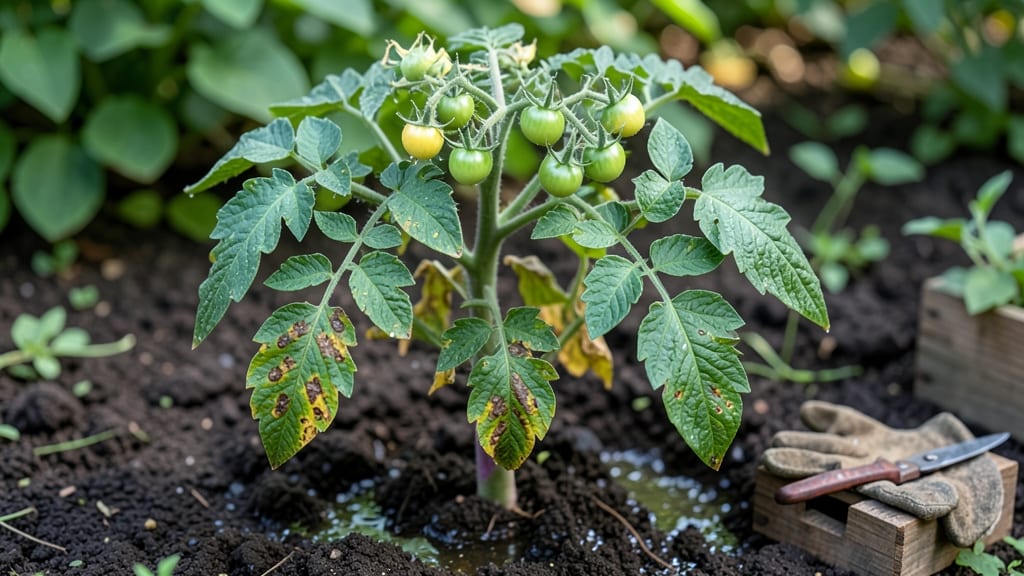
Brown spots on tomato leaves can turn your lush plants into a sad, spotted mess—unless you act fast. ✨ I've battled this exact problem in my garden, and the right pruning plus copper spray combo saved my harvest every time.
The key is catching it early before those ugly spots spread to the fruit.
Most brown spots come from fungal diseases like early blight or septoria leaf spot, but overwatering or poor airflow can make it worse. I learned the hard way that crowded plants invite trouble—now I space mine 18-24 inches apart and water at the base, never the leaves.
That simple shift cut my fungal issues by half in one season.
Here's the game-changer: prune infected leaves immediately and spray with a copper fungicide (or homemade baking soda mix) every 7-10 days. Within weeks, you'll see new growth pushing out, and those brown spots will disappear. The best part? Your tomatoes stay crisp, disease-free, and ready for harvest.
Works for both backyard gardens and container growers—just adjust the spray volume. The secret is consistency: keep pruning, keep spraying, and watch your plants bounce back stronger than ever. Trust me, your future self will thank you at tomato-sauce time.
Common Causes Of Leaf Discoloration
Brown spots on your tomato plant leaves can be frustrating, especially when you’re eager for a bountiful harvest. 🍅 Understanding the root causes is the first step to saving your plants. Below, we break down the most common culprits—each with a distinct signature and solution.
Fungal diseases thrive in warm, humid conditions and are a leading cause of brown spots. Here’s how to spot them and what’s happening under the microscope:
Early Blight (Alternaria solani)
- What it looks like: Small, dark brown to black spots with concentric rings (like a bullseye) on older leaves.
Spots may have yellow halos. - Why it happens: The fungus Alternaria solani overwinters in soil or plant debris, then spreads via wind, water, or contaminated tools.
Warm days (75–85°F) and cool nights (55–65°F) create the perfect storm for infection. - Science behind it: The fungus produces spores that germinate when leaf surfaces are wet for prolonged periods. It penetrates the leaf cuticle, disrupting cell function and causing necrotic (dead) tissue.
Late Blight (Phytophthora infestans)
- What it looks like: Irregular, greasy-looking brown spots that spread rapidly, often covering entire leaves.
White mold may appear on the undersides. - Why it happens: This aggressive water mold thrives in high humidity (above 90%) and temperatures between 60–75°F. It spreads via spores in wind, water, or even infected tomato plants from the grocery store. - Science behind it: The pathogen infects leaves through stomata (pores) and produces enzymes that break down cell walls, leading to rapid tissue collapse.
Septoria Leaf Spot (Septoria lycopersici)
- What it looks like: Tiny, circular brown spots (1–3 mm) with dark speckles in the center.
Spots often merge as the disease progresses. - Why it happens: The fungus Septoria lycopersici survives in infected plant debris and splashes onto leaves via rain or overhead watering.
It’s most active in cool, wet conditions (60–75°F). - Science behind it: Spores land on leaves, germinate in moisture, and penetrate directly through the leaf surface. The fungus then colonizes the leaf tissue, triggering cell death and spot formation.
Bacteria don’t just cause spots—they can also lead to wilting, oozing lesions, and even plant death if left unchecked.
Bacterial Spot (Xanthomonas campestris pv. vesicatoria)
- What it looks like: Small, water-soaked spots that turn brown to black with yellow edges.
Spots may have a greasy appearance and can ooze bacterial fluid. - Why it happens: This bacterium spreads via water (rain, irrigation, or contaminated tools) and thrives in temperatures between 75–85°F.
It can also survive in plant debris for years. - Science behind it: Bacteria enter through wounds or natural openings (like stomata) and multiply rapidly in leaf tissues. They trigger a hypersensitive response, causing cells to die and form necrotic spots.
Bacterial Speck (Pseudomonas syringae pv. tomato)
- What it looks like: Tiny (1–3 mm), dark brown to black spots with yellow halos. Unlike bacterial spot, these spots don’t ooze.
- Why it happens: This bacterium spreads via wind, water, or infected seeds.
It’s most aggressive in cool, wet weather (50–75°F). - Science behind it: The bacteria produce toxins that disrupt plant cell membranes, leading to localized cell death. They also trigger a defense response that creates the yellow halo.
Not all brown spots are caused by pathogens—sometimes, your tomato plants are just screaming for help due to environmental factors.
Overwatering or Poor Drainage
- What it looks like: Brown, mushy spots on leaves (often with yellowing) paired with wilting or drooping stems. Roots may appear rotten if checked.
- Why it happens: Tomatoes hate soggy roots.
Overwatering or compacted soil starves roots of oxygen, leading to root rot (often caused by fungi like Phytophthora).
Without proper oxygen, roots can’t absorb nutrients, causing leaves to brown and die. - Science behind it: Anaerobic conditions (low oxygen) trigger ethylene production, a plant stress hormone that accelerates leaf senescence (aging). Fungal pathogens also exploit waterlogged soil to spread.
Underwatering or Heat Stress
- What it looks like: Crispy, brown edges on leaves (often starting from the tips) with a paper-like texture. Soil pulls away from pot edges if in containers.
- Why it happens: Tomatoes need consistent moisture, especially during fruit development.
Heat stress (above 90°F) increases water loss through transpiration, while underwatering forces the plant to conserve water by sacrificing leaves. - Science behind it: When water loss exceeds uptake, osmotic stress occurs, damaging cell membranes. The plant’s abscisic acid (ABA) levels rise, triggering leaf abscission (dropping) and browning.
Sunburn or Hail Damage
- What it looks like: Irregular, bleached or scorched brown patches on leaves exposed to direct sun, often with a ragged edge.
Hail may cause dented or torn spots. - Why it happens: Young tomato plants or those suddenly exposed to intense sunlight (like after transplanting) can suffer sunburn.
Hail or strong winds physically damage leaf tissue, creating entry points for pathogens. - Science behind it: UV radiation breaks down chlorophyll and cell membranes, leading to oxidative stress. Physical damage disrupts the leaf’s protective cuticle, making it vulnerable to infection.
Brown spots can also signal that your tomato plants aren’t getting the right nutrients.
Magnesium Deficiency (Brown Spots Between Veins)
- What it looks like: Interveinal chlorosis (yellowing between veins) that progresses to brown, dead patches, especially on older leaves.
- Why it happens: Magnesium is a central atom in chlorophyll, and its deficiency disrupts photosynthesis.
Overwatering or high soil pH (alkaline conditions) can leach magnesium away. - Science behind it: Magnesium is mobile in the plant, so symptoms appear first in older leaves. Without enough magnesium, chlorophyll breaks down, leading to necrotic spots as cells die.
Potassium Deficiency (Edge Browning)
- What it looks like: Brown, crispy edges on leaves, often with yellowing between veins. The plant may also show weak stems or poor fruit development.
- Why it happens: Potassium regulates water balance and enzyme activity.
Deficiency occurs in sandy or leached soils or when plants are stressed (e.g., drought or disease). - Science behind it: Potassium helps maintain cell turgor pressure (rigidity). Without it, cells lose water, leading to plasmolysis (cell membrane shrinking) and browning.
Pro Tip: 💡 If you’re unsure whether your spots are fungal, bacterial, or environmental, check the undersides of leaves for mold (fungal) or ooze (bacterial). Environmental stress often affects multiple leaves uniformly, while pathogens spread in patches.
Fixing Leaf Spots Naturally
Brown spots on your tomato leaves don’t have to spell disaster—with the right approach, you can nurse your plants back to health and prevent future outbreaks.
Below are targeted solutions for each common cause, plus easy prevention tips to keep your tomatoes thriving. Let’s get your plants back in fighting shape!
Fix:
- 🔥 Remove Infected Leaves Immediately
- Snip off leaves with brown spots (especially near the stem) using sterilized pruners (wipe with rubbing alcohol between cuts). Toss them in the trash—never compost diseased plant material.
- Focus on lower leaves first, as fungal spores spread upward.
- 🍳 Homemade Copper Spray (DIY Fungicide) Mix 1 tsp copper sulfate (or copper fungicide) in 1 gallon of water + a dash of mild soap (like Castile soap) to help it stick.
Spray early in the morning on dry leaves (avoid flowers/fruit). Reapply every 7–10 days until new growth appears.
- 👨🍳 Improve Air Circulation
- Space plants 18–24 inches apart and prune suckers to reduce humidity buildup (fungi love damp leaves).
- Use a fan on low speed near plants for 10–15 minutes daily to dry foliage faster.
- 🥘 Soil & Mulch Adjustments
- Replace organic mulch (like straw) with gravel or black plastic to prevent soil-borne spores from splashing onto leaves.
- Water at the base (not overhead)—use a drip irrigation system or soaker hose.
💡 Prevention Pro Tips:
- Rotate crops: Don’t plant tomatoes in the same spot next year—fungi linger in the soil!
- Solarize soil in late summer: Cover beds with clear plastic for 4–6 weeks to kill fungal spores.
- Plant resistant varieties: Try ‘Mountain Merit’ or ‘Defiant PhR’ tomatoes if fungal diseases are recurrent.
Fix:
- ⏰ Act Fast—Remove & Destroy Bacterial spot spreads rapidly. Prune all infected leaves and sterilize tools between cuts. Do not compost—bag and trash diseased material.
- 🔪 Prune Aggressively
- Cut back severely affected branches to improve airflow.
- Avoid wetting leaves when watering—use drip irrigation or water early in the day so foliage dries quickly.
- 🌡️ Copper Spray (Again!) Bacterial spot responds to copper, but apply it more frequently (every 5–7 days) until new growth appears. For stubborn cases, add 1 tsp baking soda + a few drops of dish soap to the copper mix.
- 🎯 Crop Rotation & Soil Health
- Never plant tomatoes, peppers, or eggplants in the same spot for 3–4 years.
- Boost soil with compost + mycorrhizal fungi to strengthen plant immunity.
✨ Prevention:
- Sanitize everything: Tools, gloves, and containers should be cleaned with 10% bleach solution between uses.
- Use row covers early in the season to block bacterial spores from splashing up.
Fix:
- 🌞 Provide Shade Cloth If leaves are crispy with brown edges (sun scorch), drape 30–50% shade cloth over plants during peak sun (11 AM–3 PM). Secure it 2–3 feet above plants to allow airflow.
- 💧 Water Deeply & Consistently
- Water early morning or late evening (1–1.5 inches per week).
- Use mulch (straw or grass clippings) to retain moisture and protect roots.
- 🌱 Adjust Planting Location
- Move containers to partial shade if possible.
- If in-ground, plant taller varieties on the north side of shorter ones to prevent shading.
💡 Prevention:
- Choose heat-tolerant varieties: ‘Heatmaster’ or ‘Solar Fire’ tomatoes handle heat better.
- Avoid overhead watering during heatwaves—it evaporates quickly and stresses plants.
Fix:
- 🕷️ Blast Off Pests with Water
- Spray leaves forcefully with water to knock off mites/aphids (do this in the early morning).
- Repeat every 2–3 days for severe infestations.
- 🍳 Neem Oil Spray (Natural Pesticide) Mix 1 tbsp neem oil + 1 tsp mild soap + 1 quart water. Spray all leaf surfaces (including undersides) and reapply every 5–7 days.
- 🌿 Introduce Beneficial Insects
- Release ladybugs or lacewings (available at garden centers) to eat pests naturally.
- Plant marigolds or basil nearby to repel mites.
💡 Prevention:
- Inspect new plants before bringing them home—quarantine for a week if possible.
- Reduce stress: Healthy plants resist pests better—fertilize with balanced organic fertilizer (like 5-5-5).
Final Reminder: 🌟 Prevention is easier than cure! Rotate crops, improve airflow, and act fast at the first sign of spots. With these steps, your tomato plants will bounce back—and you’ll be feasting on juicy, blemish-free tomatoes in no time! 🍅🔥
Frequently asked questions
Why do my tomato leaves get brown spots even when I water them regularly?
Overwatering is a common culprit! While consistent moisture is key, soggy soil leads to root rot and fungal infections like early blight. Check if your soil drains well—add compost or perlite if it stays damp. Also, water at the base (not overhead) to prevent fungal spores from splashing onto leaves.
Can I still save my tomato plant if half the leaves have brown spots?
Yes, but act fast! Prune all spotted leaves immediately (don’t compost them!) and spray with a copper fungicide every 7-10 days. Improve airflow by spacing plants 18-24 inches apart and watering only at the base. With these steps, new growth should push out within 2-3 weeks.
What’s the difference between fungal spots and sunburn on tomato leaves?
Fungal spots (like early blight) appear as dark brown with concentric rings and often have yellow halos. Sunburn looks like irregular, crispy patches with ragged edges, usually on leaves exposed to intense afternoon sun. Check the undersides—fungal spots may have mold, while sunburn leaves stay dry.
Will homemade remedies (like baking soda spray) really work for brown spots?
A mix of 1 tsp baking soda + 1 tbsp vegetable oil + 1 tsp soap per gallon of water works as a preventative fungicide. Spray it on dry leaves every 10-14 days during humid weather. For existing spots, combine it with copper spray for better results—just test on a small leaf first.
Can I use the same pruners to trim healthy and diseased tomato leaves?
No! Always sterilize tools between cuts using rubbing alcohol or a 10% bleach solution. Fungal/bacterial spores can hitchhike on unsterilized pruners and spread to healthy plants. Wipe blades thoroughly after each use to prevent cross-contamination.