
Plants
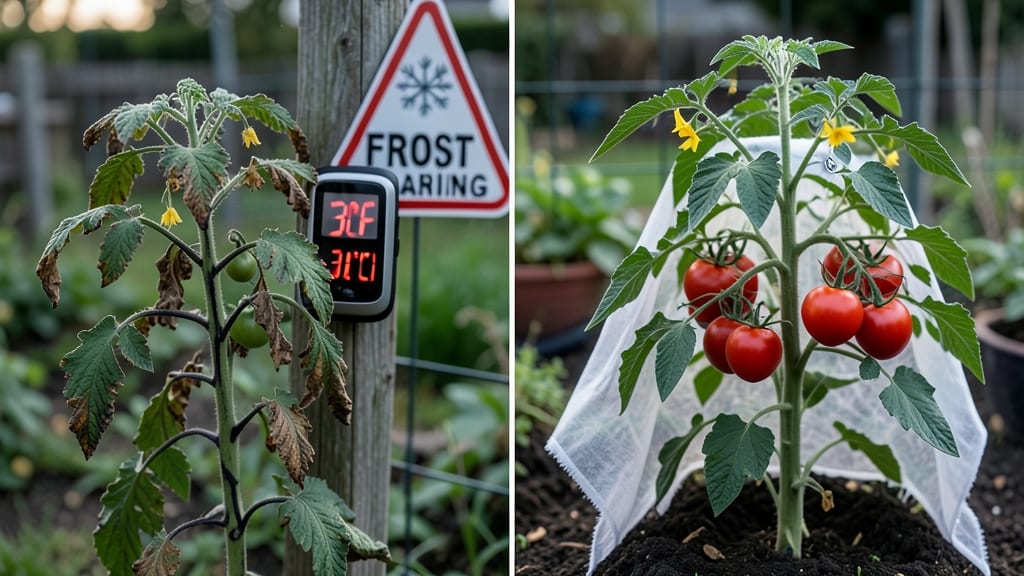
Tomato plants cannot survive frost, as temperatures below 32°F (0°C) cause irreversible damage to their tender stems and leaves, though some varieties may briefly tolerate light freezes with proper protection and recovery care.
Frost kills tomato plants by causing cell rupture in their delicate tissues, which is why even a light freeze can spell disaster for most varieties. 🌱 The stems are particularly vulnerable because they contain vascular bundles that transport water and nutrients—once damaged, the plant can't recover.
Seedlings are especially at risk, while mature plants might survive a brief dip below 32°F if protected with frost cloth or row covers, but prolonged exposure will still lead to irreversible harm.
What's interesting is how quickly damage occurs—sometimes within minutes of frost hitting the plants. The good news? Some cold-hardy tomato varieties like 'Siberian' or 'Cold Set' can withstand temperatures down to 28°F (-2°C) for short periods, but they still require careful monitoring.
If you live in a region with unpredictable cold snaps, planning your planting schedule and using protective measures can make all the difference.
💡 In This Article
- How Cold Can Tomato Plants Tolerate Before Frost Damage Occurs?
- Protecting and Reviving Tomato Plants After Frost Exposure
How cold can tomato plants tolerate before frost damage occurs?
Tomato plants begin suffering damage when temperatures drop below 50°F (10°C), but the real danger zone starts at 32°F (0°C)—the freezing point of water. At this threshold, ice crystals form inside plant cells, physically rupturing their delicate membranes.
The stems are particularly vulnerable because their vascular bundles (xylem and phloem) contain water that expands as it freezes, causing internal fractures that block nutrient flow. 🌱 This is why even a brief frost can kill seedlings within hours, while mature plants might survive a light freeze if conditions improve quickly.
Leaves are slightly more resilient than stems because their waxy cuticles provide some insulation, but they still suffer frost damage through a process called "blackening." When water inside leaf cells freezes, it disrupts photosynthesis and causes cell death, turning affected areas brown or black.
The damage spreads rapidly in prolonged cold—what starts as surface discoloration can become systemic within 24-48 hours, leading to wilting and eventual collapse. Interestingly, some varieties like 'Cold Set' tomatoes can tolerate 28°F (-2°C) for short periods because their thicker stems resist internal ice formation better.
Plant maturity plays a critical role in frost tolerance. Seedlings with tender, water-rich stems can't withstand temperatures below 35°F (2°C) for more than 30 minutes without severe damage.
In contrast, mature plants with thicker stems and more developed root systems might survive brief dips to 30°F (-1°C), especially if protected.
The key difference lies in their ability to regulate internal water content—mature plants can draw moisture from deeper soil layers, reducing the risk of cell rupture. 💧 This is why gardeners in marginal climates often delay planting tomatoes until after the last frost date, typically 2-3 weeks after the average 32°F (0°C) cutoff.
Even a light frost can trigger secondary stress responses that weaken tomato plants long-term. When cells rupture, the plant's immune system floods affected areas with defensive compounds, diverting energy from growth and fruit production.
This explains why frost-damaged plants often produce smaller yields or fail to recover even if temperatures rebound. The damage isn't always visible—some plants may appear fine above ground but have compromised roots, making them susceptible to disease or drought later in the season.
To put this into perspective, consider how frost compares to other temperature stresses. While tomatoes thrive in 70-85°F (21-29°C) ranges, they can handle brief dips to 50°F (10°C) without permanent harm. The danger escalates exponentially below 40°F (4°C), where metabolic processes slow dramatically.
At 32°F (0°C), the window for survival shrinks to mere minutes unless protective measures are in place.
This is why gardeners in frost-prone areas rely on tools like frost cloths or row covers—they create a 5-10°F (3-6°C) buffer that can mean the difference between life and death for tomato plants.