
Container Gardens
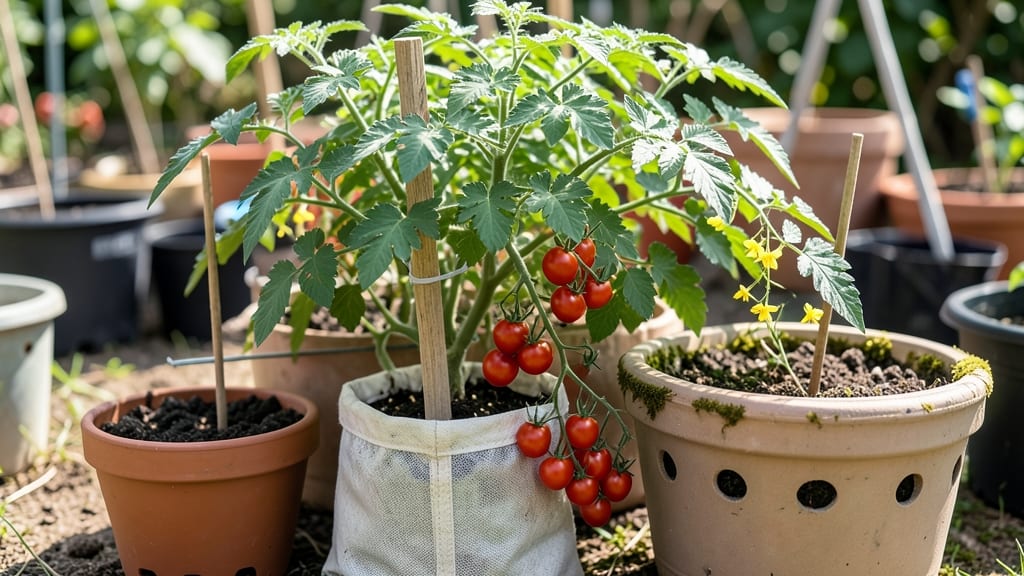
The right cherry tomato container size makes the difference between a puny plant and a bush bursting with sweet, bite-sized fruit. 🌱 I’ve watched tiny seedlings transform into prolific producers just by upgrading their pots—this isn’t luck, it’s science.
Root space, drainage, and pot material all play a role, and getting them right means more tomatoes without the backbreaking work of in-ground gardening.
Most compact cherry tomato varieties thrive in 5-gallon containers or larger, but don’t stop there—drainage holes are non-negotiable, and fabric grow bags or plastic pots with handles work better than decorative ceramic.
The key is balancing space for roots to spread while keeping the pot light enough to move when needed. I’ve even grown three cherry tomato plants in one 15-gallon container using a trellis, and the yield was shocking.
By the end of summer, you’ll be harvesting pint-sized tomatoes every 3-4 days, their bright red skins glistening under the sun.
The plants stay compact, the fruit stays sweet, and you avoid the common mistake of cramming too many plants into one pot—something that leads to crowded vines and poor airflow. This setup works for balconies, patios, or even sunny windowsills with the right light.
Whether you’re a first-timer or a seasoned container gardener, these principles apply. The best part? You’ll save money by skipping store-bought plants and starting your own from seed—just give them the right home, and they’ll repay you with a harvest that puts grocery store tomatoes to shame.
Let’s get those pots ready!
📚 In This Guide
- What you need
- Instructions
- Tips and common mistakes
- Wrapping up and next steps
What you need
- ● Container: Minimum 5-gallon size (11.4L) per plant for dwarf/cherry varieties (e.g., 'Tiny Tim,' 'Balcony Red').
- ● Larger 7-10 gallon (16.4-37.9L) for indeterminate types (e.g., 'Sweet Million').
- ● Material: Fabric grow bags, plastic pots with drainage, or wooden half-barrels (ensure holes for drainage!).
- ● Potting Mix: High-quality container mix (avoid garden soil—it compacts!). Look for blends with perlite, vermiculite, or coconut coir for aeration. 3-5 cubic feet per container.
- ● Drainage: Potting tray or saucer (to catch runoff).
- ○ 1-2 inches of gravel or broken pottery at the container’s bottom (optional but recommended).
- ● Fertilizer: Slow-release granular fertilizer (e.g., 10-10-10 or tomato-specific blend). 1-2 tbsp per plant mixed into soil.
- ● Liquid fertilizer (e.g., fish emulsion or seaweed extract) for mid-season feeding.
- ● Cherry Tomato Seedlings or Seeds: Dwarf/cherry tomato varieties (e.g., 'Tumbling Tom,' 'Micro Tom,' 'Sun Gold').
- ● 1-2 plants per 5-gallon container (or 1 per 7+ gallon).
- ● Support: Small tomato cage (4-6 ft tall) or Florida weave trellis for indeterminate varieties.
- ● Stakes or bamboo poles (for vining types).
- ● Tools: Trowel or small hand shovel.
- ● Watering can with a rose nozzle (for gentle watering).
- ● Pruning shears (for trimming suckers and dead leaves).
- ● Mulch: Straw or shredded leaves to retain moisture and suppress weeds.
- ● Self-watering system: A reservoir or drip irrigation kit for busy gardeners.
- ● Reflective mulch: Aluminum foil or white plastic to deter pests and boost pollination.
- ● Grow lights: If starting seeds indoors (LED or fluorescent, 12+ hours/day).
- ● Compost tea: For a natural boost of microbes and nutrients.
How to select and use the right cherry tomato container size
Perfecting container size is the secret to growing vigorous cherry tomatoes in limited spaces.
🪴 Step 1: Choose Containers 12-18 Inches Deep
Cherry tomato roots need at least 12 inches of depth to support heavy fruit production, but I always opt for 18-inch containers when possible. The extra space prevents root-binding, which stunts growth and reduces yields. Look for containers with multiple drainage holes—at least three—to prevent soggy soil that invites disease.
I use fabric grow bags because they allow roots to breathe and expand naturally, but rigid plastic or ceramic pots work too. Just ensure the diameter matches the depth: a 12-inch deep pot should be 12-15 inches wide to give roots room to spread. Too-narrow containers force roots to circle, creating weak stems that snap under fruit weight.
🌱 Step 2: Select Compact Varieties for Small Spaces
Not all cherry tomatoes thrive in containers. Look for determinate varieties like 'Tiny Tim,' 'Balcony Red,' or 'Patio Princess'—these stay under 2 feet tall and produce abundant fruit without sprawling. I avoid indeterminate types like 'Sungold' in small pots because their vines grow 6-10 feet and need trellising plus frequent pruning.
Check seed packets for "container-friendly" labels. These varieties have been bred to handle root constraints while still delivering 100+ tomatoes per plant. If you must grow indeterminates, choose dwarf types or be prepared to prune aggressively and provide a sturdy trellis. The key is matching plant vigor to container size—overcrowding leads to poor air circulation and fungal issues.
☀️ Step 3: Provide Support and Optimal Light
Even compact cherry tomatoes need support for heavy fruit. Install a 5-foot tall cage or trellis at planting to give vines something to climb immediately. I use tomato clips to secure main stems to the trellis as they grow—this prevents wind damage and makes harvesting easier. Without support, branches break under the weight of clusters, dropping fruit onto the soil where it rots.
Place containers in full sun (6+ hours daily), but protect from afternoon heat if temperatures exceed 90°F. Move pots to partial shade during peak heat to prevent sunscald on leaves and blossom drop. You'll know light is sufficient when leaves are deep green and new growth appears within 7-10 days after planting.
💧 Step 4: Water and Fertilize for Container Success
Containers dry out faster than garden beds, so water when the top inch of soil feels dry. I use a moisture meter to avoid guesswork—consistent moisture prevents blossom end rot and cracking fruit. Water deeply until it runs out the drainage holes, then let excess drain completely. Overwatering in containers leads to root rot within 3-5 days.
Feed plants every 2 weeks with a balanced liquid fertilizer (10-10-10) diluted to half strength. I switch to a high-phosphorus formula (5-10-5) when flowers appear to encourage fruiting. Avoid over-fertilizing—salts build up in containers, burning roots. Flush the soil monthly by watering with plain water until it runs clear from the drainage holes.
✂️ Step 5: Prune and Harvest for Maximum Yield
Pinch off suckers (the shoots that grow between the main stem and branches) when they're 1-2 inches long. This redirects energy to fruit production instead of leaf growth. I also remove the bottom leaves that touch the soil to improve air circulation and reduce disease risk. Prune in the morning so wounds have all day to heal before evening moisture sets in.
Harvest cherries when they're fully colored but still firm—this encourages more production. Pick clusters every 2-3 days during peak season to prevent overloading the plant. You'll know you're harvesting at the right time when the fruit pops off the vine easily with a gentle twist. Store picked tomatoes in the fridge for up to 1 week to maintain freshness.
Tips & tricks for perfect cherry tomato container setups
Between us, container size is where most growers go wrong—here's what nobody tells you about maximizing your cherry tomato harvest in limited spaces.
Root Space Matters: The 12-18 inch depth recommendation isn't arbitrary—it's about preventing root-binding. I've seen plants in 10-inch pots produce fruit, but stems become weak and snap under cluster weight. For the 18-inch containers, aim for a 1:1 depth-to-width ratio. That means a 15-inch diameter pot for maximum root expansion. Too-narrow containers force roots to spiral, creating a tangled mess that chokes growth. Think of it like giving your plant's roots room to breathe horizontally while growing vertically.
Variety Selection is Non-Negotiable: Determinate varieties like 'Tiny Tim' are bred specifically for containers—they naturally stay compact and produce fruit clusters at the right height for easy harvesting. I once tried growing 'Sungold' in a 15-inch pot and ended up with a 6-foot vine that needed constant pruning. The lesson? Always match plant vigor to container size. If you're set on indeterminates, choose dwarf types or be prepared to dedicate serious time to pruning and trellising every 2-3 days during peak growth.
Support Systems Save Sanity: That 5-foot tall cage in Step 3 isn't just decorative—it's essential for preventing branch breakage. I've seen tomato clusters weighing over 2 pounds on a single stem. Install your support structure at planting time, not after the plant starts growing. Use tomato clips to gently secure main stems to the trellis every 6-8 inches as they grow. This creates a natural framework that prevents wind damage and makes harvesting a breeze. Without support, you'll end up with fruit dropping onto the soil where it rots within 24 hours.
Heat Management is Critical: The 90°F threshold isn't just a random number—it's when tomato plants start experiencing heat stress. When temperatures climb above this point, move containers to partial shade during afternoon hours. You'll notice leaves start curling and flowers dropping within hours of exposure. I've found that even 1-2 hours of afternoon shade can prevent blossom drop and maintain consistent fruiting. Consider using shade cloth (30-50% coverage) during peak summer months for containers on patios or balconies.
Pro Tips for Cherry Tomato Container Size
- Between us, container size is where most growers go wrong—here's what nobody tells you about maximizing your cherry tomato harvest in limited spaces.
- Root Space Matters: The 12-18 inch depth recommendation isn't arbitrary—it's about preventing root-binding.
- Variety Selection is Non-Negotiable: Determinate varieties like 'Tiny Tim' are bred specifically for containers—they naturally stay compact and produce fruit clusters at the right height for easy harvesting.
Frequently asked questions
Got questions about growing cherry tomatoes in containers?
You’re not alone! Here are some of the most common concerns—and their practical solutions—to help you grow a bountiful harvest, even in limited space.
What’s the ideal cherry tomato container size for small spaces?
For cherry tomatoes, aim for a minimum of 5-gallon containers (12–18 inches deep). Smaller pots (like 1-gallon) may work for tiny varieties (e.g., 'Tiny Tim'), but most need room for roots and support. Larger containers (7–10 gallons) improve stability and yield, especially for indeterminate types.
How long does it take for cherry tomatoes to grow in containers?
From seed, expect 60–70 days to first harvest, depending on the variety. Transplants (started indoors) may fruit in 4–6 weeks after planting. Pro tip: Use warm soil (70°F+) and consistent watering to speed up growth!
Can I grow cherry tomatoes in hanging baskets or vertical planters?
Hanging baskets
(10+ inches deep) work for dwarf varieties like 'Tumbling Tom,' while vertical planters (like fabric grow bags) save space. Ensure drainage holes are present and use lightweight potting mix. Trellis or cage support is a must to prevent sprawling.
Why aren’t my cherry tomatoes ripening in their container?
Common culprits: insufficient sunlight (6–8+ hours daily), overcrowding, or nutrient deficiencies. Check soil moisture (containers dry faster!) and fertilize weekly with a balanced feed. If temps drop below 55°F at night, move containers to a warmer spot or use row covers.
What’s the best potting mix for cherry tomatoes in containers?
Use a lightweight, well-draining mix like 60% potting soil + 30% perlite/vermiculite + 10% compost. Avoid garden soil—it compacts and retains too much moisture. Add a slow-release fertilizer (like osmocote) at planting for steady nutrients. Bonus: Mix in worm castings for extra micronutrients!
Can I reuse the same container for cherry tomatoes every year?
Yes, but sanitize it first! Scrub with a 10% bleach solution (or soapy water) to kill pests/diseases. Replace old soil completely—it depletes nutrients and may harbor pathogens. If reusing, add fresh compost to replenish organic matter.
Wrapping up and next steps
Choosing the right cherry tomato container size can transform even the tiniest balcony or patio into a thriving garden oasis! 🌱 Whether you opt for a 5-gallon bucket for a single plant or a 10-gallon planter for a small cluster, compact varieties like 'Tiny Tim' or 'Micro Tom' prove that big yields aren’t reserved for sprawling spaces.
With the right setup—well-draining soil, proper sunlight, and regular care—you’ll be enjoying sweet, homegrown cherry tomatoes in no time.
Ready to get growing? Start by selecting your favorite compact variety and grab a container that fits your space. Then, dive into planting—your future harvest (and bragging rights!) will thank you. Happy gardening! 🌿