
Plants
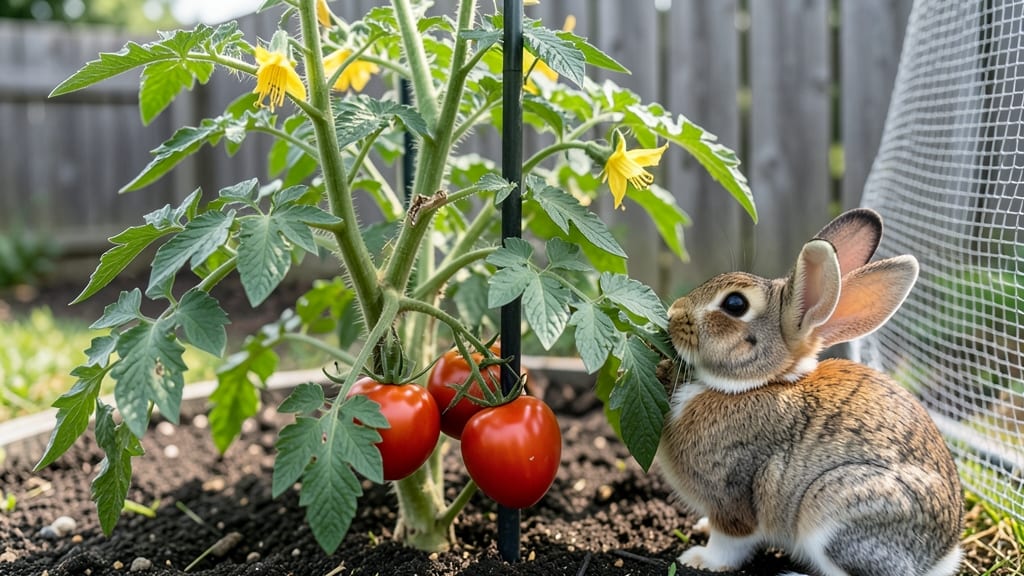
Bunnies do eat tomato plants voraciously, attacking leaves, stems, and even fruit, which can completely wipe out young plants and slash your garden's productivity. Their attraction comes from the plants' soft growth and high water content.
Tomato plants are like rabbit buffets because of their tender, water-rich growth—especially the young shoots and leaves. 🌱 Rabbits prefer these over woody plants because they're easier to digest, and the high moisture content makes them extra appealing during dry seasons.
Unlike some garden pests, rabbits don't just nibble; they can strip entire plants in a single night, leaving your garden looking like a war zone.
What makes this worse is their seasonal behavior. When food is scarce in late winter or early spring, rabbits become even more aggressive about finding fresh greens.
Even established tomato plants aren't safe—they'll go after the fruit when it's ripe, turning your harvest into a bunny snack instead of dinner.
💡 In This Article
- Why Rabbits Devour Tomato Plants: Plant Biology and Bunny Behavior
- Effective Rabbit-Proofing Methods for Tomato Gardens
Why rabbits devour tomato plants: plant biology and bunny behavior
Tomato plants become rabbit magnets because of their high moisture content and soft, nutrient-rich foliage. Rabbits are herbivores with a digestive system optimized for fibrous, water-rich plants—tomatoes provide both.
The young leaves and stems contain up to 90% water and 3-5% protein, making them an irresistible snack compared to drier garden plants like rosemary or lavender, which have only 10-20% moisture.
The real damage happens during active growth phases. When tomato plants are 6-12 inches tall, their tender shoots are most vulnerable.
Rabbits use their 28 sharpened front teeth to shear through stems cleanly, often consuming entire seedlings in minutes. 🌱 Even mature plants suffer when rabbits target the fruit, especially when tomatoes ripen in late summer—rabbits prefer the green, watery fruit over fully ripe ones, which become tougher and less appealing.
Seasonal patterns amplify the problem. In spring and fall, when new tomato growth emerges, rabbits become 2-3 times more aggressive due to food scarcity. Their natural foraging behavior—crepuscular (active at dawn/dusk)—means they strike when gardeners are least likely to notice.
Unlike deer, rabbits don't just graze; they methodically strip plants, leaving behind jagged, uneven bites that distinguish their work from other pests.
Contrast this with rabbit-resistant plants like marigolds or onions. These contain alkaloids or sulfur compounds that rabbits avoid, while tomatoes lack these natural deterrents.
The smooth, broad leaves of tomato plants also make them easier to chew than spiky or fibrous alternatives, giving rabbits a high calorie-to-effort ratio—a key factor in their foraging decisions.
What most gardeners overlook is the habitat connection. Rabbits prefer areas with dense ground cover (like grass or mulch) where they can hide while feeding. A well-maintained tomato bed with bare soil or gravel mulch reduces their comfort level, making them more likely to move on.
This behavior explains why raised beds often see less damage—they disrupt the rabbit's preferred hiding spots.
Understanding these biological and behavioral triggers is the first step in protecting your tomatoes. The key isn't just to repel rabbits, but to remove the incentives—whether through plant selection, habitat modification, or strategic timing of planting. 💡