
Companion Plants
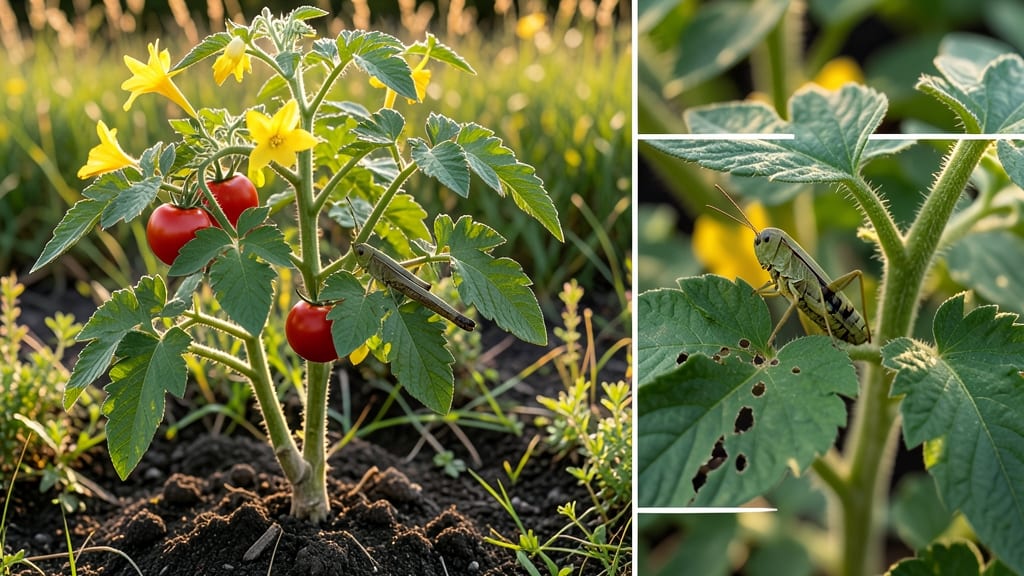
Grasshoppers do eat tomato plants, chewing through leaves, stems, and even fruit, which causes jagged edges and stunted plant growth. These pests thrive during hot, dry spells when their natural food sources dwindle.
Grasshoppers are particularly aggressive when temperatures rise above 85°F, as the heat accelerates their metabolism and makes them more voracious. 🔥 Their strong chewing mouthparts can strip a tomato plant bare in just a few days, leaving behind a skeleton of stems and veins.
Unlike many garden pests, they don’t just nibble—they devour entire sections, which can lead to reduced yields and even plant death if the infestation isn’t controlled early.
What makes this worse is their lifecycle: nymphs (young grasshoppers) are just as destructive as adults, often hiding in garden debris or under plants where they’re hard to spot. Once they mature, they become even more mobile, jumping from plant to plant with ease.
This means if you notice damage on one tomato plant, there’s likely more trouble nearby.
💡 In This Article
- How Grasshoppers Damage Tomato Plants
- Natural and Chemical Control Methods for Grasshopper Infestations
How grasshoppers damage tomato plants
Grasshoppers attack tomato plants using their powerful mandibles—chewing mouthparts designed to slice through plant tissue with precision.
They prefer young, tender leaves first, creating irregular, jagged holes that contrast sharply with the smooth edges of healthy foliage. 🔥 The damage isn't just cosmetic: when grasshoppers feed on stems, they can sever vascular bundles, disrupting the plant's ability to transport water and nutrients.
This often leads to wilting even when soil moisture appears adequate.
The lifecycle of grasshoppers makes them particularly problematic for tomato crops. Eggs laid in soil hatch into nymphs that immediately begin feeding, molting 5-6 times before reaching adulthood. Each stage is equally destructive—nymphs are often overlooked because they resemble tiny, wingless adults, but they can cause just as much damage.
Adults, however, become more mobile and can jump 20 times their body length, making them harder to control once established in a garden.
Drought conditions accelerate grasshopper activity by 30-50%, as dry soil reduces their natural predators like birds and toads while concentrating their food sources. When temperatures exceed 85°F, their metabolism spikes, causing them to consume 2-3 times more plant material daily.
This explains why tomato plants in arid climates or during heatwaves often show sudden, severe defoliation overnight.
What sets grasshoppers apart from other tomato pests is their indiscriminate feeding pattern. Unlike aphids that target specific plant parts, grasshoppers will devour leaves, stems, flowers, and even unripe fruit.
When they feed on blossoms, they destroy pollen, leading to poor fruit set. On fruit, their chewing leaves behind ragged, uneven scars that make produce unsellable and susceptible to rot.
Identifying grasshopper damage early is key. Look for these telltale signs: skeletonized leaves (veins remain intact), chewed petioles (leaf stems), and black, pellet-like droppings on plants. Unlike deer or rabbit damage, grasshopper feeding occurs at ground level and often progresses upward as the infestation grows.
The most vulnerable tomato varieties are those with delicate foliage, like 'Sweet 100' or 'Cherry Tomatoes', which can be completely defoliated in 3-5 days under heavy pressure. Even robust varieties like 'Beefsteak' suffer when grasshoppers target the main stems, leading to 20-40% yield losses if untreated.