
Size
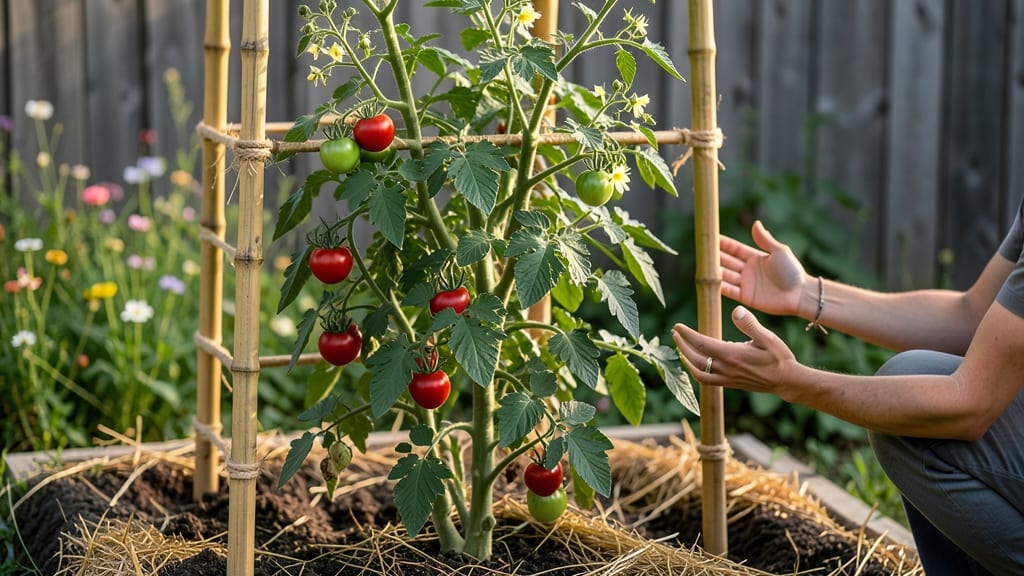
Tomato plants grow anywhere from 1 foot to over 12 feet tall, depending on the variety and how you train them 🍅 — and knowing these ranges is the difference between a crowded garden and a thriving one.
If you’ve ever imagined your backyard as a tomato jungle, you’re not alone. But without the right space plan, those towering vines can turn into a tangled mess.
The truth is, some varieties stay neatly contained, while others climb like they’re reaching for the sky — and the choice affects everything from your fence to your harvest.
Determinate types like 'Roma' stay compact, rarely exceeding 4 feet, while indeterminate varieties such as 'Sungold' can stretch 10+ feet if left unchecked. That’s why pruning and support structures aren’t just optional — they’re essential for managing growth and maximizing your garden’s potential.
In this guide, I’ll break down the height ranges by variety, share proven techniques to control size naturally, and help you avoid common mistakes that lead to overgrowth or stunted plants. Ready to turn your space into the perfect tomato haven?


Tomato plant height ranges by variety type (indeterminate vs determinate)
When planning your garden, one of the first questions I ask myself is: how big do tomato plants grow? The answer depends entirely on whether you're growing indeterminate or determinate varieties.
These two types have completely different growth habits that will change how you design your space, choose supports, and even harvest your tomatoes. Indeterminate tomatoes keep growing taller all season, while determinate types stay compact and bushy.
For example, my Sungold cherry tomatoes (indeterminate) climbed my 6-foot trellis last summer, producing fruit all the way to the top. Meanwhile, my Roma tomatoes (determinate) stayed neatly within a 3-foot radius without needing any support.
Understanding these differences helps me avoid overcrowding and ensures every plant gets the care it needs to thrive.
Let's break down the key differences using this comparison table to visualize how these growth habits translate into real-world space requirements:
| Variety Type | Height Range | Spread | Growth Habit | Support Needed | Example Varieties |
|---|---|---|---|---|---|
| Indeterminate | 6-12+ ft | 2-4 ft | Vining, continuous growth | Trellis, cage, or stake | Sungold, Brandywine, Cherry Roma |
| Determinate | 3-5 ft | 1-3 ft | Bushy, stops growing at maturity | Cage or minimal stake | Roma, Celebrity, Bush Early Girl |
| Dwarf/Compact | 1-3 ft | 1-2 ft | Bushy, slow-growing | Container or minimal support | Tiny Tim, Patio, Micro Tom |
The indeterminate varieties are the sky-scrapers of the tomato world, often reaching 10-12 feet with proper care. I've seen some even exceed 15 feet in ideal conditions! These plants produce fruit continuously throughout the growing season, which is why they need strong support structures like trellises or cages.
Without support, their vines can sprawl across your garden, shading other plants and making harvests difficult.
On the other hand, determinate tomatoes grow to a predictable height and then stop. They're perfect for gardeners with limited space or those who prefer a more low-maintenance approach. These plants produce most of their fruit in a single flush, which means you'll get a big harvest all at once.
This can be great for canning or making sauces, but it requires careful planning to store or process the tomatoes before they spoil.
If you're working with container gardening, dwarf varieties are your best friends. Plants like Tiny Tim or Patio stay under 3 feet tall and are perfect for balconies or patios.
I've successfully grown these in 5-gallon buckets on my apartment balcony, producing enough tomatoes for my family of four. The key is choosing the right container size and providing adequate drainage to prevent root rot.
Another factor that affects how big your tomato plants grow is your pruning habits. Indeterminate varieties benefit greatly from regular pruning to remove suckers (the small shoots that grow between the stem and branches).
When I prune these plants, I typically aim to keep them at a manageable height of 6-8 feet, which makes harvesting easier and improves air circulation to prevent diseases like blight. Determinate tomatoes usually don't need pruning, but you might remove a few lower leaves to improve airflow.
Don't forget that soil quality and fertilization play significant roles in plant size. Rich, well-draining soil with plenty of organic matter encourages healthy growth, while poor soil can lead to stunted plants.
I always add a balanced fertilizer (like 5-10-10) at planting time and then again when the plants start flowering. Over-fertilizing with nitrogen can lead to excessive leaf growth at the expense of fruit production, so it's important to follow the recommended amounts.
When planning your garden layout, consider the mature size of your tomato plants and give them enough space to thrive. Indeterminate varieties need at least 3-4 feet of space between plants, while determinate types can often be spaced 2-3 feet apart.
In my raised beds, I typically plant 2-3 determinate plants per square foot, while indeterminate varieties get their own dedicated space along the trellis.
Remember that these are general guidelines, and individual plants may vary based on your growing conditions. Factors like climate, daylight hours, and water availability can all influence how big your tomato plants grow.
Pay attention to your plants throughout the season and be ready to adjust your care routine as needed to help them reach their full potential.
How to control tomato plant size naturally (pruning, training, and variety selection)
Managing your tomato plant's size isn't just about aesthetics—it's about maximizing yield while keeping your garden organized.
Whether you're working with a small balcony container or a sprawling backyard plot, natural methods like pruning, training, and smart variety selection can transform even the most unruly tomato plants into productive, space-efficient powerhouses.
For me, the key moment came when I planted a 6-foot indeterminate 'Sungold' in my 5-gallon pot—it nearly toppled over! That's when I learned how critical training techniques and pruning discipline are for keeping vines manageable without sacrificing tomatoes.
Let's explore how to do this naturally, without harsh chemicals or extreme measures.
🌱 numbered highlights
- 1. Prune indeterminate types by removing suckers (shoots between stem and branches) to redirect energy to fruit production.
- 2. Trellis vining varieties vertically to save space and improve air circulation, reducing disease risk.
- 3. Choose dwarf varieties like 'Tiny Tim' (1-2 ft) for containers or 'Patio' (3-4 ft) for small gardens.
- 4. Limit determinate plants to 3 main stems for better airflow and larger fruit production.
- 5. Mulch heavily to suppress weeds and retain moisture, which slows excessive vine growth.
When it comes to pruning indeterminate varieties, I always start by identifying the main stem and primary branches. These are the powerhouses that will bear the most fruit. The suckers—those little shoots that sprout in the leaf axils—are the culprits behind unchecked growth.
Pinching them off every 1-2 weeks keeps the plant focused on producing tomatoes rather than endless vines.
For container gardening, selecting the right variety makes all the difference. My go-to dwarf is 'Tiny Tim', which tops out at just 18-24 inches and thrives in 5-gallon pots. This variety produces cherry tomatoes all season long without requiring a trellis system.
Even better, its compact size means I can grow 3-4 plants in the space that would fit just one standard variety.
If vertical space is your goal, trellising is a game-changer. I use heavy-duty tomato cages or wooden stakes for indeterminate varieties, tying the main stem to the support every 12 inches as it grows.
This not only saves space but also improves fruit quality by keeping tomatoes off the ground and reducing disease risk. Plus, the upward growth creates a stunning vertical display in my garden.
Remember, the goal isn't to stunt your tomato plants—it's to guide their growth for maximum productivity in the space you have. Whether you're pruning aggressively, choosing dwarf varieties, or training vines upward, these natural methods will help you harvest more tomatoes with less hassle.
The best part? You'll end up with a garden that's both beautiful and bountiful—no overgrowth in sight! 🌿