
Planting
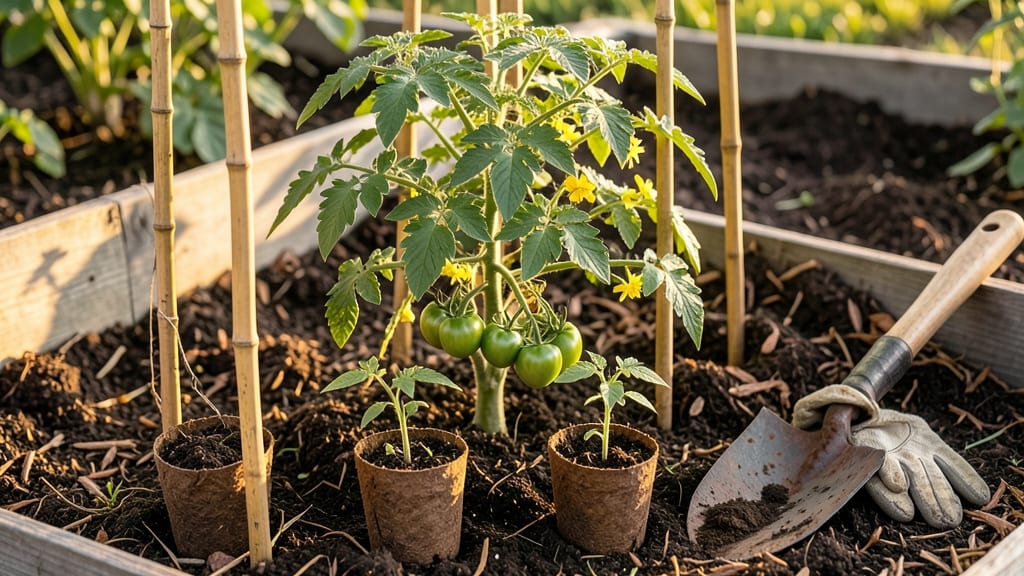
Determining how many tomato plants to plant depends on your garden space and tomato variety: dwarf types fit 18–24 inches apart, medium plants need 24–36 inches, and sprawling vining varieties require 36–48 inches. A 10x10-foot garden comfortably holds 4–9 plants, while larger areas can support more based on spacing needs.
Tomato plant spacing isn't just about fitting more plants—it's about giving each one room to thrive. 🌱 Dwarf varieties stay compact, so you can squeeze more into tight spaces, while indeterminate types need extra elbow room to sprawl.
I always calculate based on mature size: a single indeterminate plant can reach 6–8 feet tall, so crowding them leads to poor airflow and disease risks. For raised beds, I recommend arranging plants in a grid pattern to maximize sunlight exposure for all.
Garden size matters too: a 4x4-foot raised bed might fit just 4 dwarf plants, while a full backyard could support 20+ if you space them properly. 🌿 The key is balancing density with airflow—too close, and you'll deal with blight; too far apart, and you waste valuable growing space.
Start with your garden's dimensions, then work backward from your tomato varieties' mature sizes.
💡 In This Article
- Tomato Plant Spacing Rules by Variety Type
- Calculating Tomato Plant Density for Small vs Large Gardens
Tomato plant spacing rules by variety type
Proper spacing prevents root competition and fungal diseases by allowing airflow to circulate around leaves. Dwarf varieties like 'Tiny Tim' or 'Patio Princess' stay under 2 feet tall with bushy growth, so 18–24 inches apart gives them enough room while maximizing garden density.
Their compact size makes them ideal for containers or small raised beds where space is limited. 🌱 What most gardeners miss is that even dwarf varieties need this spacing to prevent overcrowding—packing them too close leads to stunted growth and poor fruit production.
Medium-height bush tomatoes (like 'Better Boy' or 'Celebrity') reach 3–4 feet tall and spread 2–3 feet wide, requiring 24–36 inches apart in all directions. This spacing ensures each plant gets 6–10 square feet of growing space, which is critical for root development and preventing soil-borne diseases like early blight.
The extra room also lets you prune suckers more effectively, directing energy toward fruit production rather than leafy growth.
Indeterminate varieties (such as 'Sungold' or 'Brandywine') are the most space-hungry, growing 6–10 feet tall with sprawling vines that can stretch 4–6 feet wide if unchecked. Spacing them 36–48 inches apart gives their roots room to explore deeper soil layers and their vines space to climb trellises or cages.
Without proper spacing, these plants become tangled messes with poor airflow, creating prime conditions for fungal infections like powdery mildew. 🌿 The key is balancing their sprawling nature with your garden's layout—trellises can help, but they still need that initial spacing to establish strong root systems.
Here's what happens when you ignore spacing: crowded plants develop weak stems that snap under fruit weight, leaves stay damp longer (promoting disease), and roots compete for nutrients, leading to smaller harvests.
I've seen gardeners cram 10 indeterminate plants into a 4x8-foot raised bed—they end up with fewer, smaller tomatoes and more pests. The rule of thumb is to visualize each plant's mature size and add 12–24 inches of buffer space around it.
Consider this comparison: a single 'Sungold' indeterminate plant in 36 inches of space can produce 20–30 pounds of fruit per season, while the same plant crowded into 18 inches might yield only 5–10 pounds.
The difference comes down to photosynthesis efficiency—more space means more leaves exposed to sunlight, which translates directly to fruit production. 🌞 For container growers, this means choosing dwarf varieties or using large pots (at least 12–15 gallons) to compensate for limited ground space.