
Plants
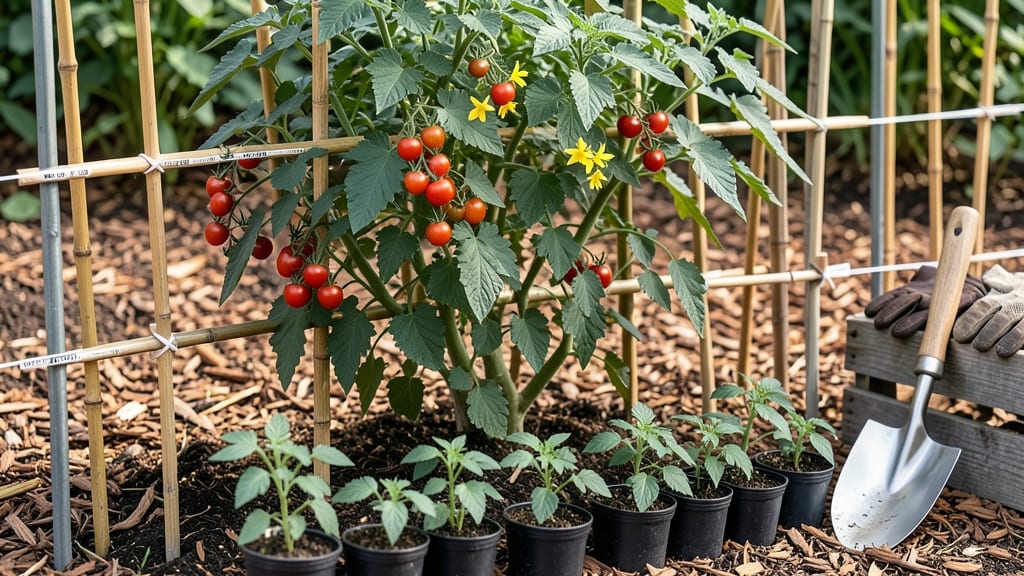
Proper spacing for cherry tomato plants 🍅 is the secret weapon behind a garden bursting with sweet, abundant fruit—not just a few sad clusters.
Struggling to get the most out of your cherry tomato harvest? The secret isn’t just sunlight or soil—it’s in how you space them. Poor spacing leads to crowded plants, disease risks, and tiny fruits, while the right layout transforms your garden into a high-yield powerhouse.
Most gardeners overlook spacing, but it directly impacts airflow, sunlight access, and even disease prevention. With the right distance—whether in containers, raised beds, or in-ground—you’ll maximize every square foot and avoid the heartbreak of blight or stunted growth.
In this guide, I’ll walk you through the exact spacing rules for indeterminate vs. determinate varieties, how to trellis for vertical growth, and the 3-step layout that keeps your plants thriving all season long.
Optimal spacing for cherry tomato plants by growth type
Getting the spacing right for your cherry tomato plants can mean the difference between a bountiful harvest and a struggling garden. These compact but prolific plants need room to thrive—whether you're growing indeterminate vines that climb or determinate bushes that stay compact.
The right spacing ensures maximum sunlight exposure, proper airflow, and reduced disease risk, all of which directly impact fruit production. Let’s break down the science-backed measurements for each type.
First, understand that indeterminate cherry tomatoes grow continuously throughout the season, often reaching 6 feet or taller if supported. These varieties need wide spacing to accommodate their sprawling habit and heavy fruit loads.
On the other hand, determinate varieties grow to a fixed size (usually 3-4 feet tall) and produce fruit all at once, requiring tighter spacing but still enough room for airflow. Both types benefit from vertical support, which saves space and improves yield.
Poor spacing leads to crowded foliage, which traps moisture and invites fungal diseases like early blight and powdery mildew. Overcrowded plants also compete for nutrients and water, resulting in smaller fruits and weaker vines. By following the guidelines below, you’ll create an environment where your cherry tomatoes can thrive and produce abundantly.
| Growth Type | Spacing (In-Ground) | Spacing (Containers) | Vertical Support Needed? | Notes |
|---|---|---|---|---|
| Indeterminate | 18-24 inches apart | 1 plant per 5-gallon container (or larger) | Yes (trellis or cage) | Grows continuously; prune suckers for airflow |
| Determinate | 12-18 inches apart | 1 plant per 3-5 gallon container | Optional (cage or stake) | Bushy growth; harvest all at once |
| Both Types (Raised Beds) | 12-18 inches apart (rows 24-36 inches apart) | N/A | Recommended for indeterminate | Increases airflow; reduces soil-borne diseases |
For indeterminate cherry tomatoes, spacing them 18-24 inches apart in the ground gives them room to sprawl and climb. If you’re using containers, opt for 5-gallon pots or larger to accommodate their deep root systems.
These varieties require vertical support, like a trellis or sturdy cage, to keep them off the ground and prevent soil-borne diseases. Without support, they’ll flop and become vulnerable to rot.
Determinate varieties, which grow in compact bushes, can handle closer spacing (12-18 inches apart). They’re ideal for small gardens or containers as long as you use 3-5 gallon pots.
While they don’t require vertical support, adding a small cage or stake can help prevent wind damage and make harvesting easier. These plants produce fruit all at once, so spacing them properly ensures even ripening and less competition for resources.
If you’re growing in raised beds, adjust your spacing to 12-18 inches apart with rows spaced 24-36 inches apart. This layout improves air circulation and reduces the risk of soil-borne diseases like blight.
Raised beds also allow you to customize soil conditions, which cherry tomatoes love—aim for well-draining, nutrient-rich soil with a pH of 6.0-6.8. Mulching around the base of plants helps retain moisture and suppress weeds, further boosting yield.
One common mistake is overestimating space in containers. A 5-gallon pot might seem large, but indeterminate varieties can outgrow it quickly. If you’re short on space, consider dwarf indeterminate varieties, which stay under 4 feet tall and can thrive in 3-gallon containers.
Always ensure containers have drainage holes to prevent root rot, a silent killer of tomato plants.
Finally, don’t forget about sunlight exposure. Cherry tomatoes need 6-8 hours of direct sun daily to produce fruit. If your garden is shady, prioritize spacing to ensure no plants are overshadowed.
You can also stagger planting times to extend your harvest season, giving each plant its turn in the sunniest spot. With the right spacing, your cherry tomatoes will reward you with juicy, abundant fruit all season long.
Transforming limited garden space into a cherry tomato powerhouse starts with smart planning. The key is maximizing vertical growth and airflow while ensuring every plant gets its fair share of sunlight. I’ve found that combining trellising, companion planting, and staggered planting can triple your yield in just a few square feet. Let’s break down my proven 3-step layout strategy that works for containers, raised beds, or square-foot gardens. First, understand that cherry tomato varieties fall into two main categories: determinate (bush-type) and indeterminate (vining). Determinate plants stay compact, while indeterminate varieties climb indefinitely. My strategy adapts to both, but I’ll focus on the high-yielding indeterminate types since they produce continuously. For these, vertical space becomes your best friend—think of it as turning your garden into a cherry tomato jungle gym! Install sturdy trellises (5-6 ft tall) at 18-inch spacing for indeterminate varieties. Use cattle panels or wooden stakes with twine. For containers, opt for spiral trellises or tomato cages with 2-3 ft diameter. This creates a 3D growing space where plants climb upward instead of sprawling. Place plants in a checkerboard pattern with 12-18 inches between each plant (adjust for determinate types: 12 inches). For raised beds, use 4 plants per square foot (16-inch spacing). In containers, limit to 1-2 plants per 12-inch pot. Stagger rows by 18 inches to optimize sunlight penetration and airflow at all levels. Interplant basil or marigolds between tomato rows to repel pests and improve growth. For continuous harvests, stagger plantings every 2-3 weeks (spring) or 3-4 weeks (fall). This ensures new plants fill gaps as older ones produce, extending your harvest season by 4-6 weeks. Pro tip: Use reflective mulch (like white plastic) under indeterminate varieties to bounce extra sunlight onto lower leaves. I’ve seen this boost fruit production by 20-30% in shady corners. Pair this with pruning to remove suckers (side shoots) and encourage upward growth—this keeps energy focused on fruit production rather than leafy vines. Don’t forget to rotate your trellis system annually. Cherry tomatoes are heavy feeders, and soil depletion happens fast. After harvest, remove old plants and add compost or aged manure to replenish nutrients. I like to mark my trellis locations with stakes so I remember where to plant next season’s tomatoes. With this layout, you’ll turn even a 4x4 ft raised bed into a cherry tomato factory capable of producing 50+ pounds of fruit per season. The secret? Vertical thinking and strategic spacing—not just throwing seeds into the dirt and hoping for the best. 🌱3-Step layout strategy for maximum yield in small spaces