
How To
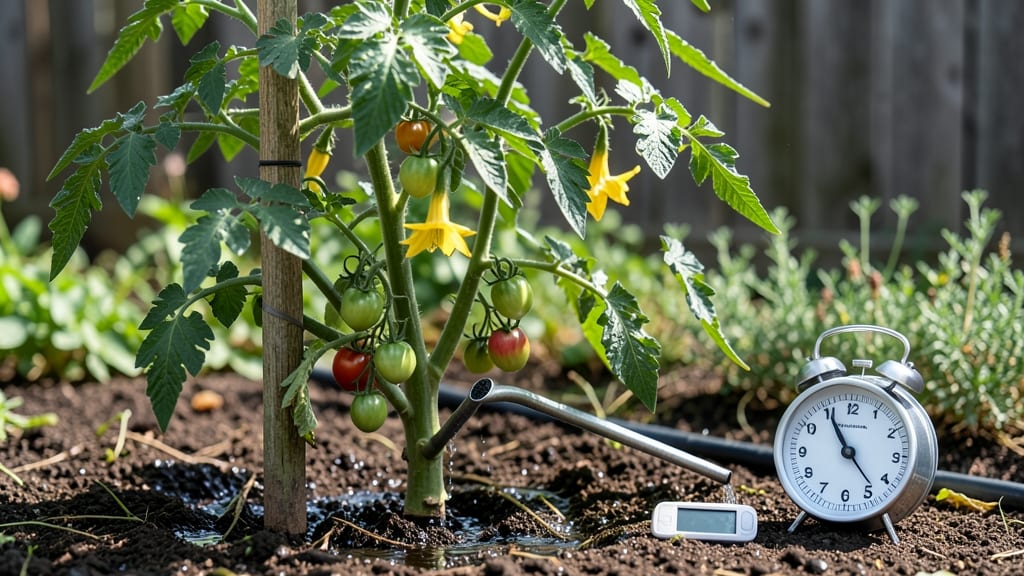
Watering a tomato plant the right way means giving it 1 to 1.5 inches of water per week—consistently, deeply, and at the right time to avoid stress or disease.
Picture this: you’ve spent weeks nurturing your 🍅 seedlings, only to watch them wilt or rot because you either drowned them or left them parched. The truth is, tomatoes are finicky about moisture—they need enough to grow but hate soggy roots.
In this guide, I’ll break down the exact watering schedule by growth stage, how to check soil moisture like a pro, and why morning watering beats evening every time. You’ll also learn how to adjust for containers, heatwaves, and even your local climate.
By the end, you’ll have a foolproof system to keep your plants thriving from seedling to harvest—no guesswork, just science-backed results.


Tomato plant watering schedule by growth stage: deep science explained
Tomatoes are thirsty plants, but their water needs change dramatically as they grow. Seedlings need gentle hydration, while fruiting plants demand deep, consistent moisture. The key? Understanding soil moisture targets and adjusting for your climate—whether you're in a hot desert or humid jungle.
Let’s break it down by stage so you never guess again.
Most gardeners fail at watering tomatoes because they treat all stages the same. Overwatering seedlings causes rot, while underwatering fruiting plants leads to cracked tomatoes. The solution?
A stage-specific schedule that matches your plant’s needs. Below, I’ll share the exact watering frequency, soil moisture goals, and climate adjustments for each phase.
Why does this matter? Tomatoes absorb water through their roots, but their root zone expansion changes as they grow. A 1-inch seedling has tiny roots, while a 6-foot plant needs roots to reach 12+ inches deep. Your watering must adapt—or your plants will suffer.
For seedlings, focus on light, frequent watering to prevent root rot. Use a spray bottle or gentle watering can to keep the top 1 inch of soil moist. In humid climates, reduce frequency to every 4 days—excess moisture causes fungal diseases like damping off.
Pro tip: Use a humidity dome for the first week to stabilize moisture.
When your tomato plants hit the vegetative stage (3-6 weeks), increase water to 1-1.5 gallons every 3-4 days. Aim for 2-3 inches of soil moisture—stick your finger in the soil.
If it feels dry 1 inch down, water again. Desert gardeners should water daily in peak heat, while rainy-season growers can skip a day to avoid waterlogging.
During flowering (7-9 weeks), tomatoes need deep, consistent watering to prevent blossom drop. Water every 2-3 days, ensuring the root zone (3-4 inches deep) stays moist. Morning watering is critical—it reduces fungal spores that thrive in damp evening soil.
If you see drooping leaves that don’t perk up after watering, your plant is overheated, not just thirsty.
The fruiting stage (10+ weeks) demands the most water—1.5-2 gallons every 1-2 days. Tomatoes need 4+ inches of soil moisture to support heavy fruit loads. Container growers must water daily because pots dry out faster, while in-ground plants can stretch to every other day.
Watch for cracked tomatoes—this happens when soil moisture fluctuates wildly.
Climate plays a huge role. In arid zones, mulch heavily to retain moisture and water early in the morning to minimize evaporation. In humid areas, improve drainage and avoid overhead watering to prevent leaf diseases. Rainy seasons?
Skip watering if you’ve had 1+ inches of rain—tomatoes hate soggy roots.
Pro move: Use a moisture meter or the finger test to check soil moisture. Insert your finger 2-3 inches deep—if it feels dry, water. If it’s damp, wait. Consistency is everything.
A sudden shift from dry to soaked soil stresses plants and leads to blossom end rot, a common (and preventable) issue.
Remember, tomatoes are 95% water when ripe. Every stage demands precision, but the fruiting phase is the most critical. Stick to this schedule, adjust for your climate, and you’ll harvest juicy, crack-free tomatoes all season long.
5 Common watering mistakes that kill tomato plants (and how to fix them)
Even the most experienced gardeners can accidentally drown their tomato plants—or let them thirst to death. The key is understanding tomato watering science: too much or too little moisture disrupts nutrient uptake, causes blossom end rot, or invites fungal diseases.
I’ve seen healthy seedlings turn into sad, wilted plants overnight because of these avoidable mistakes.
Let’s tackle the top 5 watering blunders and how to reverse them before your plants hit the compost pile. The fix often starts with a simple soil check—stick your finger 1-2 inches deep—that’s all it takes to save your harvest.
⚠️ Mistake #1: Overwatering
Tomatoes need consistent moisture, but soggy soil suffocates roots. Yellowing leaves or mushy stems? You’re drowning them. Fix it by watering only when the top 1-2 inches of soil feels dry, and always use pots with drainage holes.
Overwatering is especially sneaky in containers because potting mix dries faster than garden soil, but without proper drainage, roots rot in just 24-48 hours.
I once lost three heirloom tomato plants in pots because I assumed they needed daily watering—turns out, they were sitting in their own saucers of stagnant water.
For in-ground tomatoes, focus on deep watering once or twice weekly rather than light daily sprinkles. Use a moisture meter or the finger test to avoid guesswork. If water pools on the soil surface, you’re overdoing it. Mulch heavily to retain moisture and prevent evaporation.
Mistake #2 lurks in the opposite direction: underwatering. Tomato plants wilt dramatically when thirsty, but many gardeners assume wilting means they need more water—only to drown the plant trying to fix it.
The real fix? Water deeply in the morning so roots absorb moisture before the heat of the day. Wilting leaves that perk up after watering? You’re on the right track.
During fruit development, tomatoes need 1-1.5 gallons per plant weekly—more in hot, dry climates. I learned this the hard way when my cherry tomatoes cracked from inconsistent watering.
Now, I set a timer to water every 2-3 days in summer, adjusting for rain. Drip irrigation is my secret weapon for steady moisture.
Pro tip: If your tomato leaves curl upward during the day but flatten at night, it’s a classic sign of underwatering. Give them a deep drink and monitor closely. For container-grown tomatoes, check soil moisture daily—they dry out 3x faster than in-ground plants.