
Watering
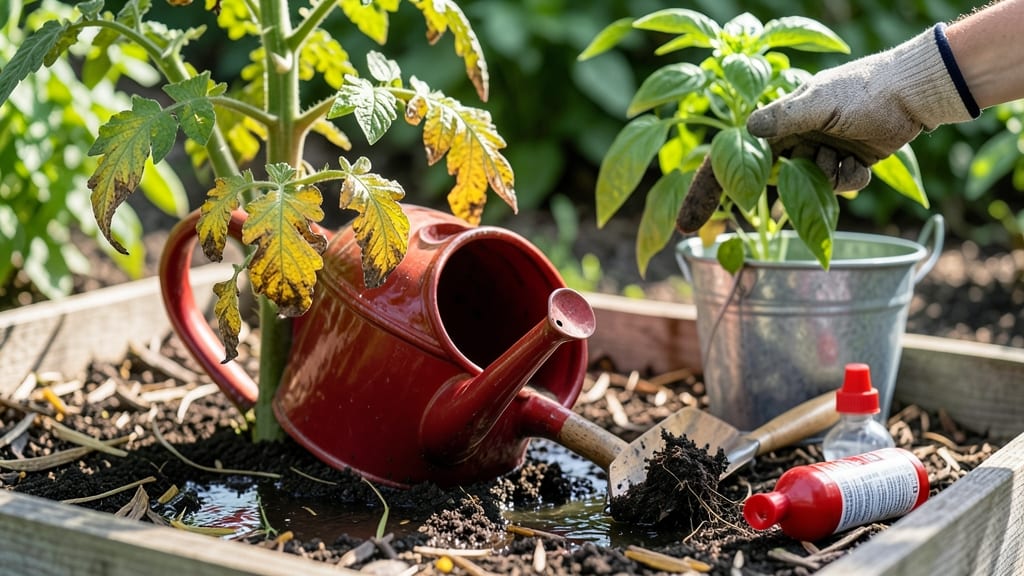
When tomato leaves look too much water, your plants are actually drowning—not thriving. 🌱 I’ve saved dozens of wilting tomato plants by fixing this one problem, and you can too. The first step is recognizing the signs: yellowing leaves, limp stems, or that musty smell from soggy soil.
Overwatering happens when roots suffocate from too much moisture, blocking oxygen and inviting fungal diseases like blight. My biggest mistake? Watering on a schedule instead of checking soil moisture. Stick your finger an inch deep—if it’s damp, wait. If it’s dry, water deeply but only until excess drains away.
Within 24 hours, you’ll see leaves perk up as roots breathe again. For stubborn cases, improve drainage with perlite or a raised bed. Prevent future problems by watering early in the day and mulching to keep soil evenly moist—not soaked.
This fix works for container tomatoes, in-ground plants, and even houseplants struggling with soggy soil. Let’s get those plants back to producing ripe, flavorful fruit instead of sad, wilted leaves.
Root Causes of Overwatered Tomato Leaves
When your tomato plants start showing signs of distress—like droopy, yellowing, or mushy leaves—it’s often a cry for help, not from thirst, but from too much water. Understanding the science behind why this happens is the first step to saving your plants.
Let’s break down the key reasons your tomato leaves might be suffering from excess moisture.
Tomatoes thrive in well-draining soil, but if your garden bed or containers lack proper drainage, water pools around the roots instead of flowing away. Here’s why this is a problem:
- Oxygen Deprivation: Roots need oxygen to respire and absorb nutrients. When soil stays soggy, oxygen is displaced by water, suffocating the roots. This triggers anaerobic conditions, where harmful bacteria and fungi (like Pythium or Phytophthora) flourish, rotting the roots.
- Nutrient Lockout: Excess water washes away essential nutrients (like nitrogen, phosphorus, and potassium) that roots need to stay healthy. Even if you’re fertilizing, the plants can’t access them.
- Compacted Soil: Heavy clay soils or overworked garden beds compact easily, creating pockets where water stagnates. A simple soil test can reveal if your mix holds too much moisture.
Actionable Fix: Amend your soil with organic matter (compost, perlite, or coconut coir) to improve aeration. For containers, ensure drainage holes are present and use a 50/50 mix of potting soil and perlite.
Even with good drainage, watering too frequently or in large amounts can drown tomato plants. Here’s how it happens:
- Surface-Level Saturation: Light, frequent watering (like daily sprinkles) keeps the topsoil wet but doesn’t encourage deep root growth. Roots stay shallow and prone to rot when the surface stays damp for days.
- Weather Mismatch: Watering on a rainy day or after a heavy downpour doubles the moisture, overwhelming the soil’s capacity. Tomato plants in humid climates (like the Southeast U.S.) are especially vulnerable.
- No "Dry Spell" Between Waterings: Tomatoes need a dry period between waterings to strengthen roots. Without it, roots stay perpetually wet, inviting disease.
Actionable Fix:
- Water deeply but infrequently—aim for 1–1.5 inches per week (including rain). Use the "finger test": Stick your finger 2 inches into the soil; if it’s dry, water.
- Water in the early morning (6–9 AM) to allow foliage to dry by nightfall, reducing fungal risks.
- Use a moisture meter or drip irrigation with a timer to avoid guesswork.
Potted tomatoes are at higher risk because containers dry out faster but also retain moisture longer if not managed properly. Key issues include:
- Small or Improper Pots: A 5-gallon container is the minimum for one tomato plant. Smaller pots dry out too quickly, leading to compensatory overwatering, while larger pots can trap excess water if drainage is poor.
- No Drainage Holes: Even "self-watering" pots can become death traps if water has nowhere to escape. Roots in waterlogged pots rot within 48–72 hours.
- Potting Mix Breakdown: Cheap or compacted potting soil can mat down over time, reducing airflow. After 2–3 months, repot or refresh the soil.
Actionable Fix:
- Upgrade to fabric pots or terracotta (which wicks moisture away). Avoid plastic if you’re a heavy waterer.
- Add a 2-inch layer of gravel at the bottom of pots for extra drainage.
- Check pots daily in hot weather—containers dry out faster than garden beds.
Heat and humidity don’t just stress plants—they amplify the damage of overwatering. Here’s how:
- High Humidity: In areas with 80%+ humidity (like Florida or the Pacific Northwest), excess moisture lingers on leaves, creating the perfect environment for early blight or septoria leaf spot. These fungal diseases thrive in wet foliage.
- Extreme Heat: When temperatures exceed 90°F (32°C), tomato leaves transpire (release water) at a slower rate. If you water on schedule without checking soil moisture, roots drown because the plant isn’t using up the excess.
- Cold Soil: In spring or fall, cool soil absorbs water slowly, leaving it saturated for days. Roots in below-60°F (15°C) soil struggle to function, even if the air is warm.
Actionable Fix:
- Water only when the top 1–2 inches of soil are dry, regardless of weather forecasts.
- Use mulch (straw or wood chips) to regulate soil temperature and reduce evaporation.
- In humid climates, prune lower leaves to improve airflow and reduce fungal risks.
Pro Tip: 💡 Yellowing leaves with crisp edges often signal underwatering, while soft, mushy leaves (especially near the stem) are a red flag for overwatering. Act fast—root rot can kill a tomato plant in just 3–5 days once it starts!
Fix Overwatered Tomato Leaves Fast
Now that you know the signs and causes of tomato leaves suffering from too much water, let’s get your plants back on track—without losing your favorite tomatoes to soggy soil! The key is acting quickly and adjusting your watering habits for good.
Below are practical, step-by-step fixes tailored to the most common causes, plus prevention tips to keep your tomatoes thriving.
Cause: Excessive moisture stress Fix:
- Pause watering for 24–48 hours to let the soil dry out slightly. This prevents root rot and fungal diseases like Fusarium or Phytophthora.
- If the soil feels squishy or smells musty, hold off even longer—roots need air!
- Pro Tip: 💡 Use your finger to test soil moisture. Stick it 1–2 inches deep; if it’s damp, wait.
Cause: Poor drainage or compacted soil Fix:
- Repot or amend the soil if your tomatoes are in containers:
- Mix in perlite, vermiculite, or coarse sand (20–30%) to loosen heavy soil.
- Ensure pots have drainage holes—no exceptions!
- For in-ground tomatoes:
- Dig a 1-inch-deep trench around the base to encourage lateral root growth (helps absorb excess water).
- Add compost or aged manure to improve soil structure over time.
🌡️ Pro Tip: If your garden soil is clay-heavy, consider raised beds for better control.
Cause: Fungal infections or bacterial soft rot Fix:
- Snip off yellow, mushy, or blackened leaves with sterilized scissors (wipe with rubbing alcohol between cuts).
- Focus on lower leaves first—they’re most vulnerable to splashing water.
- Do NOT compost diseased leaves—trash them to prevent spreading.
✨ Pro Tip: Prune in morning sunlight so wounds dry quickly, reducing infection risk.
Cause: Inconsistent or heavy watering Fix:
- Water deeply but infrequently: Aim for 1–1.5 inches per week (including rain). Use a soaker hose or drip irrigation to deliver water at the roots, not the leaves.
- Water in the morning (before 10 AM) to allow foliage to dry by nightfall—prevents fungal growth.
- Avoid overhead sprinklers—they promote disease and waste water.
🎯 Pro Tip: Use a rain gauge or tuna can to measure water depth accurately.
Cause: Root rot, early blight, or bacterial wilt Fix:
- For fungal issues (yellowing, spots, mold):
- Spray leaves with a baking soda solution (1 tsp baking soda + 1 quart water + a drop of dish soap) every 7–10 days.
- Apply copper fungicide (like Cupric Hydroxide) for severe cases.
- For bacterial soft rot (mushy stems/leaves):
- Remove infected plants immediately—bacteria spreads fast.
- Disinfect tools and soil with hydrogen peroxide (3%) or bleach solution (1 part bleach to 10 parts water).
💡 Pro Tip: Prevent future outbreaks by rotating crops (don’t plant tomatoes in the same spot yearly).
Cause: Ongoing stress from poor habits Fix:
- Check roots after 3–5 days: Gently tug the plant—if it resists, roots are recovering. If it pulls easily, replant in fresh soil.
- Fertilize lightly with a balanced organic fertilizer (5-5-5) to boost recovery (avoid high nitrogen—it encourages leafy growth, not roots).
- Mulch with straw or shredded leaves to retain moisture evenly and deter weeds.
🌱 Pro Tip: Weakened plants may need staking or cages for support as they regrow.
Now that your tomatoes are on the mend, keep these habits to avoid future waterlogging: ✅ Test soil moisture before watering—never on a schedule. ✅ Upgrade containers with better drainage if needed. ✅ Space plants properly (18–24 inches apart) for airflow. ✅ Avoid watering at night—cool, damp nights = fungal paradise. ✅ Use mulch to regulate soil temperature and moisture.
🚀 Result: With these fixes, your tomato plants should perk up in 3–7 days—and you’ll be back to harvesting juicy, vine-ripened tomatoes in no time! 🍅🌿
Frequently asked questions
How can I tell if my tomato plant has too much water vs. not enough?
Check the leaves and soil: overwatered plants have soft, mushy leaves (especially near stems), yellowing with no crisp edges, and soil that smells musty or stays soggy. Underwatered plants have dry, crispy leaf edges and soil that pulls away from pot sides. Always test soil moisture first!
What should I do if my tomato plant's leaves are already yellow and wilted?
Act fast! Stop watering immediately and let the soil dry out for 24–48 hours. Prune any mushy or blackened leaves with sterilized scissors, then repot in fresh, well-draining soil if needed. For fungal issues, spray with a baking soda solution (1 tsp baking soda + 1 quart water) every 7–10 days.
Can I save a tomato plant with root rot caused by overwatering?
It depends on how severe it is. If only the tips are affected, trim the damaged roots and repot in fresh, sterile soil with perlite or sand (50/50 mix). For advanced rot, the plant may not recover—remove it immediately to prevent spreading. Always use pots with drainage holes to avoid this in the future!
Why do my container-grown tomatoes need less water than in-ground plants?
Containers dry out faster because they have less soil mass, but they also retain moisture longer if drainage is poor. Check soil moisture daily in hot weather—stick your finger 1–2 inches deep. Use terracotta pots or fabric grow bags for better airflow, and never let water sit in saucers.
Will mulch help prevent overwatering in my tomato plants?
Yes! Mulch like straw or wood chips regulates soil moisture by slowing evaporation and preventing water from pooling at the surface. Apply a 2–3 inch layer around plants (keep it 2 inches away from stems to avoid rot). It also keeps roots cooler in summer and warmer in spring.