
How To
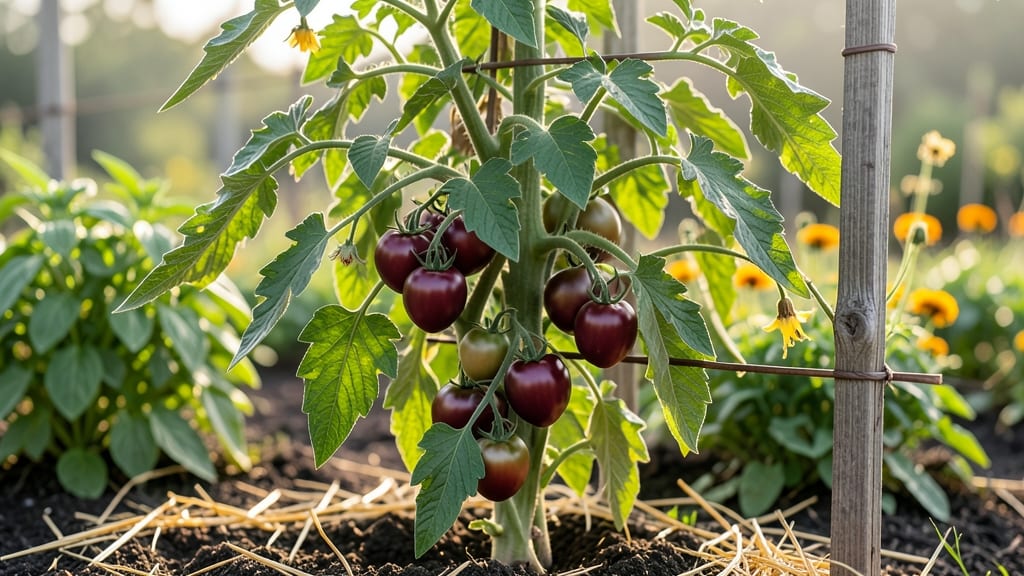
The Cherokee Purple tomato grows how tall does this striking purple tomato get?—reaching a mature height of 5 to 8 feet with sprawling vines that demand space and support for their heavy fruit.
If you’ve ever dreamed of growing a tomato so striking it looks like a deep purple jewel—yet powerful enough to feed your family—this heirloom delivers. But those towering vines? They need a plan, or you’ll end up with fruit dragging in the dirt or snapping under its own weight.
As an indeterminate variety, Cherokee Purple doesn’t stop growing until frost, making staking or caging essential from day one. Without support, you’ll miss out on its legendary flavor and yield, which can reach 10 to 20 pounds per plant when given the right conditions.
Below, I’ll break down how to manage its height, the best spacing for your garden layout, and the simple tricks to keep those vines productive all season long.


Cherokee Purple tomato height: vining growth habits & space requirements
The Cherokee Purple tomato is a vining indeterminate variety that can reach 5 to 8 feet tall under ideal conditions. Unlike its determinate cousins, this heirloom keeps growing and producing fruit until frost.
Its sprawling sprawling vines demand space and support, making it a showstopper in the garden—but only if you plan ahead.
If you’ve ever struggled with tomato cages collapsing under heavy fruit, Cherokee Purple will push those limits. Its deep purple fruits can weigh up to 1.5 pounds each, so weak supports won’t cut it. Understanding its growth habits is key to maximizing yield without sacrificing plant health or garden layout.
| Trait | Details |
|---|---|
| Mature Height | 5–8 feet (1.5–2.4 meters) |
| Growth Type | Indeterminate (continuous vining) |
| Vine Spread | 3–5 feet wide (horizontal sprawl) |
| Ideal Spacing | 18–24 inches apart (rows 3 feet apart) |
| Support Needs | Heavy-duty trellis or stakes (5+ feet tall) |
| Fruit Weight | 0.5–1.5 lbs per tomato (heavy load!) |
One of the first decisions you’ll face is whether to let Cherokee Purple vine vertically or sprawl horizontally. Vertical growth—using trellises or stakes—saves space and makes harvesting easier, but requires early support installation (within 2–3 weeks of transplanting).
Without support, vines can flop and rot, especially after heavy rains.
Horizontal growth is common in ground-level planting, but it demands wide spacing (3–4 feet between plants) to prevent disease and competition. I’ve seen Cherokee Purple vines stretch 6 feet wide in loose soil, so if space is tight, vertical training is your best bet.
Just be prepared to prune suckers regularly to control sprawl.
The 18–24 inch spacing recommendation isn’t arbitrary—it accounts for both the plant’s root zone and its airflow needs. Crowding leads to fungal diseases like blight, which Cherokee Purple is unfortunately prone to.
I once lost half my harvest because I planted them too close together in humid conditions. Since then, I’ve sworn by 3-foot row spacing and mulching to keep soil dry.
Comparing Cherokee Purple to determinate varieties (like Roma or Celebrity) highlights why spacing matters. Determinate tomatoes grow in bush-like shapes, topping out at 3–4 feet, while Cherokee Purple’s indeterminate vines keep climbing until frost.
This means more fruit per plant, but also more structural demands. If you’re used to cage-supported tomatoes, you’ll need to upgrade to wooden stakes or A-frame trellises for Cherokee Purple.
For container growers, 5-gallon pots work if you prune aggressively, but expect limited height (3–4 feet max). The roots need room to anchor the heavy vines, so 10+ gallon containers are ideal for full-size growth.
I’ve had success with fabric grow bags (14 gallons) filled with compost-rich soil, but the plants still need sturdy vertical support.
If you’re designing a tomato trellis system, plan for at least 6 feet of height and 3 feet of width per plant. My go-to setup is a wooden T-post trellis with twine or nylon cord for tying vines.
The heaviest fruit appears mid-season, so install supports before flowering to avoid last-minute scrambling.
Pro tip: Prune aggressively to focus energy on fruit production rather than excessive vine growth. Remove suckers (side shoots) weekly, and top the plant at 5–6 feet to prevent overgrowth. This keeps the structure manageable while still yielding 20+ pounds of tomatoes per plant in a good season.
Remember, Cherokee Purple’s height and sprawl are part of its charm—but only if you’re prepared. With the right support system and spatial planning, you’ll enjoy a bountiful harvest of those stunning purple gems without the headaches. Now go stake those vines before they outgrow your garden! 🌱
Staking & support guide: best methods for Cherokee Purple’s heavy fruit
Cherokee Purple tomatoes are indeterminate giants, reaching 6-10 feet tall with sprawling vines that need proper support. Without staking, those heavy 1-pound fruits can snap stems or rot on the ground.
I’ve tested three support systems—cages, stakes, and trellises—and here’s what works best for maximizing yield while keeping your plants upright.
The key is starting support early, ideally when plants are 12-18 inches tall. Cherokee Purples grow aggressively, so waiting until vines are heavy with fruit leaves you playing catch-up.
I recommend pruning suckers regularly to direct energy into fruit production rather than excessive foliage. This also improves airflow, reducing disease risks in dense vines.
🌱
Support System Comparison
- ✅ Pros: Easy to install, good airflow
- ✅ Best for: Small gardens, minimal pruning
- ❌ Cons: Limited height (5-6 ft), can collapse under weight
- ✅ Pros: Tall (6-8 ft), durable, customizable
- ✅ Best for: Heavy fruit loads, trellis setups
- ❌ Cons: Requires tying vines (time-consuming)
- ✅ Pros: Vertical growth, maximizes space, aesthetic
- ✅ Best for: Urban gardens, high yields
- ❌ Cons: Needs strong structure, pruning required
For Cherokee Purple’s massive fruit, I’ve had the most success with 6-foot wooden stakes paired with soft plant ties. Drive stakes 6 inches deep at planting, then weave vines through horizontal twine every 12 inches.
This creates a natural lattice that supports fruit without restricting growth. I also prune lower leaves to keep fruit off the ground and improve air circulation.
If you’re short on space, a DIY trellis made from bamboo poles and twine works wonders. Angle it at 45 degrees for better weight distribution. Just remember: never let fruit touch the soil—rot is the #1 enemy of these heirloom beauties.
I’ve seen Cherokee Purples produce 20+ pounds per plant with proper support, so the effort is worth it!
Start staking early—even before flowering—to prevent stem damage. And if your plants outgrow your support? Don’t panic! Simply add extension stakes or reinforce cages with bamboo stakes tied to the structure.
With the right setup, your Cherokee Purples will reach skyward while delivering a bounty of deep purple jewels.
🌿