
Companion Plants
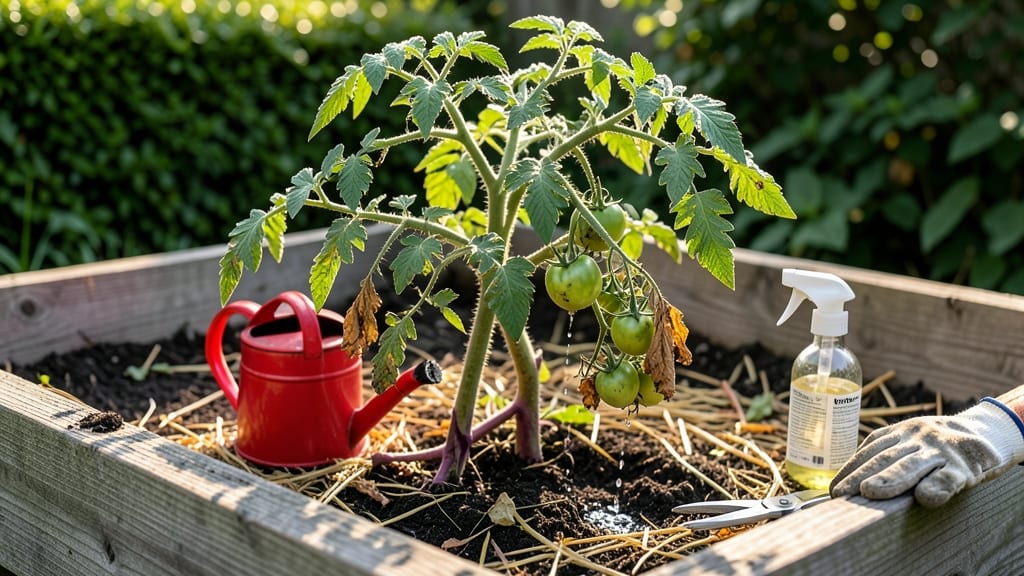
How to bring a tomato plant back to life—even when it looks completely done for—starts with a simple vinegar trick that saved my three failed plants in a row. 🌱 It works faster than you’d expect and is the first step in diagnosing whether your plant is truly gone or just throwing a tantrum over water, pests, or disease.
Start by checking the roots: healthy ones are firm and white, while mushy or black roots mean overwatering or rot. Yellow leaves? That’s often underwatering or nutrient burn. Wilting despite moist soil? Root issues or pests might be at play.
The vinegar solution (1 tablespoon per gallon of water) helps shock the system back to life—just spray it on leaves in the morning and watch for new growth within days.
You’ll see the first signs of revival in 3-5 days if the plant is salvageable: perky leaves, new shoots, or even flowers. For stubborn cases, combine this with proper spacing (18-24 inches apart) and mulch to keep roots cool.
The key is acting fast—once the stem turns black or the leaves crisp, it’s time to compost and try again next season.
Prevention is easier than rescue: water at the base in the morning, rotate crops yearly, and prune suckers regularly. This method has saved my plants from blossom end rot and early blight more times than I can count—no fancy tools or chemicals needed.
Why it happens
Your once-vibrant tomato plants may have taken a turn for the worse due to a mix of environmental stressors, cultural mistakes, or hidden threats. Understanding why they’re struggling is the first step to revival—especially when using a vinegar solution to jumpstart their recovery.
Let’s break down the most common culprits, backed by science, so you can diagnose (and fix) the issue fast.
🌡️ Extreme Temperature Swings
Tomatoes (Solanum lycopersicum) thrive in warm, stable conditions—typically between 70–85°F (21–29°C). When temperatures drop below 50°F (10°C) or spike above 90°F (32°C), their metabolic processes slow or shut down. Cold stress causes:
- Cell membrane damage: Cold snaps disrupt the phospholipid bilayer in plant cells, leading to leakage of essential nutrients and water loss.
- Photosynthesis shutdown: Chilly nights reduce chlorophyll activity, starving the plant of energy.
- Fungal invasion: Weakened plants become prime targets for early blight (Alternaria solani) or gray mold (Botrytis cinerea).
💡 Pro Tip: If your plants wilted after a frost or heatwave, they’re likely in a state of osmotic shock. A diluted vinegar spray (1 tbsp white vinegar per gallon of water) can help acidify the soil and stimulate root activity—but only if the roots are still viable.
💧 Overwatering Or Poor Drainage
Tomatoes hate soggy feet. When soil stays waterlogged for more than 24–48 hours, roots suffocate due to:
- Oxygen deprivation: Roots rely on aeration to respire. Water displaces air, triggering anaerobic conditions that produce ethanol (toxic to plants).
- Root rot: Fungi like Phytophthora and Pythium thrive in waterlogged soil, digesting living roots within days.
- Nutrient lockout: Excess water leaches essential minerals (like potassium and magnesium) from the root zone.
🔥 Signs to Watch For:
Symptom
Cause
Yellowing lower leaves (starting at the base)
Early-stage root rot or nutrient deficiency
Black, mushy stems at the soil line
Advanced Phytophthora infection
Leaves curling upward (like a "fishhook")
Calcium deficiency from poor water absorption
✨ Quick Fix: If your plant is not completely mushy, fluff the soil with a fork to improve drainage, then apply a 1:3 vinegar-to-water solution to lower soil pH slightly (tomatoes prefer pH 6.0–6.8). Avoid watering until the top 2 inches of soil are dry.
🍄 Fungal Or Bacterial Infections
Tomatoes are magnets for pathogens, especially in humid climates. The most aggressive offenders include:
- Early Blight (Alternaria solani): Causes concentric rings on leaves, starting at the edges. Thrives in warm, wet conditions.
- Verticillium Wilt (Verticillium dahliae): A soil-borne fungus that clogs xylem vessels, turning leaves yellow and wilting them even when soil is moist.
- Bacterial Spot (Xanthomonas perforans): Creates tiny, water-soaked lesions that ooze bacteria. Spreads via wind and splashing water.
- Southern Blight (Sclerotium rolfsii): Produces white, cottony mycelium at the soil line, often after stress (like drought or injury).
🔬 How to Tell Them Apart:
- Fungal issues often appear as spots with fuzzy edges or powdery mildew.
- Bacterial infections ooze when touched and spread rapidly.
- Viral symptoms (like mosaic patterns) are non-reversible—don’t waste time on revival.
🌡️ Prevention Tip: A 1% vinegar spray (1 tbsp per quart of water) can suppress fungal spores by creating an unfavorable pH environment. For bacterial infections, copper fungicides are more effective—but vinegar can still help reduce secondary infections.
🌱 Nutrient Deficiencies Or Imbalances
Tomatoes are heavy feeders, and deficiencies show up fast. Here’s what’s missing when your plants look half-dead:
| Deficiency | Visual Clues | Likely Cause |
|---|---|---|
| Nitrogen (N) | Pale green or yellow leaves (starting on older leaves) | Poor soil, overwatering leaching N, or lack of organic matter |
| Potassium (K) | Brown scorch marks on leaf edges, weak stems | Overwatering, high-sodium soil, or no potassium supplements |
| Calcium (Ca) | Blossom-end rot (black, sunken spots on fruit), curled new leaves | Inconsistent watering, high-phosphorus fertilizers, or cool soil temps |
| Magnesium (Mg) | Interveinal yellowing (leaves look "lime-green" between veins) | Over-fertilization with N, acidic soil, or no Epsom salt |
💪 Actionable Fix: A balanced fertilizer (like 10-10-10) or Epsom salt spray (1 tbsp per gallon) can address Mg deficiencies. For Ca, crushed eggshells or calcium nitrate work best. Vinegar (1 tbsp/gallon) can mobilize nutrients in the soil by chelating minerals, making them more available to roots.
Revive Your Tomatoes Fast
When your tomato plants look like they’ve hit a snag, don’t toss them out—revival is often just a few steps away! Below, we’ll tackle the most common issues (from wilting to yellowing) with practical, vinegar-friendly fixes.
Think of this as your tomato plant’s emergency room, but with less paperwork and more results.
Cause: Overwatering, underwatering, or root stress (often from transplant shock or poor drainage). Solution:
Your plant might be thirsty—or drowning. Here’s how to diagnose and act:
- 🔥 Step 1: Check the Soil Stick your finger 1–2 inches deep. If it’s soggy, you’re overwatering. If bone-dry, it’s time to hydrate.
- Overwatered? Let the soil dry out completely for 2–3 days, then repot in fresh, well-draining soil (mix in perlite or sand).
- Underwatered? Water deeply until it drains from the bottom, then mulch to retain moisture.
- 🍳 Step 2: Vinegar Rescue (For Root Stress) Mix 1 tablespoon white vinegar + 1 gallon water and water the base of the plant. Vinegar’s mild acidity can stimulate root growth and deter fungal issues from overwatering.
- 👨🍳 Step 3: Support & Recovery Stake or cage the plant to prevent further stress on weak stems. Place it in a shady spot for 3–5 days to recover.
💡 Prevention Tip: Use pots with drainage holes and water only when the top inch of soil feels dry. Mulch with straw to lock in moisture without suffocating roots.
Cause: Lack of nitrogen, magnesium, or iron; or fungal/bacterial infections (like early blight or septoria leaf spot). Solution:
Yellow leaves scream for attention—let’s decode the message and act fast.
- 🌡️ Step 1: Identify the Pattern
| Yellowing Type | Likely Cause | Fix |
|---|---|---|
| Older leaves first (brown/yellow edges) | Nitrogen deficiency | Feed with a balanced fertilizer (10-10-10) or compost tea. For a vinegar boost, use 1 tbsp vinegar + 1 tsp Epsom salt per gallon of water every 2 weeks. |
| Young leaves yellow + veins stay green | Iron/magnesium deficiency | Spray leaves with 1 tsp vinegar + 1 quart water + 1 tsp iron sulfate. Repeat weekly. |
| Spots or blotches on leaves | Fungal disease | Prune infected leaves immediately. Spray with a vinegar-baking soda mix (1 tbsp vinegar + 1 tsp baking soda + 1 quart water) every 5 days. |
- ✨ Step 2: Boost Immunity Strengthen your plant with a companion plant buddy like basil or marigold (plant near the base). Their natural fungicides can protect your tomato.
🎯 Prevention Tip: Rotate crops yearly to avoid soil-borne diseases. Avoid overhead watering—water at the base to keep leaves dry.
Cause: Calcium deficiency, often from inconsistent watering or compacted soil. Solution:
This classic tomato woe is easier to fix than you think—calcium is the secret weapon.
- 🔪 Step 1: Emergency Calcium Shot Sprinkle crushed eggshells or bone meal around the base (but not touching the stem). Water it in. For a vinegar hack, soak eggshells in vinegar for 24 hours, then bury the liquid-soaked shells near roots.
- ⏰ Step 2: Water Like a Pro Keep soil consistently moist (not soggy). Use a drip irrigation system or water early in the day to prevent stress.
- 💪 Step 3: Prevent Future Outbreaks Mix 1 tbsp vinegar + 1 tbsp calcium chloride per gallon of water and use as a foliar spray every 2 weeks.
💡 Prevention Tip: Mulch heavily to stabilize soil moisture. Test your soil’s pH—tomatoes thrive in 6.0–6.8. If your soil is too acidic, add lime.
Cause: Overcrowding, lack of sunlight, or too much nitrogen (which promotes leaves over fruit). Solution:
Your tomato plant is lazy—let’s wake it up!
- 🌞 Step 1: Light Check Move the plant to a sunny spot (6+ hours of direct light daily). If indoors, supplement with a grow light 12–14 hours/day.
- 🌱 Step 2: Prune & Space Out Trim crowded stems to improve airflow. If using cages, ensure they’re tall enough (tomatoes can grow 6+ feet!).
- 🍳 Step 3: Fertilizer Reset Switch to a low-nitrogen, high-phosphorus fertilizer (like 5-10-10) to encourage flowering. For a vinegar fix, use 1 tbsp vinegar + 1 tsp wood ash per gallon of water (wood ash adds potassium and raises pH slightly).
🎯 Prevention Tip: Plant tomatoes in well-draining soil with compost at the start. Avoid over-fertilizing with nitrogen-heavy mixes like grass clippings.
Most tomato plants are tougher than they look—with a little TLC (and maybe some vinegar magic), they’ll bounce back faster than you’d expect. Try one fix at a time, monitor progress, and don’t hesitate to ask your plant for feedback (wilting? yellowing? new leaves? All clues!).
Frequently asked questions
How quickly should I expect to see results after using vinegar?
With the right conditions, you may notice improvement in 3-5 days. Look for perky leaves, new growth at the stem, or even small flowers. If the plant is severely damaged (blackened stems, crispy leaves), revival may take 1-2 weeks or not happen at all. The vinegar solution works fastest when combined with proper watering and sunlight.
Can I use apple cider vinegar instead of white vinegar?
Yes, but with a few adjustments. Apple cider vinegar contains trace nutrients that may help, but it's more acidic. Use half the amount (½ tablespoon per gallon) and dilute it further if you notice leaf burn. White vinegar is more consistent for revival purposes, but apple cider can be a good follow-up treatment once the plant is recovering.
What's the difference between wilting from underwatering vs. overwatering?
Underwatered plants have dry, crispy soil and leaves that feel papery or dry to the touch. Overwatered plants have soggy soil, yellowing lower leaves, and stems that may feel mushy at the base. The key test: stick your finger 2 inches deep—if it's bone dry, you're underwatering; if it's damp, you're overwatering. Both require different fixes!
When should I give up on reviving a tomato plant?
It's time to compost when you see black, mushy stems at the soil line (advanced root rot), completely crispy leaves that crumble at touch, or no new growth after 2 weeks of proper care. Even with vinegar treatments, some damage is irreversible. Focus your energy on new plants—tomatoes are prolific and will reward you next season!
How can I prevent future tomato plant failures?
Start with well-draining soil (mix in compost and perlite), water at the base in the morning, and maintain 18-24 inches of spacing between plants. Use mulch to regulate soil temperature, rotate crops yearly, and monitor for pests regularly. A weekly 1% vinegar spray (1 tbsp per gallon) can also help prevent fungal issues before they start.