
How To
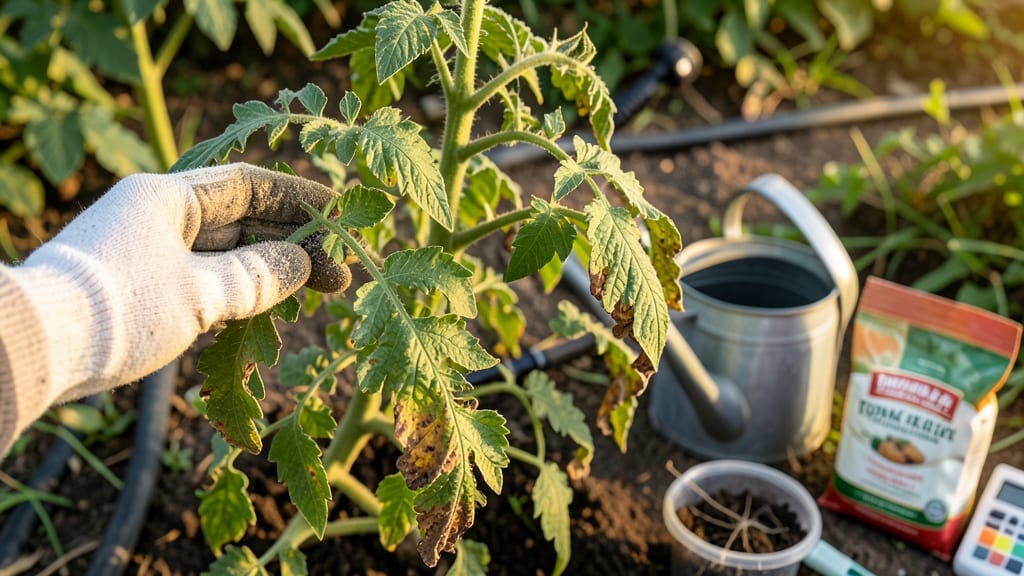
Your tomato leaves wilting isn’t a death sentence—it’s a call to action. 🌱 I’ve saved dozens of plants from this exact crisis, and the fix often comes down to one overlooked detail: soil moisture, pests, or hidden disease. The key is diagnosing fast before the problem spreads to the fruit.
Start by checking the soil: if it’s soggy, you’ve got overwatering or fusarium wilt; if it’s bone-dry, roots are begging for hydration. Look for yellowing leaves (nutrient issues) or sticky residue (aphids), then act accordingly—whether that’s pruning, adjusting water, or a targeted spray.
Most wilting is reversible within 24-48 hours if caught early. What you’ll end up with is a plant that recovers faster than you thought possible, with firm stems and vibrant new growth. The fruit stays unaffected, and you’ll spot the early warning signs next time before they escalate.
This works for container tomatoes, raised beds, and in-ground gardens alike—just adjust the watering schedule to match your soil type. Let’s turn that droop into a comeback story.
Root Causes Behind Wilting Leaves
Understanding why your tomato plant’s leaves are wilting starts with identifying the hidden stressors at play. Wilting often signals a disruption in the plant’s ability to transport water and nutrients efficiently—whether from environmental factors, biological threats, or human error.
Below, we break down the most common culprits and the science behind them, so you can diagnose the issue like a pro.
Wilting from excess water might sound counterintuitive, but root suffocation is a silent killer. When soil stays soggy for too long, roots struggle to absorb oxygen, leading to anaerobic conditions—a process that triggers cellular damage and halts nutrient uptake.
Tomatoes, native to dry climates, are especially sensitive to waterlogged roots.
Key signs to watch for:
- Yellowing leaves (not just wilting)
- Mushy, blackened stems at the base
- A foul, rotten smell from the soil
Why it happens:
- Compacted or clay-heavy soil traps water, preventing roots from breathing.
- Overzealous watering (especially on a schedule) without checking soil moisture.
- Lack of drainage holes in pots or raised beds, causing water to pool.
Tomatoes are thirsty plants, and wilting is their first cry for help when they’re parched. But heatwaves can accelerate moisture loss, making leaves droop even faster. When soil dries out, the plant’s xylem vessels (its plumbing system) collapse slightly, disrupting water flow from roots to leaves.
Key signs to watch for:
- Dry, crispy leaf edges
- Soil pulling away from pot sides (if potted)
- Wilting that worsens in the afternoon heat
Why it happens:
- Inconsistent watering (e.g., deep soaks followed by drought).
- High temperatures (above 90°F/32°C) increase transpiration rates.
- Shallow root systems in young plants or those recently transplanted.
Wilting can also be a symptom of an unseen battle—pests like aphids, spider mites, or fungal pathogens (e.g., Fusarium wilt) sap the plant’s vitality. These invaders clog vascular tissues or trigger stress hormones that cause leaves to wilt prematurely.
Key signs to watch for:
- Sticky residue on leaves (aphids)
- Fine webbing between leaves (spider mites)
- Dark streaks in stems (vascular diseases)
Why it happens:
- Weakened plants (from poor nutrition or stress) attract pests.
- Overhead watering spreads fungal spores.
- Contaminated soil or tools introduce pathogens.
Wilting can stem from malnutrition, particularly a lack of potassium (K) or calcium (Ca). These nutrients are critical for osmotic regulation (balancing water pressure in cells) and cell wall integrity. Without them, leaves lose turgor (rigidity) and wilt.
Key signs to watch for:
- Potassium deficiency: Yellowing leaf edges (scorch), weak stems.
- Calcium deficiency: Blossom-end rot (on fruits) + wilting new growth.
- Nitrogen deficiency: Pale, yellowing leaves (older ones first).
Why it happens:
- Poor soil quality (lack of organic matter).
- Over-fertilizing with nitrogen (burns roots, starving other nutrients).
- pH imbalances (e.g., acidic soil locks out calcium).
Sudden changes—like wind, hail, or temperature swings—can physically damage leaves or roots, disrupting their ability to photosynthesize or absorb water. Even transplant shock (from moving plants) can cause wilting as roots adjust.
Key signs to watch for:
- Windburn: Scorched, curled leaf edges.
- Root damage: Wilting after repotting or moving plants.
- Cold stress: Blackened leaf tips after frost.
Why it happens:
- Lack of mulch exposes roots to temperature extremes.
- Improper handling during transplanting (e.g., root circling).
- Extreme weather events (e.g., heatwaves, storms).
When roots hit the ceiling (in pots) or get squeezed in dense soil, they can’t expand to access water and nutrients. This leads to wilting under stress, even if the soil seems moist. Root-bound plants also compete internally for resources, causing leaves to droop.
Key signs to watch for:
- Roots circling the pot’s base (visible when removed).
- Slow growth despite regular watering.
- Wilting that worsens in hot weather.
Why it happens:
- Small pots for fast-growing tomato varieties.
- Hard, clay-like soil that doesn’t aerate well.
- No pruning of roots during repotting.
Revive Your Tomatoes Fast
Wilted tomato leaves can feel like a gardener’s worst nightmare, but with the right approach, you can often bring your plants roaring back to life. The key is identifying the root cause (literally!) and applying targeted fixes.
Below, we’ve mapped out practical solutions for common triggers—plus prevention tips to keep your tomatoes thriving long-term.
If your soil stays soggy, roots suffocate, leading to wilting. Fix it fast:
- 🔥 Stop watering immediately—let the top 2–3 inches of soil dry out before watering again.
- 🍳 Improve drainage by mixing in perlite, sand, or compost into heavy clay soil. Elevate pots if using containers.
- 👨🍳 Prune affected leaves to redirect energy to healthy growth. Use clean, sharp scissors to avoid disease spread.
💡 Prevent it: Water deeply but infrequently (1–2 inches per week, depending on climate). Use raised beds or containers with drainage holes.
Wilting in hot weather often means your tomatoes are thirsty. Hydrate properly:
- 🥘 Water at the base early in the morning or late evening to reduce evaporation. Avoid wetting leaves to prevent sunburn.
- ⏰ Mulch heavily with straw or wood chips to retain moisture and cool roots.
- 🌡️ Provide shade cloth (30–50%) if temperatures exceed 90°F (32°C) to protect leaves.
💡 Prevent it: Monitor soil moisture with your finger—if the top inch is dry, it’s time to water. Drip irrigation systems work wonders in heatwaves.
Chewed leaves, yellowing, or sticky residue? Pests or pathogens may be to blame. Act swiftly:
| Problem | Solution |
|---|---|
| Aphids, spider mites | Spray leaves with a soapy water mix (1 tsp mild soap per quart of water) or introduce ladybugs. |
| Fungal diseases (early blight, septoria) | Remove infected leaves immediately and apply copper fungicide or a baking soda spray (1 tbsp baking soda + 1 quart water + a drop of soap). |
| Root-knot nematodes | Rotate crops (avoid tomatoes in the same spot for 3+ years) and add marigolds as a natural repellent. |
💡 Prevent it: Inspect plants weekly for early signs. Encourage beneficial insects like lacewings and keep the garden clean of debris.
Yellowing leaves or stunted growth? Your tomatoes might be hungry. Feed them right:
- 📊 Test your soil—low phosphorus or potassium? Amend with a balanced 5-10-10 fertilizer or compost.
- 💪 For transplant shock, water thoroughly after planting and apply a seaweed extract to boost resilience.
- 🥗 Avoid over-fertilizing with nitrogen (like lawn fertilizer)—it burns roots and attracts pests.
💡 Prevent it: Mix compost into soil before planting and side-dress with fertilizer mid-season. Mulch to slow nutrient leaching.
Physical damage from weather can cause wilting. Protect and recover:
- 🌡️ For cold snaps, cover plants with frost blankets or row covers at night.
- 🌪️ For wind damage, stake tall varieties or use windbreaks (like bamboo fencing).
- ✨ Trim broken stems just above a leaf node to encourage new growth.
💡 Prevent it: Choose wind-resistant varieties (e.g., ‘Sungold’ or ‘Celebrity’) and plant in sheltered spots.
Most wilting issues are reversible with quick action. Start with the most likely cause (check soil moisture first!), and your tomatoes should bounce back in days. For persistent problems, dig deeper—sometimes it’s a combo of factors (like overwatering + pests). Happy reviving!
Frequently asked questions
Why do my tomato leaves wilt only in the afternoon?
Afternoon wilting often signals heat stress or underwatering. Tomatoes lose moisture faster in hot weather, causing temporary droop. Check soil moisture—if the top 1 inch is dry, water deeply at the base in the morning. Mulch helps retain moisture and cool roots.
Can I save a tomato plant if the wilting spreads to the stems?
If stems are mushy or blackened, it may indicate fusarium wilt or root rot, which are often irreversible. For early-stage stem wilting (without rot), prune affected leaves, improve drainage, and water consistently. If the entire plant collapses, it’s best to remove it to prevent spreading.
How do I tell if wilting is from pests vs. disease vs. water issues?
Check for these clues: Pests leave sticky residue (aphids) or webbing (spider mites); diseases show dark streaks (vascular wilt) or spots (early blight); water issues cause uniform wilting with dry soil (underwatering) or soggy soil (overwatering). Inspect leaves and stems closely—pests and diseases often appear first on younger growth.
Will wilting tomato leaves affect my fruit production?
Early wilting rarely harms fruit if addressed quickly, but severe or prolonged stress can reduce yield. Focus on reviving leaves first—healthy foliage powers fruit development. If wilting persists, prioritize saving the plant over saving individual tomatoes. Young plants are more resilient than mature ones.
Can I use coffee grounds to fix wilting tomato plants?
Coffee grounds can help with nutrient deficiencies (they’re high in nitrogen), but they’re not a cure-all. Mix 1 cup into the soil around the base to boost growth, but avoid overdoing it—too much nitrogen burns roots. For wilting, combine coffee grounds with proper watering and drainage fixes for best results.