
Planting
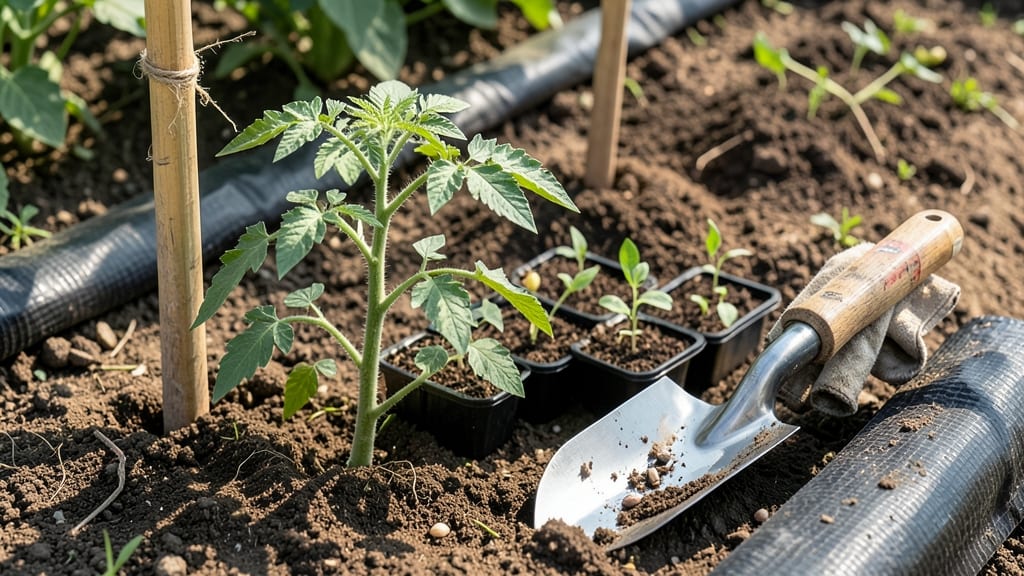
Planting tomato seeds outdoors starts 5-6 weeks before your last frost date—that’s when the soil warms to 60°F and stays reliably above 50°F at night. 🌱 I learned the hard way that rushing seeds into cold soil means weak, leggy starts that never catch up.
The key is patience: wait for those soil temps, then plant at the right depth and spacing to avoid crowding. You’ll need a sunny spot with loose, well-draining soil (amend with compost if yours is heavy), seeds, a small trowel, and row markers.
Dig trenches about ¼-inch deep, place seeds 1-2 inches apart, cover lightly, and water gently—no soaking. The goal is to mimic natural conditions where seeds bury themselves just enough to stay moist but not suffocate. Within 7-14 days, you’ll see tiny sprouts pushing through the soil.
That’s when the real work begins: keeping them evenly watered, protecting them from pests, and hardening off seedlings before transplanting. Thin to 2-3 inches apart once they’re 2 inches tall—this prevents competition for nutrients. This method works for any tomato variety, from cherry to heirloom.
The payoff? Stocky, disease-resistant plants that produce earlier and more abundantly** than store-bought seedlings. Let’s get those seeds in the ground the right way!
📚 In This Guide
- What you need
- Instructions
- Tips and common mistakes
- Wrapping up and next steps
What you need
- ● Tomato seeds: 1–2 packets (choose heirloom, hybrid, or cherry varieties based on your preference).
- ● Seed-starting mix: 1–2 bags (lightweight, sterile, and well-draining—avoid garden soil!).
- ● Containers: 4–6 biodegradable pots (2–3 inches deep) or a seed tray with cells.
- ● Grow lights or sunny windowsill: For seedlings before transplanting outdoors.
- ● Watering can or spray bottle: With a fine mist nozzle to avoid disturbing seeds.
- ● Plant labels or markers: To track varieties (especially if growing multiple types).
- ● Fertilizer: A balanced, water-soluble fertilizer (5-10-5 ratio) for seedlings.
- ● Garden bed or large containers: At least 12–18 inches deep (tomatoes need room to grow!).
- ● Compost or aged manure: 1–2 cups per plant to enrich soil.
- ● Mulch: Straw or shredded leaves to retain moisture and suppress weeds.
- ● Stakes or cages: 5–6 feet tall (for indeterminate varieties) to support vines.
- ● Pruning shears: For trimming suckers and shaping plants later.
- ● Heat mat ($10–$20) to speed up germination in cool climates.
- ● Row covers ($15–$30) to protect seedlings from pests or frost.
- ● pH test kit ($10–$15) to ensure soil is slightly acidic (6.2–6.8).
- ● Drip irrigation system ($20–$50) for consistent watering.
- ● Organic pest control (neem oil or insecticidal soap) for early prevention.
Step-by-Step instructions for planting tomato seeds outdoors
Here's how I time and plant tomato seeds for robust, disease-resistant plants that thrive from day one.
🌱 Step 1: Time Planting Based on Your Last Frost Date
Tomatoes need warm soil and air to germinate—plant 2-3 weeks after your last frost when nighttime temperatures stay above 50°F. Check your local frost calendar and count backward; seeds take 7-14 days to sprout. If your zone has unpredictable springs, opt for the later date to avoid transplant shock.
Here's the thing—soil temperature matters more than air temperature. Use a soil thermometer to confirm 60°F+ at a 2-inch depth before planting. If it's cooler, wait or use black plastic mulch to warm the soil faster. I've planted too early and lost seedlings to cold snaps—don't make that mistake.
🪴 Step 2: Prepare the Planting Site
Choose a location with 6-8 hours of direct sunlight and well-draining soil. Tomatoes are heavy feeders, so enrich the bed with 2-3 inches of compost mixed into the top 6 inches of soil. Work in a handful of balanced fertilizer (10-10-10) at planting time for an immediate nutrient boost.
Tomatoes hate soggy roots, so improve drainage by adding 1-2 inches of coarse sand or perlite if your soil is clay-heavy. I dig a small trench around the planting area to create a slight basin—this helps water pool at the roots where it's needed most. Avoid fresh manure; it burns tender seedlings.
🌱 Step 3: Plant Seeds at the Right Depth and Spacing
Sow seeds ½ inch deep in rows spaced 18-24 inches apart. Plant 3-4 seeds per hole since not all will germinate. If you're planting 4 plants, space holes 2 feet apart in all directions. Press the soil gently around seeds to ensure good seed-to-soil contact—this prevents air pockets that delay germination.
Label each row immediately. I use wooden stakes with the variety name and planting date—trust me, you'll forget which is which by midsummer. Cover seeds with a thin layer of mulch to retain moisture and block weeds. Water gently with a spray nozzle until the soil surface is damp but not saturated.
☀️ Step 4: Maintain Moisture and Warmth
Keep the soil consistently moist until germination, which takes 7-14 days. Use a fine mist setting on your hose to avoid dislodging seeds. Once sprouts appear, reduce watering slightly but maintain 1 inch of water per week. Mulch with 2-3 inches of straw after germination to retain moisture and suppress weeds.
Watch for leggy seedlings—thin stems that stretch toward light. This happens when seedlings get too much light too soon. If you see this, provide afternoon shade with a lightweight row cover until plants develop stronger stems. I've seen seedlings collapse under their own weight when they grow too fast without support.
✂️ Step 5: Thin Seedlings and Support Early Growth
When seedlings reach 2-3 inches tall, thin to the strongest plant per hole. Use scissors to snip unwanted seedlings at soil level—pulling risks disturbing roots of remaining plants. Leave 12-18 inches between plants to allow airflow, which prevents fungal diseases like early blight.
Install 6-foot tall cages or stakes immediately after thinning. Tomatoes grow fast, and supporting them early prevents stem damage. I tie the main stem to the support with soft plant ties, leaving a little slack to accommodate growth. Remove any suckers (side shoots) that form in the leaf axils—they divert energy from fruit production.
Tips & tricks for perfect tomato seed planting
These precision tips will help you avoid common pitfalls and maximize your tomato seedling success from the very first planting.
Soil Temperature is Non-Negotiable: The 60°F soil temperature in Step 1 isn't just a suggestion—it's the absolute minimum for reliable germination. I've lost entire batches planting at 55°F when a cold snap hit. For extra insurance, cover the planting area with clear plastic for 24 hours before planting to create a mini greenhouse effect and raise soil temps by 5-10°F. This works especially well in cooler climates where spring arrives late.
Seed-to-Soil Contact Matters More Than You Think: When planting those ½-inch deep seeds in Step 3, don't just drop them in—press the soil firmly around each seed with your thumb. This eliminates air pockets that can delay or prevent germination. I learned this the hard way when half my seeds failed to sprout one spring. Think of it like giving your seeds a firm handshake to say "welcome to the garden!"
The Leggy Seedling Rescue: If you notice those thin, stretched seedlings in Step 4, don't panic. The solution is simple: provide afternoon shade using a lightweight row cover or even a piece of white fabric draped over a frame. This prevents further stretching while allowing the seedlings to develop stronger stems. I've saved many a leggy seedling this way—it's like giving them a temporary sunhat to build their strength.
Labeling System Upgrade: While the instructions suggest wooden stakes, I recommend upgrading to plant markers with both the variety name AND planting date. You'll thank me when you're harvesting in August and trying to remember which is your early girl versus your beefsteak. I use colorful plastic flags that stand out against the garden—no more mystery plants!
Pro Tips for Plant Tomato Seeds Outdoors
- These precision tips will help you avoid common pitfalls and maximize your tomato seedling success from the very first planting.
- Soil Temperature is Non-Negotiable: The 60°F soil temperature in Step 1 isn't just a suggestion—it's the absolute minimum for reliable germination.
- Seed-to-Soil Contact Matters More Than You Think: When planting those ½-inch deep seeds in Step 3, don't just drop them in—press the soil firmly around each seed with your thumb.
Frequently asked questions
Got questions about planting tomato seeds outdoors? You’re not alone!
Here are answers to the most common queries to help you grow confidently.
When is the best time to plant tomato seeds outdoors?
The ideal time depends on your climate, but aim for 2–4 weeks before your last frost date (after soil temps hit at least 60°F). In warmer zones, start earlier—just ensure nighttime temps stay above 50°F to avoid chilling stress. Check your local frost dates for precision!
Can I plant tomato seeds directly in the ground, or should I start indoors first?
Both work! Direct sowing saves time but risks slower growth in cool soils. For a head start, start seeds indoors 6–8 weeks before transplanting (use seed trays with heat mats for best results). If outdoor temps are consistently warm, direct sowing is totally fine—just add a row cover for extra warmth.
What if my tomato seeds don’t sprout? How do I troubleshoot?
No sprouts? Check these first:
- Moisture: Keep soil consistently damp (not soggy) with a spray bottle or misting.
- Depth: Seeds need ¼ inch of light coverage—burying too deep suffocates them.
- Viability: Test a few seeds in a damp paper towel (they should sprout in 5–7 days). If not, try fresh seeds.
- Temperature: Soil should stay 70–85°F for germination.
Do I need to thin tomato seedlings, and how?
Yes! Once seedlings have 2–3 true leaves, thin them to 12–18 inches apart (or 24 inches for indeterminate varieties). Use scissors to snip at soil level—never pull to avoid disturbing roots. Save thinned seedlings for salads or compost!
What’s the fastest way to get tomatoes to grow bigger and faster?
Boost growth with these tricks:
- Sunlight: Place seedlings in a south-facing spot with 6–8+ hours of sun daily.
- Fertilizer: Use a balanced organic fertilizer (like 5-5-5) when seedlings are 3–4 inches tall.
- Watering: Keep soil moist but not waterlogged—deep water 1–2 times weekly.
- Support: Add cages or stakes early to encourage strong stems.
Wrapping up and next steps
Planting tomato seeds outdoors is a rewarding journey that starts with precision timing and careful preparation—but your efforts will pay off with a bountiful harvest! 🌱 By choosing the right seeds, nurturing young plants, and hardening them off before transplanting, you’re setting the stage for healthy, thriving vines.
Remember, patience is key, and even small mistakes can be corrected with love and attention.
Now that you’re armed with the know-how, roll up your sleeves and get growing! Start by marking your calendar for next year’s planting window, and keep a gardening journal to track what works best in your climate. Happy planting—your future tomato sandwiches will thank you! 🍅😉