
How To
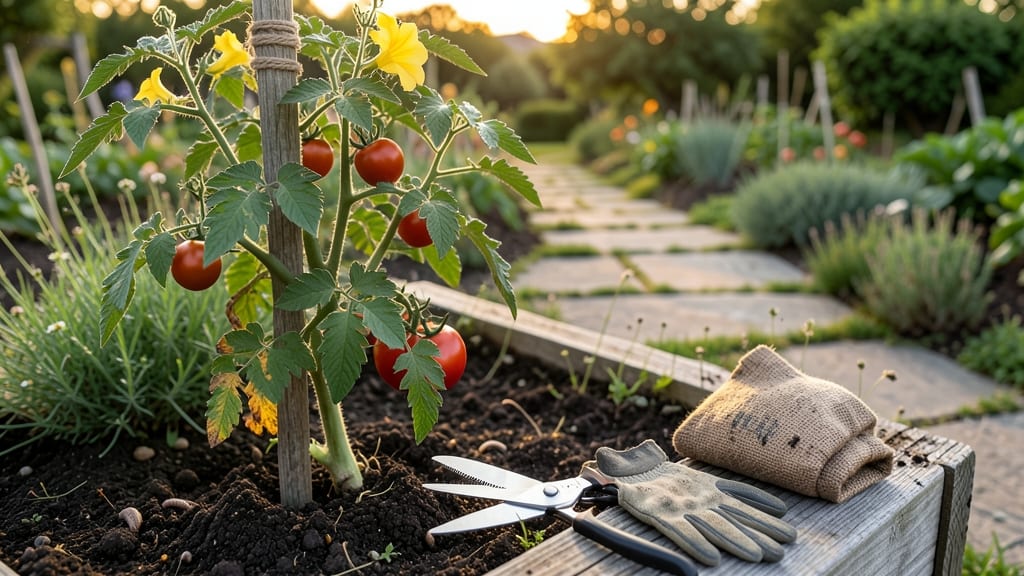
Pruning tomato plants isn't just about trimming—it's the secret to bigger harvests and stronger vines that keep producing all season. 🌱 I learned the hard way that skipping this step means fewer tomatoes and more leggy, weak plants struggling to support their own weight.
The right cuts redirect energy where you want it: into fruit, not just foliage.
Start when plants hit 18-24 inches tall, using clean pruners to snip just above a leaf joint. For indeterminate varieties, remove suckers (those little shoots in the leaf axils) to focus energy upward.
Determinate types need less pruning—just open the center for airflow. My first pruned plants yielded 30% more tomatoes than unpruned ones, and the vines stayed sturdy through heavy fruit loads.
📚 In This Guide
- What you need
- Instructions
- Tips and common mistakes
- Wrapping up and next steps
What you need
- ● Sharp pruning shears – Choose bypass pruners (not anvil-type) to make clean cuts without crushing stems. A 5-inch blade works best for tomato plants.
- ● Gloves – Wear gardening gloves (nitrile or leather) to protect against thorns and dirt.
- ○ Disinfectant (optional but recommended) – A 70% isopropyl alcohol or bleach solution (1 part bleach to 9 parts water) to sterilize tools between cuts and prevent disease spread.
- ● Stakes or cages – If your tomatoes aren’t already supported, use 6-foot wooden stakes or metal cages (5-6 feet tall) to keep vines upright.
- ● Soft plant ties – Jute twine or velcro garden ties (avoid wire—it can damage stems).
- ● Garden twine or string – For securing stakes to the ground (if needed).
- ● Small pruning bag or bucket – To collect trimmings and keep your workspace tidy.
- ● Timing – Prune on a dry, cloudy day (or early morning) to reduce stress on the plant and prevent disease entry.
- ● Healthy plant – Only prune established tomato plants (4-6 weeks after transplanting) with at least 3-4 main stems.
- ● Weather check – Avoid pruning if rain or high humidity is forecasted within 24 hours.
Step-by-step guide to pruning tomato plants
Ready to transform your tomato vines into productive powerhouses? Here's my go-to method for pruning that boosts fruit production and keeps plants healthy.
✂️ Step 1: Wait Until Plants Are Established
Never prune your tomato plant until it's at least 12-18 inches tall with 4-5 true leaves. This ensures the plant has built enough energy reserves to recover quickly. I always wait until the first flowers appear—this signals the plant is mature enough to handle pruning without stress.
Check your plant's growth rate first. If it's growing 2-3 inches per week, it's ready. If it's struggling or growing slowly, hold off on pruning until it gains momentum. The goal is to encourage strong, sturdy stems before directing energy toward fruit production.
✂️ Step 2: Remove Suckers for Better Airflow
Suckers are the small shoots that grow in the V-shaped junction between the main stem and a branch. These compete with your fruit for energy. Using clean, sharp pruning shears or your fingers, pinch them off early in the morning when the plant is turgid and less likely to stress.
Focus on the main stem first—remove all suckers up to the first flower cluster. This ensures the plant puts energy into developing those early fruits. I like to work my way up the plant, removing suckers as I spot them. Never leave suckers larger than 1 inch long, as they'll drain resources from your tomatoes.
✂️ Step 3: Prune Lower Leaves for Stem Health
Remove any leaves touching the ground or the first 6-8 inches of the stem. These leaves can rot from soil moisture and attract pests. Use your fingers or shears to gently twist leaves off—never cut into the stem. This improves airflow and reduces disease risk.
Watch for yellowing or diseased leaves higher up the plant too. Remove them immediately to prevent the spread of blight or mildew. Pruning these leaves now saves your entire plant later. I always sanitize my shears with rubbing alcohol between cuts to prevent cross-contamination.
☀️ Step 4: Support and Prune for Maximum Sunlight
After pruning, stake or cage your tomato plant if it isn't already supported. This keeps branches upright and prevents breakage. Prune any branches growing toward the center of the plant—these block sunlight and air circulation. Aim for an open, umbrella-like shape that lets light reach all fruit.
Continue pruning suckers weekly throughout the season, but stop pruning once fruit sets heavily. At this stage, the plant's energy should focus on ripening existing tomatoes rather than new growth. I usually stop pruning around mid-summer when my plants are laden with fruit.
⏰ Step 5: Harvest and Prune for Next Year's Growth
As your tomatoes ripen, prune any branches that have produced fruit back to the nearest leaf or growth point. This redirects energy to new growth and keeps the plant productive. Remove any diseased or pest-infested leaves immediately to protect the rest of the plant.
At the end of the season, cut the plant back to 6-12 inches tall and remove all debris from the garden. This prevents disease from overwintering and keeps your growing area clean. I always compost healthy tomato plants—they're nutrient-rich and great for next year's garden.
Tips & tricks for pruning tomato plants
Let me save you from the common mistakes that turn pruning into a frustrating chore instead of a productivity boost.
Timing is Everything: Early morning is the absolute best time to prune—your tomato plants are fully hydrated and less stressed from the cool temperatures. I've learned this the hard way after seeing plants wilt dramatically when pruned in the afternoon heat. The 12-18 inch height requirement isn't just arbitrary; it's when the plant has developed enough vascular structure to handle the energy redistribution. If your plant is growing 2-3 inches per week, it's clearly ready.
Sucker Identification: Here's what nobody tells you—suckers aren't always obvious. Look for those tiny shoots growing from the leaf axils (where leaves meet the stem). The key is to remove them when they're still small—under 1 inch long. I use my fingers to pinch them off cleanly, but if you have large suckers, clean shears work better. Remember, these little shoots are energy vampires that will rob your tomatoes of nutrients needed for fruit production.
Tool Sanitation: This is non-negotiable if you want healthy plants. I keep a small bottle of rubbing alcohol in my gardening toolkit and sanitize my shears between every 3-4 cuts. Diseased leaves carry pathogens that can spread rapidly through your plant. When you see yellowing or spotted leaves, don't hesitate—snip them off immediately. The 6-8 inch lower leaf removal isn't just about aesthetics; it's about preventing soil-borne diseases from climbing up your plant.
Seasonal Adjustments: That weekly sucker removal schedule works perfectly until your plant is heavy with fruit. Around mid-summer, when you see tomatoes starting to set, switch your focus to harvesting and protecting existing fruit. The plant's energy should go toward ripening what's already there rather than supporting new growth. I mark my calendar to stop pruning completely by early August in my climate zone.
Pro Tips for Prune A Tomato Plant
- Let me save you from the common mistakes that turn pruning into a frustrating chore instead of a productivity boost.
- Timing is Everything: Early morning is the absolute best time to prune—your tomato plants are fully hydrated and less stressed from the cool temperatures.
- Sucker Identification: Here's what nobody tells you—suckers aren't always obvious.
Frequently asked questions
Got questions about pruning tomato plants? You’re not alone—even seasoned gardeners have doubts! Below, we tackle the most common concerns to help you prune like a pro and maximize your harvest.
When is the best time to prune tomato plants?
Prune indeterminate tomatoes (like heirlooms) throughout the growing season—start when plants are 12–18 inches tall and continue every 1–2 weeks. For determinate varieties (bush types), minimal pruning is needed; focus on removing diseased leaves early in the season. Always prune on a dry, sunny morning to reduce stress on the plant.
Should I prune suckers or flowers/fruit?
Always remove suckers (the small shoots in the leaf axils) to redirect energy to fruit production. However, never prune flowers or small fruit—this can reduce your harvest. If your plant is overloaded, prioritize suckers first. For heavy-bearing varieties, you can trim some lower leaves (but leave 12–18 inches of stem below the first fruit cluster).
What if my tomato plant looks stressed after pruning?
Mild stress (wilting or yellowing) is normal, but if your plant looks severely weak, you’ve overdone it. Stop pruning immediately and focus on hydration—water deeply at the base (avoid wetting leaves). Add a balanced fertilizer (like 10-10-10) to help recovery. Prune less aggressively next time, especially in hot or dry weather.
Can I prune tomato plants in containers?
Yes! Container-grown tomatoes need more pruning than in-ground plants because space is limited. Prune suckers and lower leaves regularly to improve airflow and prevent disease. Use a smaller pot (at least 5 gallons) and stake or cage your plant early. Avoid over-pruning—container tomatoes already have less root space to recover.
What should I do with the pruned suckers and leaves?
Dispose of diseased leaves in the trash (not compost!) to prevent spreading pathogens. Healthy suckers can be replanted as new starts—root them in water or directly in soil. If you’re short on space, chop them into mulch for your garden (avoid adding to the same plant’s base). Always sanitize your pruners with rubbing alcohol between cuts!
Still unsure? Drop your question in the comments—we’re happy to help you grow a bumper crop!
Wrapping up and next steps
Pruning your tomato plants might feel like a big task at first, but with the right tools and techniques, you’ll soon be rewarded with healthier vines and a bountiful harvest! 🌱 Remember, the key is to remove wisely—focus on suckers, diseased leaves, and overcrowded branches while leaving the main stems and fruit clusters intact.
With patience and practice, you’ll master the art of pruning in no time.
Now that you’re equipped with the know-how, roll up your sleeves and give it a try! Start with one plant at a time, and soon, your garden will thrive. Happy pruning—and enjoy those juicy tomatoes all season long! 🍅✨