
Diseases
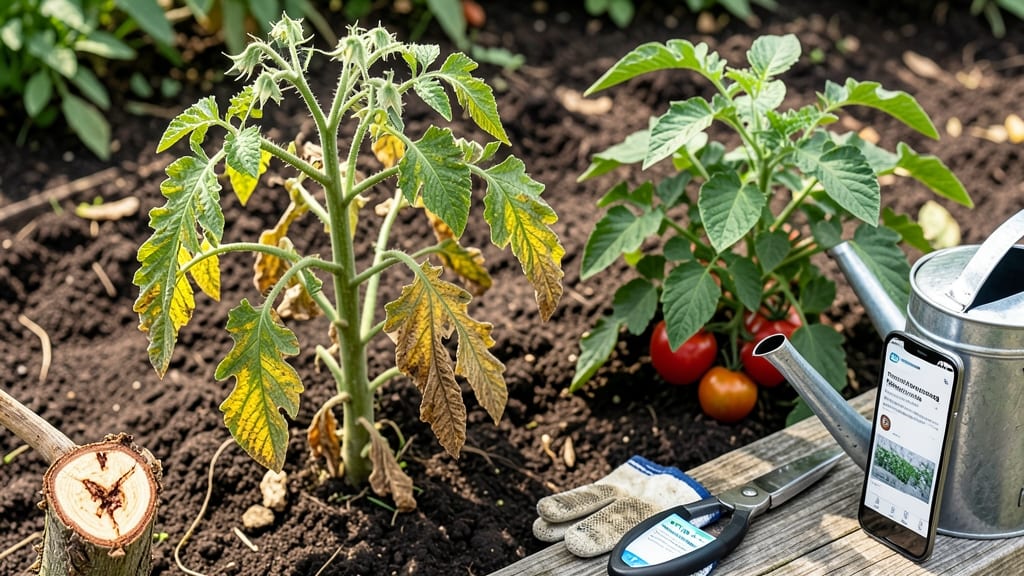
When the tomato plant wilt disease strikes and your vines suddenly droop like overcooked noodles, 🌱 it’s usually one of three wilt diseases—and catching it early makes all the difference. I’ve seen entire harvests lost because we ignored the first yellowing leaf or assumed it was just heat stress.
The truth? Fusarium, Verticillium, or bacterial wilt spread fast, but there are still ways to save your plants if you act within 24-48 hours of noticing symptoms.
Here’s the thing—these diseases don’t just attack mature plants. They lurk in the soil, waiting for stressed seedlings or overwatered vines to break through defenses. My first season, I lost three tomato plants to wilt because I kept them too wet and ignored the wilting until it was too late.
The good news? You can still grow tomatoes successfully by rotating crops, testing soil health, and choosing resistant varieties like ‘Mountain Merit’ or ‘Defiant PhR.’
You’ll spot wilt disease by checking the stems: brown streaks inside (Fusarium/Verticillium) or oozing sap (bacterial wilt) mean it’s time for drastic action. Prune infected leaves immediately, improve airflow between plants, and consider a copper fungicide spray for bacterial wilt.
For soil-borne diseases, solarization or planting cover crops like clover can break the cycle over time.
Prevention is your best bet—healthy soil, balanced watering, and 3-year crop rotation keep these diseases at bay. Even if you lose a plant, you’ll learn which varieties thrive in your climate and how to spot early warning signs next time. Trust me, your future harvests will thank you.
Root Causes of Tomato Plant Wilting
Wilting tomato plants can feel like a gut punch for any gardener—especially when you’ve poured heart and sweat into your crop. 🌱💔 But before you panic, it’s crucial to pinpoint the real culprit behind the droop.
Wilting isn’t just one problem; it’s often a symptom of deeper issues, from soil woes to sneaky pathogens. Below, we break down the most common reasons your tomato plants are throwing in the towel, complete with the science behind the struggle and actionable clues to diagnose the problem.
Tomatoes are sun-lovers, but too much heat—especially when combined with dry soil—can cause physiological wilting. Unlike disease-related wilting, this type is usually temporary and recoverable if conditions improve.
- Why it happens: High temperatures increase transpiration (water loss through leaves), while dry soil can’t keep up with the demand. When roots can’t absorb enough water, the plant’s turgor pressure (the internal water pressure that keeps stems rigid) drops, leading to wilting. Think of it like a balloon losing air—floppy and sad.
- Key signs:
- Wilting occurs during the day but recovers at night or after watering.
- Leaves may appear crispy or dry at the edges (a sign of water stress).
- No yellowing, spots, or unusual growth patterns.
- Fix it fast:
- Water deeply early in the morning (1–1.5 inches per week, including rain). Use drip irrigation or soaker hoses to avoid wetting leaves, which can invite fungal diseases.
- Mulch heavily with straw or wood chips to retain moisture and cool roots.
- Avoid overhead watering in peak sun—it causes leaf scorch and increases stress.
Fungal diseases like Fusarium wilt, Verticillium wilt, and early blight are among the most devastating causes of wilting in tomatoes. These pathogens clog the plant’s xylem vessels (the plant’s plumbing system), blocking water and nutrient flow. Once established, they’re nearly impossible to cure—but prevention is your best defense.
🔬 Fusarium and Verticillium Wilt: The Vascular Blockers
These two soil-borne fungi are notoriously persistent and can lie dormant in soil for years, waiting for the perfect moment to strike.
| Cause | How It Spreads | What to Look For |
|---|---|---|
| Fusarium oxysporum (Fusarium wilt) |
|
|
| Verticillium dahliae (Verticillium wilt) |
|
|
💡 Pro Tip: If you suspect Fusarium or Verticillium wilt, remove and destroy the infected plant immediately (do not compost!). These fungi can survive for 10+ years in soil, so rotate crops and avoid planting tomatoes, peppers, or eggplants in the same spot for at least 3–4 years.
🍄 Early Blight: The Leaf-Eating Menace
While early blight primarily attacks leaves, severe infections can stress the plant enough to cause wilting, especially in hot, humid conditions.
- Why it happens: The fungus Alternaria solani thrives in warm, wet weather and spreads via splashing water or contaminated seeds/tools.
- Key signs:
- Brown or tan concentric rings on lower leaves.
- Wilting may occur if 50%+ of leaves are infected, reducing the plant’s ability to photosynthesize.
- Stems may develop dark lesions near the soil line.
- Fix it:
- Remove and dispose of infected leaves (don’t compost them!).
- Apply a copper fungicide or baking soda spray (1 tbsp baking soda + 1 quart water + a drop of dish soap) every 7–10 days.
- Space plants 18–24 inches apart for better airflow and reduce humidity around leaves.
Healthy roots need oxygen. When soil stays too wet—whether from overwatering, poor drainage, or heavy clay—roots suffocate, leading to root rot. This is often caused by Phytophthora or Pythium fungi, which thrive in waterlogged conditions.
- Why it happens:
- Compacted or clay-heavy soil doesn’t drain well, trapping water around roots.
- Overwatering or frequent heavy rains drown roots, cutting off oxygen.
- Container-grown tomatoes may rot if pots lack drainage holes.
- Key signs:
- Wilting that doesn’t improve with watering.
- Yellowing leaves that eventually turn brown and mushy.
- Roots appear dark, slimy, and decayed when dug up.
- Plant may fall over easily or pull out of the ground with little resistance.
- Fix it fast:
- Stop watering
Fixing Wilted Tomato Plants Fast
Wilted tomato plants can feel like a gardener’s worst nightmare—especially when you’ve invested time and care into growing lush, productive vines. 🌱😬 But don’t panic! The right fixes depend on the root cause (literally and figuratively).
Below, we break down practical, actionable solutions for each common trigger, plus prevention tips to keep your tomatoes thriving.
Fix:
- Remove Infected Plants Immediately 🔪
- Snip wilted stems at the base and dispose of them in the trash (not compost). Fungal spores linger in soil and debris.
- Sterilize Tools & Soil ✨
- Clean pruners with 70% isopropyl alcohol or bleach solution (1 part bleach to 9 parts water).
- Solarize the soil: Cover beds with clear plastic for 4–6 weeks in hot sun to kill pathogens.
- Rotate Crops & Avoid Host Plants 🌱
- Wait 3–4 years before replanting tomatoes, peppers, or eggplants in the same spot.
- Plant non-host crops (like beans, onions, or lettuce) in the meantime.
- Boost Soil Health 🌿
- Amend soil with compost, mycorrhizal fungi, or biochar to improve drainage and microbial balance.
- Avoid overwatering—fungi thrive in soggy conditions.
Prevention Tip: 💡 Test your soil for pH (aim for 6.0–6.8) and resistance to fungal diseases. Some tomato varieties (like ‘Defiant PhR’ or ‘Mountain Merit’) are bred for fungal resistance.
Fix:
- Check the Soil Moisture 🌡️
- Stick your finger 2 inches deep—if it’s damp, hold off on watering. Tomatoes need 1–1.5 inches of water per week, but roots need air too!
- Improve Drainage ⏰
- Raise beds or add gravel, sand, or perlite to heavy clay soil.
- Ensure pots have drainage holes and use a mix of potting soil + perlite.
- Water Deeply & Consistently 💦
- Water early in the morning at the base (avoid wetting leaves to prevent disease).
- Use drip irrigation or soaker hoses to keep roots evenly moist.
Prevention Tip: 🎯 Mulch heavily (with straw or wood chips) to retain moisture without suffocating roots.
Fix:
- Inspect for Pests 🔍
- Look for cutworms, aphids, or nematodes gnawing on roots or stems.
- Handpick larger pests or spray with neem oil (mix 2 tbsp per gallon of water).
- Repair Root Zones 🛠️
- Gently loosen compacted soil around roots with a fork.
- If roots are exposed, bury stems deeper (up to the first leaves) to encourage new root growth.
- Use Beneficial Nematodes 🪱
- Apply heterorhabditis bacteriophora nematodes to soil to combat root-dwelling pests.
Prevention Tip: 💡 Rotate crops and plant marigolds or basil nearby—they repel pests naturally!
Fix:
- Provide Shade Cloth ☀️
- If temps hit 90°F+, drape 30–50% shade cloth over plants for a few hours daily.
- Mulch & Hydrate 💦
- Apply 2–3 inches of mulch to keep roots cool.
- Water deeply in the evening to help plants recover.
- Adjust Fertilizer 🌱
- Reduce nitrogen (which burns roots in heat) and switch to potassium-rich fertilizer (like 0-10-10) to strengthen stems.
Prevention Tip: ✨ Choose heat-tolerant varieties like ‘Heatmaster’ or ‘Solar Fire’ for hot climates.
- Prune Damaged Leaves ✂️ – Remove yellow/brown leaves to redirect energy.
- Fertilize Lightly 🌿 – Use a balanced 10-10-10 fertilizer to support recovery.
- Monitor Daily 📅 – Keep a log of watering, pests, and weather to spot patterns.
Final Thought: 🌟 Most wilted tomato plants can bounce back with quick action—but prevention (like crop rotation, proper watering, and soil care) is your best defense. Try one fix at a time, and your vines will be back to producing juicy, sun-ripened tomatoes in no time!
Frequently asked questions
Can I save a tomato plant already showing wilt disease symptoms?
It depends on the type of wilt. For bacterial wilt, remove the plant immediately—it’s contagious and spreads fast. For Fusarium or Verticillium wilt, prune infected foliage and try copper fungicide, but recovery is unlikely. Early blight may respond to baking soda spray if caught early. Always sterilize tools and avoid composting infected plant parts.
How do I tell if wilting is from disease or just heat stress?
Check the timing and recovery: heat stress causes wilting during the day that improves at night or after watering, with crispy leaf edges. Disease wilting happens anytime, doesn’t recover, and shows other signs like brown stem streaks (Fusarium/Verticillium) or leaf spots (early blight). Cut open a stem to check for discoloration.
What’s the best way to prevent wilt diseases in my tomato garden?
Start with 3-year crop rotation—never plant tomatoes, peppers, or eggplants in the same spot. Use resistant varieties like ‘Mountain Merit’ or ‘Defiant PhR’, and improve soil health with compost and mycorrhizal fungi. Water at soil level (never overhead) and space plants 18–24 inches apart for airflow. Solarize soil in fall to kill pathogens.
Will compost tea help cure wilt disease in my tomatoes?
Compost tea can boost plant immunity as a preventative measure, but it won’t cure established wilt diseases. For active infections, use targeted solutions: copper fungicide for bacterial wilt, baking soda spray for early blight, or soil solarization for Fusarium/Verticillium. Focus on removing infected plants and improving soil health first.
How long does it take to see results from treating wilt disease?
For early blight, you might see improvement in 7–10 days with copper sprays. Heat stress wilting recovers in hours with proper watering. However, Fusarium/Verticillium wilt is often irreversible—you’ll only slow spread by removing plants and sterilizing soil. Prevention (like crop rotation) is your best long-term strategy.