
Pruning
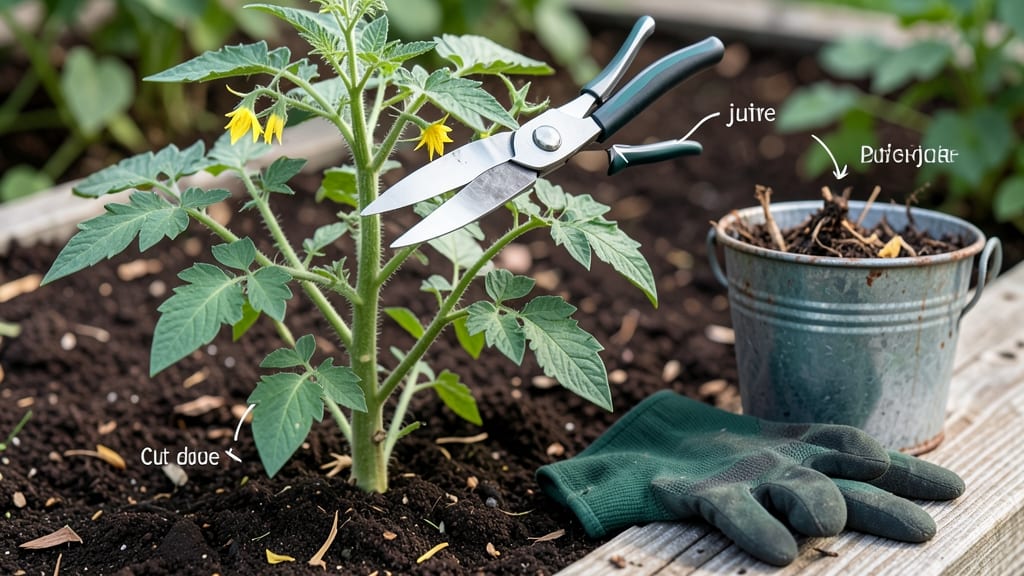
Pruning young tomato plants turns scraggly seedlings into bushier, fruit-heavy powerhouses—just by pinching off a few leaves. ✂️ I learned the hard way that skipping this step means fewer tomatoes and more leggy plants fighting for sunlight.
The secret is timing and technique: do it right, and you’ll see thicker stems, more branches, and a harvest that puts store-bought to shame.
You only need clean pruners (or your fingers!) and a sunny morning to work. Start when plants hit 12–18 inches tall, focusing on the "suckers"—those tiny shoots growing between the main stem and branches.
These compete with fruit production, so removing them early redirects energy where you want it: into juicy, vine-ripened tomatoes instead of extra foliage.
The payoff comes in 4–6 weeks: plants thicken, leaves shade fruit better, and you’ll have more clusters than you know what to do with. Even indeterminate varieties (the ones that keep growing all season) respond well—just keep pinching suckers as they appear.
The key? Don’t overdo it: aim for 3–5 main stems per plant, and always cut above a leaf node to encourage new growth.
Works for cherry, beefsteak, and heirloom varieties alike, and even saves space in small gardens. Here’s how to do it without turning your plants into a tangled mess—plus what to watch for when things go wrong.
📚 In This Guide
- What you need
- Instructions
- Tips and common mistakes
- Wrapping up and next steps
What you need
- ● Pruning shears or scissors: Sharp, clean, and sterilized (use rubbing alcohol or bleach solution). Avoid dull tools—they can damage plants.
- ○ Gloves: A pair of gardening gloves (optional but recommended to protect your hands from thorns and dirt).
- ● Disinfectant (bleach or rubbing alcohol): A small spray bottle or cloth to sterilize tools between cuts (1 part bleach to 9 parts water or 70% isopropyl alcohol).
- ○ Watering can or hose: For post-pruning hydration (optional but helpful if plants look stressed).
- ● Garden twine or stakes: If your plants are leggy, lightweight stakes can provide temporary support while they recover.
- ● Mulch: A layer of organic mulch (straw, grass clippings, or shredded leaves) to retain moisture and protect the soil.
- ○ Plant growth regulator (optional): A mild solution (like seaweed extract) to encourage faster recovery if pruning heavily.
- ● Notebook or app: To track pruning dates, plant responses, and notes on growth patterns.
Step-by-Step guide to pruning young tomato plants
Pinching and pruning young tomato plants transforms spindly stems into strong, productive bushes—here's exactly how to do it right.
🌱 Step 1: Identify the Main Stem and First True Leaves
Start when your tomato seedlings have developed their first true leaves (the second set after the initial seed leaves). These leaves are typically 1-2 inches long and look like miniature versions of mature foliage. Gently pinch off the top pair of leaves using your thumb and forefinger—no tools needed. This is called "pinching back," and it encourages the plant to branch out instead of growing tall and weak.
I know it seems counterintuitive to remove leaves, but this is where the magic happens. The plant will redirect its energy to the side shoots (suckers) that form at the leaf axils (where the leaf meets the stem). These side shoots will become your future fruiting branches. If you wait too long, the plant will grow too tall before you can shape it effectively.
✂️ Step 2: Remove Suckers to Encourage Bushier Growth
Suckers are the small shoots that grow in the V-shaped junction between the main stem and a branch. These appear 2-3 weeks after pinching back and are about 1-2 inches long. Use your fingers or clean pruning shears to gently pinch them off at the base. Never tear them—they’ll regrow, and you’ll waste time removing them repeatedly.
Here’s the thing—you only want to keep the strongest sucker on each branch. If a branch has multiple suckers, remove all but the one closest to the main stem. This ensures the plant’s energy goes into developing a few strong branches rather than many weak ones. If you’re growing indeterminate tomatoes (the vining types), you’ll need to keep pruning suckers throughout the season to maintain shape and airflow.
☀️ Step 3: Prune for Airflow and Sunlight Exposure
Once your plant reaches 18-24 inches tall, focus on pruning to improve airflow and sunlight penetration. Remove any leaves that are touching the soil or blocking light from reaching the lower branches. Use clean, sharp pruners to make cuts just above a leaf node (the bump where a leaf or branch grows out). This prevents disease and encourages new growth.
You’ll also want to trim back any branches that are growing inward or crossing over others. These can rub against each other, creating wounds that invite pests and diseases. Aim for an open, vase-like shape—this allows sunlight to reach all parts of the plant, which is critical for fruit development. If you’re growing determinate tomatoes (the bush types), you can stop pruning once the plant starts flowering heavily, as these varieties don’t need as much shaping.
⏰ Step 4: Time Your Pruning for Maximum Yield
Prune young tomato plants in the morning when the plants are turgid (full of water) and the cuts will seal quickly. Avoid pruning in the evening or after rain, as open wounds can invite fungal infections. After pruning, water the base of the plant deeply to help it recover. You’ll notice new growth emerging from the leaf axils within 5-7 days—this is a sign your pruning is working.
Real talk: Over-pruning can stress the plant, so don’t go overboard. Focus on removing only the suckers and leaves that are clearly hindering growth or airflow. If you see yellowing leaves, don’t automatically assume it’s time to prune—sometimes it’s just a sign of overwatering or nutrient deficiency. Always check the soil moisture and plant health before reaching for the shears.
Tips & tricks for perfect tomato plant pruning
Transforming those leggy seedlings into productive tomato bushes takes a few strategic moves—and avoiding these common pitfalls makes all the difference.
Timing is Everything: The 2-3 week window after your initial pinch-back (Step 1) is when suckers first appear. I check my plants every 5-7 days during this period—this is when you'll catch those tiny shoots before they grow too large. The key is consistency: if you miss a week, you'll suddenly have a jungle of suckers to remove. I keep a small notebook by my garden to mark when I last pruned each plant.
Tool Selection Matters: While fingers work for small suckers, invest in a pair of clean, sharp pruning shears for larger branches. Dull tools crush stems instead of making clean cuts, which can damage the plant. I sterilize my shears with rubbing alcohol between plants to prevent spreading disease. For large indeterminate varieties, I use a small bypass pruner—it gives me more leverage without tearing the plant.
Visual Cues for Perfect Pruning: When removing leaves in Step 3, look for the classic V-shaped junction where suckers emerge. The leaf you want to keep should be at the base of this V. For sunlight exposure, aim to remove any leaf that would cast shade on another part of the plant. I imagine a vase shape when pruning—this open structure prevents disease and maximizes fruit production. If you're unsure, snap a photo of your plant before pruning to compare after.
Recovery Strategy: After your morning pruning session, give plants a deep watering at the base—this helps them recover faster. I've noticed that plants pruned in the morning (when they're turgid) show new growth within 5-7 days as mentioned, but if you prune in hot afternoons, recovery can take up to 10 days. For heat-prone areas, I even mist the cut stems lightly to reduce stress. The goal is to minimize plant shock while encouraging that bushier growth we're after.
Pro Tips for Prune Young Tomato Plants
- Transforming those leggy seedlings into productive tomato bushes takes a few strategic moves—and avoiding these common pitfalls makes all the difference.
- Timing is Everything: The 2-3 week window after your initial pinch-back (Step 1) is when suckers first appear.
- Tool Selection Matters: While fingers work for small suckers, invest in a pair of clean, sharp pruning shears for larger branches.
Frequently asked questions
Got questions about pruning young tomato plants? You’re not alone! Here are some of the most common concerns—and straightforward answers—to help you grow like a pro.
Why should I prune my young tomato plants at all?
Pruning young tomato plants encourages bushier growth, which means more fruiting branches and a bigger harvest later. It also improves airflow, reducing disease risk and helping your plants focus energy on producing juicy, flavorful tomatoes instead of extra foliage.
When is the best time to start pruning?
Begin pruning when your tomato plants are 6–12 inches tall and have 3–4 sets of true leaves (not just seed leaves). This usually happens 3–4 weeks after transplanting. Pinch off the top growth just above a leaf node to trigger branching. Don’t wait too long!
What if I skip pruning—will my tomatoes still grow?
Yes, but they’ll likely be taller and less productive. Unpruned plants may grow long, leggy stems with fewer fruit clusters, and poor airflow can lead to fungal diseases. Pruning is especially critical for indeterminate varieties (like cherry tomatoes), which grow continuously.
Do I need special tools, or can I just use scissors?
You can use clean pruning shears, scissors, or even your fingers for small jobs! Just avoid dull tools that can crush stems or spread disease. Sterilize your tools with rubbing alcohol between plants. Bonus tip: Prune on a dry day to prevent splashing soil onto cuts.
What if I prune too much or too little?
If you over-prune, your plant may struggle to recover or produce fruit. If you under-prune, growth can become unruly. Aim for 1–2 inches of new growth between prunings. Watch your plant’s response: If it looks stressed, ease up. If it’s still leggy, keep pruning!
Wrapping up and next steps
Pruning young tomato plants might feel like a small task now, but it’s the secret to bigger harvests and healthier vines later! By pinching suckers and shaping your plants early, you’re setting the stage for a thriving garden. Remember, consistency is key—check your plants regularly and adjust as they grow.
Ready to take the next step? Monitor your tomato plants weekly and watch those lush, fruit-filled vines reward your effort. Happy gardening—your future tomato feasts are waiting! 🍅✨