
Vegetables
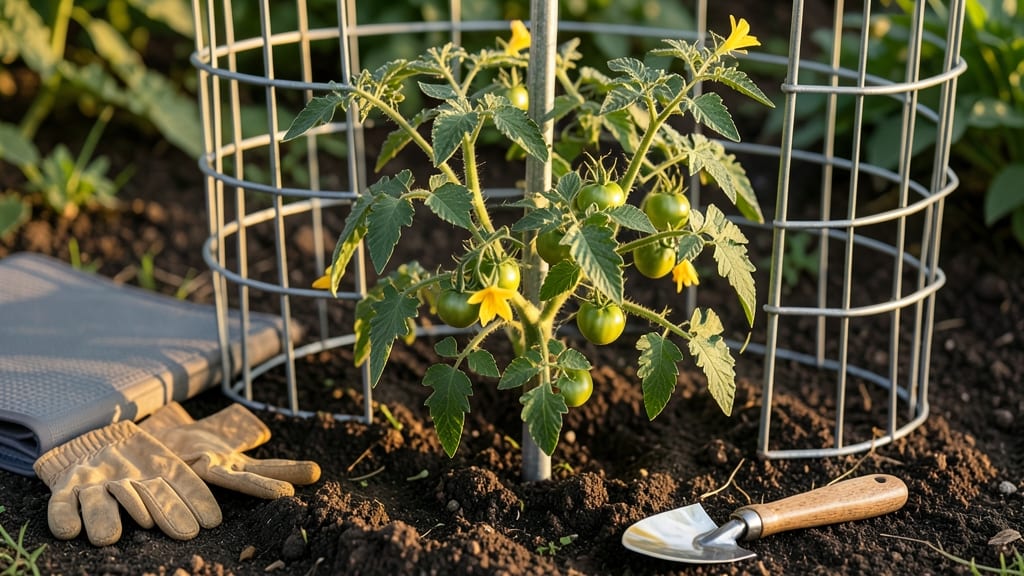
Setting up a tomato cage turns floppy plants into productive towers in just 15 minutes. 🌱 I learned the hard way—skipping support leads to sprawling vines, cracked fruit, and a mess that’s impossible to manage. The right cage keeps plants upright, improves airflow, and makes harvesting a breeze.
You’ll need a sturdy cage (5-6 feet tall), your tomato plant, and a sunny spot with good drainage. Most cages come with instructions, but the key is placing it right when you transplant—not waiting until the plant is already leaning.
Push the cage gently into the soil until it stands firm, then guide the main stem through the center opening. Once secured, tie the stem loosely to the cage with soft plant ties every 12-18 inches as it grows. This prevents wind damage and keeps the plant growing straight.
The payoff? Healthier plants, fewer diseases, and tomatoes that ripen evenly—no more hidden fruit under sprawling leaves. If cages feel too bulky, try wooden stakes or trellises for a lighter look. Just avoid flimsy plastic cages—they bend under heavy fruit.
With the right support, your tomatoes will reach their full potential without the struggle.
📚 In This Guide
- What you need
- Instructions
- Tips and common mistakes
- Wrapping up and next steps
What you need
- ● Tomato cage: Choose a 5- to 6-foot tall cage made of galvanized steel or sturdy plastic (5-6 cages for multiple plants). Look for cages with 16+ wires or slats for maximum support.
- ● Tomato plants: Healthy seedlings or young plants with 2-3 true leaves (1-3 plants per cage, depending on variety).
- ● Garden soil: Well-draining, nutrient-rich soil (amend with compost if needed).
- ● Garden gloves: A pair to protect your hands while handling soil or thorny plants.
- ● Watering can or hose: With a gentle spray nozzle for hydration.
- ● Staking ties: Soft plant ties or cloth strips to secure vines to the cage (avoid wire ties—they can damage stems!).
- ● Mulch: Straw or shredded leaves to retain moisture and suppress weeds.
- ● Fertilizer: Balanced organic fertilizer (e.g., 10-10-10) to boost growth.
- ● Pruning shears: For trimming suckers or excess foliage later in the season.
- ● Plant support stakes: Additional wooden or metal stakes if your cage feels unstable in windy areas.
Step-by-step guide to setting up a tomato cage
Here's how I assemble sturdy cages that keep tomato plants upright and productive all season.
🪴 Step 1: Choose the Right Cage and Location
Select a 4-foot tall cage made of galvanized steel or sturdy plastic—these hold up to heavy vines and wind better than flimsy wire. I always opt for 4-6 foot cages for indeterminate varieties since they can grow 6-10 feet tall if given support. Place the cage next to your tomato plant before transplanting, so you don't disturb roots later.
Position the cage 2-3 feet from the plant's base—this gives the stem room to grow straight before needing support. If planting multiple tomatoes, space cages 18-24 inches apart to allow airflow between plants. This prevents fungal diseases like blight that thrive in crowded, humid conditions.
🌱 Step 2: Assemble the Cage Properly
Unfold the cage and stand it upright in the planting hole before inserting the tomato. Most cages come with pre-attached stakes or rings—push these 4-6 inches deep into the soil on opposite sides of the plant. For extra stability, I add two additional stakes at a 45-degree angle from the cage corners and tie them together with soft plant ties (never wire, which cuts into stems).
If your cage has a collapsible design, snap the sides together firmly until you hear a click—this ensures the structure won't bow under the weight of fruit. For heavy producers, I reinforce the center with a third cross-stake halfway up the cage. This prevents the middle from sagging when tomatoes ripen.
✂️ Step 3: Secure the Plant to the Cage
Gently weave the main stem through the cage's vertical slots as the plant grows. I start tying when the stem reaches 12-18 inches tall, using soft fabric ties (like those from TomatoTies brand) that won't girdle the stem. Loop the tie around the main stem and one cage ring, leaving 1-2 inches of slack—this prevents the tie from tightening as the plant grows.
Watch for side shoots (suckers) that form in the leaf axils. These compete with the main stem for energy, so I either pinch them off or weave them through the cage if I want extra fruiting branches. Never let suckers grow longer than 3 inches—they'll drain energy from your main crop.
💧 Step 4: Maintain Support as the Plant Grows
Check the cage weekly for stability, especially after heavy rain or wind. If the cage leans, push it back upright and add soil or rocks to the base for weight. I also rotate the plant 180 degrees every 2-3 weeks so it grows straight toward the sun—not leaning toward one side. You'll notice this when the plant starts growing unevenly toward the light source.
When tomatoes begin to form, the plant's weight increases dramatically. If the cage sags, add a second tie below the heaviest fruit clusters. For determinate varieties (bush tomatoes), the cage only needs to support the plant until fruit ripens—after that, you can remove it. Indeterminate varieties, though, need the cage all season long as they keep growing.
☀️ Step 5: Adjust for Wind and Heavy Fruit
If you're in a windy area, secure the cage's base with two additional stakes driven into the ground at a 30-degree angle. This creates a triangle of support that resists tipping. I also weave larger branches through the cage's top rings to spread the plant's weight more evenly—this prevents the cage from bending under fruit load.
When tomatoes ripen, the plant's center may sag. To fix this, tie the main stem to the cage at 12-inch intervals using fresh ties. Avoid metal or wire—they'll cut into the stem as it thickens. Instead, use soft, stretchy plant ties that you can easily adjust as the stem grows thicker.
Tips & tricks for sturdy tomato cage support
Between us, proper tomato cage setup isn't just about sticking a cage in the ground—it's about creating a system that grows with your plant. Here's what I've learned from years of trial and error (and a few toppled cages).
The Cage Height Matters: For indeterminate varieties, that 4-6 foot cage isn't just a suggestion—it's essential. I've seen 4-foot cages snap under the weight of 8-foot-tall plants. If your variety is known to grow tall, go with the taller cage right from the start. The extra foot of height gives you room to work without constantly adjusting ties as the plant grows.
Plant Positioning Secret: That 2-3 feet spacing from the plant's base isn't arbitrary—it's about giving your tomato room to grow straight before it needs support. I learned this the hard way when my first plant grew crooked because the cage was too close. Think of it like giving your tomato a straight jacket that grows with it, not one that restricts it from day one.
Tie Technique That Changed Everything: The 12-18 inch height before your first tie is crucial, but here's what nobody tells you: those soft fabric ties need to be checked weekly. I started using the "finger test"—if you can slide your finger between the tie and the stem, it's still loose enough. Tight ties strangle growth, while loose ones won't hold. And for heaven's sake, never use wire—it'll cut your plant like a guillotine.
Wind Resistance Strategy: That 30-degree angle for additional stakes in windy areas isn't just about looks—it's physics. The triangle formation creates three points of support that distribute weight and resist tipping forces. I reinforce this with a simple trick: after heavy rain, I add a handful of small rocks around the cage base to increase stability without disturbing the plant's roots.
Pro Tips for Set Up Tomato Cage
- Between us, proper tomato cage setup isn't just about sticking a cage in the ground—it's about creating a system that grows with your plant.
- The Cage Height Matters: For indeterminate varieties, that 4-6 foot cage isn't just a suggestion—it's essential.
- Plant Positioning Secret: That 2-3 feet spacing from the plant's base isn't arbitrary—it's about giving your tomato room to grow straight before it needs support.
Frequently asked questions
Got questions about setting up your tomato cage? You’re not alone!
Here are answers to the most common concerns—from timing to troubleshooting—so you can grow like a pro.
When is the best time to install a tomato cage?
Install your tomato cage before transplanting seedlings into the ground or container. This gives roots time to establish without struggling against wind or heavy vines. If your plant is already growing, transfer it gently with its cage—just be patient while it adjusts!
Can I reuse a tomato cage from last year?
Yes! Clean and disinfect cages with a 10% bleach solution (1 part bleach to 9 parts water) to kill pests or diseases. Rinse well and let dry in the sun. Reusing cages saves money and reduces waste—just ensure they’re sturdy and free of rust.
What if my tomato plant outgrows the cage?
If vines escape the cage, reinforce it with soft plant ties or a second cage tied together. For heavy varieties like beefsteaks, opt for a larger cage (6+ feet tall) or add trellis supports alongside it. Prune suckers regularly to manage growth!
How do I protect my cage from strong winds?
Stake the cage deeper into the soil (12+ inches) or bury a second stake next to it and tie the cage to it with twine. For containers, anchor the pot with weights or use a windbreak like burlap. Avoid overcrowding plants—spread them out for better airflow and stability.
Why is my tomato plant leaning or falling over?
Leaning usually means the cage isn’t tall enough or the plant needs more support. Check for root-bound plants (container-grown) and repot if needed. Secure the cage to a stake or add a wooden trellis for extra strength. Prune lower leaves to reduce weight on stems.
Pro Tip:
For determinate tomatoes (bush varieties), a cage is perfect. But indeterminate types (like cherry tomatoes) may need extra vertical support. Combine cages with floppy trellises or bamboo poles for a hybrid setup!
Wrapping up and next steps
Setting up a tomato cage is a simple yet game-changing task for any gardener! With just a few minutes and minimal tools, you’ll provide your tomato plants with the sturdy support they need to thrive.
Remember, stability and placement are key—secure that cage firmly, and watch your plants grow strong and healthy.
Ready to see your tomatoes reach new heights? Grab your cage, follow the steps, and enjoy the rewards of a bountiful harvest! 🌱🍅 Next up: plant your tomatoes and keep them well-fed with regular watering and nutrients.