
Companion Plants
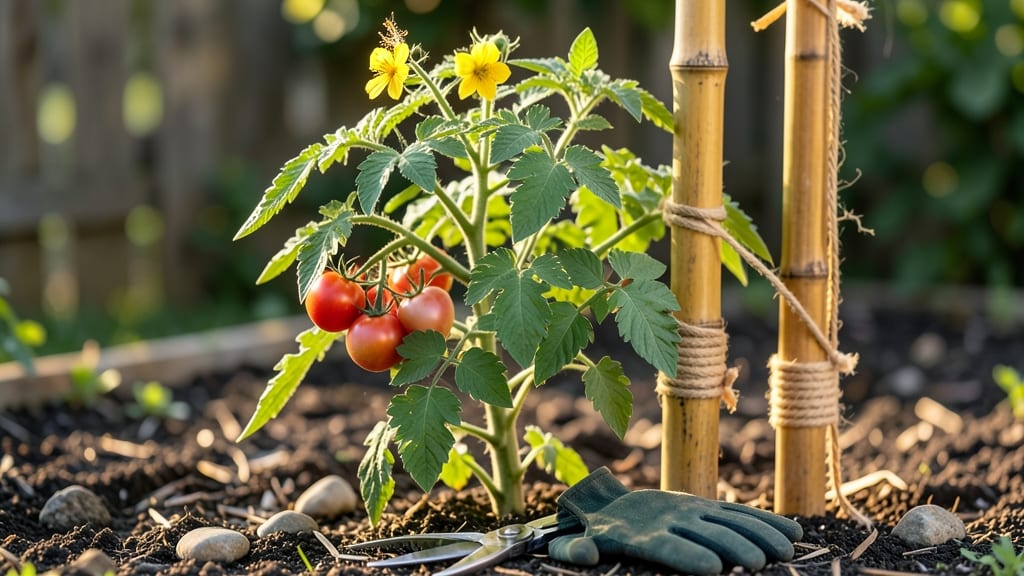
String support for tomatoes isn’t just a trick—it’s the secret to sturdy, disease-resistant vines that produce heavier fruit. 🌱 I’ve grown hundreds of plants this way, and the difference between string-supported tomatoes and flopping ones is night and day. The best part?
No trellis to build, no cages to buy—just a spool of twine and a few minutes of work. You’ll need soft plant ties (not wire or zip ties), a strong string (jute or nylon), and a top anchor (like a stake or wall hook).
Start when plants hit 12-18 inches tall, tying the main stem loosely to the string every 6-8 inches. This keeps them vertical without strangling the stems as they grow.
By summer’s end, your plants will be 6+ feet tall, with fruit hanging neatly instead of dragging in the dirt. The string method also reduces disease risk by keeping foliage dry and airy. Plus, harvesting becomes a breeze—no more bending over or broken stems.
For comparison, stakes work well but can poke stems, while cages limit airflow. String gives you full control over plant shape and support. Ready to try it? Here’s the exact process I use every season.
📚 In This Guide
- What you need
- Instructions
- Tips and common mistakes
- Wrapping up and next steps
What you need
- ● String or twine: 10–20 feet (3–6 meters) of biodegradable or recyclable string (e.g., jute, hemp, or untreated cotton). Avoid plastic—it can harm plants over time!
- ○ Stakes or supports: 3–5 wooden stakes (1–2 feet/30–60 cm tall) or a T-post for larger plants. Optional: Metal or bamboo stakes for durability.
- ● Tomato plants: 1–4 healthy seedlings or young plants (depending on space). Choose indeterminate varieties for best vertical growth!
- ● Garden twine or zip ties: Small rolls (5–10 feet/1.5–3 meters) to secure stakes and string temporarily.
- ● Pruning shears or scissors: For trimming excess foliage or string (if needed).
- ● Soft plant ties: Velcro or fabric strips to gently bind stems without cutting into them.
- ● Clips or clips: Plastic or metal plant clips for securing string without knots.
- ● Hose or watering can: To keep plants hydrated while training (string support works best with healthy growth!).
- ● Garden gloves: Protect your hands from thorns or rough string.
Step-by-step guide to supporting tomato plants with string
This trellis-free method keeps plants upright, boosts yields, and works for any garden space.
🪴 Step 1: Gather Your Support Materials
You'll need 4 sturdy wooden stakes (6 feet tall) or metal fence posts for each plant, plus 100 feet of soft twine or plant tie (jute or cotton works best—avoid plastic, which can cut stems). I like to use 3/8-inch wide twine because it's gentle on plant tissue but strong enough to hold heavy fruit. Place your stakes in the ground 6-8 inches from the plant base.
Drive the stakes 12-18 inches deep—deep enough they won't lean or wobble when you tug. For windy areas, pound them in at a 15-degree angle away from prevailing winds. This creates a natural brace that prevents snapping during storms. If you're working with multiple plants, space stakes 3 feet apart in a grid pattern for easy string management.
💧 Step 2: Create the String Grid System
Start by tying the top of your twine to the very top of each stake using a bowline knot—this knot holds tight but lets you adjust easily. Stretch the twine horizontally between stakes at 12-inch intervals, creating a ladder-like grid. I pull the string taut but not tight enough to snap—think "firm handshake" tension. For 4 plants, you'll need 3 horizontal strings (one at the top, one in the middle, one at the base).
Here's the thing—don't skip the base string. It acts as a guide for young plants to climb early, preventing them from flopping when they're still small. You'll see the difference immediately: plants on the grid grow straight up while unsupported ones sprawl. For extra stability, add a diagonal string from the top of one stake to the base of the next, creating an "X" pattern. This prevents the grid from sagging under fruit weight.
☀️ Step 3: Train the Plant as It Grows
When your tomato plant reaches 12-18 inches tall, gently weave the main stem through the lowest string. Don't force it—if the stem won't fit, loosen the string slightly. I like to use a figure-eight tie around the stem to secure it without cutting into the plant. As the plant grows, guide the main stem upward through each successive string, tying it loosely every 12 inches.
Watch for suckers (those little shoots in the leaf axils)—they're the plant's way of creating side branches. For indeterminate tomatoes (the vining types), pinch off suckers larger than a pencil to direct energy upward. You'll know you're doing it right when the plant grows in a single vertical column instead of bushy sprawl. This method also makes harvesting easier—no more bending over!
✂️ Step 4: Adjust and Maintain Through the Season
Check your string system weekly—especially after heavy rains or when fruit starts forming. Loosen any strings that feel tight against the stem, and retie them higher if the plant has outgrown the current grid level. I add a fourth string mid-season if my plants are particularly vigorous. For large fruit varieties, consider adding a supporting string between stakes every 18 inches to prevent sagging.
If a stem breaks during a storm, don't panic. Simply tie the remaining healthy growth to the nearest string and let the plant recover. The string system gives you flexibility—you can even train multiple stems if your plant produces suckers you want to keep. Just remember: the goal is gentle guidance, not tight restriction. A well-supported tomato plant will reward you with bigger, riper fruit and fewer diseases from ground contact.
⏰ Step 5: Clean Up After Harvest
Once your tomatoes are harvested, remove the string system before the first frost. Cut the twine at the stake tops and pull gently—most will come out easily. If any twine breaks, leave the stubs in the ground; they'll decompose naturally. Store your stakes and twine for next season (clean and dry them first to prevent mold). I label mine with the year to track what worked best each growing season.
Real talk: this method takes 10 minutes per plant to set up but pays off huge in yield and ease. You'll see the difference immediately in how your plants grow—straight, strong, and ready to produce. Plus, it's way cheaper than buying commercial cages. Next year, you might even experiment with double-string systems for extra-heavy varieties like beefsteaks.
Tips & tricks for supporting tomato plants with string
This simple system transforms sprawling vines into productive vertical columns—here's how to get it right every time.
Stake Placement Matters: The 6-foot stakes should be driven 12-18 inches deep at a 15-degree angle in windy areas. I learned this the hard way after seeing stakes topple during storms. For extra stability, pound them in on the side opposite prevailing winds. This creates a natural brace that prevents snapping when fruit loads up. The 6-8 inch spacing from the plant base gives roots room to breathe while still providing support.
Twine Selection Tip: Avoid plastic twine—it can cut into stems as they grow. I use 3/8-inch wide jute twine because it's gentle yet strong enough to handle heavy tomato fruit. If you're working with multiple plants, keep a roll of twine handy and cut it to length as you go. The 100 feet mentioned is plenty for 4 plants, but you might need more if you're supporting larger varieties like beefsteaks.
String Tension Secret: When creating your 12-inch grid, aim for "firm handshake" tension—not too tight, not too loose. Too tight restricts growth; too loose lets plants sag. The base string is especially important—it guides young plants upward before they get too heavy. I add diagonal strings creating "X" patterns between stakes for extra stability, especially when fruit starts forming.
Maintenance Strategy: Your weekly checks are crucial—especially after rains or when fruit begins to swell. Loosen any strings that feel tight against the stem, and retie them higher as the plant grows. For particularly vigorous plants, consider adding a fourth string mid-season. This system gives you flexibility: if a stem breaks, simply tie the healthy growth to the nearest string and let the plant recover.
Pro Tips for Support Tomato Plants With String
- This simple system transforms sprawling vines into productive vertical columns—here's how to get it right every time.
- Stake Placement Matters: The 6-foot stakes should be driven 12-18 inches deep at a 15-degree angle in windy areas.
- Twine Selection Tip: Avoid plastic twine—it can cut into stems as they grow.
Frequently asked questions
Got questions about supporting your tomato plants with string? You’re not alone!
Here are some common concerns—and quick, easy answers to keep your vines thriving without a traditional trellis.
What’s the best type of string to use for tomato plants?
Opt for natural jute twine (biodegradable) or plastic-coated string (durable). Avoid wire or rough materials that can damage stems. Jute works well for short-term use, while plastic string lasts longer if you plan to reuse it year after year. Pro tip: Skip the tape—it can girdle stems over time!
When is the best time to start stringing tomato plants?
Begin when plants are 6–12 inches tall (about 2–3 weeks after transplanting). This gives them enough height to benefit from support but isn’t so tall that they topple over. For indeterminate varieties, keep adding string as they grow—think of it like a rolling scaffold!
Can I reuse string from last year’s tomato plants?
Yes, but sterilize it first! Soak the string in a 10% bleach solution (1 part bleach to 9 parts water) for 10 minutes, then rinse and dry. This kills pathogens and prevents disease spread. Bonus: Reusing string is eco-friendly and budget-savvy!
What if my tomato plants keep breaking the string?
This usually means the string is too loose or weak. Switch to a thicker, stretch-resistant string (like nylon) or add a second layer for extra support. For windy areas, tie plants at multiple points (every 6–12 inches) and use soft ties (like old T-shirts or rubber bands) to avoid cutting into stems.
Are there alternatives to string if I don’t have any?
Try:
- Bamboo stakes + soft plant ties (gentler than string)
- Old pantyhose (cut into strips for flexible support)
- Twisted vine tendrils (weave nearby plants together naturally)
- Cattle panels or wire mesh (for larger gardens)
Wrapping up and next steps
Supporting your tomato plants with string isn’t just a clever trick—it’s a game-changer for bigger yields, healthier vines, and easier harvesting. 🌱 With just a few simple steps, you’ll transform sprawling plants into vertical powerhouses while keeping pests at bay and airflow optimized.
Whether you’re a seasoned gardener or a beginner, this method is effortless, cost-effective, and rewarding.
Now that you’re armed with the know-how, grab those tomatoes and get growing! 🌿 Ready to take it further? Try experimenting with companion plants like basil or marigolds to boost flavor and deter pests—your garden (and taste buds) will thank you!