
Planting
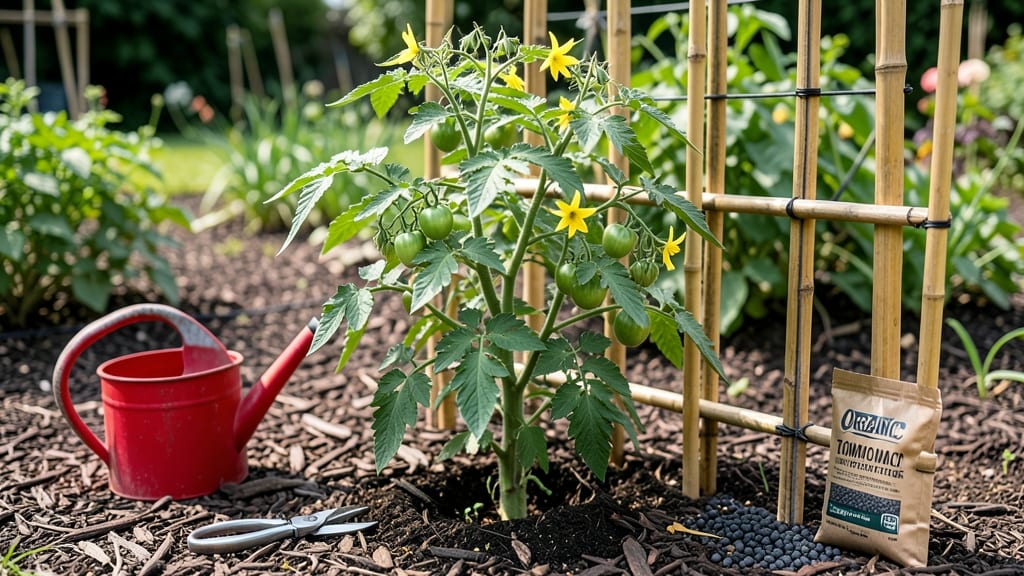
Taking care of a tomato plant starts with the right balance of sun, soil, and patience—my first vine produced 20 pounds of tomatoes after I finally got these basics right.
The secret isn't complicated: healthy roots mean strong stems, and strong stems mean fruit that actually ripens on the vine, not rots in the soil.
You'll need a spot with 6-8 hours of sunlight daily, well-draining soil rich in compost, and a sturdy cage or stakes to support those vines as they grow. Watering matters most—deep soaks once a week (not daily light sprinkles) keep roots happy without inviting disease.
And yes, pruning those suckers (the little shoots between main stems) actually makes plants more productive, not less.
By midsummer, you'll be harvesting tomatoes that burst with flavor, not the bland store-bought versions. The plants reward consistent care with weeks of fresh harvests, and the smell of sun-warm tomatoes on the vine? That's the real payoff. Let's get those vines thriving.
Works for both garden beds and containers, and the same principles apply whether you're growing heirlooms or hybrids. The only difference is how fast they grow—so choose your varieties based on your season length.
📚 In This Guide
- What you need
- Instructions
- Tips and common mistakes
- Wrapping up and next steps
What you need
- ● Tomato seeds or seedlings: Choose heirloom, hybrid, or disease-resistant varieties (e.g., Cherry, Beefsteak, or Roma). Start with 3-5 plants for a small garden or 10+ for a bigger harvest.
- ● Containers or garden bed: Containers: 5-gallon pots or larger (tomatoes need room!), with drainage holes. 1 container per plant is ideal.
- ● Garden bed: Well-draining soil in a sunny spot (6+ hours of sunlight daily). Amend soil with compost if needed.
- ● Potting mix or garden soil: Lightweight, nutrient-rich mix (avoid garden soil alone—it compacts easily). 1 bag per 2-3 plants or mix with compost (1:1 ratio).
- ● Fertilizer: Balanced fertilizer (10-10-10) or tomato-specific fertilizer for planting.
- ● Slow-release granular fertilizer (e.g., 13-13-13) for ongoing nutrition.
- ● Watering can or hose with gentle nozzle: Avoid blasting leaves to prevent disease.
- ● Stakes or cages: 6-ft tall stakes or tomato cages (1 per plant) to support vines as they grow.
- ● Pruning shears: For trimming suckers and dead leaves (sharp, clean blades only!).
- ● Mulch (straw or shredded leaves): Retains moisture and suppresses weeds. Spread 2-3 inches around the base.
- ● pH test kit: Tomatoes thrive in slightly acidic soil (pH 6.0–6.8). Adjust with lime (to raise pH) or sulfur (to lower it) if needed.
- ● Plant clips or twist ties: Secure vines to stakes/cages as they grow.
- ● Drip irrigation or soaker hose: Automates watering and reduces disease risk.
- ● Gloves and knee pads: Because gardening is way more comfortable with these!
Step-by-Step guide to caring for a tomato plant
Here's the straightforward approach I use to keep tomato plants thriving all season long.
☀️ Step 1: Position for Maximum Sunlight
Tomatoes demand 6-8 hours of direct sunlight daily—no compromises. Place your plant where it gets full morning sun and afternoon light, even if that means moving it closer to a south-facing window or adjusting your garden layout. I always check by observing the plant's shadow at noon; if it's shorter than the plant itself, you've got the right spot.
If you're growing indoors, supplement with a grow light positioned 6-12 inches above the plant for 14-16 hours daily. You'll notice leaves growing toward the light—rotate the plant weekly to prevent lopsided growth. Without enough light, stems grow weak and produce fewer fruits, so don't skimp here.
💧 Step 2: Water Deeply and Consistently
Water at the base of the plant 1-1.5 inches per week, delivering moisture directly to the roots rather than overhead. I water in the morning so the foliage dries quickly, preventing fungal diseases like blight. Let the top inch of soil dry between waterings—you'll know it's time when the soil feels dry to touch.
Avoid wetting the leaves, especially in humid conditions. Wet foliage invites disease, and tomatoes are particularly susceptible. If you must water overhead, do it early in the day so leaves have time to dry completely. Mulching with straw helps retain moisture and keeps soil temperatures stable, reducing stress on the plant.
🌿 Step 3: Support and Prune for Health
Install a sturdy stake or cage at planting time—tomatoes grow heavy, and unsupported vines break easily. I tie the main stem to the support every 2-3 weeks as it grows, using soft plant ties or strips of old T-shirt fabric. Never use wire or anything that can cut into the stem.
Prune suckers—those little shoots that grow in the joint between the stem and a branch—regularly. Remove them by pinching them off with your fingers when they're still small. This encourages the plant to focus energy on fruit production rather than leaf growth. Watch for yellowing leaves at the bottom; these are normal as the plant matures, but remove any diseased or spotted leaves immediately.
✂️ Step 4: Fertilize and Monitor for Pests
Feed your tomato plant with a balanced fertilizer (10-10-10) every 4-6 weeks after planting, following package instructions. I switch to a low-nitrogen, high-phosphorus formula when flowers appear to encourage fruit set. Over-fertilizing leads to leafy growth at the expense of tomatoes, so stick to the recommended amounts.
Inspect the undersides of leaves weekly for early signs of pests like aphids or whiteflies. Spray with a mix of 1 tablespoon mild dish soap and 1 quart water if you spot any. For larger infestations, use neem oil or an insecticidal soap. Healthy plants bounce back quickly, but don't let problems linger—tomatoes are resilient but not indestructible.
🍅 Step 5: Harvest at Peak Ripeness
Pick tomatoes when they're fully colored and slightly soft to the touch. Green tomatoes can ripen off the vine if stored in a cool, dry place with a banana to release ethylene gas. I harvest in the morning when the fruit is cool and firm, using a sharp knife or pruners to avoid damaging the vine.
Don't leave overripe tomatoes on the plant—they attract pests and can spread disease to other fruits. If your plant produces more than you can use, share with neighbors or preserve them by canning, freezing, or making sauces. A well-cared-for tomato plant rewards you with an abundance, so enjoy the harvest while it lasts!
Tips & tricks for growing healthy tomato plants
A few simple adjustments can make all the difference between a struggling tomato plant and one that produces bushels of flavorful fruit. These are the lessons I've learned after years of trial and error in my own garden.
Light Positioning: When checking your plant's shadow at noon, pay attention to the direction of the light. South-facing windows or garden spots get the most consistent sunlight. If your plant leans toward the light, rotate it a quarter turn every few days to encourage even growth. Uneven light exposure leads to weak stems and poor fruit set, so don't overlook this simple adjustment. The 6-8 hours of direct sunlight in Step 1 should be spread evenly throughout the day whenever possible.
Watering Technique: The 1-1.5 inches of water per week in Step 2 is a guideline, but your actual needs depend on your climate. In hot, dry weather, you might need to water every other day, while cooler, humid conditions may only require weekly watering. Always check the top inch of soil—if it's dry, it's time to water. I've found that using a rain gauge or measuring cup next to the plant helps track exactly how much water you're providing.
Pruning Strategy: When removing suckers in Step 3, be patient and thorough. These little shoots grow quickly, especially in warm weather, so check your plant every 5-7 days. The goal is to keep the plant's energy focused on fruit production rather than leaf growth. I like to prune in the morning when the plant is dry, which reduces the risk of disease entering through any small cuts. Remember, you're not just removing growth—you're shaping the plant's future harvest.
Fertilizer Timing: The switch to low-nitrogen, high-phosphorus fertilizer when flowers appear in Step 4 is crucial. I've seen plants with lush green leaves but no tomatoes because they were over-fertilized with nitrogen early in the season. Once flowers appear, cut back on the balanced fertilizer and focus on phosphorus to encourage fruit development. A simple soil test can help you determine exactly what nutrients your plants need at each stage.
Pro Tips for Take Care Of A Tomato Plant
- A few simple adjustments can make all the difference between a struggling tomato plant and one that produces bushels of flavorful fruit.
- Light Positioning: When checking your plant's shadow at noon, pay attention to the direction of the light.
- Watering Technique: The 1-1.5 inches of water per week in Step 2 is a guideline, but your actual needs depend on your climate.
Frequently asked questions
Got questions about growing your own tomato plants? You're not alone! Here are some of the most common queries—plus quick, practical answers to keep your vines happy and productive.
How often should I water my tomato plants?
Tomatoes need consistent moisture—about 1–1.5 inches of water per week, especially during fruiting. Water deeply at the base (not the leaves) to prevent disease, ideally in the morning so foliage dries quickly. Pro tip: Use drip irrigation or soaker hoses to avoid wetting leaves, which can lead to fungal issues like blight.
When is the best time to transplant tomato seedlings?
Wait until after the last frost and soil temps are above 55°F (13°C)—usually 2–3 weeks before your area’s last frost date. Seedlings should be 4–6 inches tall with 2–3 sets of true leaves. Transplant on a cloudy day or in the evening to reduce stress. Harden them off first by exposing them to outdoor conditions for 5–7 days before moving.
Why are my tomato leaves turning yellow?
Yellow leaves usually signal overwatering, underwatering, or nutrient deficiencies. Check the soil—if it’s soggy, improve drainage. If dry, water deeply. Lower leaves yellowing? It’s often normal aging, but if it spreads upward, it could be blight or nitrogen deficiency. Feed with a balanced fertilizer (like 10-10-10) or compost tea. Pro tip: Prune affected leaves to improve airflow.
Can I grow tomatoes in containers, and what’s the best setup?
Choose a 5-gallon pot or larger (bigger = better for heavy fruiting). Use a lightweight potting mix with added compost, and ensure it has drainage holes. Dwarf varieties (like ‘Tiny Tim’ or ‘Patio Princess’) thrive in containers, while indeterminate types need stakes or cages for support. Place pots in full sun (6–8+ hours/day) and fertilize every 2–3 weeks with a tomato-specific feed.
How do I deal with pests like aphids or hornworms?
Start with prevention: Use row covers early in the season and remove weeds (they attract pests). For aphids, blast them off with water or introduce ladybugs. Hornworms? Handpick them (they’re huge and easy to spot!) or use Bt (Bacillus thuringiensis), a natural bacterial spray. Pro tip: Encourage beneficial insects like parasitic wasps by planting dill or basil nearby.
Still stumped? Drop your tomato-growing woes in the comments—we’ve got you covered!
Wrapping up and next steps
Caring for a tomato plant is a rewarding journey that connects you to the earth and your table!
With the right sunlight, soil, water, and love, you’ll soon enjoy the sweet taste of homegrown tomatoes—straight from vine to plate. 🍅✨ Start small, stay consistent, and don’t hesitate to troubleshoot along the way.
Ready to turn your green thumb into a harvest? Plant those seeds (or seedlings) today and watch your garden flourish! For even more tips, explore our guide on common tomato pests or dive into pruning techniques to maximize your yield.