
Companion Plants
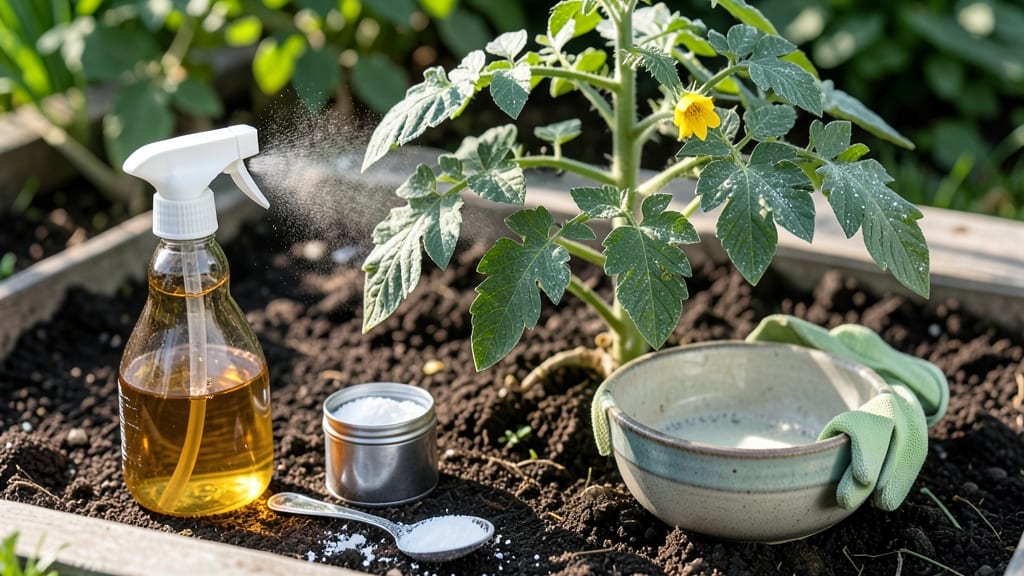
How to use baking soda for tomato plants was the game-changer my struggling plants needed—turning my failed science experiment into a thriving harvest. The secret lies in its ability to balance pH and deliver calcium directly to where plants need it most, without harsh chemicals that disrupt your organic garden’s delicate balance.
You’ll need just 1 tablespoon of baking soda, a gallon of water, and a spray bottle for the foliar treatment. Mix gently (no clumping!) and apply to leaves when the soil is moist but not soggy—this is where most gardeners mess up.
The solution works best when used preventatively at planting and again when flowers appear, but it can also rescue stressed plants showing early signs of rot.
What you’ll see is firm, healthy fruit with no dark, sunken bottoms—no more wasted harvests from calcium deficiency. The plants stay lush, the flavor improves, and you avoid the frustration of throwing away misshapen tomatoes. It’s the organic gardener’s shortcut to perfect tomatoes without the guesswork.
For extra insurance, pair this with crushed eggshells in the soil (for calcium) and mulch to keep moisture steady. If rot persists, check your watering habits—overhead watering can wash away calcium faster than baking soda can replenish it. Here’s how to make it work for your garden.
📚 In This Guide
- What you need
- Instructions
- Tips and common mistakes
- Wrapping up and next steps
What you need
- ● Baking soda (sodium bicarbonate) – 1-2 tablespoons per gallon of water (food-grade quality recommended).
- ● Water – 1 gallon (3.8 liters) per treatment (use distilled or rainwater if possible).
- ● Spray bottle or garden sprayer – 16-32 oz (500-1000 mL) capacity for even distribution.
- ● Measuring spoons or scale – For precise baking soda quantities.
- ○ Gloves (optional but recommended) – To protect hands from prolonged contact with baking soda.
- ● Horticultural oil or soap – 1 tsp per gallon (adds mild fungicidal properties).
- ● Lemon juice or vinegar – 1 tsp per gallon (balances pH and adds extra nutrients).
- ● Epsom salt (magnesium sulfate) – 1 tbsp per gallon (boosts magnesium for healthier plants).
- ● pH testing kit – To monitor soil pH (ideal range: 6.0-6.8 for tomatoes).
- ● Fine-mesh strainer – If mixing baking soda with soil (to avoid clumping).
Step-by-Step guide to using baking soda for tomato plants
Here’s how to naturally prevent blossom end rot and strengthen your tomato plants—no chemicals needed.
Prepare the Baking Soda Solution
Mix 1 teaspoon of baking soda with 1 quart of water in a clean spray bottle or bucket. The baking soda acts as a mild fungicide and soil pH regulator, but too much can disrupt beneficial microbes. Use only this ratio—never more than 1 teaspoon per quart.
Add a few drops of liquid dish soap (about ½ teaspoon) to help the solution adhere to leaves and stems. This isn’t about cleaning; it’s about creating surface tension so the baking soda stays where it’s needed. Shake the mixture well before use to ensure even distribution.
Apply to Soil and Foliage
Spray the solution directly onto the soil around the base of the tomato plant, focusing on the root zone. This helps correct calcium deficiencies and prevents blossom end rot by stabilizing soil pH. Avoid wetting the fruit, as excess moisture can promote rot.
Lightly mist the undersides of leaves with the remaining solution. The undersides are where pests and fungal spores often hide, and this application prevents early signs of disease. Work on a calm day so the spray dries evenly—wet foliage left in direct sunlight can scorch.
Monitor Soil pH and Reapply as Needed
Test your soil’s pH every 2-3 weeks using a simple soil kit. Tomatoes thrive in slightly acidic to neutral soil (pH 6.0–6.8). If your soil tests higher than 7.0, baking soda applications can help lower it gradually. Overcorrecting with baking soda raises pH too quickly, locking out essential nutrients.
Reapply the solution every 7–10 days during active growth (spring through summer). Stop applications 2 weeks before harvest to avoid any residual buildup on fruit. If blossom end rot persists, pair this method with calcium-rich compost or crushed eggshells for better results.
Combine with Good Growing Practices
Baking soda alone won’t fix poor growing conditions. Ensure your tomato plants receive 1–2 inches of water per week, delivered at the soil level—not overhead. Mulch with straw or grass clippings to retain moisture and prevent soil pH fluctuations.
Rotate crops annually to prevent soil-borne diseases, and remove any affected fruit immediately. Healthy plants are resilient—when you combine baking soda with consistent care, you’ll see fewer signs of blossom end rot and stronger overall growth.
Tips & tricks for using baking soda on tomato plants
Between us, baking soda isn't just a kitchen staple—it's a game-changer for tomato gardens when used correctly. Here's what nobody tells you about maximizing its benefits while avoiding common pitfalls.
Precision Matters: The 1 teaspoon to 1 quart ratio is non-negotiable. I learned this the hard way after overcorrecting my soil pH and seeing nutrient lockout in my plants. Too much baking soda raises pH too quickly, making calcium and other nutrients unavailable. Think of it like seasoning a dish—just enough to taste it, not enough to ruin it.
Soil Application Technique: When applying to soil in Step 2, focus on the root zone within 2-3 inches of the stem. This is where the plant absorbs nutrients most efficiently. I've found that using a watering can with a narrow spout gives better control than a spray bottle. The goal is to moisten the soil without creating surface puddles that could promote rot.
Leaf Application Strategy: The undersides of leaves are prime real estate for fungal spores, so that's where you want to concentrate your baking soda mist in Step 2. Work early in the morning so the solution has time to dry completely before afternoon sun. I've noticed that plants treated this way show fewer signs of early blight and powdery mildew throughout the season.
pH Monitoring System: Invest in a simple soil pH test kit—it's the only reliable way to track progress. I test every 2 weeks as recommended, but I also keep a garden journal to track when I applied baking soda and how my plants responded. This helps me adjust future applications. Remember, we're aiming for gradual correction—you shouldn't see dramatic pH changes between tests.
Pro Tips for Use Baking Soda For Tomato Plants
- Between us, baking soda isn't just a kitchen staple—it's a game-changer for tomato gardens when used correctly.
- Precision Matters: The 1 teaspoon to 1 quart ratio is non-negotiable.
- Soil Application Technique: When applying to soil in Step 2, focus on the root zone within 2-3 inches of the stem.
Frequently asked questions
Got questions about using baking soda for your tomato plants? You’re not alone! Here are some of the most common concerns—and their simple, science-backed answers.
How often should I apply baking soda to my tomato plants?
Apply a diluted baking soda solution (1 teaspoon per gallon of water) every 2–4 weeks during the growing season (spring to early fall). Overuse can disrupt soil pH, so consistency is key—not frequency. Monitor your plants for signs of stress (yellowing leaves) and adjust as needed.
Can I use baking soda for tomato plants if I don’t have lime?
Baking soda (sodium bicarbonate) raises soil pH temporarily, helping prevent blossom end rot by boosting calcium availability. However, it’s not a long-term fix for acidic soil. Pair it with organic mulch (like straw) or compost to improve soil structure over time.
Will baking soda harm my tomato plants if I use too much?
Yes—excess baking soda can burn roots or alter soil chemistry, leading to nutrient deficiencies (e.g., magnesium or phosphorus shortages). Stick to the 1 tsp/gallon ratio and never apply it directly to leaves. Test soil pH annually to avoid overcorrecting.
Can I mix baking soda with other fertilizers or sprays?
Mixing baking soda with Epsom salt (magnesium sulfate) or a balanced fertilizer (like 10-10-10) can enhance results, but avoid combining it with vinegar or acidic amendments—they’ll neutralize each other. Always apply them separately with a few hours between sprays.
How do I know if my tomato plants need baking soda?
Watch for these signs:
- Blossom end rot: Dark, sunken spots on fruit (calcium deficiency).
- Yellowing leaves (especially lower leaves) or stunted growth.
- Soil pH < 6.0 (test with a kit or send a sample to your local extension office).
Wrapping up and next steps
Using baking soda for your tomato plants is a simple, cost-effective, and eco-friendly way to combat blossom end rot and boost overall plant health. With just a few ingredients and minimal effort, you can nurture stronger, more resilient tomato plants—no harsh chemicals required! 🌱✨
Ready to give it a try? Start with a small batch, monitor your plants, and adjust as needed. Your garden—and your taste buds—will thank you!
Next step: Grab your baking soda and get growing! 🍅💚