
Vegetables
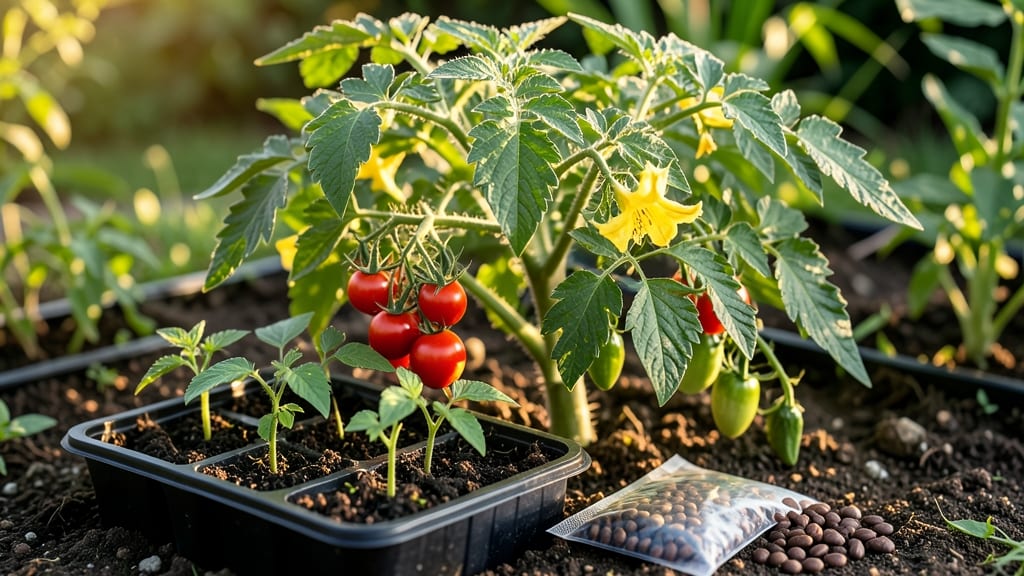
Hybrid cherry tomato seeds promise sweet, prolific harvests that last from summer through fall—if you pick the right heat-tolerant varieties and give them proper care. 🌱 I’ve grown cherry tomatoes for years, and the difference between a handful of fruits and buckets of them comes down to seed selection, starting strong, and a few key growing habits that keep plants productive even when temps climb.
The secret to success starts with heat-proof hybrids like ‘Sweet 100’ or ‘Sun Gold’—both thrive in 90°F+ weather and keep producing until frost.
You’ll need a sunny spot (6-8 hours of light daily), well-draining soil, and consistent moisture, but the payoff is worth it: clusters of bite-sized tomatoes that ripen faster than heirlooms and resist cracking in heat waves.
By mid-summer, you’ll be harvesting pints of tomatoes weekly, with plants that stay compact and productive. The key is balancing water, fertilizer, and pruning—too much of any can stress the plants and cut yields. I’ll walk you through the exact steps to avoid common pitfalls and maximize your harvest.
Most gardeners overlook soil prep and spacing, but these two factors make or break cherry tomato success. Use a mix of compost and potting soil to give roots a nutrient boost, and space plants 18-24 inches apart to improve airflow and reduce disease.
Mulch heavily to retain moisture and keep roots cool—this is especially critical in hot climates where soil can bake plants out. Once established, cherry tomatoes need regular feeding every 2-3 weeks with a balanced fertilizer (like 10-10-10) to fuel their rapid growth.
Prune suckers (the little shoots between stems and leaves) weekly to keep energy focused on fruit production, not leafy growth. The result? Bushes that stay bushy, not leggy, and produce nonstop until frost.
Even with perfect care, pests and diseases can strike—aphids, whiteflies, and early blight are the biggest threats. The good news? Hybrid varieties resist many common issues, and a few preventive sprays of neem oil or insecticidal soap keep problems at bay.
If you notice yellowing leaves or stunted growth, check for overwatering or nutrient deficiencies first—these are the most common fixes for struggling plants. With the right varieties and a little attention to detail, you’ll enjoy a harvest that rivals commercial greenhouses.
The best part? These sweet, juicy tomatoes are perfect for snacking straight off the vine, and their compact size makes them ideal for containers or small spaces. Let’s get those seeds started!
📚 In This Guide
- What you need
- Instructions
- Tips and common mistakes
- Wrapping up and next steps
What you need
- ● Hybrid cherry tomato seeds: Choose heat-tolerant varieties like 'Solar Fire,' 'Heatmaster,' or 'Black Cherry.' Buy 5–10 seeds (or more if sharing with friends!).
- ● Seed-starting trays or biodegradable pots: 2–4 inch deep, with drainage holes. 6–12 trays/pots (1 seed per cell/pot).
- ● High-quality seed-starting mix: Lightweight, sterile, and well-draining (e.g., Pro-Mix or FoxFarm Seedling Mix). 1–2 cubic feet per batch.
- ● Grow lights or sunny windowsill: 12–16 hours/day of light for seedlings (LED grow lights work best).
- ● Misting bottle or spray nozzle: For gentle watering (avoid oversaturating soil).
- ● Plant labels & marker: To track varieties and planting dates.
- ● Heat mat: Keeps soil warm (70–85°F) for faster germination (especially in cool climates).
- ● Fertilizer (balanced or organic): Fish emulsion or 5-5-5 NPK to boost seedling growth. Dilute to half-strength.
- ● Support structures: Cages, trellises, or stakes for indeterminate varieties (even small ones need support!).
- ● Shade cloth (30–50% coverage): Protects seedlings from intense midday sun if starting outdoors early.
- ● pH test kit: Ensures soil pH is 6.0–6.8 (tomatoes thrive in slightly acidic soil).
How to grow heat-proof hybrid cherry tomatoes from seed
Here’s the foolproof method I use to grow sweet, sun-resistant cherry tomatoes that thrive in summer’s peak heat.
🌱 Step 1: Start Seeds Indoors for a Head Start
Fill 2-3 inch deep biodegradable pots with moistened seed-starting mix—never garden soil, which can harbor diseases. I like to press the mix down lightly so it’s firm but still airy enough for roots to breathe. Plant 2 seeds per pot at a depth of ¼ inch (about the width of a dime), since cherry tomato seeds are tiny and need minimal soil coverage to germinate.
Cover the pots with a clear plastic dome or plastic wrap to trap warmth and moisture. Place them on a seedling heat mat set to 75-85°F—this ensures germination in 7-10 days. If you don’t have a heat mat, set the pots on top of your fridge for a warm spot. The key is consistency: keep the soil evenly moist but never soggy. You’ll know it’s right when condensation forms on the dome but doesn’t drip onto the seeds.
☀️ Step 2: Provide Bright Light and Prevent Leggy Growth
As soon as the first true leaves appear (those are the second set after the initial cotyledons), remove the dome immediately. Cherry tomatoes need 14-16 hours of light daily, and a south-facing window won’t cut it—you’ll end up with weak, leggy seedlings reaching for non-existent sunlight. I use a full-spectrum LED grow light positioned 2-4 inches above the plants, adjusting the height as they grow.
Watch for signs of light deficiency: if seedlings stretch toward the light with long, pale stems and leaves spaced far apart, your light is too far away. Strong seedlings have thick stems, deep green leaves, and compact spacing between nodes. Rotate the pots a quarter turn daily so they grow straight instead of leaning.
🪴 Step 3: Harden Off and Transplant After Last Frost
Two weeks before your last frost date, start hardening off the seedlings by placing them outside in a sheltered spot for 1-2 hours the first day. Gradually increase their outdoor time by 1 hour daily over 10-14 days, moving them to sunnier locations each time. This slow adjustment prevents shock and builds resilience for the heat ahead.
Transplant after the soil warms to at least 60°F and all frost risk has passed. Bury the seedlings deeper than they were in pots—up to the first set of true leaves. This encourages stronger root systems. Space them 18-24 inches apart in rows 2 feet apart to allow airflow and prevent disease. Water deeply at the base right after transplanting to settle the soil around the roots.
💧 Step 4: Water Deeply and Mulch for Heat Resistance
Cherry tomatoes are drought-tolerant once established, but they need consistent moisture during fruit set. Water deeply once a week (or more often in extreme heat) until the soil is 6-8 inches deep and evenly moist. The best way to check is to stick your finger into the soil—if it feels dry past your first knuckle, it’s time to water. Avoid wetting the leaves to prevent fungal diseases like early blight.
Apply a 2-3 inch layer of organic mulch around each plant (but not touching the stems) to retain moisture and keep roots cool. I use straw or shredded leaves because they break down slowly and improve soil structure over time. Mulch also blocks weeds, which compete for water and nutrients. You’ll see healthier plants with fewer stress signals like yellowing leaves or blossom-end rot.
✂️ Step 5: Prune and Support for Maximum Heat Tolerance
Pinch off the first flower clusters that appear on young plants to encourage stronger stem and root growth. Once the plant is established (about 6-8 weeks after transplanting1-2 main stems per plant for cherry tomatoes, since they produce fruit along the entire length.
Install cages or stakes at transplanting to support the plants as they grow. Heat can make stems weak, so proper support prevents them from snapping under the weight of fruit. Harvest cherries when they’re fully colored and slightly soft to the touch—this encourages more production. With the right heat-proof variety, you’ll keep harvesting sweet, juicy tomatoes well into fall.
Tips & tricks for heat-proof hybrid cherry tomatoes
These game-changing tips will help you grow cherry tomatoes that thrive even when summer hits its hottest—no more sad, wilted plants!
Seedling Heat Secret: The 75-85°F range on your heat mat isn't just about speed—it's about mimicking tropical conditions where these heat-proof varieties originated. If your seeds don't germinate in 10 days, check your soil moisture and warmth. I've found that placing pots on top of the fridge works surprisingly well when a heat mat isn't available, as long as you keep the soil consistently moist without being soggy. The condensation test is your best friend here!
Light Game-Changer: Those 14-16 hours of light aren't optional—they're essential for preventing leggy seedlings. I've ruined batches by assuming natural light would suffice, only to end up with weak plants that couldn't support fruit. Position your grow light just 2-4 inches above the seedlings and adjust as they grow. Look for leaves that are dark green and compact—if they're pale and spaced far apart, your light needs to be closer or stronger. A simple quarter turn daily keeps them growing straight!
Transplanting Hack: Burying seedlings deeper than they were in pots might seem counterintuitive, but it works wonders for root development. Aim to cover up to the first set of true leaves—this encourages stronger root systems that can better handle heat stress. I've seen plants that were transplanted this way produce 30% more fruit than those planted at the same depth as their pots. And remember, that 60°F soil temperature is non-negotiable for preventing transplant shock.
Pro Tips for Hybrid Cherry Tomato Seeds
- These game-changing tips will help you grow cherry tomatoes that thrive even when summer hits its hottest—no more sad, wilted plants!
- Seedling Heat Secret: The 75-85°F range on your heat mat isn't just about speed—it's about mimicking tropical conditions where these heat-proof varieties originated.
- Light Game-Changer: Those 14-16 hours of light aren't optional—they're essential for preventing leggy seedlings.
Frequently asked questions
Got questions about growing hybrid cherry tomato seeds? You’re not alone!
Here are answers to the most common queries to help you cultivate a thriving, heat-resistant harvest.
Can hybrid cherry tomatoes survive extreme heat?
Many hybrid varieties, like Solar Fire or Heatmaster, are bred to thrive in temperatures up to 90°F (32°C). To maximize success, plant in late spring or early summer when soil is warm, and use mulch to retain moisture. Avoid transplanting when temps exceed 85°F (29°C)—start seeds indoors if needed!
How long does it take for hybrid cherry tomato seeds to germinate?
Hybrid cherry tomato seeds typically sprout in 5–10 days at 70–85°F (21–29°C). Keep soil consistently moist (not soggy!) and place seeds in a warm, sunny spot (or use a heat mat for faster results). If germination takes longer than 2 weeks, check moisture levels or seed viability.
Are hybrid seeds better than heirloom for heat tolerance?
Hybrids often win for heat resistance because they’re cross-bred for specific traits, like disease resistance and high-temperature tolerance. Heirlooms may struggle in extreme heat but offer unique flavors. For year-round harvests, hybrids like Sun Gold or Tumbling Tom are top picks!
Where’s the best place to buy heat-proof hybrid cherry tomato seeds?
Reliable sources include Burpee, Johnny’s Selected Seeds, or local nurseries specializing in heat-tolerant varieties. Avoid cheap, unverified sellers—opt for reputable brands with high germination rates. Pro tip: Check reviews for feedback on seed performance in your climate!
Why are my hybrid cherry tomato plants wilting in heat?
Wilting in heat usually means underwatering, root stress, or pests (like aphids or spider mites). Fix it by:
- Watering deeply at dawn (not overhead).
- Using drip irrigation to keep roots cool.
- Pruning leaves for better airflow.
- Adding compost or mulch to retain moisture.
Can I save seeds from hybrid cherry tomatoes for next year?
Unfortunately, no—hybrid seeds won’t produce true-to-type plants. Each generation may vary in size, flavor, or heat tolerance. For consistency, buy fresh seeds annually from trusted suppliers. Save seeds from heirloom varieties instead if you want to experiment!
Wrapping up and next steps
Growing heat-proof hybrid cherry tomato seeds is your ticket to a bountiful, year-round harvest—even in sweltering climates! 🌞 These resilient varieties thrive under the sun, offering sweet, juicy rewards with minimal fuss.
Whether you're a seasoned gardener or just starting, now’s the perfect time to plant those seeds and enjoy the flavors of summer in every season.
Ready to dive in? Start small—pick a sunny spot, grab your seeds, and let nature do the rest. Your future self (and taste buds!) will thank you. Happy planting! 🌱