
Vegetables
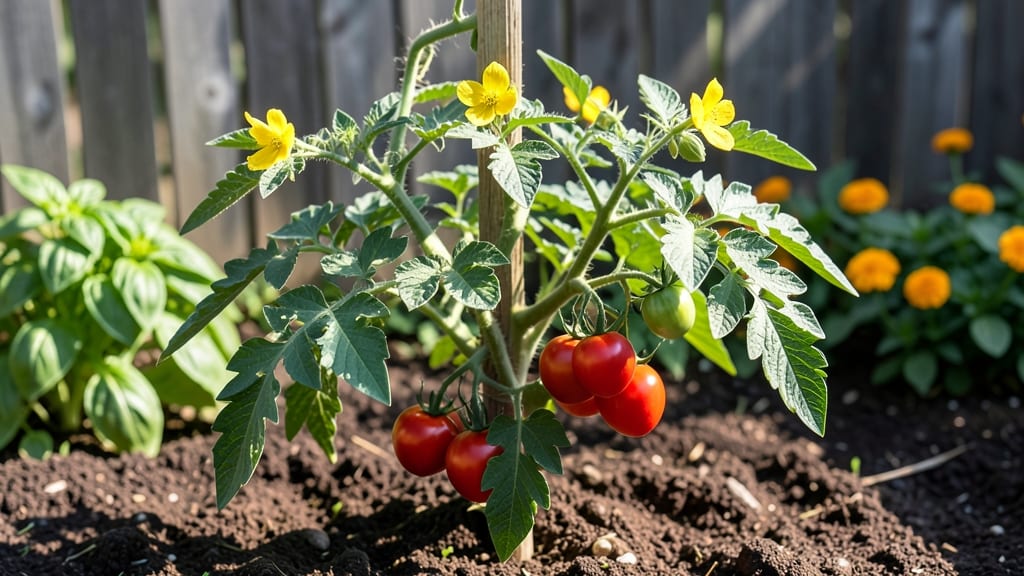
Growing F1 hybrid tomato seeds unlocks a season of disease-resistant plants that produce heavy yields with less fuss. 🌱 I’ve grown heirlooms for years, but F1 hybrids changed the game—they’re bred for strength, so they shrug off blight and drought while packing flavor. The key?
Starting seeds right and giving them the perfect conditions from day one. These seeds need warmth to germinate (70-80°F) and bright light after sprouting—no fancy setup, just a seedling heat mat and a grow light.
I use a simple mix of 50% potting soil, 30% perlite, 20% compost to keep roots happy. Plant them ¼-inch deep, keep the soil damp, and expect tiny shoots in 7-14 days.
By transplanting at the right time (after last frost, when soil is 60°F+), you’ll watch vines explode with uniform, vigorous growth. The plants handle heat better, resist cracking, and produce fruit weeks ahead of heirlooms. Just watch for overwatering—F1s hate soggy roots.
Works in containers, raised beds, or in-ground—just match their needs to your space. Here’s how to make it foolproof from seed to harvest.
📚 In This Guide
- What you need
- Instructions
- Tips and common mistakes
- Wrapping up and next steps
What you need
- ● F1 Hybrid Tomato Seeds – Choose disease-resistant varieties like ‘Mountain Merit’ or ‘Defiant PhR’ (5–10 seeds per plant).
- ● Seed-starting trays or biodegradable pots – 2–4" deep, with drainage holes (10–20 cells or pots).
- ● High-quality seed-starting mix – Lightweight, sterile, and well-draining (1–2 bags).
- ● Grow lights or sunny windowsill – LED grow lights (12–16 hrs/day) or a south-facing window.
- ● Misting bottle or spray nozzle – For gentle watering (avoid over-saturation).
- ○ Heat mat (optional but helpful) – 70–85°F range to speed germination.
- ● Fertilizer – Balanced, water-soluble fertilizer (5-10-5 or 10-10-10, diluted to half-strength).
- ● Transplanting pots or garden bed – 5–7" pots or prepared soil with compost (pH 6.0–6.8).
- ● Stakes or cages – 6–8 ft tall for indeterminate varieties (1 per plant).
- ● Pruning shears – For trimming suckers and shaping plants.
- ● Organic mulch – Straw or shredded leaves to retain moisture and suppress weeds.
- ● Seedling heat mat – Speeds up germination in cooler climates.
- ● pH test kit – Ensures soil is optimal for tomato growth.
- ● Drip irrigation system – Automates watering for consistent moisture.
- ● Compost tea or mycorrhizal fungi – Boosts soil health and root development.
- ● Row covers or shade cloth – Protects young plants from pests or excessive heat.
Step-by-Step guide to maximizing yields with F1 hybrid tomato seeds
Here's how to unlock the full potential of F1 hybrids—resilient genetics that deliver both disease resistance and jaw-dropping fruit production.
🌱 Step 1: Select the Right Variety for Your Climate
F1 hybrids are bred for specific growing conditions, so choose a variety matched to your USDA hardiness zone and days to maturity. Early-season types like 'Mountain Merit' thrive in cooler climates, while heat-tolerant 'Heatmaster' handles southern summers. Check seed packets for disease resistance codes—look for V (verticillium), F (fusarium), and N (nematodes) to match your biggest local threats.
I always plant at least two varieties with staggered maturity dates to extend harvests. For example, a 60-day early type alongside a 75-day main crop ensures tomatoes when the first batch ripens. Plant taller indeterminate varieties along trellises and bushier determinate types in cages—this prevents overcrowding and improves air circulation, which is critical for F1 hybrids.
💧 Step 2: Start Seeds Indoors with Precision Timing
Sow seeds 6-8 weeks before your last frost date in a sterile seed-starting mix. F1 hybrids germinate best at 75-85°F, so use a seedling heat mat if your home runs cooler. Plant 2 seeds per cell at a depth of ¼ inch—deeper planting delays germination. Cover with a humidity dome and place in indirect light until sprouts emerge.
Once seedlings appear, remove the dome immediately to prevent damping-off. You'll notice the first true leaves (not the initial cotyledons) in 10-14 days. At this stage, move seedlings under 14-16 hours of grow light daily to prevent leggy growth. F1 hybrids need strong starts to resist early blight and other soil-borne diseases—weak seedlings struggle to recover.
☀️ Step 3: Harden Off and Transplant Strategically
Begin hardening off 2 weeks before transplanting by gradually increasing outdoor exposure. Start with 1-2 hours in partial shade on day one, then extend by 1 hour daily until seedlings tolerate full sun. F1 hybrids handle transplant shock better than heirlooms, but abrupt changes still stress them—watch for wilting or yellowing leaves as a warning sign.
Transplant on a cloudy day or late afternoon to reduce stress. Bury stems deeper than the seedling pot—F1 hybrids root along buried stems, creating a stronger plant. Space indeterminate varieties 18-24 inches apart and determinate types 24-36 inches apart. Mulch with 2-3 inches of organic matter to retain moisture and suppress weeds, which is especially important for F1 hybrids that produce heavy yields.
✂️ Step 4: Maintain Optimal Growing Conditions
F1 hybrids thrive with consistent moisture—water at the base 1-2 inches deep when the top inch of soil feels dry. Avoid wetting foliage to prevent fungal diseases like early blight. Use drip irrigation or soaker hoses for even moisture distribution. Fertilize with a balanced 10-10-10 or tomato-specific formula when flowers appear, then switch to a low-nitrogen, high-phosphorus blend to encourage fruiting.
Prune suckers (the shoots that form in the leaf axils) on indeterminate varieties to improve air flow and direct energy to fruit production. F1 hybrids respond well to pruning, but avoid over-trimming—leave enough foliage to shade developing fruit. Watch for pests like hornworms and aphids; F1 hybrids may still succumb if infestations aren't controlled early. Use neem oil or insecticidal soap as a preventative measure.
🍅 Step 5: Harvest at Peak Ripeness for Maximum Flavor
Harvest tomatoes when they reach full color and yield slightly to gentle pressure. F1 hybrids often ripen uniformly, so you'll see clusters of red (or purple, yellow, or striped, depending on variety) fruit ready at the same time. Use pruning shears or twist gently to avoid damaging the stem. Harvesting promptly encourages more flowers to set, extending the season.
Store ripe tomatoes at 55-65°F and use within 1 week for best flavor. Unripe tomatoes can be left on the vine to ripen in full sun, but bring them indoors at night if temperatures drop below 50°F. F1 hybrids often produce a second flush of fruit after the first harvest—keep plants healthy with consistent care to maximize yields.
Tips & tricks for growing F1 hybrid tomatoes like a pro
These battle-tested strategies will help you coax maximum yields from your F1 hybrid tomato seeds—where science meets real-world gardening challenges.
Seed Starting Precision: The 6-8 week indoor timing window is non-negotiable, but here's the secret: use a seedling heat mat to maintain that critical 75-85°F range consistently. I've found that placing trays on top of refrigerators (with a heat mat) creates the perfect microclimate without expensive equipment. Once those first true leaves appear in 10-14 days, immediately transition to 14-16 hours of grow light—I use LED shop lights on timers to prevent leggy seedlings, which F1 hybrids are particularly prone to developing.
Transplanting Technique: When burying stems deeper than the seedling pot in Step 3, make sure to remove any lower leaves that would end up underground—those buried leaves rot and create entry points for soil-borne diseases. I also recommend adding a handful of compost to each planting hole before transplanting; this gives your F1 hybrids a nutrient boost right when they need it most. The 2-3 inch mulch layer should be organic (straw or shredded leaves work best) to improve soil structure over time.
Fertilizer Strategy: The switch from balanced to high-phosphorus fertilizer in Step 4 is crucial, but timing matters. I apply the first high-phosphorus dose when I see the first flower clusters appear, not just when flowers open. F1 hybrids respond dramatically to this shift—you'll notice more fruit set and heavier yields. For organic gardeners, bone meal makes an excellent phosphorus source, but follow package directions carefully to avoid over-application.
Pest Prevention: F1 hybrids may be disease-resistant, but they're not pest-proof. I've had the best success with a two-pronged approach: weekly neem oil sprays (especially before flowers appear) and introducing ladybugs for aphid control. The key is consistency—don't wait until you see pests. I also recommend installing floating row covers early in the season to prevent whiteflies from establishing themselves on your plants.
Pro Tips for F1 Hybrid Tomato Seeds
- These battle-tested strategies will help you coax maximum yields from your F1 hybrid tomato seeds—where science meets real-world gardening challenges.
- Seed Starting Precision: The 6-8 week indoor timing window is non-negotiable, but here's the secret: use a seedling heat mat to maintain that critical 75-85°F range consistently.
- I also recommend adding a handful of compost to each planting hole before transplanting; this gives your F1 hybrids a nutrient boost right when they need it most.
Frequently asked questions
Got questions about F1 hybrid tomato seeds? You’re not alone! Here are answers to the most common queries to help you grow like a pro:
What makes F1 hybrid tomato seeds better than heirloom varieties?
F1 hybrids are bred for consistent traits, like disease resistance, uniform ripening, and higher yields. While heirlooms offer unique flavors, F1s are the go-to for gardeners prioritizing reliability and productivity. Think of them as the "athletes" of tomato varieties—built for performance!
How long does it take for F1 hybrid tomato seeds to germinate?
Most F1 hybrid tomato seeds sprout within 5–14 days at 70–85°F (21–29°C). Keep soil moist (not soggy) and maintain warmth for faster results. Pro tip: Use a seedling heat mat if your home runs chilly—it speeds up germination by days!
Can I save seeds from F1 hybrid tomatoes for next year?
Not reliably! F1 hybrids are first-generation crosses, so saved seeds may not produce the same traits. For consistent results, buy fresh F1 seeds annually. Save heirloom seeds instead—they’re bred to stay true from generation to generation.
What’s the best temperature range for growing F1 hybrid tomatoes?
Ideal temps are 70–85°F (21–29°C) during the day and 55–65°F (13–18°C) at night. Avoid extremes: below 50°F (10°C) stunts growth, while above 90°F (32°C) can cause blossom drop. Hot tip: Use shade cloth in peak summer to protect plants!
How do I prevent diseases in F1 hybrid tomatoes despite their resistance?
Even resistant varieties need care! Rotate crops yearly, prune for airflow, and water at the base (avoid wetting leaves). Remove diseased foliage immediately, and consider neem oil as a preventive spray. F1 hybrids are tough, but prevention is your best defense!
Wrapping up and next steps
Growing F1 hybrid tomato seeds is your ticket to a bountiful, disease-resistant harvest—even in challenging conditions! 🌱 These powerhouse seeds deliver heavy yields with minimal effort, making them perfect for both beginner and experienced gardeners.
Whether you're saving money, reducing pesticide use, or simply craving fresh, flavorful tomatoes, the payoff is worth every seed planted.
Ready to take the next step? Start small—try a few F1 hybrid varieties in containers or your garden plot—and watch your confidence (and tomato stash!) grow. Happy planting! 🍅✨