
Planting
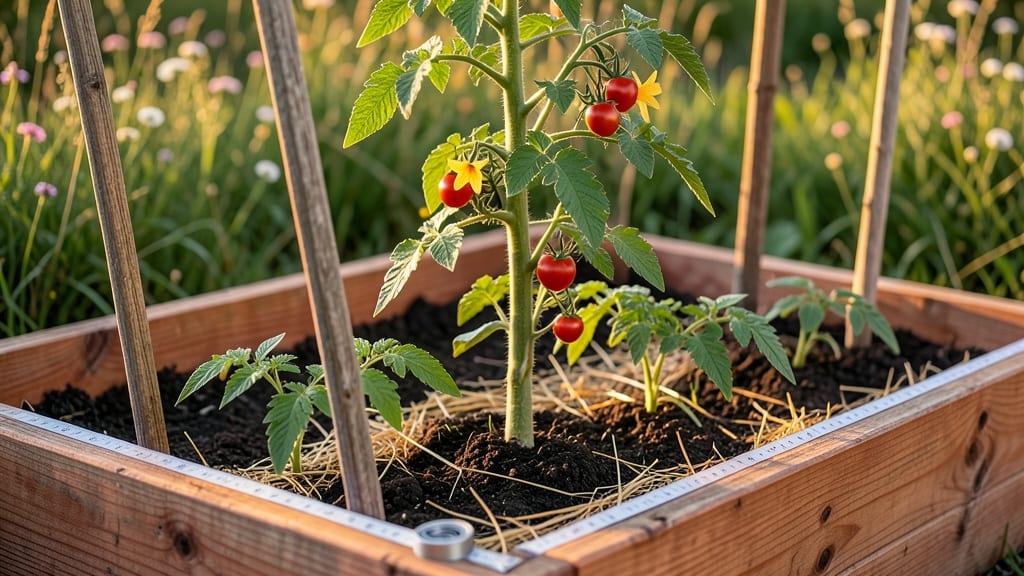
Your raised bed garden tomato spacing could make or break your harvest—determinate tomatoes need 18-24 inches apart, while indeterminate varieties thrive with 24-36 inches of room to sprawl. 🌱 I learned this the hard way when my crowded cherry tomatoes produced tiny, sun-starved fruit, and my beefsteaks got tangled in their own vines.
The right spacing isn’t just about fit; it’s about airflow, sunlight, and preventing disease.
Start by measuring your raised bed’s width—most standard 4×8-foot beds fit 4-6 indeterminate plants or 6-8 determinate plants in a single row. If you’re growing two rows, leave 3 feet between them for easy access and better airflow.
For compact varieties like ‘Tiny Tim,’ you can squeeze in 12-16 inches apart, but don’t skimp on space for larger types like ‘Brandywine’—they’ll reward you with heavier, more flavorful fruit.
Proper spacing isn’t just about avoiding crowded vines—it’s about maximizing your harvest. Plants with enough room produce more flowers, which means more tomatoes, and they ripen faster because sunlight reaches every leaf. Plus, you’ll spend less time wrestling with tangled stems and more time enjoying fresh-picked fruit.
Think of it as giving your tomatoes the personal space they deserve—they’ll thank you with a bountiful yield.
If your bed is narrow or you’re growing in containers, opt for bushier determinate varieties or use cages and trellises to train indeterminate types vertically. Just remember: overcrowding leads to blight, poor fruit set, and stunted growth, so when in doubt, give your tomatoes a little extra room.
Trust me, your future self will thank you when you’re drowning in ripe, sun-kissed tomatoes instead of struggling with a jungle of vines.
📚 In This Guide
- What you need
- Instructions
- Tips and common mistakes
- Wrapping up and next steps
What you need
- ● Raised bed (or container): At least 4 feet wide x 8 feet long (for proper airflow and spacing), with a depth of 12+ inches. Wood, cedar, or composite materials work best.
- ● High-quality soil mix: A blend of 60% topsoil, 30% compost, and 10% perlite or vermiculite (sterile and well-draining is key!). Aim for 1 cubic yard per 4’x8’ bed.
- ● Tomato seedlings or seeds: Determinate varieties: 2–3 plants per 2’x2’ square (e.g., Roma, Celebrity).
- ● Indeterminate varieties: 1–2 plants per 2’x2’ square (e.g., Cherry, Beefsteak).
- ● Support structures: Cages (5’ tall): 1 per indeterminate plant.
- ● Trellis or stakes (6’+ tall): 2–3 per indeterminate plant.
- ○ String or twine: For tying vines (optional but helpful!).
- ● Mulch: Straw, shredded leaves, or grass clippings (2–3 inches thick to retain moisture).
- ● Garden trowel or transplant spade (for digging holes).
- ● Measuring tape or ruler (to ensure precise spacing!).
- ● Pruning shears (for trimming suckers or dead leaves).
- ● Gloves (to keep hands clean and protected).
- ● Watering can or hose with nozzle (gentle watering avoids soil erosion).
- ○ pH test kit (optional but recommended—tomatoes thrive in 6.0–6.8 pH).
- ● Sunlight: Full sun (6–8+ hours daily). Choose a south-facing bed if possible!
- ● Last frost date: Wait until 2–3 weeks after the last frost to transplant seedlings (soil should be 60°F+).
- ● Disease prevention: Avoid planting tomatoes in the same spot yearly (rotate crops!).
- ○ Optional: Add 1 tbsp Epsom salt per plant at planting for magnesium boost.
- ● Watering schedule: 1–1.5 inches per week (deep watering 2x/week is ideal).
How to space tomatoes in raised beds for maximum yield
Here's the spacing system I've used for years to grow healthy, high-yield tomato plants in raised beds—whether you're working with bushy determinates or vining indeterminates.
🌱 Step 1: Choose Your Tomato Type and Plan the Layout
Determinate tomatoes grow in compact bushes and produce fruit all at once, while indeterminate varieties grow continuously and need more vertical space. For determinate tomatoes, space plants 18-24 inches apart in rows that are 24-30 inches apart. This gives each plant room to fill its space without crowding. For indeterminate tomatoes, increase spacing to 24-36 inches apart in rows that are 36-48 inches apart—they'll sprawl if given the chance.
I always sketch a quick layout before planting. Draw your raised bed dimensions, then mark rows based on your tomato type. Remember, indeterminates need more space because their vines will grow 6-10 feet tall if properly trained. If you're planting both types, place determinates in one section and indeterminates in another to avoid confusion during maintenance.
🪴 Step 2: Prepare the Raised Bed for Planting
Before planting, ensure your raised bed has 4-6 inches of well-draining soil mixed with 2-3 inches of compost. Tomatoes thrive in slightly acidic soil with a pH between 6.0 and 6.8. If your soil is heavy or clay-like, add a 1-inch layer of perlite or vermiculite to improve drainage. I also like to work in a slow-release fertilizer at this stage—just follow the package instructions for tomato-specific blends.
Create small planting holes that are twice as wide as the root ball but no deeper. Gently loosen the roots of your transplants if they're root-bound, then place each plant in its hole. The top of the root ball should sit just below the soil line—burying stems too deep can cause rot, while planting too shallow leads to weak growth. Space your first row 6-12 inches from the bed's edge to allow for easy access and airflow.
☀️ Step 3: Train and Space for Sunlight and Airflow
Tomatoes need 6-8 hours of direct sunlight daily, so avoid planting in shaded corners of the raised bed. If your bed runs north-south, indeterminate tomatoes should face east to catch morning sun and prevent leaf scorch. For determinate varieties, a south-facing orientation ensures even light exposure throughout the day.
After planting, install stakes, cages, or trellises immediately to support indeterminate varieties. I prefer 5-6 foot bamboo stakes for vining tomatoes, placing them 2 inches from the stem to avoid damaging roots. For determinates, 3-foot cages work well. Proper support prevents sprawling and improves airflow, which reduces disease risk. Space your support structures 12-18 inches apart to match your tomato spacing.
💧 Step 4: Water and Mulch for Optimal Spacing Benefits
Water deeply once a week (or more in hot climates) to encourage strong root growth. Aim for 1-1.5 inches of water per week, delivered at the base of the plant to avoid wetting leaves—this prevents fungal diseases like early blight. I use a drip irrigation system for raised beds, which delivers water directly to the roots without disturbing the soil or plants.
Apply a 2-3 inch layer of organic mulch (like straw or shredded leaves) around each plant, keeping it 6 inches away from the stem to prevent rot. Mulch retains moisture, regulates soil temperature, and suppresses weeds. Replenish mulch every 4-6 weeks to maintain its effectiveness. This spacing also makes it easier to spot pests or diseases early, allowing you to act before they spread.
✂️ Step 5: Prune and Thin for Long-Term Spacing Success
For indeterminate tomatoes, prune suckers (the small shoots that grow between the main stem and branches) weekly to direct energy to fruit production. Remove any leaves touching the soil to improve airflow and reduce disease risk. For determinates, minimal pruning is needed—just remove diseased or yellowing leaves. I also thin fruit clusters on indeterminates to 5-6 tomatoes per cluster to ensure larger, healthier fruit.
As the season progresses, monitor your spacing. If plants start to crowd—especially determinates—thin out the smallest or weakest plants to maintain your original spacing. This might mean removing 1-2 plants per 4-foot section if growth is particularly vigorous. Proper spacing now means bigger, healthier tomatoes and fewer issues with pests or diseases later in the season.
Tips & tricks for perfect raised bed tomato spacing
Took me years of trial-and-error to perfect this spacing system—here's what actually makes the difference between healthy plants and crowded struggles.
Tomato Type Matters: In Step 1, don't just eyeball those spacing measurements! For determinate varieties, the 18-24 inch spacing between plants creates a natural dome shape that catches sunlight from all directions. Indeterminates need the wider 24-36 inch spacing because their vines will grow 6-10 feet tall—think of it like giving them their own personal sky. I've seen gardeners cram indeterminates too close, and within weeks, the vines start competing for light and nutrients, leading to weak fruit.
Sunlight Strategy: When positioning your plants in Step 3, remember that sunlight patterns change throughout the day. For indeterminate varieties facing east, the morning sun helps dry dew quickly, reducing disease risk. If your raised bed runs east-west instead of north-south, place indeterminates on the north side to prevent afternoon leaf scorch. This might seem like overthinking, but I've had entire rows of tomatoes develop sunburn when I ignored this detail—now I mark my bed's orientation before planting.
Support System Secret: The 12-18 inch spacing for support structures in Step 3 isn't just about aesthetics—it's about creating airflow channels. When I first started, I placed stakes too close together, and the plants developed more fungal issues. Now I think of it like a ventilation system: proper spacing lets air circulate between plants, which prevents humidity buildup that leads to blight. For determinates, those 3-foot cages should be spaced to allow you to walk between rows without disturbing the plants.
Long-Term Monitoring: In Step 5, that 1-2 plants per 4-foot section thinning guideline might seem drastic, but trust me—it's better to remove a few now than deal with crowded plants later. I've had to thin entire rows when I ignored this, and the remaining plants never recovered their vigor. Watch for when the outer leaves start touching between plants—that's your first warning sign. The goal is to maintain the original spacing you planned, not just the number of plants you started with.
Pro Tips for Raised Bed Garden Tomato Spacing
- Took me years of trial-and-error to perfect this spacing system—here's what actually makes the difference between healthy plants and crowded struggles.
- Tomato Type Matters: In Step 1, don't just eyeball those spacing measurements!
- Sunlight Strategy: When positioning your plants in Step 3, remember that sunlight patterns change throughout the day.
Frequently asked questions
Got questions about spacing tomatoes in raised beds? You’re not alone! Here are some of the most common queries—and their answers—to help you grow a thriving garden.
What’s the best tomato spacing for raised beds?
For indeterminate varieties, plant 18–24 inches apart in rows spaced 2–3 feet apart. Determinate tomatoes need 24–36 inches between plants and 3–4 feet between rows. Stagger plants to maximize airflow and sunlight.
When is the best time to plant tomatoes in a raised bed?
Wait until after the last frost (when soil temps hit at least 60°F) and nighttime temps stay above 50°F. For cooler climates, start seeds indoors 6–8 weeks before transplanting. Early spring or late winter is ideal for warm regions.
Can I grow tomatoes closer together in a raised bed?
Yes, but expect smaller yields and more disease risk. If space is tight, opt for bushier determinate varieties (like ‘Roma’ or ‘Patio’) and prune aggressively. Avoid overcrowding—tomatoes need room to breathe (literally!) to prevent blight and improve fruit production.
How do I handle tomato spacing if my raised bed is small?
Use vertical growing! Train indeterminate vines up trellises, cages, or stakes to save space. For determinate types, try container growing (5-gallon buckets work) or interplant with shallow-rooted herbs like basil or thyme. Succession planting (replacing harvested plants) also helps.
Why are my tomatoes not producing well despite proper spacing?
Check for these issues:
- Poor pollination: Gently shake plants or hand-pollinate with a paintbrush.
- Over/under-watering: Keep soil consistently moist (1–1.5 inches per week).
- Nutrient deficiency: Add compost or a balanced fertilizer (like 5-5-5) at planting and mid-season.
- Pests/disease: Remove affected leaves and use row covers or neem oil preemptively.
Wrapping up and next steps
Mastering the art of raised bed garden tomato spacing is all about balancing growth potential and yield—whether you’re nurturing determinate or indeterminate varieties. With the right layout, your tomatoes will thrive, saving you space and effort while maximizing those juicy rewards. 🍅✨
Now that you’re armed with the perfect planting chart and tips, it’s time to roll up your sleeves! Start by sketching your raised bed design, gather your seeds or seedlings, and get ready to watch your garden flourish. Happy planting—and may your harvest be bountiful!