
How To
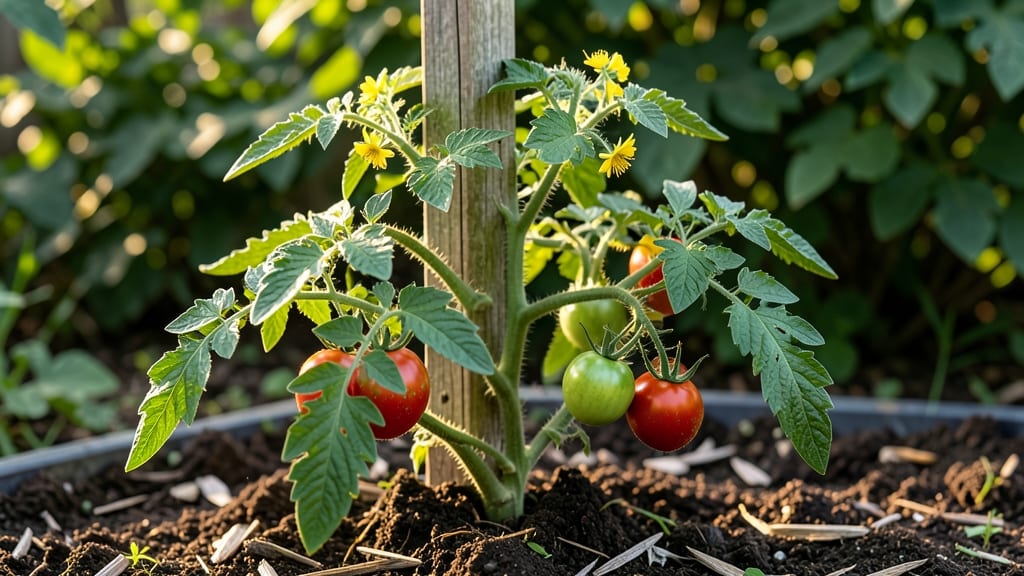
Understanding tomato days to maturity is the difference between a summer full of ripe, juicy 🍅 fruit and a garden of leafy vines that never deliver.
If you’ve ever planted tomatoes only to wonder why some varieties ripen in weeks while others take months, the answer lies in those numbers on the seed packet.
A 60-day tomato won’t wait for a 90-day heirloom—and that mismatch can mean the difference between a bountiful harvest and a season of disappointment.
This guide breaks down exactly what those maturity days mean, how to use them to plan your planting schedule, and which varieties align best with your climate and timeline. No more guessing whether your tomatoes will make it to harvest—or whether you’ll be left staring at green fruit in October.
You’ll learn how to match varieties to your growing season, adjust for your local climate, and even troubleshoot delays so you can enjoy homegrown tomatoes from early summer straight through to fall.
Tomato days to maturity by variety type: fast vs slow-ripening tomatoes
When you see days to maturity on a tomato seed packet, it’s not just a number—it’s your garden’s roadmap to a successful harvest.
This metric tells you how long from planting (or transplanting) until you can expect ripe tomatoes. Early varieties like 'Early Girl' can deliver fruit in 55-60 days, while heirlooms like 'Brandywine' may take 85-95 days or longer.
The difference isn’t just about patience—it’s about climate zone, planting timing, and even your local microclimate.
Understanding these timelines helps you avoid seasonal mismatches, like planting late-season tomatoes too early in warm climates or early varieties too late in cool regions.
For example, a 60-day tomato planted in Zone 7 in early May might ripen by late June, while the same variety in Zone 4 could struggle unless started indoors. Let’s break down how these numbers translate into real-world growing strategies.
Cherry tomatoes often top the list for speed, with varieties like 'Sweet 100' maturing in just 55-60 days. These compact plants thrive in containers and produce prolific harvests over weeks, making them perfect for short-season gardens or urban balconies. In contrast, heirloom beefsteaks like 'Brandywine' can take 90-100 days or more, requiring a longer growing season and more patience—but the flavor payoff is unmatched.
Hybrid varieties strike a balance, often offering disease resistance and consistent maturity. For example, 'Mountain Merit' (a hybrid) matures in 70 days and resists cracking and disease, making it ideal for humid climates like Zone 8.
Meanwhile, determinate varieties (like 'Roma') tend to have tighter maturity windows, while indeterminate types (like 'Sungold') may produce fruit over multiple harvest cycles but start later.
Your climate zone plays a huge role in interpreting these numbers. In Zone 5, even a 60-day tomato might need to be started indoors 6-8 weeks before the last frost to hit its maturity timeline.
Conversely, in Zone 10, you can plant late-season varieties like 'Black Krim' directly in the ground in February and still enjoy a summer harvest. Always adjust your planting date by checking your average last frost date and adding the days-to-maturity number.
Another critical factor is temperature. Tomatoes thrive in warm soil (60°F+) and air temperatures between 70-85°F. If nights dip below 55°F, growth slows dramatically, extending maturity timelines. For example, a 70-day tomato
How to calculate your exact tomato harvest timeline (with climate adjustments)
Understanding tomato days to maturity transforms guesswork into a precise garden plan. That label on your seed packet—like 60 days to maturity—tells you how long it takes from planting to harvest under ideal conditions.
But real-world growing? That’s where climate adjustments come into play. A 45-day cherry tomato in Florida won’t ripen the same way in Minnesota, even if you plant them on the same date.
To nail your harvest timeline, you’ll need three key pieces of information: the days to maturity from your seed packet, your last frost date, and your local growing degree days (GDD).
Let’s break it down step by step so you can predict when those juicy tomatoes will be ready to pick—without waiting in suspense all season.
Look up your USDA hardiness zone and average last frost date for your area. This tells you when it’s safe to plant. For example, in Zone 6a, the last frost is typically around April 15.
If you plant 60-day tomatoes on May 1, add 60 days to estimate a July 1 harvest. But this is a starting point—not your final answer.
Growing Degree Days (GDD) measure heat accumulation. Tomatoes need 1,000–1,500 GDD to mature. If your area has low GDD, your harvest may take 10–20% longer than the label promises.
Use row covers, greenhouses, or straw mulch to add 2–4 weeks to your growing season. For example, a 70-day tomato in a cold zone might ripen in 80–85 days with protection.
Plant 6–8 weeks before your last frost date. A 50-day tomato started indoors in March could harvest by May—beating the outdoor planting schedule by weeks.
Let’s say you’re in Zone 5 with a May 10 last frost date and you plant ‘Early Girl’ tomatoes (55 days to maturity) outdoors on May 15. Without adjustments, you’d expect a July 9 harvest.
But if your area has low GDD, add 7–10 days for a July 16–19 window. Use row covers to shave off another 5 days and aim for July 11–14!
For heirloom varieties like ‘Brandywine’ (80 days), the math changes. Planting on May 15 in Zone 6a with moderate GDD might push your harvest to August 10–15. To bring it forward, try container growing—pots warm up faster and let you move plants to sunnier spots as needed.
Pro tip: Track your actual harvest dates over years to refine your predictions. Write down what worked (and what didn’t) in a garden journal. Next year, you’ll be the neighborhood expert on tomato timelines—no more guessing games! 🌱