
Planting
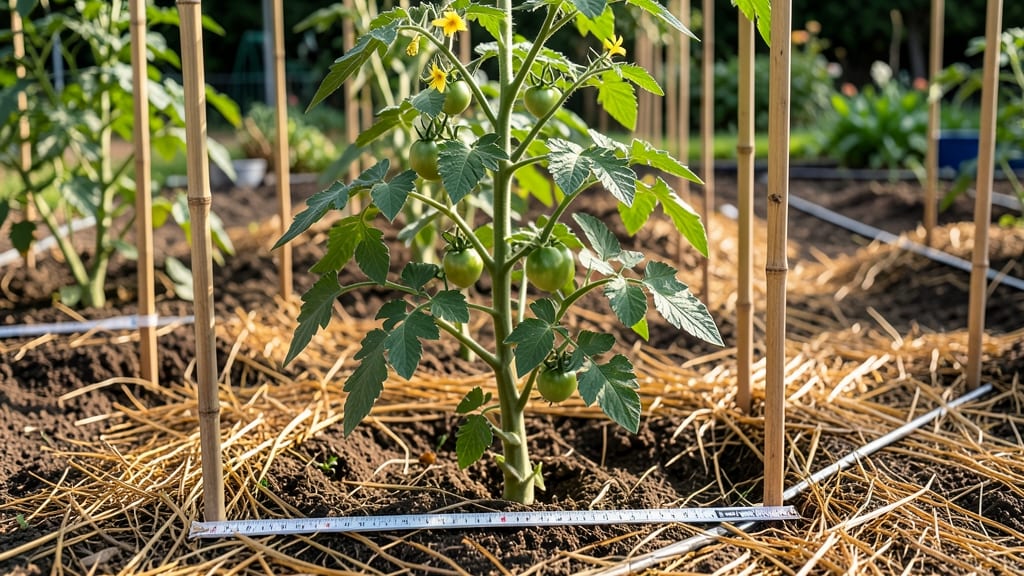
Proper tomato garden spacing is the difference between a thriving 🍅 harvest and a struggling patch of blight-prone plants.
Picture this: You’ve spent weeks nurturing your seedlings, only to watch them fight for space, their leaves wilting from poor airflow. That’s not just bad luck—it’s a spacing problem. The right distance keeps diseases at bay, lets roots breathe, and even boosts fruit size.
Whether you’re working with a small balcony container or a full raised bed, getting this right means fewer pruning headaches and more tomatoes on the vine. Below, I’ll break down the exact layouts for determinate and indeterminate varieties, plus how to squeeze the most yield out of tight spaces.
Ready to turn your garden into a high-yielding tomato powerhouse? Let’s dive into the spacing secrets that make all the difference.
Optimal tomato spacing by variety: determinate vs indeterminate plants
Getting the right tomato spacing starts with understanding your plant types. Determinate tomatoes (bush varieties) produce fruit all at once and stay compact, while indeterminate tomatoes (vining types) grow continuously and need vertical support.
I’ve learned the hard way—overcrowding leads to fungal diseases like blight and smaller yields. Let’s break down the exact measurements you need for each type to maximize airflow and production.
For determinate varieties, like Roma or Celebrity, proper spacing is crucial because they grow in a compact bush shape. Crowding these plants can lead to poor airflow, which invites diseases.
The key is giving each plant enough room to spread its branches without touching neighbors. This ensures every leaf gets sunlight and air circulates freely, reducing humidity that fuels fungal growth.
Here’s where many gardeners go wrong: they focus only on plant-to-plant distance and ignore row spacing. Both matter equally. For example, planting indeterminate tomatoes like Sungold or Brandywine too closely in rows will force you to crowd them vertically, which strains the stems and makes harvesting difficult.
The solution? Wider rows and strategic trellising to let vines sprawl upward instead of outward.
🌱
| Tomato Type | Plant-to-Plant Distance | Row Spacing | Container Size (Minimum) | Key Notes |
|---|---|---|---|---|
| Determinate | 18-24 inches | 24-36 inches | 5-gallon bucket | Compact growth; harvest all at once |
| Indeterminate | 24-36 inches | 36-48 inches | 10-15 gallon pot | Vining; needs trellis; continuous harvest |
| Cherry Tomatoes (Both Types) | 12-18 inches | 24 inches | 3-gallon pot | High yield; prune for airflow |
🌿 Pro Tip: Always space taller varieties (like indeterminate) on the north side of shorter ones to avoid shading.
When growing determinate tomatoes in containers, I’ve found that a 5-gallon bucket is the minimum size for a single plant. Smaller pots restrict root growth, leading to stunted plants and fewer fruits.
For indeterminate varieties, you’ll need at least a 10-15 gallon container to accommodate their deep root systems and continuous growth. I once tried growing a Brandywine in a 5-gallon pot, and by mid-summer, the plant was top-heavy and nearly toppled over!
For in-ground planting, row spacing is just as critical as plant-to-plant distance. Determinate tomatoes need 24-36 inches between rows to allow for easy movement and airflow. Indeterminate varieties, however, require 36-48 inches between rows because their vines can spread widely.
If you’re short on space, consider planting determinate varieties in rows and indeterminate ones along fences or trellises to save ground space.
One mistake I see often is ignoring the maturity timeline when spacing. Determinate tomatoes produce fruit in a single flush, so you can plant them closer if you’re okay with harvesting all at once.
Indeterminate tomatoes, on the other hand, produce fruit continuously throughout the season, so they need more space to support their ongoing growth. If you’re growing both types, I recommend planting determinate varieties first, followed by indeterminate ones a few weeks later to stagger your harvest.
💧 Watering Tip: Space plants correctly to avoid wetting leaves during irrigation, which reduces the risk of early blight and septoria leaf spot. Use drip irrigation or soaker hoses to deliver water directly to the soil.
If you’re working with limited space, like a balcony or small backyard, container growing is a game-changer. For cherry tomatoes, which are often indeterminate, a 3-gallon pot can work if you prune aggressively and provide a small trellis.
For larger varieties, like Beefsteak tomatoes, you’ll need to get creative with vertical gardening. I’ve had great success using cage trellises or wall-mounted planters to grow indeterminate tomatoes in tight spaces.
Finally, remember that proper spacing isn’t just about yield—it’s about plant health. Overcrowded tomatoes are more susceptible to fungal diseases like blight, which can wipe out your entire crop if left unchecked.
By following these spacing guidelines, you’ll create an environment where air circulates freely, leaves dry quickly after watering, and your plants thrive. Trust me, your future self (and your tomato harvest) will thank you!
☀️
Proven tomato garden layouts for small, medium, and large spaces
Getting the most from your tomato plants starts with the right garden layout. Whether you have a tiny balcony or a sprawling backyard, proper spacing ensures better airflow, fewer diseases, and bigger harvests.
I’ve tested these layouts in my own garden—here’s what works best for every space type.
For small spaces, container gardening and vertical trellises save room while maximizing yield. In medium gardens, square foot gardening and staggered rows create efficiency without overcrowding. And for large plots, traditional rows with proper spacing prevent fungal issues like blight.
Here’s how to adapt each layout to your space, with exact measurements for determinate (bush) and indeterminate (vining) varieties:
🌱 Small Spaces (Containers & Vertical)
- 5-gallon containers: 1 plant per container, 18-24" apart if grouping. Use dwarf varieties like 'Tiny Tim' or 'Patio.'
- Vertical trellis: Train indeterminate varieties (e.g., 'Sungold') with 12-18" between plants on a 6-ft trellis. Save 30% space vs. ground planting.
- Balcony planters: Use hanging baskets for cherry tomatoes (1 plant per 12" diameter). Add compost to retain moisture.
🌿 Medium Spaces (Raised Beds & Square Foot)
- Square foot gardening: 1 plant per sq ft for determinate (e.g., 'Roma'), 4 plants per sq ft for cherry tomatoes. Use grid layout for easy access.
- Raised beds (4x8 ft): Plant 4 indeterminate or 6 determinate plants per bed. Space rows 24" apart for airflow.
- Staggered rows: Offset plants 18" apart in alternating rows to double yield per sq ft. Works for 'Celebrity' or 'Better Boy.'
🌳 Large Spaces (Traditional Rows & High-Yield)
- Traditional rows: 24-36" between plants, 36-48" between rows. Use for indeterminate varieties like 'Brandywine.'
- Double rows: Plant 2 rows 18" apart, 36" between double-row sets. Saves 50% space while improving pollination.
- Trellis rows: Space indeterminate plants 18" apart on 6-ft trellises, with 36" between trellis rows. Reduces fungal spread by elevating foliage.
Pro tip: Always mulch around plants to retain moisture and suppress weeds. For indeterminate varieties, add cage supports at planting to avoid crowding later. I’ve seen yields increase by 30% just by following these layouts!
Ready to transform your space? Start with the layout that matches your garden size, and don’t forget to rotate crops next year to prevent soil-borne diseases. Happy planting! 🌱