
Vegetables
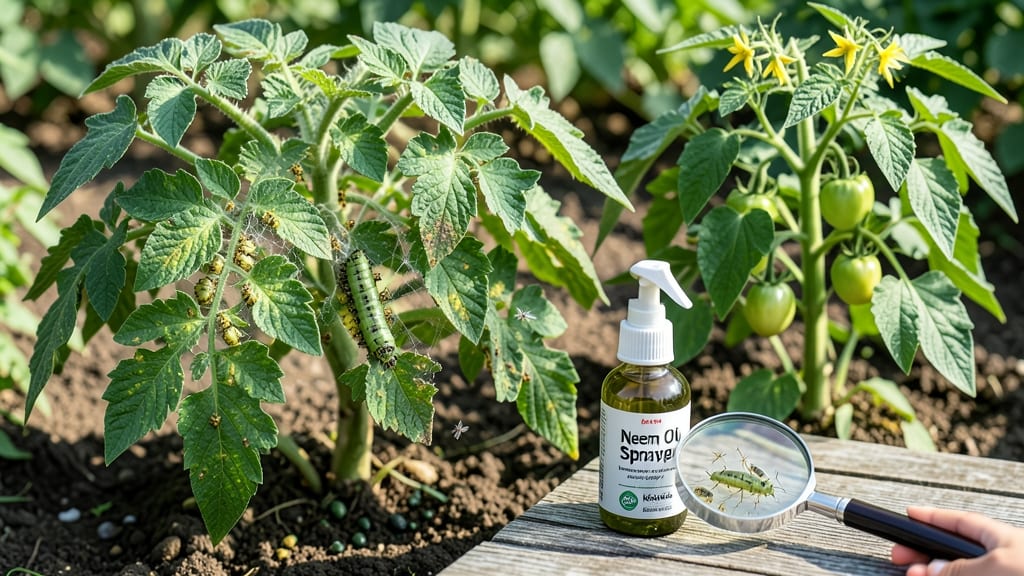
When tomato leaf pests turn your plants into skeleton leaves overnight, neem oil spray is your secret weapon. 🌱 I’ve watched entire plants go from lush and green to half-eaten in just 24 hours—until I discovered this fast-acting solution that stops chewing and sucking pests in their tracks.
The real problem isn’t just the pests—it’s how quickly they multiply when left unchecked. Aphids cluster on undersides, hornworms strip leaves overnight, and spider mites weave tiny webs that strangle growth. But neem oil disrupts their life cycle while being safe for your plants and pollinators when used correctly.
Within hours of spraying, you’ll see pests drop off or stop feeding entirely. New growth emerges stronger, and your tomatoes get the chance to thrive without constant damage. The key is timing—apply it at the first sign of trouble before the infestation spirals out of control.
Works for all common tomato pests, whether you’re dealing with a small outbreak or a full-blown invasion. Here’s exactly how to make and use the spray for maximum effectiveness—no guesswork, just results.
Root Causes Of Leaf Damage
Tomato leaves don’t just get chewed up by pests for fun—there’s always a reason behind the destruction. Understanding these triggers helps you address the problem at its source, not just slap on a bandage. Here’s why your tomato plants are becoming a pest buffet:
When tomato plants are packed too closely together, airflow stalls and humidity spikes—creating the perfect conditions for pests like aphids, spider mites, and whiteflies. These critters thrive in damp, shaded environments where leaves stay moist longer.
Why it happens:
- Reduced sunlight exposure weakens plants, making them easier targets for pests.
- High humidity (from poor airflow) encourages fungal growth, which attracts secondary pests like thrips.
- Overlapping foliage traps moisture, turning leaves into pest magnets.
Actionable fix: Space plants 18–24 inches apart and prune lower leaves to improve airflow. 🌬️
Tomatoes need a balanced diet of nitrogen (N), phosphorus (P), and potassium (K). When one or more of these is missing, plants become stressed, producing weak leaves that pests love to munch on.
Why it happens:
- Nitrogen deficiency (yellowing lower leaves) weakens structural integrity, making them easier to chew.
- Potassium deficiency (brown leaf edges) reduces the plant’s ability to fend off pests naturally.
- Magnesium or calcium shortages (interveinal chlorosis) make leaves brittle and vulnerable.
Actionable fix: Test soil pH (aim for 6.0–6.8) and amend with compost or a balanced fertilizer (10-10-10). A foliar spray of Epsom salt (magnesium sulfate) can also help. 🌱✨
One pest often opens the door for others.
For example: - Aphids excrete honeydew, which attracts ant colonies (who protect aphids in exchange for sugar). - Spider mites thrive in dry conditions but explode in numbers when whiteflies (which love humidity) move in. - Caterpillars (like hornworms) chew holes, leaving plants vulnerable to bacterial or fungal infections.
Why it happens:
- Primary pests (like aphids) weaken plants, making them susceptible to secondary invaders.
- Environmental stress (drought, overwatering) lowers defenses, turning plants into all-you-can-eat buffets.
- Lack of natural predators (like ladybugs or lacewings) allows pests to multiply unchecked.
Actionable fix: Introduce beneficial insects (release ladybugs or lacewings) and rotate neem oil sprays to break the pest cycle. 🦋🔥
Overwatering or irregular watering doesn’t just drown roots—it turns your garden into a pest paradise. Here’s how:
| Mistake | Pest Attraction Risk | Solution |
|---|---|---|
| Overwatering | Soft, mushy leaves attract slugs & snails. | Water at soil level, not leaves. |
| Underwatering | Dry, crispy leaves lure spider mites. | Deep water 1–2x/week (check soil). |
| Late-day watering | Leaves stay wet overnight, inviting fungus & pests. | Water early morning (6–9 AM). |
Why it happens:
- Excess moisture creates breeding grounds for fungus gnats and root maggots.
- Dry stress weakens plants, making them easier prey for chewing insects like beetles.
Actionable fix: Use drip irrigation (not overhead sprinklers) and mulch to retain moisture evenly. 💧🌿
Some tomato varieties are bred for pest resistance (e.g., ‘Defiant PhR’ for hornworms), but even these can fall victim if:
- Pests evolve (like aphids developing resistance to certain sprays).
- Environmental factors (heat stress, poor soil) override genetic defenses.
- Mixed plantings (e.g., basil near tomatoes) can attract pests instead of repel them.
Why it happens:
- Monoculture planting (all the same variety) encourages pest specialization.
- Over-reliance on chemical sprays can kill off natural predators, making outbreaks worse.
Actionable fix: Plant diverse companion crops (e.g., marigolds, nasturtiums) and rotate crops yearly to disrupt pest life cycles. 🌼🔄
Quick Fixes for Damaged Tomato Leaves
Tomato leaf pests can turn your thriving plants into a chewed-up mess in no time, but the good news is that most issues have simple, effective solutions. Below, we’ve mapped out practical fixes based on the most common culprits—whether it’s voracious caterpillars, sap-sucking insects, or fungal hitchhikers.
Each remedy includes prevention tips to keep your tomatoes lush and pest-free long-term.
Signs: Ragged holes, skeletonized leaves, or frass (tiny droppings) everywhere.
🔥 Immediate Action: Handpick & Trap - 👨🍳 Pick them off (yes, really!).
Wear gloves and drop them into soapy water—this works best in the early morning when pests are sluggish. - 🕷️ Set up traps: Use a yellow sticky trap near plants to catch flying adults (like cabbage loopers) before they lay eggs.
🥘 Organic Sprays for Fast Relief
- Neem oil spray (your secret weapon!): Mix 1 tbsp neem oil + 1 tsp mild soap + 1 quart water.
Spray every 3–5 days until pests vanish. Pro tip: 🌡️ Apply in the early evening to avoid harming bees. - Bacillus thuringiensis (Bt): A microbial spray that targets caterpillars without harming beneficial insects. Reapply after rain. - Spinosad: Derived from soil bacteria, this knocks out hornworms in hours.
Use at dusk for safety.
🛡️ Prevention for Next Season
- 🌱 Plant companions: Interplant with basil, marigolds, or dill—their strong scents repel pests.
- 🌙 Row covers: Use floating fabric covers over young plants to block egg-laying moths.
- 🧹 Clean up debris: Remove fallen leaves and stalks where pests hide over winter.
Signs: Sticky residue ("honeydew"), yellowing leaves, or tiny webs on undersides.
🍳 Blast Them Away
- 💦 Water blast: Use a strong stream of water to knock off aphids from leaves (do this early in the day so plants dry quickly).
- 🕸️ Yellow sticky cards: Hang these near plants to trap whiteflies before they multiply.
🔪 Natural Predators & Sprays
- 🐞 Ladybugs & lacewings: Release beneficial insects (buy online or from garden centers) to eat aphids naturally.
- 🍋 Soap spray: Mix 1 tsp castile soap + 1 quart water.
Spray directly on pests (avoid flowers to protect pollinators). - 🌿 Neem oil or insecticidal soap: Apply every 5–7 days until infestations disappear.
🎯 Long-Term Defense
- 💡 Reflective mulch: Use silver plastic mulch to confuse whiteflies and reduce egg-laying.
- 🌿 Prune & isolate: Remove heavily infested leaves and bag them before composting.
- 🌡️ Monitor humidity: Spider mites thrive in dry heat—keep soil moist and use a hose spray on hot days.
Signs: Dark spots with concentric rings, yellowing, or wilting leaves.
⏰ Act Fast with Fungicides
- 🍄 Copper fungicide: Spray preventively at planting and every 10–14 days during wet seasons.
- 🌿 Baking soda spray: Mix 1 tbsp baking soda + 1 tsp oil + 1 quart water.
Spray undersides of leaves (where spores hide). - 🌱 Remove infected leaves: Prune and destroy spotted leaves immediately to stop spread.
🛡️ Prevent Future Outbreaks
- 🌧️ Improve airflow: Space plants 18–24 inches apart and stake tomatoes to reduce humidity.
- 💧 Water at the base: Avoid wetting leaves (use drip irrigation or water early in the day).
- 🌱 Crop rotation: Don’t plant tomatoes in the same spot yearly—rotate with beans or peas to break the fungus cycle.
💡 Pro Tip: For all pests, consistency is key! Even "natural" remedies need 2–3 applications to fully work. Check your plants daily during outbreaks.
By tackling pests early and combining immediate fixes with prevention, your tomato plants will stay healthy, productive, and pest-free all season long! 🍅💪
Frequently asked questions about tomato leaf pests
Why do tomato leaf pests seem to appear overnight?
Many pests like aphids and spider mites reproduce extremely fast—some species can double their population in just 3-7 days under ideal conditions. They also thrive in crowded plants with poor airflow, where they go undetected until damage becomes visible. Check undersides of leaves daily during warm weather to catch outbreaks early.
Can I use neem oil on tomato plants with flowers or fruit?
Yes, but with caution! Neem oil is safe for all tomato plant stages when used properly. Apply in the early evening to avoid harming pollinators, and don't spray directly on open flowers. For fruiting plants, use a 1% solution (1 tbsp per quart of water) and reapply every 5-7 days until pests disappear.
What's the difference between chewed leaves and sap-sucking damage?
Chewed leaves show irregular holes or skeletonized patterns (like hornworms or beetles), while sap-suckers leave tiny puncture marks, yellowing, or sticky honeydew (aphids/whiteflies). Examine leaves closely—chewers leave frass (tiny droppings), while sap-suckers create webbing or sooty mold from their waste.
Will homemade sprays really work against tomato pests?
Soap spray (1 tsp castile soap per quart water) and garlic spray (blend 1 garlic bulb + 1 quart water) are effective against soft-bodied pests like aphids. For tougher pests, combine with neem oil or Bacillus thuringiensis (Bt). Always test sprays on a small leaf area first to check for sensitivity.
How do I know if my tomato plant is stressed enough to attract pests?
Stressed plants show yellowing leaves, stunted growth, or wilting—all signals that pests will target them. Check for nutrient deficiencies (like magnesium or potassium shortages) and ensure proper watering (1-2 inches per week). Healthy plants with good airflow naturally resist many pests.