
Pests and Diseases
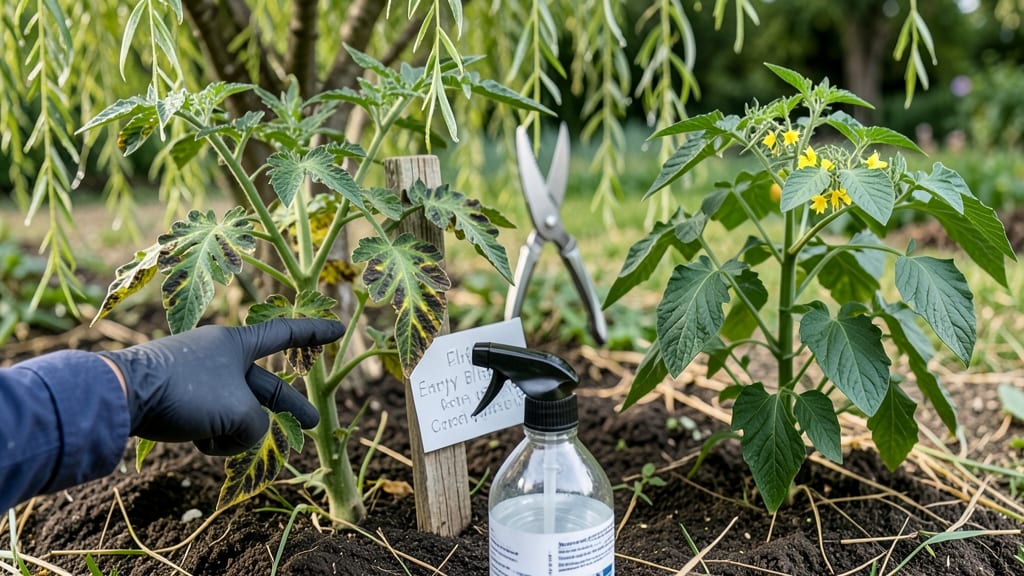
Those first brown spots on tomato leaves mean your harvest is at risk—unless you act fast. 🌱 I’ve lost entire plants to diseases like early blight and late blight, but I’ve also saved others by catching symptoms early and using targeted organic fixes.
The key is knowing what you’re dealing with before the problem spreads beyond control.
Start by examining the undersides of leaves for yellowing, spots, or moldy growth—these are your early warning signs. Early blight shows up as concentric rings on lower leaves, while late blight creates greasy-looking spots that spread rapidly.
Bacterial wilt? Look for wilting that happens overnight, even when soil is moist. The sooner you identify the issue, the easier it is to stop it before it ruins your tomatoes.
📚 In This Guide
- What you need
- Instructions
- Tips and common mistakes
- Wrapping up and next steps
What you need
- ● Pruning shears or sharp scissors – sterilized with rubbing alcohol (1 pair)
- ● Gloves – nitrile or latex-free (1 pair for hygiene)
- ● Spray bottle – 16 oz or larger (for homemade sprays)
- ● Neem oil – 100% cold-pressed, organic (8 oz bottle)
- ● Baking soda – unscented, food-grade (1 box)
- ● Hydrogen peroxide – 3% solution (16 oz bottle)
- ○ Copper fungicide – organic, liquid or powder form (optional but helpful for severe cases)
- ○ Magnifying glass – for close-up inspection (optional but useful)
- ● Notebook & pen – to track symptoms and treatments
- ● Plastic bags or paper towels – for removing infected leaves (1 roll or pack)
- ● Compost bin – for disposing of diseased plant debris
- ● pH test kit – to check soil health
- ● Beneficial microbes – like Bacillus subtilis for soil treatment
- ● Plant clippers – for larger pruning tasks
- ● Labeling tags – to mark treated plants
How to diagnose and treat common tomato leaf diseases
Here’s how I spot early trouble and stop diseases before they wreck your harvest.
🌿 Step 1: Identify the Problem with Visual Clues
Start by examining the undersides of leaves—that’s where most diseases hide. Look for yellow spots, black speckles, or white powdery coatings. Early blight shows up as brown concentric rings on lower leaves, while septoria leaf spot creates tiny dark spots with lighter centers. Powdery mildew leaves a fuzzy white film, and bacterial spot causes greasy, water-soaked patches.
Check the stem base too—wilting or dark streaks could signal bacterial wilt or fusarium. I always compare affected leaves to healthy ones side by side. If you see mushy stems or roots turning brown, your plants might be drowning in overwatered soil or infected by root rot.
✂️ Step 2: Remove Infected Parts Immediately
Snip off any diseased leaves with clean scissors—sterilize them in rubbing alcohol between cuts to avoid spreading spores. Don’t compost these clippings; toss them in the trash instead. For severe cases, remove entire lower branches where fungus often starts. The goal is to stop the disease from climbing higher.
Wear gloves—some fungal spores can irritate skin. After pruning, rinse your hands and tools with soapy water. I keep a small spray bottle of 1:10 bleach-water mix nearby to disinfect tools between plants. Never reuse pruners on healthy plants after diseased ones without cleaning.
💧 Step 3: Apply Organic Treatments Targeted to the Disease
For fungal diseases like early blight or powdery mildew, spray plants with a baking soda solution (1 tbsp baking soda + 1 tsp oil + 1 gallon water). Reapply every 7-10 days during wet weather. Neem oil (2 tsp per gallon) smothers fungal spores too—just shake well before spraying and apply in the early morning to avoid burning leaves.
If you suspect bacterial infections, use copper fungicide (like copper soap) or a hydrogen peroxide spray (1 tbsp 3% peroxide per quart of water). For viral issues (like mosaic patterns), remove infected plants immediately—viruses spread fast and have no organic cure. Always spray undersides of leaves where spores hide.
☀️ Step 4: Adjust Growing Conditions to Prevent Recurrence
Improve air circulation by spacing plants 18-24 inches apart and pruning to open the canopy. Remove weeds and debris from around the base—these harbor spores. If your garden stays shady or damp, move plants to a sunnier spot (tomatoes need 6+ hours of direct sun) and water only at the base in the morning.
Rotate crops next season—never plant tomatoes, peppers, or eggplants in the same spot for at least 3 years. I also solarize soil in fall by covering beds with clear plastic for 4-6 weeks to kill fungus. For container growers, sterilize pots with a 10% bleach rinse before reuse.
🔍 Step 5: Monitor and Repeat as Needed
Check plants weekly for new symptoms, especially after rain. If you see yellowing leaves again, it’s time to reapply treatments. Keep a gardening journal noting when you pruned, sprayed, and what worked. I jot down weather patterns too—humid summers mean more frequent sprays.
For stubborn cases, switch treatments every 2 weeks to prevent resistance. If all else fails, pull the plant and replace it with a resistant variety like ‘Defiant PhR’ (early blight-resistant) or ‘Mountain Merit’ (verticillium-resistant). Prevention saves time—and your tomatoes!
Tips & tricks for spotting and stopping tomato leaf diseases
Took me years of trial-and-error to master these tricks—here's how I catch problems before they ruin my harvest.
Early Detection is Everything: I start my inspections in the morning when leaves are dry. This is when fungal spores are most visible. Use a magnifying glass to check undersides of leaves—this is where early blight and powdery mildew love to hide. I've caught diseases in their infancy by focusing on the lower leaves first, where pathogens often appear before climbing higher. The earlier you spot those brown concentric rings or white powdery coatings, the easier they are to treat.
Tool Sanitation Matters: I learned this the hard way after sterilizing my pruners with rubbing alcohol between cuts. The 1:10 bleach-water mix I keep in a spray bottle has saved multiple seasons. Never skip this step—even a tiny fungal spore on your tool can jump to healthy plants. I also keep separate pruners for diseased and healthy plants when possible. This simple habit has prevented entire plants from getting infected.
Treatment Timing is Critical: For the baking soda solution (1 tbsp baking soda + 1 tsp oil + 1 gallon water), I apply it in the early morning when humidity is lower. This gives the solution time to dry before evening moisture sets in. I've found that applying treatments during humid summers every 7-10 days is more effective than waiting until symptoms appear. The key is consistency—don't wait for visible damage to start spraying.
Environmental Prevention Wins: The 18-24 inch spacing between plants isn't just about aesthetics—it's about airflow. I've seen fungal diseases spread rapidly in crowded gardens. Pair this with pruning to open the canopy, and you'll dramatically reduce moisture buildup where spores thrive. For container growers, I've had great success with 10% bleach rinses for pots before reuse—it's a simple way to break the disease cycle.
Pro Tips for Tomato Leaves Disease
- Took me years of trial-and-error to master these tricks—here's how I catch problems before they ruin my harvest.
- Early Detection is Everything: I start my inspections in the morning when leaves are dry.
- Tool Sanitation Matters: I learned this the hard way after sterilizing my pruners with rubbing alcohol between cuts.
Frequently asked questions
Got questions about tomato leaf diseases?
You’re not alone—gardeners often struggle with spotting, treating, and preventing these pesky issues. Here are answers to the most common concerns, so you can keep your tomato plants thriving!
What are the most common tomato leaf diseases?
The top culprits include early blight (brown spots with yellow halos), late blight (rapidly spreading dark lesions), septoria leaf spot (tiny gray spots with white centers), and powdery mildew (white, powdery patches). Fungal infections dominate, but bacterial spots (water-soaked lesions) also occur.
How do I tell if my tomato plant has a disease vs. pests?
Diseases often start with spots, discoloration, or mold (e.g., fuzzy growth or leaf curling). Pests like aphids or spider mites leave holes, webbing, or sticky residue. Check the underside of leaves—diseases usually show up there first, while pests may hide or cluster.
Can I save a tomato plant with leaf disease?
It depends! For early-stage fungal diseases, prune infected leaves, improve airflow, and apply organic fungicides (like neem oil or copper spray). If late blight or bacterial infections strike, removal is often the best option to prevent spread. Act fast—don’t wait until 70% of leaves are affected!
What’s the best organic treatment for tomato leaf diseases?
Start with prevention: rotate crops, water at the base (not overhead), and space plants for airflow. For treatment, mix 1 tbsp baking soda + 1 tsp dish soap + 1 gallon water (for powdery mildew) or use compost tea to boost plant immunity. Copper-based sprays (like Bordeaux mixture) work for fungal issues.
Should I remove all diseased leaves, or just the worst ones?
Remove only the most severely infected leaves—toss them in the trash (not compost!). Over-pruning stresses the plant. Focus on outer leaves first to protect the core. If the disease spreads, prune aggressively and disinfect tools with rubbing alcohol to avoid cross-contamination.
Does heat or humidity make tomato leaf diseases worse?
Yes!
High humidity (above 75%) and warm temps (70–85°F) create the perfect storm for fungal growth. Water in the morning to let foliage dry quickly, use mulch to reduce soil splashes, and avoid overhead irrigation. Fan leaves lightly if humidity is extreme—just don’t damage the plant!
Can I reuse soil from a diseased tomato plant next year?
Not safely! Fungal spores and bacteria linger in soil. Solarize the bed (cover with clear plastic for 4–6 weeks in summer) or replace the top 6 inches of soil. Crop rotation (wait 3 years before planting tomatoes or nightshades in the same spot) is key to breaking the disease cycle.
Wrapping up and next steps
Recognizing and addressing tomato leaves disease early is key to keeping your garden thriving! 🌱 With the right organic fixes—like neem oil, copper sprays, or proper spacing—you can protect your plants and enjoy a bountiful harvest. Don’t wait until it’s too late! Start monitoring your plants today and act fast at the first sign of trouble.
Ready to take action? Grab your supplies, follow the steps above, and give your tomatoes the care they deserve. Your future harvests will thank you!