
Vegetables
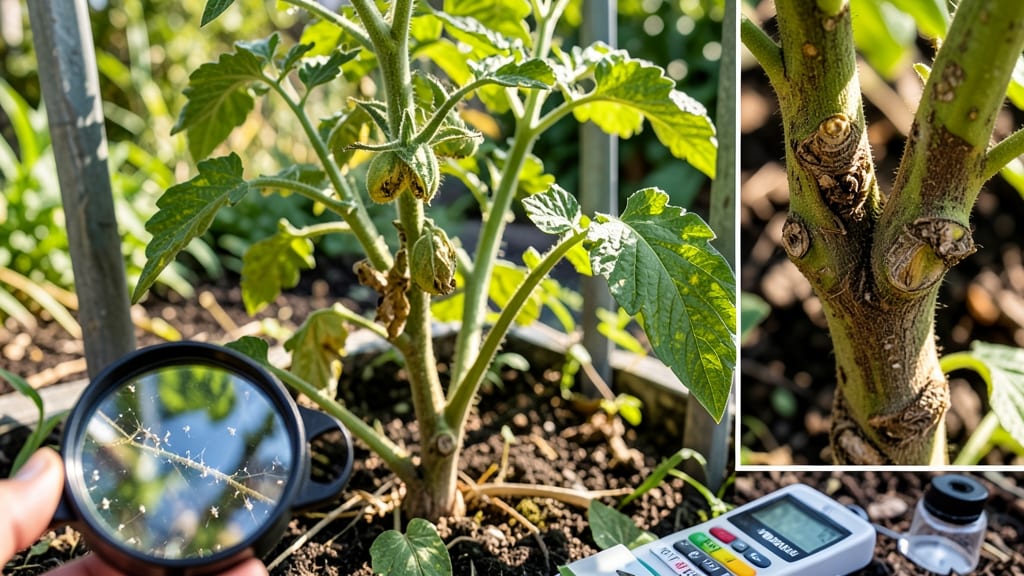
When your tomato plants develop tiny, yellowed leaves that look like they’ve been shrunk overnight, you’re likely dealing with little leaf syndrome—one of the fastest-spreading tomato diseases. 🌱 I’ve seen this bacterial nightmare turn lush plants into stunted, unproductive shadows in just weeks, and the key to saving your harvest is acting before the symptoms spread to your entire garden.
The culprit is usually a tiny, sap-sucking insect called the tomato psyllid, which carries the bacteria that triggers this disease. What starts as a few yellowed leaves at the tips quickly becomes crinkled, upward-curling foliage and stunted growth—classic signs your plants are fighting an uphill battle.
The worst part? Once it takes hold, there’s no cure, which is why early diagnosis is your best weapon.
Here’s the good news: you can stop it fast with a few targeted steps—removing infected plants immediately, introducing beneficial insects to control psyllids, and choosing resistant varieties next season. The goal isn’t just to save this year’s crop but to protect your entire garden from becoming a bacterial hotspot.
We’ll cover how to spot the difference between little leaf syndrome and nutrient deficiencies, the most effective organic treatments, and why your pruning habits might be making it worse. Trust me, catching this early makes all the difference—your tomatoes will thank you at harvest time.
Root Causes Behind Stunted Tomato Growth
Understanding why your tomato plants develop stunted, yellowing leaves—and that classic "little leaf" look—starts with identifying the underlying triggers. This condition often stems from a mix of pathogen infections, environmental stress, and cultural mismanagement. Below, we break down the key culprits, their science-backed mechanisms, and what sets them apart.
The most common cause of little leaf syndrome in tomatoes is infection by the Tomato Leaf Curl Virus (ToLCV) or Tomato Yellow Leaf Curl Virus (TYLCV), both spread by whiteflies (Bemisia tabaci). Here’s how it works:
- Viral Transmission: Whiteflies feed on infected plants, then spread the virus to healthy ones via their saliva while probing for sap.
Once inside the plant, the virus hijacks the phloem tissue (the plant’s vascular system), disrupting nutrient and water transport. - Result: New leaves emerge smaller, thicker, and curled, with stunted growth due to restricted nutrient flow.
- Symptom Red Flags:
- Yellowing between leaf veins (chlorosis) 🌿→💛
- Upward leaf curling (like a "cup")
- Reduced fruit set (flowers drop off prematurely)
- Stunted stems (plants look "bushy" but weak)
- Why It’s Tricky: These viruses persist in the soil and on weeds, and there’s no cure—only prevention. Infected plants should be removed and destroyed (not composted) to stop further spread.
Tomatoes are heat-loving, but extreme temperatures, drought, or poor air circulation can mimic little leaf symptoms—even without a virus. Here’s the breakdown:
| Stress Factor | How It Triggers Symptoms | Actionable Fix |
|---|---|---|
| High Heat (>90°F) | Stops cell division in new leaves, causing stunted, thick growth. | Provide shade cloth or mulch to cool roots. |
| Drought Stress | Roots can’t absorb water/nutrients → chlorosis and leaf curling to reduce moisture loss. | Deep water 1–2x/week (1–1.5 inches per session). |
| Poor Airflow | Traps heat/humidity, encouraging fungal/bacterial infections that weaken leaves. | Prune for spacing (18–24" between plants). |
| Cold Snaps (<50°F) | Slows metabolism → yellowing and leaf drop, stunting new growth. | Use row covers or move pots indoors temporarily. |
- Pro Tip: 🌡️ Monitor soil temp—ideal range is 60–85°F. Use a soil thermometer to catch stress early.
Tomatoes are heavy feeders, and deficiencies in key nutrients can stunt growth, mimic viral symptoms, and cause small, yellowed leaves. The top offenders:
- Nitrogen (N) Deficiency:
- Symptoms: Pale yellow leaves (starting at the bottom), stunted shoots.
- Why? Nitrogen fuels leaf growth. Without it, plants prioritize roots over foliage.
- Fix: Apply balanced fertilizer (10-10-10) or compost tea every 2–3 weeks.
- Phosphorus (P) Deficiency:
- Symptoms: Dark green/purple stems, delayed flowering, small leaves.
- Why? Phosphorus is critical for energy transfer—without it, plants can’t grow new tissue efficiently.
- Fix: Use bone meal or a high-P fertilizer (5-10-10) at planting.
- Potassium (K) Deficiency:
- Symptoms: Yellowing at leaf edges (scorching), weak stems, small leaves with curled edges.
- Why? Potassium regulates water and nutrient uptake—deficiency = poor osmotic balance.
- Fix: Apply greensand or potassium sulfate mid-season.
- Micronutrient Imbalance (Zinc, Magnesium, Iron):
- Symptoms: Interveinal yellowing (like viral symptoms!) or stunted new growth.
- Why? These trace minerals act as enzymes—without them, cells can’t divide properly.
- Fix: Chelated micronutrient spray or Epsom salt (magnesium sulfate) for quick relief.
While viruses are the #1 cause, sap-sucking pests like aphids, spider mites, and whiteflies can physically damage leaves, leading to stunted growth. Their saliva also blocks stomata (pores), reducing photosynthesis.
- How They Cause Symptoms:
- Aphids/Whiteflies: Cluster on new growth, injecting toxins that distort leaves and spread viruses.
- Spider Mites: Stipple leaves (tiny white/yellow dots) → reduced leaf surface area = less energy for growth.
- Thrips: Scratch leaves while feeding, causing silver streaks and bud deformities.
- Action Plan:
- Blast them off with a strong spray of water (disrupts their grip).
- Use insecticidal soap or neem oil (repeat every 5–7 days).
- Introduce predators: Ladybugs, lacewings, or parasitic wasps (for whiteflies).
Compacted, low-organic-matter soil or improper pH strangles roots, leading to nutrient starvation and stunted tops. Key issues:
- Compacted Soil:
- Problem: Roots can’t breathe or expand, limiting water/nutrient uptake.
- Fix: Aerate soil with a fork or add compost + perlite to improve drainage.
- Wrong pH (Too Acidic or Alkaline):
- Ideal range: 6.0–6.8 (tomatoes prefer slightly acidic).
- Symptoms: Yellowing leaves (if pH >7.5) or brown tips (if pH <5.5).
- Fix: Test soil with a DIY kit and amend with lime (to raise pH) or sulfur (to lower pH).
- Lack of Organic Matter:
- Problem: Soil holds less moisture and nutrients, forcing plants to struggle.
- Fix: Mulch with straw and add compost every season.
Too much synthetic fertilizer—especially high in nitrogen—can burn roots or disrupt microbial balance, leading to stunted growth.
- Signs of Over-Fertilizing:
- Leaf burn (brown edges).
- Salty crust on soil surface.
- Slow growth despite green leaves (nutrient lockout).
- How to Correct It:
- Flush soil with water to leach excess salts.
- Switch to organic fertilizers (like fish emulsion or worm castings) for slow-release nutrients.
- Water deeply before fertilizing to dilute concentration.
Fixing Stunted Tomato Growth Fast
Now that you’ve identified the cause of your tomato plants’ tiny leaves, yellowing, or stunted growth, it’s time to take action. The good news? Most cases of tomato little leaf syndrome (or similar stress responses) can be reversed with targeted fixes.
Below, we break down practical solutions based on the root cause—plus prevention tips to keep your plants thriving.
If your plants are infected with tomato little leaf virus (TLLV) or a bacterial pathogen, removal is often the best defense—these issues rarely have a cure.
🔥 Step 1: Remove Infected Plants Immediately
- Pull up or prune any plants showing severe symptoms (stunted growth, curled leaves, yellowing).
- Do not compost infected plant material—burn or trash it to prevent spread.
- Wear gloves and disinfect tools with 70% isopropyl alcohol or a bleach solution (1 part bleach to 9 parts water).
🍳 Step 2: Sterilize Your Garden Space
- Clean tools between uses (pruners, trowels) to avoid cross-contamination.
- Rotate crops—don’t plant tomatoes, peppers, or eggplants in the same spot for 3–4 years (viruses can linger in soil).
- Solarize the soil (if possible): Cover infected beds with clear plastic for 4–6 weeks in hot sun to kill pathogens.
👨🍳 Step 3: Strengthen Remaining Plants
While you can’t cure the virus, boosting plant health may help them resist further damage:
- Fertilize with compost or balanced organic fertilizer (10-10-10) to support recovery.
- Water deeply but infrequently to avoid stress.
- Prune lower leaves to improve airflow and reduce humidity (which spreads bacteria).
If your tomatoes are suffering from nitrogen, phosphorus, or potassium imbalances, simple adjustments can revive them.
🥘 Step 1: Test Your Soil (Cheap & Easy!)
- DIY soil test kit (available at garden centers) or send a sample to a local extension office for analysis.
- Quick fixes based on symptoms:
- Yellow lower leaves? → Nitrogen deficiency (add blood meal, fish emulsion, or compost tea).
- Purple stems/leaves? → Phosphorus deficiency (use bone meal or rock phosphate).
- Weak stems, slow growth? → Potassium deficiency (apply wood ash, banana peel tea, or greensand).
⏰ Step 2: Adjust Watering & Fertilizer Schedule
- Over-fertilizing? Flush the soil with water to reduce salt buildup.
- Under-fertilizing? Use a slow-release organic fertilizer (like worm castings or fish bone meal) every 4–6 weeks.
- Water consistently—tomatoes hate dry-wet cycles, which stress roots.
Tomatoes often react to extreme temperatures or stagnant air with stunted growth and small leaves.
🔥 Step 1: Optimize Temperature & Light
- Too hot? Provide shade cloth (30–50%) during peak afternoon sun (especially in 90°F+ weather).
- Too cold? Use row covers or cold frames if nights dip below 50°F (10°C).
- Not enough light? Move plants to a sunnier spot or supplement with a grow light (12–16 hrs/day).
🌬️ Step 2: Improve Air Circulation
- Prune suckers and lower leaves to reduce humidity and fungal risk.
- Space plants 18–24 inches apart (crowding = more disease).
- Use a small fan (on low) near plants to mimic wind and strengthen stems.
Once your plants recover, keep these habits to avoid another round of little leaf syndrome:
✅ 💡 Rotate crops – Never plant tomatoes, peppers, or eggplants in the same spot two years in a row. ✅ 🌡️ Mulch heavily – Use straw or grass clippings to retain moisture, regulate soil temp, and block weeds. ✅ 🎯 Practice crop monitoring – Inspect plants weekly for early signs of pests/disease. ✅ ✨ Start with healthy seedlings – Buy from reputable nurseries or grow from sterilized seeds. ✅ 🔥 Use companion plants – Basil, marigolds, and onions deter pests and improve growth.
| Problem | Solution | Prevention |
|---|---|---|
| Viral/Bacterial Infection | Remove plants, sterilize tools, rotate crops | Solarize soil, use resistant varieties |
| Nitrogen Deficiency | Add compost/fish emulsion | Test soil yearly, balance fertilizers |
| Over-Fertilization | Flush soil, reduce feeding | Use slow-release organic fertilizers |
| Heat Stress | Provide shade, water deeply | Mulch, choose heat-tolerant varieties |
| Poor Airflow | Prune, space plants, use a fan | Train vines, avoid overcrowding |
Final Thought: While some causes (like viruses) are permanent, most tomato growth issues are reversible with the right care. Act fast—the sooner you address the problem, the quicker your plants bounce back for a bountiful harvest! 🍅✨
Frequently asked questions about tomato little leaf syndrome
What’s the difference between little leaf syndrome and regular nutrient deficiency?
Little leaf syndrome causes tiny, upward-curling leaves with yellowing between veins, while nutrient deficiencies (like nitrogen) typically show uniform yellowing starting at the bottom or purple stems. The key difference? Viral/bacterial infections stunt new growth permanently, whereas deficiencies can be fixed with fertilizer adjustments.
Can I save my tomato plants if they already have little leaf syndrome?
For viral causes, there’s no cure—remove infected plants immediately to prevent spread. For nutrient or environmental stress, you can often revive plants by fixing soil imbalances, improving airflow, and adjusting watering. Act fast, as symptoms worsen quickly!
How do I know if it’s little leaf syndrome or just heat stress?
Heat stress causes leaves to yellow uniformly and thicken slightly, while little leaf syndrome produces small, crinkled leaves with yellowing between veins. Check for whiteflies or psyllids—their presence confirms a viral/bacterial infection. A soil thermometer can help rule out heat issues.
Are there tomato varieties resistant to little leaf syndrome?
Yes! Look for heat-tolerant, disease-resistant varieties like 'Heatmaster' or 'Solar Fire'. These are bred to handle stress better, though no variety is 100% immune. Companion planting with basil or marigolds also helps deter pests that spread the disease.
Will neem oil or insecticidal soap help if my tomatoes have little leaf?
These work only if pests (like whiteflies) are spreading the disease. Spray neem oil or insecticidal soap every 5–7 days to control vectors, but they won’t cure an existing infection. Focus on removing infected plants and sterilizing tools to stop the spread.