
Watering
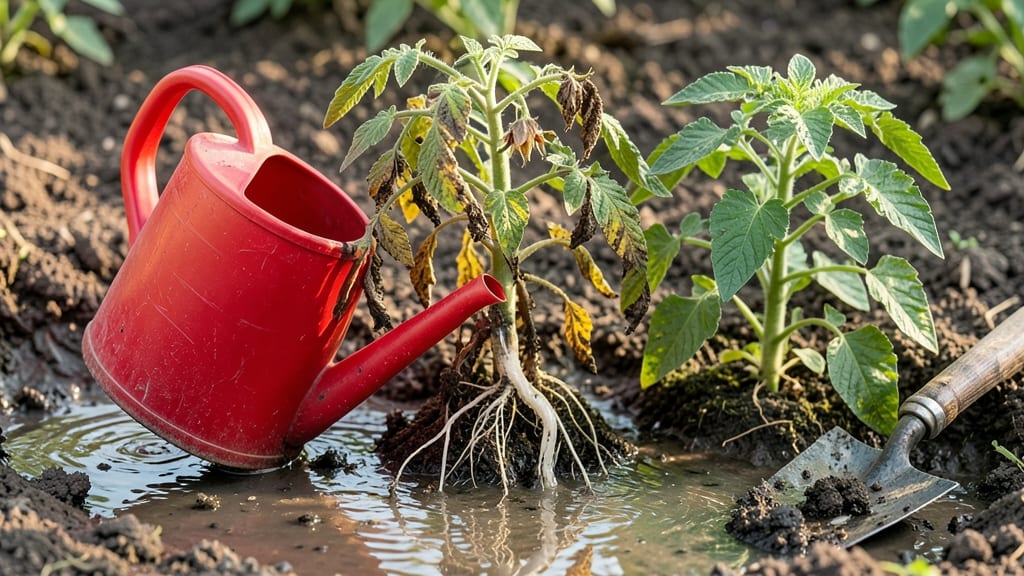
Your tomato plants might be drowning in water, not thriving. 🌱 Overwatering symptoms like yellowing leaves, mushy stems, and foul-smelling soil are silent killers—often mistaken for underwatering. The good news? Recognizing these signs early can save your harvest before root rot takes over.
Yellowing leaves that start at the bottom and spread upward? That’s classic overwatering. 🌿 Check the soil—if it’s soggy or smells like rot, your plants are begging for better drainage. Wilting despite wet soil, grayish mold, or stunted growth are other red flags. These aren’t just cosmetic issues; they’re life-threatening.
Fixing it starts with adjusting your watering schedule—tomatoes need 1-2 inches per week, but never let them sit in puddles. Amend heavy soil with compost or perlite to improve drainage, and consider raised beds or containers if your garden stays too wet.
Prune affected leaves to redirect energy to healthy growth.
Prevent future problems by watering deeply but less frequently, always at the base of the plant. Mulch helps regulate moisture, and avoid watering late in the day to reduce fungal risks. With these adjustments, your tomatoes will bounce back stronger—and you’ll spot overwatering before it becomes a crisis.
Root Causes Of Overwatering
Overwatering your tomato plants isn’t just a gardening mistake—it’s a silent killer that disrupts the delicate balance of water, oxygen, and nutrients your plants need to thrive. Understanding why this happens is the first step to preventing it.
Below, we break down the science-backed reasons behind excessive moisture and how they lead to tomato plant stress.
Tomatoes hate soggy feet, and the primary culprit is often the soil itself. If your garden bed or pots lack proper drainage, water pools around the roots instead of draining away. This creates an anaerobic (oxygen-deprived) environment, where beneficial microbes struggle to function and harmful pathogens thrive.
- Clay-heavy soil: Compact and slow-draining, clay holds water like a sponge, leaving roots starved for air.
- Compacted soil: Foot traffic, machinery, or poor organic matter can squeeze soil particles together, reducing pore space for oxygen.
- Improper container drainage: Pots without drainage holes or those lined with waterproof materials trap excess moisture, mimicking a swampy root zone.
Actionable fix: Amend clay soil with coarse sand, perlite, or compost to improve aeration. For containers, use a well-draining potting mix (like a 60/40 blend of peat moss and perlite) and always add drainage holes.
Many gardeners assume tomatoes need constant hydration, but these plants are surprisingly drought-tolerant once established. Overwatering often stems from:
- Inconsistent schedules: Watering at the same time daily (e.g., morning only) can lead to waterlogging if rainfall or other factors add extra moisture.
- Ignoring weather conditions: Heavy rain or high humidity can saturate soil faster than you think, but many gardeners keep watering on autopilot.
- Using the "finger test" incorrectly: Sticking your finger 1–2 inches into the soil and assuming it’s dry when it’s actually moist but not soggy.
Actionable fix:
- Water deeply but infrequently—aim for 1–1.5 inches per week (including rain), adjusting for heat or wind.
- Use a moisture meter or the "squeeze test": Gently press soil; if water drips out, it’s overwatered.
- Morning watering is best—it allows excess moisture to evaporate during the day.
Not all overwatering is your fault—sometimes, the environment conspires against your tomatoes. Humidity, temperature swings, and even wind can trap moisture where it doesn’t belong.
- High humidity: Air saturated with moisture slows evaporation, keeping soil damp longer than usual. In tropical climates, roots can suffocate even with "normal" watering.
- Cold or rainy seasons: Cool temperatures reduce soil evaporation, while frequent rain adds extra moisture, creating a double whammy for drainage.
- Windbreaks or dense mulch: While mulch conserves moisture, thick layers (over 3 inches) can smother soil and trap humidity near roots.
Actionable fix:
- In humid climates, water less frequently but more deeply to encourage roots to seek dry layers.
- Use straw or shredded leaves (instead of wood chips) for mulch—they allow better airflow.
- Raise beds or use container growing in areas with poor natural drainage.
Tomato roots need oxygen to respire—just like you need air to breathe. When soil stays waterlogged, roots drown, leading to:
- Root rot (Phytophthora, Pythium): Fungal pathogens thrive in anaerobic conditions, attacking root tissues and blocking nutrient uptake.
- Reduced microbial activity: Beneficial bacteria and mycorrhizae (which help absorb nutrients) die off, starving your plant.
- Toxic buildup: Excess water leaches away oxygen but also traps salts and chemicals (like fertilizer) near roots, burning them.
Actionable fix:
- If roots are already rotting, prune affected areas with sterilized scissors and repot in fresh, dry soil.
- Avoid fertilizing waterlogged soil—wait until the top 2 inches are dry to prevent salt burn.
- For severe cases, solarize the soil (cover with clear plastic for 4–6 weeks) to kill pathogens before replanting.
Now that you know the why, the next step is spotting the symptoms early—because once your tomatoes start yellowing or wilting, it’s often too late. Stay tuned for our deep dive into diagnosing overwatered tomato plants!
Revive Your Tomatoes: Step-by-Step Fixes
Overwatering can feel like a death sentence for your tomato plants, but don’t panic! With the right actions, you can nurse them back to health—sometimes even saving them from the brink.
Below, we’ll map out practical fixes for each symptom, along with prevention tips to keep your plants thriving. Let’s turn this around!
Cause: Overwatering stresses roots, starving leaves of oxygen and nutrients. Fix:
- 🔥 Step 1: Stop Watering for 2–3 Days Let the soil dry out slightly before watering again. Use your finger to check moisture—if the top 1–2 inches feel damp, wait.
- 🍳 Step 2: Improve Drainage If your pots lack drainage holes, add them or switch to a container with better airflow. For garden beds, mix in perlite or coarse sand (10–20%) to loosen compacted soil.
- 👨🍳 Step 3: Prune Damaged Foliage Snip off yellow or mushy leaves with clean scissors to redirect energy to healthy growth. Avoid pruning during wet weather to prevent disease.
💡 Prevention Tip: Use a moisture meter or the "squeeze test"—gently press soil; if it crumbles, it’s dry enough. Aim for 1–1.5 inches of water per week (including rain).
Cause: Waterlogged roots suffocate, leading to fungal infections like Phytophthora. Fix:
- ⏰ Step 1: Remove the Plant (Gently!) Dig up the tomato (if in soil) or tip the pot to expose roots. Rinse healthy roots with water to remove excess soil.
- 🔪 Step 2: Trim Rotten Roots Use sterilized scissors to cut away black, mushy roots. Only keep firm, white roots—discard the rest.
- 🌡️ Step 3: Repot in Fresh, Dry Soil Choose a clean pot with drainage and fill with a mix of:
- 60% sterilized potting soil
- 30% perlite or vermiculite
- 10% compost Let the plant acclimate for 3–5 days before watering lightly.
✨ Pro Tip: Add 1 tbsp of hydrogen peroxide (3%) per gallon of water when repotting to kill lingering fungi. Water only when the top 2 inches of soil are bone-dry.
Cause: Overwatering + calcium deficiency = ugly, sunken spots on fruit. Fix:
- 📊 Step 1: Test Soil pH Ideal pH for tomatoes: 6.0–6.8. Use a soil test kit (or vinegar/baking soda test at home). If too acidic (pH <5.5), add lime (follow package rates).
- 💪 Step 2: Boost Calcium Mix 1 tbsp of crushed eggshells or bone meal into the soil around the plant. For a quick fix, spray calcium nitrate (0.5 tsp/gallon) on leaves weekly.
- 🥗 Step 3: Mulch to Retain Moisture (Without Overdoing It) Apply 2–3 inches of straw or wood chips to keep roots cool and even out water absorption.
🎯 Prevention Tip: Water deeply but infrequently—early morning is best. Avoid wetting leaves to prevent disease.
Cause: Overwatering diverts energy from fruiting to root recovery. Fix:
- 🌞 Step 1: Ensure 6–8 Hours of Sun Daily Move potted tomatoes to a sunnier spot or prune nearby shade-casting plants.
- 🌧️ Step 2: Water at the Base, Not the Leaves Use a soaker hose or drip irrigation to deliver water directly to roots. Avoid overhead sprinklers.
- 🍎 Step 3: Fertilize Lightly Switch to a balanced fertilizer (10-10-10) or compost tea to replenish nutrients. Over-fertilizing after stress can burn roots—go easy!
🔥 Quick Fix Table:
| Symptom | Action | Frequency |
|---|---|---|
| Yellow leaves | Reduce water, improve drainage | Check soil moisture daily |
| Root rot | Repot in fresh soil, trim roots | Once (emergency measure) |
| Blossom end rot | Add calcium, adjust pH | Weekly (until resolved) |
| Stunted growth | More sun, base watering | Daily (morning only) |
💡 Final Prevention Checklist: ✅ Use raised beds or containers for better drainage. ✅ Group plants with similar water needs (tomatoes + peppers, not lettuce). ✅ Monitor weather—adjust watering during rain or humidity spikes. ✅ Rotate crops annually to prevent soil-borne diseases.
With these fixes, your tomatoes should bounce back in 2–4 weeks—just give them time and consistency. 🍅💦 Now go save those plants!
Frequently asked questions
Why do my tomato leaves turn yellow first at the bottom?
Yellowing leaves starting from the bottom are a classic sign of overwatering. When roots sit in soggy soil, they can't absorb oxygen, causing nutrient starvation. The oldest leaves (at the bottom) show symptoms first because the plant prioritizes keeping younger growth alive. Check if the soil feels damp or smells musty—those are red flags.
Can overwatered tomato plants recover?
Yes, but it depends on how severe the damage is! If only leaves are yellow but roots are still firm and white, stop watering for 2-3 days and improve drainage. For root rot (black/mushy roots), you'll need to trim affected areas and repot in fresh, dry soil. Early intervention gives your plants the best chance to bounce back.
How often should I water tomatoes to avoid overwatering?
Tomatoes need 1-1.5 inches of water per week total (including rain), but never let them sit in wet soil. The key is deep, infrequent watering—aim for the base of the plant in the morning. Use your finger to check moisture: if the top 1-2 inches are dry, it's time to water. Containers dry out faster than garden beds.
What's the difference between overwatering and underwatering symptoms?
Overwatering causes yellowing leaves (bottom-up), mushy stems, and foul-smelling soil, while underwatering shows wilting (especially in afternoon), crispy leaf edges, and soil pulling away from pot sides. The key difference is soil moisture—overwatered soil stays damp, while underwatered soil feels bone-dry. Both stress plants, but the solutions are opposite!