
Companion Plants
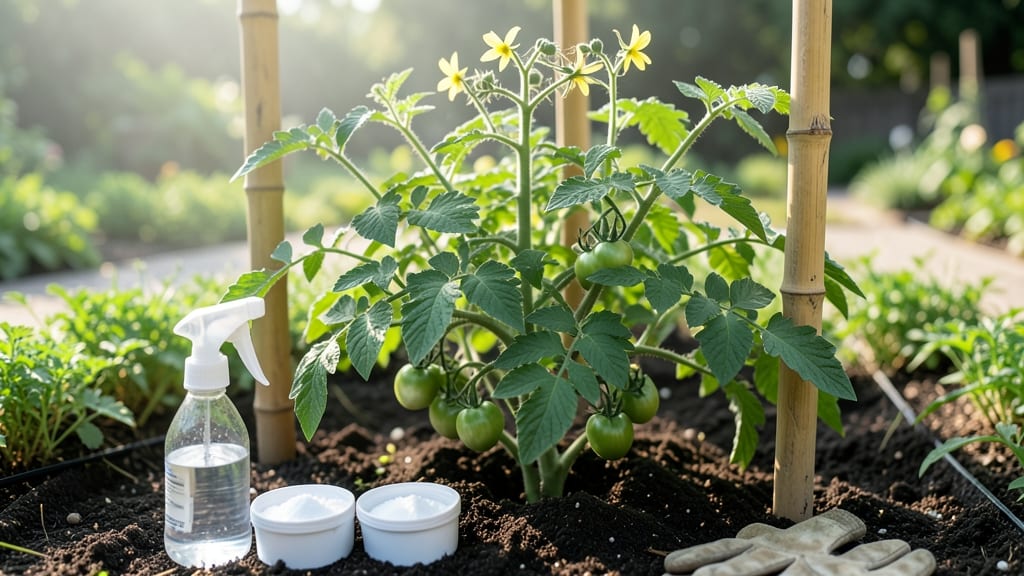
Put baking soda on tomato plants when you first spot blossom end rot—look for yellowing or brown, sunken areas on fruit bottoms—usually during late spring or early summer when plants are actively growing. Use it every 7-14 days as a foliar spray or soil treatment, preferring dry conditions to prevent fungal growth.
Baking soda helps because it boosts calcium availability in the soil, which tomatoes desperately need to prevent blossom end rot. 🌱 The condition occurs when calcium can't reach developing fruit fast enough, often due to overly acidic soil or nutrient imbalances.
I've found that applying baking soda during peak growth—when plants are most calcium-hungry—gives the best results, especially when combined with a light sprinkle of lime to balance soil pH.
For best results, mix 1 teaspoon of baking soda per gallon of water and spray the solution directly on leaves or pour it around the base of the plant. Early morning applications work best, as this gives the plant time to absorb the nutrients before the heat of the day.
If you notice new rot spots after treatment, it might signal deeper soil issues that need addressing with organic matter or a calcium supplement.
💡 In This Article
- How Baking Soda Prevents Blossom End Rot in Tomatoes
- Step-by-Step Guide: Applying Baking Soda to Tomato Plants
How baking soda prevents blossom end rot in tomatoes
Blossom end rot happens when tomatoes can't absorb enough calcium to support fruit development, often due to soil pH imbalances or nutrient competition. Baking soda (sodium bicarbonate) works primarily by raising soil pH slightly—most garden soils sit between 5.5-6.5, but tomatoes thrive at 6.2-6.8.
When you add baking soda, it neutralizes excess acidity, creating a more alkaline environment that helps calcium ions (Ca²⁺) dissolve and become plant-available. This is critical because calcium deficiency causes cell walls to weaken, leading to those telltale sunken, leathery spots on fruit bottoms.
The magic happens at the cellular level: calcium acts as a "glue" that stabilizes plant cell membranes. Without enough calcium, cells in developing fruit can't maintain their structure, causing rot.
Baking soda also provides a small but meaningful dose of magnesium (about 0.05% by weight), which works synergistically with calcium to support enzyme functions in the plant.
Think of it like adding a tiny boost to your plant's internal plumbing system—suddenly, calcium can flow where it needs to go most.
However, timing matters more than most gardeners realize. The most effective window is during active fruit set (late spring to early summer), when plants are rapidly expanding and calcium demand spikes.
I've seen dramatic improvements when applying baking soda during these growth phases, especially in containers where soil volume limits calcium availability. For prevention, start treatments when flowers first appear—this gives the plant a head start on calcium uptake before fruit begins developing.
There's a catch: baking soda shouldn't be your only solution. It works best when paired with other calcium sources like crushed eggshells or gypsum, which provide a steady supply of calcium ions. The baking soda acts more like a temporary pH adjuster rather than a complete nutrient fix.
Overusing it can actually harm your plants by creating a sodium buildup in the soil—stick to the 1 tsp per gallon ratio and never apply more frequently than every 7 days.
What most people don't realize is how soil texture affects baking soda's effectiveness. Sandy soils respond quickly because water drains through faster, delivering calcium to roots immediately. Clay soils, however, may require more frequent applications since baking soda can get locked up in the dense structure.
In these cases, mixing baking soda with a bit of perlite or vermiculite helps distribute it more evenly throughout the root zone.
For visual learners, imagine your tomato plant's root system like a sponge. When soil pH is too acidic, the sponge gets clogged with tiny acid molecules that block calcium from reaching the plant's cells.
Baking soda acts like a gentle scrub, clearing those blockages so calcium can flow freely—just like unclogging a showerhead lets water spray properly again. This chemical balance is why you'll often see blossom end rot disappear within 7-10 days of consistent baking soda treatment.