
Planting
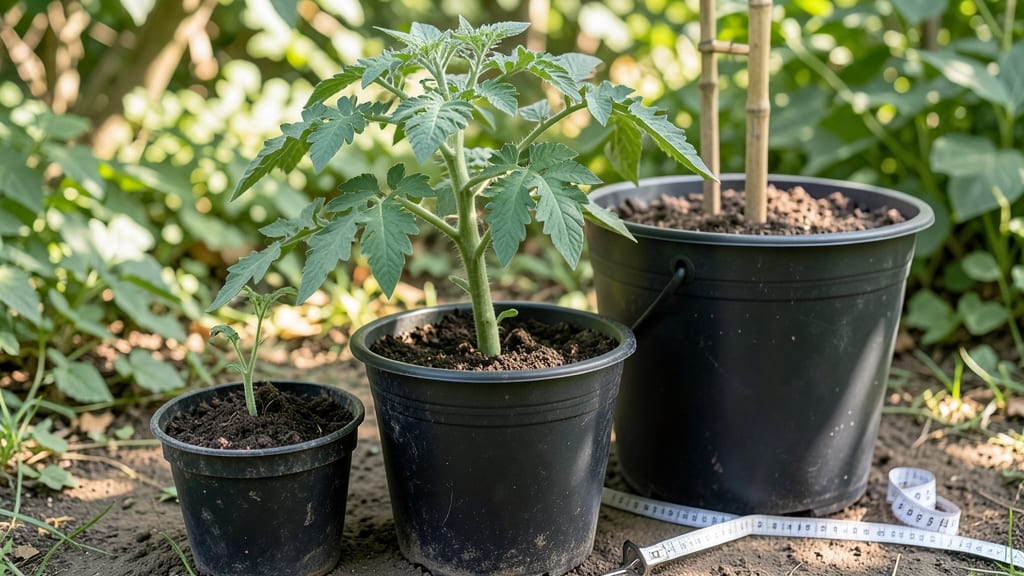
Your tomato plant's pot size determines whether you'll harvest juicy red slices or sad, stunted vines. 🌱 The right container prevents root-bound stress that leads to blossom-end rot and poor yields—something I learned the hard way after my cherry tomatoes produced just three fruits last summer.
Most gardeners underestimate how much space a single tomato plant needs: 5-gallon pots work for dwarf varieties like 'Tiny Tim,' but indeterminate types like 'Sungold' demand 10-15 gallons to support their sprawling vines. The key is matching root space to growth habit—something you can't guess, but must measure.
With the right pot, you’ll see stronger stems, more flowers, and fruit that ripens consistently. A self-watering container adds insurance against drought stress, while proper drainage prevents that dreaded soggy soil smell. Even in small spaces, the right setup transforms a balcony into a productive garden.
Pro tip: Use 3-inch pots for seed starting, then upgrade to final containers by transplanting—never let roots circle. This one habit saved my second-year harvest from disaster. Let’s get those vines thriving!
📚 In This Guide
- What you need
- Instructions
- Tips and common mistakes
- Wrapping up and next steps
What you need
- ● Containers: 1–5-gallon pots for determinate (bush) varieties (5–10" diameter, 10–12" deep)
- ● 7–10-gallon pots for indeterminate (vining) varieties (12–18" diameter, 18–24" deep)
- ● Fabric grow bags (5–10 gallons) for better drainage and root aeration
- ● Potting Mix: 1 bag of high-quality, well-draining tomato-specific mix (avoid garden soil)
- ● Drainage: 1–2 inches of gravel, pebbles, or pot feet to prevent waterlogging
- ● Support: 1–2 tomato cages (6–8 ft tall) or stakes (5–7 ft) for indeterminate varieties
- ○ Tie-down clips or soft twine (optional but helpful)
- ● Tools: 1 trowel or small shovel for planting
- ● 1 watering can or hose with a gentle nozzle
- ● Slow-release fertilizer (e.g., Osmocote) for nutrient boost
- ● Mulch (straw or shredded leaves) to retain moisture
- ● Self-watering pot system for consistent hydration
- ● pH testing kit to monitor soil acidity (ideal: 6.0–6.8)
- ● Sunlight meter or app to track light exposure
Step-by-step guide to choosing the right pot size for your tomato plants
Here’s how to match container size to your tomato’s growth stage—because the wrong pot will stunt roots or waste space.
🌱 Step 1: Determine Your Tomato Variety’s Mature Height
First, check your seed packet or plant tag for the variety’s mature height. Determinate tomatoes (bush types) like ‘Roma’ or ‘Celebrity’ stay under 3 feet, while indeterminate vines (like ‘Sungold’ or ‘Brandywine’) can climb to 10+ feet if supported. This dictates your pot’s minimum depth—3 feet of root zone for every 1 foot of plant height. A 5-gallon pot works for determinates, but indeterminates need 7+ gallons to prevent root-bound stress.
I always err on the larger side because tomatoes grow fast. A pot that’s too small will show signs within 2-3 weeks: yellowing leaves, stunted growth, or roots circling the bottom. If you’re unsure, measure the plant’s height at maturity and multiply by 3 to get your pot’s depth requirement in inches.
🪴 Step 2: Select the Correct Pot Shape and Material
Tomatoes need depth more than width—look for containers that are taller than they are wide, ideally with a minimum 12-inch diameter for indeterminate varieties. Fabric grow bags are great for airflow, but plastic or terra cotta holds moisture better in hot climates. Avoid shallow pots (like 1-gallon containers) unless you’re growing dwarf varieties like ‘Tiny Tim’—their roots will outgrow the space by midsummer.
Drainage is non-negotiable. If your pot lacks holes, drill at least 4 near the bottom. I add a 2-inch layer of gravel or broken pottery at the base to prevent soil from clogging the holes. This also helps prevent the dreaded "sour soil" smell from waterlogged roots.
☀️ Step 3: Adjust for Sun Exposure and Climate
In hot, dry climates, you’ll need 1-2 gallons more than the minimum to compensate for rapid moisture loss. A 7-gallon pot in full sun may dry out in 3-4 days, while the same pot in partial shade lasts 5-7 days. If your tomatoes wilt by midday, it’s a sign the pot is too small for your climate.
For cooler regions, prioritize insulated materials like fabric or thick plastic to protect roots from temperature swings. I’ve seen tomatoes in 5-gallon pots thrive in 60°F zones but struggle in 85°F+ heat unless given extra soil volume. Always place pots on elevated stands to improve airflow around the base.
⏰ Step 4: Transplant Up as Vines Grow
Start with a smaller pot (3-5 gallons) for seedlings, then upgrade to the final size when the plant hits 12 inches tall. This prevents shock from sudden root expansion. I use biodegradable pots for seedlings—they break down when transplanted, so I don’t disturb the root ball. If repotting, water the plant 24 hours before to reduce stress.
Watch for root growth at the pot’s bottom—if you see roots circling or poking through drainage holes, it’s time to upgrade. A 2-gallon increase (e.g., from 5 to 7 gallons) gives indeterminate varieties the room they need to keep producing through fall. Never let tomatoes sit in a pot more than 6 months without a refresh of soil.
✂️ Step 5: Prune and Train for Pot-Grown Success
In containers, pruning is critical to prevent overcrowding. Remove suckers (the small shoots between stems and leaves) weekly to direct energy to fruit production. For indeterminate varieties, I tie the main stem to a 6-foot stake inserted into the pot at planting. This keeps the plant upright and makes harvesting easier.
Leggy growth? It’s a sign of light deficiency or pot-bound roots. Move the plant to a sunnier spot and check for roots circling the bottom. If the stem stretches more than 2 inches between leaves, it’s time to repot or add a tomato cage for support. A well-trained vine in the right-sized pot will yield 2-3 times more fruit than one left to sprawl.
Tips & tricks for thriving container tomatoes
These practical insights will help you avoid common pitfalls and maximize your tomato plant's potential in containers.
Root Zone Calculation: The 3:1 ratio of root zone to plant height is non-negotiable for container tomatoes. For a 6-foot indeterminate vine, you'll need at least a 18-inch deep pot—but I recommend going 20% larger (like a 9-gallon container) to prevent root congestion. Remember, the instructions mention that signs of root stress appear within 2-3 weeks, so don't wait until you see yellowing leaves to upgrade.
Material Matters: Fabric grow bags excel in airflow but dry out faster in hot climates, while terra cotta retains moisture better but can crack in freezing temperatures. I've found that thick plastic containers offer the best compromise for most climates. If using terra cotta, place it on a saucer to catch excess water and prevent the pot from absorbing moisture from the soil.
Climate-Specific Adjustments: The 60°F to 85°F temperature range makes all the difference in container sizing. In hotter zones, add 1-2 extra gallons to compensate for rapid moisture loss—this is why the instructions specify that a 7-gallon pot may dry out in just 3-4 days in full sun. For cooler climates, consider adding a layer of bubble wrap around the pot's exterior to insulate roots during temperature swings.
Transplanting Strategy: The 24-hour watering before repotting is crucial for minimizing transplant shock. I've seen plants recover perfectly when moved to larger containers after this preparation, but if you forget, simply water thoroughly right before transplanting. When upgrading from 5 to 7 gallons, use the extra space to add compost-rich soil at the bottom—this gives roots immediate access to nutrients as they expand.
Pro Tips for Tomato Plant Pot Size
- These practical insights will help you avoid common pitfalls and maximize your tomato plant's potential in containers.
- Root Zone Calculation: The 3:1 ratio of root zone to plant height is non-negotiable for container tomatoes.
- Material Matters: Fabric grow bags excel in airflow but dry out faster in hot climates, while terra cotta retains moisture better but can crack in freezing temperatures.
Frequently asked questions
What’s the best tomato plant pot size for indeterminate vs. determinate varieties?
Indeterminate tomatoes (vining, like 'Sungold') need 5+ gallon pots (18"+ deep) to support their height and root growth. Determinate (bush) types, like 'Roma,' thrive in 1-3 gallon pots (12-16" deep). Always prioritize pot depth over width—roots grow downward!
How often should I repot tomatoes if they outgrow their container?
Repot once a season (spring or early summer) if roots circle the pot or growth stalls. Choose a container 2-3 inches larger in diameter and 6+ inches deeper. Water thoroughly after repotting to reduce transplant shock. Pro tip: Add fresh potting mix with compost for nutrients!
Can I use fabric pots or plastic for tomatoes? What’s the difference?
Both work! Fabric pots improve aeration and reduce root circling but dry out faster (water daily). Plastic pots retain moisture longer but may overheat in sun. For hot climates, opt for terracotta or insulated fabric pots. Drainage holes are non-negotiable for both!
Why are my tomato plants wilting in a large pot? Is it overwatering or undersizing?
Wilting in big pots usually means underwatering—large containers dry out slower but still need 1-2 inches of water weekly (check soil moisture). If roots are circling or bound, the pot is too small. Quick fix: Soak the pot for 10 mins, then trim suffocated roots and repot if needed.
Are there space-saving alternatives to traditional pots for tomatoes?
Yes! Try:
- Vertical grow bags (10-15 gal) for indeterminate varieties—hang on walls or fences.
- Self-watering containers (5+ gal) to reduce maintenance.
- Pallet gardens (with 5-gallon buckets) for urban setups.
Wrapping up and next steps
Choosing the right tomato plant pot size is the secret to a bountiful harvest—whether you’re growing cherry tomatoes in 5-gallon containers or beefsteaks in 15-gallon pots! Remember, bigger isn’t always better; it’s about matching your tomato variety to the pot’s depth, drainage, and stability.
With the right setup, you’ll enjoy healthier plants, fewer pests, and a garden full of flavor.
Now that you’re armed with the perfect pot, roll up your sleeves and plant! Start with well-draining soil, stake your vines for support, and watch your tomatoes thrive. Happy gardening! 🌱🍅