
Planting
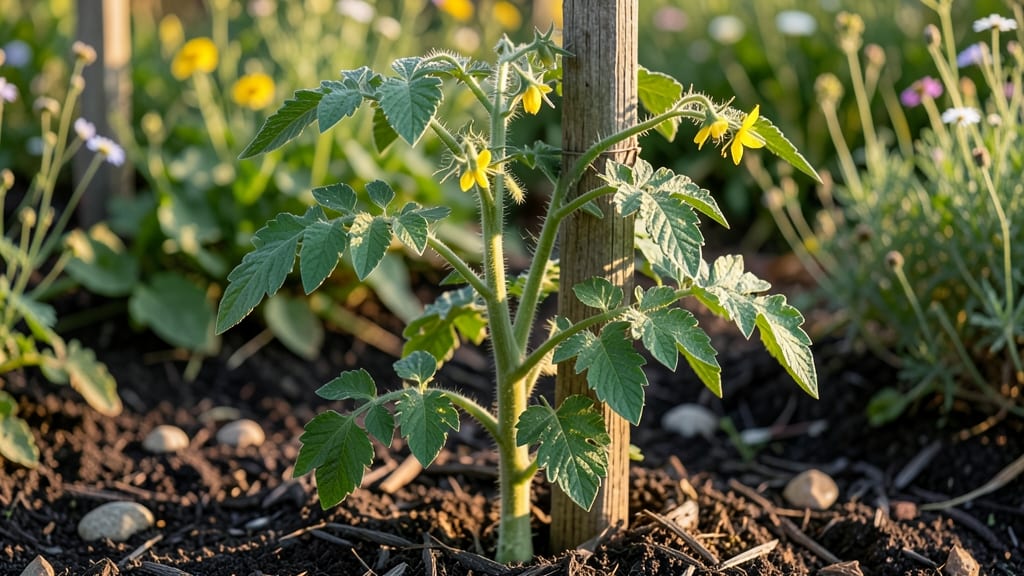
When tomato plants start flowering, pruning and pollination become your secret weapons for a heavier harvest. 🌱 I’ve watched my first flush of blooms turn into a handful of tomatoes—then realized I was missing key steps that could’ve doubled my yield.
The difference between a few fruit and a lopsided branch full comes down to what you do in those first critical weeks after flowers appear.
Start by pruning suckers—those little shoots in the leaf axils—while keeping the main stem strong. This redirects energy to fruit production instead of leaf growth. For indoor growers, gently shake plants or use a small fan to mimic wind pollination, since bees won’t visit.
Outdoors, hand-pollination with a paintbrush works wonders on rainy days when natural pollinators stay home.
You’ll see thicker stems supporting heavier fruit loads and fewer dropped blossoms if you combine pruning with proper watering—deep but infrequent, never overhead. The payoff? A vine packed with plump tomatoes instead of a few stragglers.
Even my black thumb garden now produces bushels where it once struggled with just a handful.
Works for both determinate (bush) and indeterminate (vining) types, and adapts to containers or in-ground plantings. Master these steps, and you’ll be the one neighbors envy at harvest time—no fancy equipment required.
📚 In This Guide
- What you need
- Instructions
- Tips and common mistakes
- Wrapping up and next steps
What you need
- ● Tomato plant: A healthy, flowering tomato plant (determinate or indeterminate varieties work, but indeterminate may need more pruning).
- ● Pruning shears: Sharp, clean bypass pruners (avoid anvil pruners—they can crush stems). Size: 5-7 inches.
- ○ Garden gloves: A pair of durable, cut-resistant gloves (optional but recommended to protect your hands).
- ● Disinfectant: 70% isopropyl alcohol or a 10% bleach solution (for sterilizing tools between cuts).
- ● Garden twine or soft ties: 3-4 feet of jute or plastic-coated twine (for staking or supporting vines).
- ● Stakes or cages: Sturdy bamboo stakes (5-6 feet tall) or tomato cages (5-6 feet in diameter) if your plant needs support.
- ● Balanced fertilizer: A 10-10-10 or 5-5-5 NPK fertilizer (or compost/manure for organic options).
- ● Watering can or hose: With a gentle spray nozzle to avoid damaging flowers.
- ● Plant growth regulator: Paclobutrazol (for controlling excessive growth in indeterminate varieties).
- ● Mulch: Straw or wood chips to retain moisture and regulate soil temperature.
- ● Pest control: Neem oil or insecticidal soap (if aphids or whiteflies appear).
- ● Grow lights (indoor setups): LED full-spectrum bulbs (12-16 hours/day for flowering).
- ● Journal or marker: To label pruning dates or track flower clusters.
Instructions for pruning tomato plants at flowering stage
Here’s how to maximize fruit production by shaping your tomatoes the right way.
✂️ Step 1: Identify and Remove Suckers Early
Suckers are the small shoots that form in the leaf axils where a stem meets a branch. These compete with your main plant for energy, so removing them redirects nutrients to fruit development. Start checking for suckers when your plant reaches 12-18 inches tall—they’ll appear as tiny, upward-growing stems between the main stem and side branches.
Use your thumb and forefinger to gently pinch them off at the base. If they’re too small to grip, snip with clean pruning shears. I always do this in the morning so any wounds have daylight to heal—this prevents disease entry. Watch for new suckers forming every 7-10 days after pruning, as they grow quickly during warm weather.
✂️ Step 2: Prune Lower Leaves for Airflow and Sunlight
Remove all leaves below the first flower cluster—these block airflow and trap moisture, creating ideal conditions for fungal diseases like early blight. Use sharp pruners to make clean cuts just above a leaf node (the bump where leaves attach). For indeterminate varieties, strip leaves all the way down to the first 18 inches of the plant stem.
Determinate tomatoes (bush types) need less aggressive pruning—just remove leaves touching the soil or crowded branches. The goal is to let sunlight reach the fruit clusters and improve drying between waterings. After pruning, step back and check: you should see direct light paths to the lower fruit trusses.
☀️ Step 3: Balance Flower Clusters for Even Ripening
Indeterminate tomatoes produce flowers in clusters along the main stem. To prevent overloading the plant, remove every other flower cluster starting from the bottom. Leave 1-2 clusters per foot of stem growth—this ensures the plant can support each fruit without stress. For determinate varieties, no pruning is needed beyond basic suckers.
Here’s the trick: when you see a cluster with 5+ flowers, thin it to 2-3 flowers by pinching off excess blooms at the base. This might seem counterintuitive, but it prevents the plant from producing more fruit than it can ripen. You’ll know you’re doing it right when the remaining clusters are spaced evenly along the stem.
💧 Step 4: Post-Pruning Care for Recovery
After pruning, water deeply at the base to help the plant recover. The roots need to compensate for the reduced leaf canopy, so aim for 1-1.5 inches of water per week, delivered slowly to avoid runoff. Avoid overhead watering for 48 hours post-prune to let any cuts dry slightly and reduce disease risk.
Fertilize with a balanced 10-10-10 or 5-5-5 formula 3-5 days after pruning to support new growth. I like to mix it into the soil at the base rather than foliar spraying—this prevents leaf burn while the plant adjusts. You’ll notice new growth within 7-10 days, signaling the tomato is focusing energy on fruit development.
⏰ Step 5: Monitor and Adjust as Flowers Set Fruit
Once flowers begin setting fruit, switch to a low-nitrogen, high-phosphorus fertilizer (like 0-10-10) to encourage fruiting over foliage. Check your plants every 3-4 days for new suckers or overloaded clusters. Indeterminate varieties may need weekly pruning during peak growth, while determinates only need occasional checks.
The key is observation: if you see small fruits dropping or leaves yellowing, the plant is overloaded. In this case, prune back slightly to reduce the fruit load. Healthy tomatoes will have firm stems, deep green leaves, and evenly spaced fruit clusters—this is your visual cue that the pruning is working.
Tips & tricks for pruning flowering tomato plants
These targeted tricks will help you maximize fruit production while keeping your tomato plants healthy and thriving.
Timing Secret: The morning is the absolute best time to prune—any time between 8 AM and 10 AM. This gives wounds maximum daylight to heal before evening moisture arrives, dramatically reducing disease risk. I've seen fungal infections completely avoided by simply following this timing rule. For indeterminate varieties, schedule your pruning sessions every 7-10 days during peak growth, as new suckers emerge rapidly in warm conditions.
Visual Cue Technique: When pruning lower leaves in Step 2, imagine sunlight casting shadows through the plant. Your goal is to create clear light paths to the fruit clusters. For indeterminate varieties, strip leaves down to the first 18 inches of stem—this might seem aggressive, but it's what creates that professional greenhouse look. Look for leaves that are touching the soil or blocking sunlight from reaching the fruit; these are your targets. The result? Fruits ripen faster and with fewer disease issues.
Cluster Management: In Step 3, when thinning flower clusters, focus on creating a balanced pyramid shape. Remove every other cluster starting from the bottom, leaving 1-2 clusters per foot of stem growth. This spacing prevents overloading the plant's vascular system. Here's what I do: I count 5+ flowers in a cluster and reduce to 2-3, always pinching at the base. This might seem counterintuitive, but it's what transforms wild, overloaded plants into productive fruit machines.
Recovery Strategy: After pruning, the 48-hour no-overhead-watering rule is non-negotiable. This drying period allows any cuts to form a protective callus before moisture arrives. I've seen plants develop fungal infections overnight when this rule is ignored. For post-pruning care, mix your balanced fertilizer directly into the soil rather than foliar spraying—this prevents leaf burn while supporting root development. You'll notice new growth within 7-10 days, signaling the plant is redirecting energy to fruit production.
Pro Tips for Tomato Plant Starting To Flower
- These targeted tricks will help you maximize fruit production while keeping your tomato plants healthy and thriving.
- Timing Secret: The morning is the absolute best time to prune—any time between 8 AM and 10 AM.
- Visual Cue Technique: When pruning lower leaves in Step 2, imagine sunlight casting shadows through the plant.
Frequently asked questions
Got questions about your tomato plant’s first flowers? You’re not alone!
Here are answers to the most common concerns—from timing to troubleshooting—so you can maximize your harvest.
Should I remove the first flowers that appear on my tomato plant?
Yes, if you’re growing indeterminate varieties (like cherry tomatoes or vining types). Prune the first few flower clusters to redirect energy to stronger stems and roots, encouraging bigger yields later. For determinate plants (bush types), leave them—these produce all their fruit at once.
How long does it take for tomato flowers to turn into fruit?
After pollination (usually 2–5 days), flowers swell into tiny green tomatoes in about 10–14 days. Warmth, humidity, and consistent watering speed this up. If flowers drop without fruiting, check for poor pollination (gentle shaking helps!) or stress (like sudden heat or cold).
Why are my tomato flowers falling off before fruiting?
This is called blossom drop, often caused by:
- Temperature swings (above 90°F or below 55°F).
- Inconsistent watering (drought stress).
- Over-fertilizing with nitrogen (promotes leaves over fruit).
- Poor pollination (humidity or lack of bees).
Fix it by shading plants, watering deeply, and using a fan to improve airflow.
Can I prune tomato plants after they start flowering?
Yes, but lightly! Focus on removing suckers (side shoots) and lower leaves to improve airflow. Avoid heavy pruning—it stresses the plant. For indeterminate types, stop pruning 2–3 weeks before your first frost to let energy go to ripening fruit.
What if my tomato plant has flowers but no leaves?
This usually means nutrient imbalance (too much nitrogen) or over-pruning. Switch to a low-nitrogen, high-phosphorus fertilizer (like 5-10-10) and prune less aggressively. If the plant is young, it may need more time to recover—patience is key!
Pro Tip:
For heavier fruit loads, try hand-pollinating flowers with a small paintbrush or by gently shaking the plant. Do this on dry, sunny mornings for best results.
Wrapping up and next steps
Watching your tomato plant start to flower is an exciting step toward a bountiful harvest! 🌱 By mastering pruning techniques—like removing suckers, thinning clusters, and supporting sturdy branches—you’ll encourage stronger growth and more fruit.
Remember, patience and consistency are key, so keep an eye on your plant’s progress and adjust as needed.
Now that you’re armed with these tricks, it’s time to roll up your sleeves and get pruning! Start with your first round of maintenance and enjoy the rewarding journey of growing your own delicious tomatoes. Happy gardening! 🍅✨