
Size
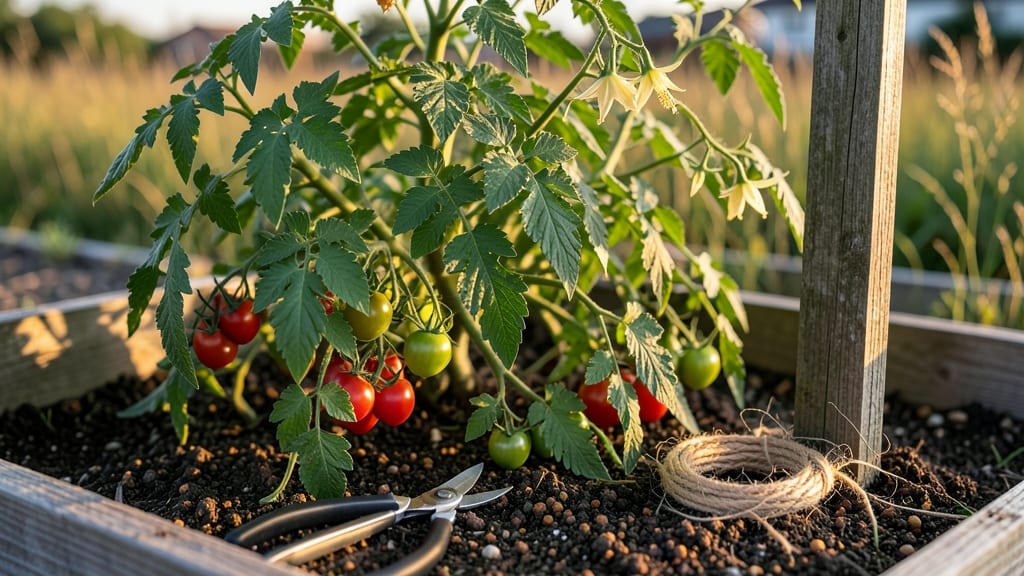
Your tomato plants are getting too tall—shooting up like they're in a race to the sky—🌱 but that vertical growth means fewer, smaller fruits. The fix starts with pruning to encourage bushier stems and redirect energy where it counts: on those juicy, vine-ripened tomatoes you actually want to eat.
Indeterminate varieties (the ones that keep growing all season) are the usual culprits, but even determinate types can get leggy if they're thirsty, hungry, or crowded. The solution?
Prune aggressively at the right spots, add support like sturdy cages or stakes, and make sure they're getting consistent water and a balanced fertilizer. My first overgrown plants went from 7-foot monsters to productive, manageable bushes in just two pruning sessions.
You'll end up with stronger stems that can support more fruit, better air circulation to prevent disease, and a harvest that comes in waves instead of one last desperate flush.
The key is timing—prune when plants are young and again after heavy fruiting—and always use clean, sharp shears to avoid tearing the stems. Even my black thumb can't mess this up once you get the hang of it.
Works for both backyard gardens and container growers, though determinate types need less aggressive pruning. The same principles apply whether you're dealing with heirlooms or hybrid varieties—just adjust the frequency based on how fast your plants grow.
Let's get those tomatoes back where they belong: on the vine, not the ceiling.
The Real Culprits Behind Tall Tomato Plants
If your tomato plants are reaching for the sky like overzealous sunflowers, don’t panic—it’s usually a sign that they’re just following their natural instincts (or yours!). But why does this happen? Tall, leggy tomato plants often result from a mix of environmental, genetic, and cultural factors.
Understanding these causes is the first step to training your plants into sturdy, productive bushes. Let’s break down the science behind the stretch.
Not all tomatoes are created equal—and some varieties are genetically predisposed to grow tall. Here’s the breakdown:
- Indeterminate varieties (e.g., 'Sungold,' 'Brandywine,' 'Cherokee Purple') keep growing and producing fruit until frost. Their vines can climb indefinitely if unchecked, often reaching 6–10 feet or more. These are the "sky-scrapers" of the tomato world.
- Determinate varieties (e.g., 'Roma,' 'Celebrity,' 'Better Boy') grow to a fixed height (3–5 feet) and produce fruit in one big flush before stopping. Even these can get leggy if conditions aren’t ideal.
Pro tip: 🌡️ If you love indeterminate tomatoes but hate the height, choose semi-determinate hybrids (like 'Mountain Merit' or 'Early Girl'), which strike a balance between bushiness and productivity.
Tomato plants stretch toward light like sun-worshipping worshippers—this is called etiolation. When they don’t get enough sunlight, they grow tall, weak stems with sparse leaves to reach for rays. Common causes:
- Overcrowding: Planting too close together (or ignoring spacing guidelines) forces plants to compete for light.
- Shade from structures: Fences, tall weeds, or nearby trees block sunlight, especially in early growth stages.
- Cloudy weather: Prolonged overcast skies (common in spring or rainy seasons) slow photosynthesis, triggering vertical growth.
Actionable fix: 🌿 Thin seedlings to the recommended spacing (18–24 inches apart for determinate, 24–36 inches for indeterminate). Use reflective mulch or mirrors to bounce light onto shaded plants.
Watering habits play a huge role in tomato height. Both extremes—drought stress and overwatering—can lead to leggy growth:
- Inconsistent watering: Drying out and then overwatering causes plants to grow rapidly to seek moisture, leading to weak stems.
- Deep watering (but not enough frequency): Tomatoes need 1–2 inches of water per week. If roots can’t keep up, the plant stretches to find water.
- Overhead watering: Wet leaves promote fungal diseases (like blight), which stress plants and stunt growth—or worse, cause them to bolt upward.
Pro tip: 🔥 Water at the base early in the day (6–8 AM) to prevent evaporation and fungal issues. Use drip irrigation or soaker hoses for consistent moisture.
Tomatoes are tropical plants at heart—they hate temperature swings. Both heat stress and cold snaps can trigger tall, spindly growth:
- Cool soil temperatures: If soil stays below 55°F (13°C) for too long, seeds and seedlings grow slowly, then bolt upward when conditions warm up.
- Hot days + cool nights: Rapid temperature changes disrupt photosynthesis, causing plants to prioritize vertical growth over bushiness.
- Transplant shock: Moving seedlings from a greenhouse or indoor start to outdoor conditions too early stresses them, leading to leggy recovery growth.
Actionable fix: 🌡️ Wait until soil is at least 60°F (15°C) before transplanting. Use row covers or black plastic mulch to warm soil faster in spring.
Tomatoes need a balanced diet of nutrients to grow sturdy. If one element is missing, they’ll stretch to compensate:
| Nutrient Deficiency | How It Causes Tall Growth | Signs to Watch For |
|---|---|---|
| Nitrogen (N) | Too much nitrogen promotes leafy growth over sturdy stems, but not enough causes slow, weak growth that stretches upward. | Yellowing lower leaves (older leaves first). |
| Phosphorus (P) | Phosphorus fuels root and flower development. A deficiency leads to poor root systems, forcing plants to grow tall to access more nutrients. | Dark green or purple stems/leaves; slow flowering. |
| Potassium (K) | Potassium strengthens cell walls. Without it, stems weaken, and plants become top-heavy, growing taller to support themselves. | Yellowing leaf edges (like a "scorched" look); weak stems. |
Pro tip: 💡 Use a balanced fertilizer (like 10-10-10 or 5-10-10) at planting, then switch to a low-nitrogen, high-phosphorus blend (like 0-10-10) when flowers appear. Avoid synthetic fertilizers—compost or worm castings provide slow-release nutrients without burning roots.
Now that you know the why, the next step is the how—pruning, staking, and training your tomatoes to grow wide instead of tall. Stay tuned!
Quick Fixes for Leggy Tomato Plants
Now that you know why your tomato plants are reaching for the sky like overenthusiastic toddlers, it’s time to bring them back down to earth—where they’ll produce more fruit and fewer flops. The good news?
Most solutions are simple, require minimal tools, and can be done in under 30 minutes. Below, we’ll match common causes to the best fixes, plus share pro tips to keep your plants sturdy and productive.
If your plants are stretching because they lack structure, it’s like trying to grow a skyscraper without scaffolding. Prune and stake to redirect their energy into bushier growth.
🔥 Step 1: Install Sturdy Supports
Tomato plants need something to lean on—whether it’s a cage, trellis, or bamboo stakes.
If you’re playing catch-up: - For indeterminate varieties (like cherry tomatoes that grow forever): Use a 6-foot tall trellis or tomato cage (or DIY with PVC pipes and twine). - For determinate varieties (bushier types that stop growing): A 3-foot stake or small cage suffices. - Pro tip: 💡 Bury stakes deep (at least 12 inches) so they don’t topple when winds hit.
Drive them in at a 45-degree angle for extra stability.
🍳 Step 2: Prune Strategically
Once supported, prune to encourage lateral growth (side branches = more tomatoes!). - Remove suckers (those little shoots in the leaf axils) up to 12–18 inches from the base.
This forces energy into the main stem and lower branches. - Snip off lower leaves (up to the first flower cluster) to improve airflow and reduce disease risk. - For indeterminates: Pinch off the terminal bud (the topmost growth point) to halt vertical growth. This triggers bushier side shoots.
👨🍳 Step 3: Train the Vines
Gently weave or tie the main stem to the support as it grows. Use soft ties (old T-shirts, rubber bands, or horticultural tape)—never wire, which can cut into stems.
- Weekly check: Loosen ties if the plant outgrows its support. Adjust as needed.
If your plants are leggy and pale, they’re likely starving for nutrients or struggling with light. Here’s how to fatten them up:
📊 Step 1: Test Your Soil
Leggy growth often signals low nitrogen (early growth) or phosphorus (root/fruit development). Grab a DIY soil test kit (or send a sample to your local extension office) to check pH and nutrient levels. - Ideal pH for tomatoes: 6.0–6.8.
Too acidic (below 5.5)? Add lime. Too alkaline (above 7.5)? Mix in sulfur or peat moss.
💪 Step 2: Feed the Right Way
- Early growth (seedlings to flowering): Use a balanced fertilizer (like 10-10-10) to boost nitrogen.
Follow label rates—more isn’t better! - Flowering to fruiting: Switch to a phosphorus-heavy feed (5-10-10 or tomato-specific fertilizer) to encourage root and fruit development. - Organic option: Mix compost, worm castings, or fish emulsion into the soil for slow-release nutrients.
🌿 Step 3: Boost Light Exposure
If your plants are reaching toward a window or weak sunlight, they’re etiolated (stretched and weak).
Move them to a sunnier spot (at least 6–8 hours of direct light daily). - No outdoor space? Use a grow light (LED or fluorescent) 4–6 inches above the plants for 12–14 hours/day. - Pro tip: ✨ Rotate pots weekly so all sides get even light—prevents lopsided growth.
Plants that shoot up overnight after transplanting are playing catch-up for lost time. Here’s how to reset them:
🔪 Step 1: Prune Back Aggressively (But Safely)
If your plants are tall and spindly with few leaves, they’ve been neglected. Trim them back by 1/3 to encourage new growth.
- Where to cut?
- Indeterminates: Prune just above a leaf node (the bump where leaves grow).
This forces the plant to branch out. - Determinates: Cut back suckers and weak stems, leaving only the strongest 2–3 main stems.
🌱 Step 2: Repot or Bury Deeper
Sometimes, roots need a boost of stability. If your plant is in a container:
- Repot into a larger container (tomatoes need 5+ gallons per plant).
- Bury deeper: Gently loosen roots and plant 1–2 inches lower than before.
This encourages secondary root growth and stabilizes the stem.
🌡️ Step 3: Adjust Watering
Leggy plants often suffer from inconsistent watering. Keep soil evenly moist (not soggy!) to prevent stress.
- Water deeply 1–2 times per week (more in heatwaves).
- Mulch with straw or shredded leaves to retain moisture and cool roots.
Once you’ve rescued your towering tomatoes, lock in their success with these habits:
- Start strong: Use seedlings (not seeds) for a head start.
Buy compact or dwarf varieties if space is tight. - Prune early: Pinch off suckers weekly to prevent overgrowth. - Fertilize smart: Side-dress with compost or fertilizer mid-season for a nutrient boost. - Watch the weather: Heatwaves or drought cause rapid stretching. Shade cloth can help in extreme heat. - Rotate crops: Avoid planting tomatoes in the same spot yearly to prevent soil depletion.
If your plants are already sky-high but still productive, don’t despair!
Use their height to your advantage: - Harvest from below: Train vines to grow upward on a trellis, making picking easier. - Grow vertically: Save space in small gardens by letting them climb. - Succession plant: If early plants bolt, sow new seeds every 2–3 weeks for a continuous harvest.
With these fixes, your tomato plants will stop reaching for the clouds and start filling your kitchen with juicy, vine-ripened fruit. Happy pruning! 🍅✂️
Frequently asked questions
Why do my tomato plants grow so tall so fast?
Rapid height growth usually happens when plants are searching for sunlight (called etiolation) or trying to compensate for stress. Common triggers include insufficient light, inconsistent watering, or nutrient deficiencies. Indeterminate varieties naturally grow taller, but even determinate types will stretch if crowded or transplant-shocked.
Can I still get good tomatoes from tall, leggy plants?
Yes! With proper support and pruning, tall plants can produce just as many tomatoes—but they'll be smaller and fewer if left unchecked. Focus on removing suckers, providing sturdy stakes or cages, and redirecting energy to lower branches. The key is training them to grow wide rather than tall.
How do I prune tall tomato plants without hurting them?
Use clean, sharp pruners to cut just above a leaf node (the bump where leaves grow). For indeterminate types, remove suckers up to 18 inches from the base. Never cut more than 1/3 of the plant at once, and avoid removing leaves below the first flower cluster. Always prune in the morning when plants are hydrated.
What's the best support for very tall tomato plants?
For plants over 6 feet, use a combination of a 6-foot tall trellis and soft ties (like old T-shirts or rubber bands). Bury stakes at a 45-degree angle for stability, or build a DIY cage from PVC pipes. Avoid wire—it can damage stems. Add support early to prevent breakage during storms.
Will tall tomato plants survive heavy rain or wind?
Tall, unsupported plants are extremely vulnerable to wind damage and can snap easily. If storms are forecasted, temporarily secure vines to supports with soft ties. For extreme conditions, consider adding a windbreak or moving potted plants to a sheltered area. Strong stems develop best with proper pruning and support from the start.