
Size
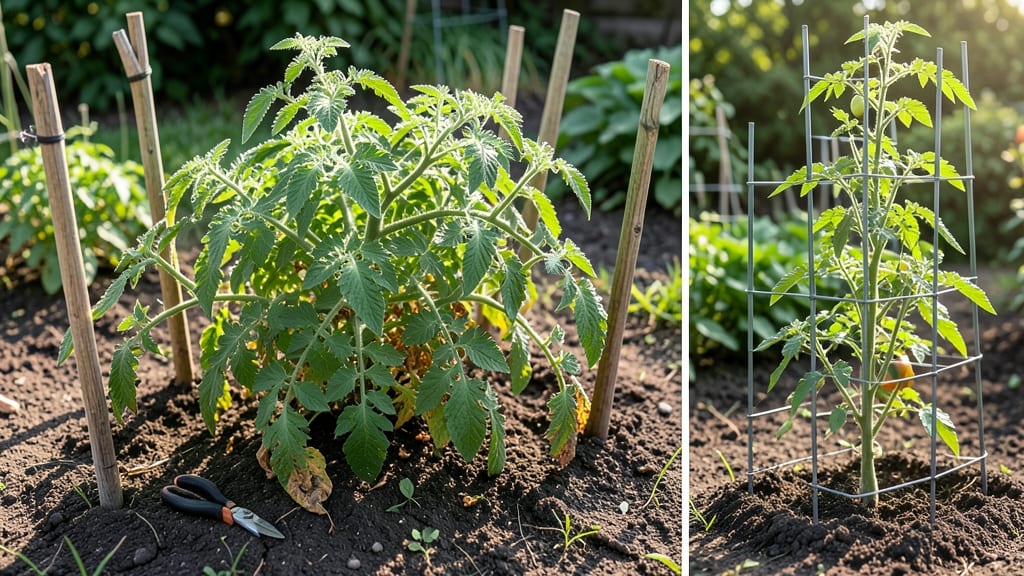
My tomato plants reached 8 feet tall by July, and I panicked—until I learned how to turn that height into strength. 🌱 Towering vines aren't a problem; they're an opportunity for bigger yields, better airflow, and sturdier stems if you support them right.
The key is acting early with the right techniques before the weight of fruit snaps those delicate stems.
Most gardeners wait too long to support their plants, but the best time to intervene is when vines hit 3-4 feet tall—before they start leaning or splitting. You'll need simple tools: sturdy bamboo stakes, tomato cages (the heavy-duty kind), or a DIY trellis made from wood and twine.
Pruning isn't about chopping everything off; it's about directing energy where you want it—toward fruit production, not just vertical growth.
With proper support, your plants won't just survive—they'll thrive. Imagine heavier fruit loads, fewer diseases from improved airflow, and stems that can actually hold up under the weight.
The secret is balancing pruning with support so the plant puts energy into what matters most: those juicy, vine-ripened tomatoes you've been dreaming about.
This works for indeterminate varieties (the ones that keep growing) and even some determinate types that get leggy. Whether you're dealing with a single plant or a whole garden full of overgrown vines, these techniques keep everything manageable—no more wrestling with flopping plants or watching fruit rot on the ground.
What Triggers Excessive Height Growth
If your tomato plants are reaching for the sky like they’re auditioning for a jungle gym competition, there’s usually a scientific reason behind their vertical ambitions. Understanding these triggers can help you take corrective action before your vines become unmanageable.
Let’s break down the key factors that turn your tomato plants into towering giants.
Not all tomatoes are created equal—and some are genetically programmed to grow taller than a basketball hoop. Indeterminate varieties (like 'Sungold,' 'Brandywine,' or 'Cherokee Purple') keep producing new shoots and flowers until frost, leading to continuous vertical growth.
In contrast, determinate varieties (e.g., 'Roma' or 'Celebrity') grow bushier and stop extending once they reach maturity.
✅ Actionable Tip: If you love tall tomatoes, embrace indeterminate types—but be prepared for support structures like cages, stakes, or trellises from day one. For shorter gardens, opt for determinate varieties or dwarf hybrids like 'Tiny Tim.'
Tomatoes are sun-worshippers, and when they don’t get enough light, they stretch—a phenomenon called etiolation. This occurs when plants prioritize growing taller to access sunlight over developing strong stems, leaves, or fruit. Common causes include:
- 🌿 Overcrowded plants: Too many tomatoes competing for the same space.
- 🏢 Obstructed sunlight: Nearby fences, buildings, or taller plants casting shade.
- 🌦️ Early/late season planting: Cool temperatures or short daylight hours slowing growth.
💡 Pro Tip: Ensure your tomatoes get 6–8 hours of direct sunlight daily. Thin out seedlings, prune nearby overgrowth, and consider reflective mulch or mirrors to bounce light into shaded areas.
Watering habits can drastically affect height. While consistent moisture is key, overwatering or inconsistent watering can trigger excessive growth:
- 💦 Overwatering: Encourages lush, weak stems that flop under their own weight. It also dilutes nutrients, leading to leggy, spindly growth.
- 🌵 Underwatering: Causes stress, forcing plants to grow rapidly (and tall) to access moisture deeper in the soil.
- 🌡️ Temperature swings: Hot days followed by cold nights can disrupt growth hormones, leading to erratic height spikes.
🎯 Solution: Water deeply 1–2 times per week (depending on climate), aiming for 1–1.5 inches of water per week
Tomatoes are tropical plants, and they react dramatically to temperature fluctuations. Cool nights (below 55°F/13°C) or hot days (above 90°F/32°C) can disrupt the balance of growth hormones: 🔥 Fix It: Use row covers for early-season protection or shade cloth during heatwaves. Mulch with straw to regulate soil temperature and reduce stress. A lack of key nutrients can lead to weak stems and rapid height growth as the plant tries to reach for resources. Watch for these deficiencies: ✨ Bonus Tip: Conduct a soil test before planting to identify deficiencies early. Side-dress with compost or worm castings mid-season for a nutrient boost. Now that you know the culprits, the next step is taming those towering vines before they become a gardening nightmare! 🍅💪
Nutrient
Signs of Deficiency
Solution
🌱 Nitrogen (N)
Yellowing lower leaves, weak stems
Apply balanced fertilizer (10-10-10) or compost tea
💪 Phosphorus (P)
Purple stems, slow root growth
Use bone meal or rock phosphate at planting
🌿 Potassium (K)
Weak stems, yellow edges on leaves
Add wood ash or potassium sulfate
🪴 Calcium (Ca)
Blossom-end rot, weak cell walls
Apply crushed eggshells or lime
Quick Fixes for Lanky Tomatoes
Tall, wobbly tomato plants can feel like a gardening disaster—until you know how to tame them! Whether your vines are stretching toward the sky due to poor support, overcrowding, or nutrient imbalances, these practical solutions will bring them back under control.
Below, we’ve mapped the most common causes to easy fixes, plus prevention tips to keep your plants sturdy and productive.
If your tomato plants are flopping because they’re too close together or their stems aren’t strong enough, pruning and support are your best friends.
🔪 Prune for Strength
- Remove suckers (the small shoots in the leaf axils) to redirect energy to the main stem and fruit. Use clean, sharp scissors or pruning shears.
- Trim lower leaves (up to 12 inches from the ground) to improve airflow and reduce disease risk.
This also helps the plant focus on upward growth. - 💡 Pro Tip: If your plant is extremely leggy, prune back the top growth by 1/3 to encourage bushier, sturdier growth.
🏗️ Add Support Structures
Tomatoes need physical support to stay upright. Here’s how to choose the right one: - Cages: Opt for heavy-duty tomato cages (5+ feet tall) and install them early before the plant gets too tall.
Press the cage into the soil firmly so it doesn’t tip over. - Trellises: Use wooden or metal trellises for indeterminate varieties.
Secure the plant with soft ties (like old T-shirts or garden twine) to avoid damaging the stems. - Stakes: Drive 6-foot bamboo or wooden stakes into the ground next to the plant and tie the main stem to the stake every 12 inches with cloth strips (never wire—it cuts into the stem!). - 🌡️ Prevention: Install supports at planting time to avoid struggling with a 6-foot giant later!
If your tomatoes are stretching unusually fast toward the sun, they might be heat-stressed or light-deprived (e.g., shaded by taller plants).
🌿 Provide Partial Shade
- Use shade cloth (30-50%) during peak afternoon sun (12 PM–4 PM) if temperatures exceed 90°F (32°C).
This slows down rapid growth and prevents sunscald. - 💡 Pro Tip: Place a reflective mulch (like white plastic or aluminum foil) around the base to bounce light upward and encourage even growth.
💧 Water Deeply and Consistently
- Deep watering (1–2 inches per week) encourages root growth, which stabilizes the plant.
Avoid shallow, frequent watering, which leads to weak stems. - Water in the morning to reduce evaporation and fungal risks. - 🔥 Prevention: Mulch with straw or wood chips to retain moisture and cool the soil.
Leggy tomatoes often signal nitrogen overload (too much leafy growth, few fruits) or phosphorus/potassium deficiency (weak stems).
🍽️ Adjust Fertilizer for Stronger Plants
- Stop high-nitrogen fertilizers (like lawn fertilizer) if your plants are all leaves and no fruit. Switch to a balanced 10-10-10 or tomato-specific fertilizer (higher in phosphorus and potassium).
- Add compost or worm castings to the soil for slow-release nutrients.
Mix 1–2 cups into the planting hole at the start. - 🥗 Prevention: Do a soil test before planting to check nutrient levels. Amend the soil with bone meal (phosphorus) or kelp meal (potassium) if needed.
💪 Use Epsom Salt for Magnesium
- If older leaves yellow between veins, your plants may need magnesium. Mix 1 tablespoon of Epsom salt in a gallon of water and spray the leaves once a month.
If your tall tomatoes are blowing over or snapping in the wind, they need extra reinforcement.
🏗️ Build a Windbreak
- Plant tall, wind-resistant crops (like corn or sunflowers) as a natural barrier.
- Use burlap screens or plastic sheeting on the windward side of your garden.
- 🌡️ Prevention: Stake or cage plants before storms roll in.
If a storm is coming, tie the plant to the ground at the base with a soft rope.
🔄 Re-tie and Reinforce
- Check ties every few days—as the plant grows, the stem thickens, and old ties can cut into it.
- Switch to velcro plant ties or old T-shirt strips for a gentler hold.
If your tomato plant is already top-heavy, diseased, or beyond saving, don’t panic—you can reset it or start fresh.
🔄 Prune and Reset Growth
- Cut back the top 1/3 of the plant to encourage lateral branching (more stems = more stability).
- Fertilize with potassium (like banana peel tea) to strengthen new growth.
- 💡 Pro Tip: If your plant is diseased, remove it completely and sterilize your tools with rubbing alcohol to prevent spread.
🌱 Start Over with a Bushier Variety
- Next season, choose determinate (bush) tomatoes if you prefer shorter, sturdier plants (great for sauces and canning).
- For indeterminate varieties, plant closer to supports from the beginning.
🎯 Final Prevention Checklist: ✅ Install supports at planting time. ✅ Prune regularly to encourage bushiness. ✅ Fertilize correctly—balance is key! ✅ Water deeply but consistently. ✅ Mulch to retain moisture and cool roots. ✅ Monitor wind/storms and reinforce ties.
With these fixes, your towering tomatoes will be strong, productive, and ready for harvest—no more flopping disasters! 🍅💪
Frequently asked questions
Why do my tomato plants grow so tall so quickly?
Rapid vertical growth usually happens due to etiolation (light starvation) or nutrient imbalances. Plants stretch toward sunlight when shaded, and excessive nitrogen without enough phosphorus/potassium creates weak, leggy stems. Check for overcrowding or nearby obstructions blocking light first.
Can I prune tall tomato plants back to make them shorter?
You can't truly make them shorter, but you can reset their growth by pruning back the top 1/3 of the plant. This encourages bushier lateral branches that produce fruit closer to the stem. Just avoid cutting into old wood—focus on new growth above leaf nodes.
What's the best support for a 7-foot tall tomato plant?
For plants this tall, use a combination of a sturdy trellis and soft ties. Drive a 6-foot wooden stake into the ground and attach the main stem every 12 inches with old T-shirt strips or velcro plant ties. Add a second stake on the opposite side for extra stability.
Will tall tomato plants produce more fruit?
Not necessarily! Tall vines often mean fewer, smaller fruits because energy goes into vertical growth. Proper pruning and support redirect energy to fruit production. Focus on removing suckers and providing 6-8 hours of sunlight daily for better yields.
How do I prevent tomato plants from getting too tall next year?
Start with determinate varieties if you prefer shorter plants, or use heavy-duty cages installed at planting time. Space plants 18-24 inches apart, use balanced fertilizer (10-10-10), and mulch with straw to maintain even moisture. Prune regularly to encourage bushiness.