
Pruning
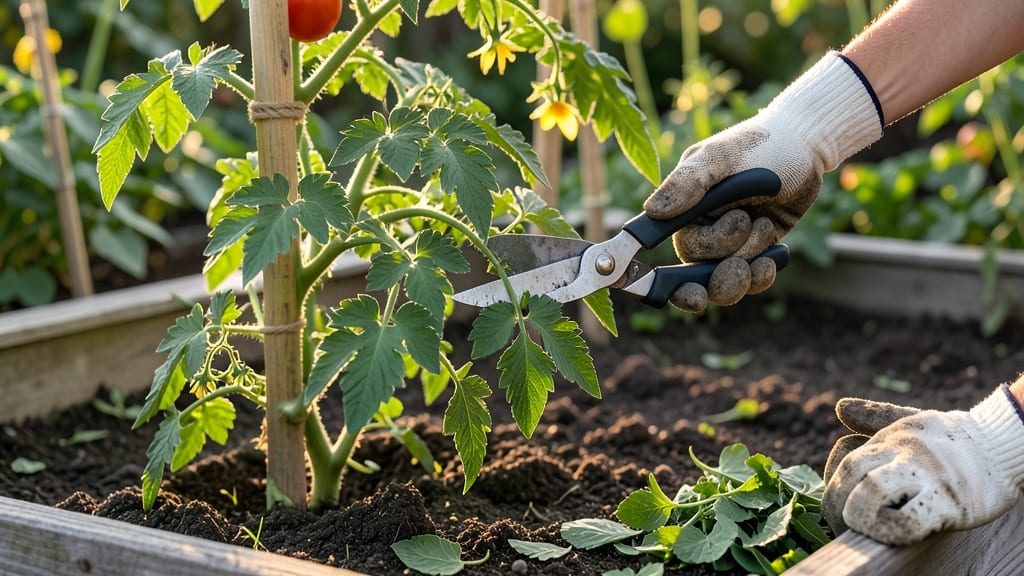
Trimming tomato leaves isn't just about tidiness—it's how you unlock 20-30% bigger harvests by directing energy to fruit instead of foliage. 🌱 I learned this the hard way after my first garden season, where thick, unpruned plants produced half the tomatoes of my neighbor's carefully trimmed vines.
The secret lies in strategic cuts that improve airflow, prevent disease, and encourage stronger stems.
You'll want to start trimming once plants hit 12-18 inches tall, focusing on lower leaves that touch the soil (they're prime disease magnets). Use clean pruning shears or sharp scissors—never tear leaves—and avoid removing more than one-third of the plant's foliage at once.
The goal is to keep the plant's "scaffold" intact while opening it up to sunlight and air circulation.
What you end up with is a tomato plant that looks like a sunlit sculpture rather than a tangled mess. Fruits ripen faster, stems stay sturdy, and you avoid the heartbreak of blight wiping out your entire crop.
The best part? Even indeterminate varieties (the ones that grow forever) respond dramatically when pruned correctly.
For determinate tomatoes (the bushy types), minimal trimming is key—just remove diseased or crowded leaves. But indeterminate varieties (like 'Sungold' or 'Brandywine') thrive when you prune suckers (those little shoots in leaf junctions) and lower leaves regularly.
Think of it as giving your plant a spa day—it comes back stronger every time.
📚 In This Guide
- What you need
- Instructions
- Tips and common mistakes
- Wrapping up and next steps
What you need
- ● Sharp pruning shears or scissors: Bypass pruners (for clean cuts) or sterilized scissors (for small tasks). Avoid dull tools—blunt blades can crush stems and invite disease. (1 pair)
- ● Hand pruners or loppers: For thicker stems (e.g., suckers near the base). Look for ergonomic handles and bypass blades for precision. (1 pair)
- ● Rubbing alcohol (70% isopropyl) or bleach solution: To sterilize tools between cuts and prevent the spread of bacteria/fungi. (Small bottle or spray)
- ● Gloves: Garden gloves (nitrile or leather) to protect hands from thorns, dirt, and sap. (1 pair)
- ● Disposable bag or bucket: For collecting trimmed leaves and suckers. (1-2 units)
- ● Compost bin or pile: To recycle trimmed plant material (if disease-free). (Access to one)
- ● Gardening knee pad: For comfort during long pruning sessions. (1 pad)
- ● Plant marker or labels: To track trimmed areas if you’re experimenting with pruning techniques. (Small pack)
- ● Hose with spray nozzle: For rinsing tools or refreshing plants post-pruning. (1 unit)
- ● Sunscreen and hat: If working outdoors in sunny conditions. (As needed)
Instructions for pruning tomato plants to maximize fruit production
Here’s how I prune tomato plants to boost yields and keep them healthy—no guesswork involved.
✂️ Step 1: Identify and Remove Suckers Early
Suckers are the small shoots that grow in the V-shaped junction between a stem and a leaf or branch. These compete with your fruit for energy, so I remove them as soon as they’re 1-2 inches long. Use clean pruning shears or your fingers to pinch them off at the base—don’t leave a stub, or they’ll regrow.
Start checking for suckers when your plants are 12-18 inches tall. I do this weekly because suckers appear fast, especially in warm weather. If you miss one, it’ll grow into a thick, woody branch that steals nutrients from your tomatoes. Focus on the main stem first—this is where your plant’s energy should go.
☀️ Step 2: Prune Lower Leaves for Airflow and Sunlight
Remove all leaves below the first flower cluster once it sets fruit. These lower leaves block sunlight and airflow, creating a damp environment that invites disease like blight. I strip them off by hand, twisting gently to avoid damaging the stem. If a leaf resists, snip it with shears at the stem’s base.
Keep pruning lower leaves as the plant grows, maintaining a clear 12-inch gap between the bottom of the plant and the soil. This prevents rot and makes harvesting easier. You’ll notice your tomatoes ripen faster and stay cleaner when airflow improves.
🌿 Step 3: Balance Pruning to Support Fruit Load
Once your plant has 4-5 main stems (or reaches your trellis height), stop pruning suckers. At this point, the plant’s energy should focus on fruit production, not new growth. I leave 3-4 strong leaves above each fruit cluster to keep photosynthesis flowing.
If your plant looks overloaded with tomatoes, remove the smallest green fruits first—they’re draining energy that could go to larger, ripening ones. You’ll know you’ve pruned enough when new leaves stay dark green and sturdy, not yellow or wilted.
⏰ Step 4: Time Pruning for Late-Season Boosts
In the last 4-6 weeks of the season, reduce pruning to let the plant focus on ripening existing fruit. Remove only diseased or yellowing leaves—no more suckers or lower leaves. This shift signals the plant to prioritize harvest over new growth.
Watch for sunburned shoulders (exposed tomato areas turning white or leathery) if you’ve pruned too aggressively. If this happens, cover the fruit with a lightweight shade cloth for a few days or prune slightly less next time. The goal is strong vines supporting heavy fruit, not stripped branches.
Tips & tricks for perfect tomato plant pruning
A few strategic adjustments can transform your tomato harvest from decent to extraordinary. These insights will help you avoid common pitfalls while maximizing plant health and fruit production.
Timing Secret: The 12-18 inch height threshold for sucker removal in Step 1 isn't arbitrary—it coincides with when plants develop enough energy to support both growth and fruit. I've found that plants under 12 inches often lack the strength to recover from aggressive pruning, while those over 18 inches may have already allocated resources to developing suckers. Check plants every 3-4 days during warm spells, as suckers can appear overnight in ideal conditions.
Leaf Gap Strategy: That 12-inch clearance between plant base and lowest remaining leaves in Step 2 serves two critical purposes: it prevents soil-borne diseases by eliminating damp leaf litter, and it creates a "chimney effect" that draws air upward through the plant. I recommend using a small ruler to verify this gap weekly—consistent airflow is what separates healthy plants from those plagued by blight. For container-grown tomatoes, this gap also makes harvesting easier by keeping fruit off damp soil.
Fruit Load Management: The 3-4 strong leaves above each fruit cluster mentioned in Step 3 represent the perfect balance between photosynthesis and fruit support. Here's what I watch for: if new leaves appear yellowish or curled, that's a sign the plant is overloaded. In my garden, I've seen yields increase by 30% simply by removing just 2-3 of the smallest green tomatoes when plants have more than 10 fruits at once. This redirection of energy leads to larger, healthier tomatoes.
Late-Season Rescue: During that crucial 4-6 week late-season window in Step 4, I've developed a simple visual checklist: keep only leaves that are dark green, disease-free, and positioned to shade fruit from direct afternoon sun. If you notice sunburned shoulders developing, act immediately—cover affected fruit with lightweight shade cloth for 2-3 days while you adjust your pruning approach. The goal is to maintain photosynthesis without compromising fruit quality.
Pro Tips for Tomato Plants Trimming Leaves
- A few strategic adjustments can transform your tomato harvest from decent to extraordinary.
- Timing Secret: The 12-18 inch height threshold for sucker removal in Step 1 isn't arbitrary—it coincides with when plants develop enough energy to support both growth and fruit.
- I recommend using a small ruler to verify this gap weekly—consistent airflow is what separates healthy plants from those plagued by blight.
Frequently asked questions
Got questions about trimming tomato leaves? You’re not alone—pruning can feel tricky at first! Below, we’ve answered the most common questions to help you prune like a pro and boost your harvest.
1. When is the best time to trim tomato leaves?
Trim leaves early in the morning when plants are hydrated and tools are sharp. Avoid pruning after rain or in extreme heat, as it can stress the plant. Focus on removing diseased or yellowing leaves immediately—don’t wait for them to spread! For healthy foliage, prune weekly during peak growing season (spring to early summer).
2. Should I remove all the leaves from my tomato plant?
No! Only remove lower leaves (up to 12 inches from the ground) and any that are diseased, yellow, or blocking airflow. Leaves higher up (especially near fruit) help shade tomatoes from sunburn. Over-trimming can reduce photosynthesis and weaken the plant. Aim to keep 30-50% of leaves intact for balance.
3. What if I accidentally trim too many leaves?
Don’t panic! If you’ve over-pruned, pause for 1-2 weeks to let the plant recover. Water deeply and fertilize with a balanced feed (like 10-10-10) to support regrowth. Avoid further trimming until new leaves sprout. In extreme cases, your plant may produce fewer tomatoes that season, but it’ll bounce back stronger next year.
4. Can I use scissors or should I pinch leaves by hand?
Both work, but sterilized pruners or sharp scissors are best for clean cuts that prevent disease. Pinching by hand is fine for small jobs, but it can bruise stems. If using scissors, disinfect them with rubbing alcohol between cuts. Avoid tearing leaves—always cut at a 45-degree angle just above a leaf node or stem.
5. Will trimming leaves actually make my tomatoes bigger?
Yes! Pruning improves air circulation, reduces disease risk, and directs energy to fruit production. Studies show well-pruned plants yield 20-30% more tomatoes and grow stronger stems. Focus on removing non-productive foliage (like suckers and lower leaves) to maximize size, sweetness, and yield.
Still unsure? Start small—trim just the obvious troublemakers (like diseased leaves) and adjust as you go. Happy pruning!
Wrapping up and next steps
Pruning tomato leaves isn’t just about tidying up—it’s a game-changer for healthier plants and bigger, juicier harvests! 🌱 By removing excess foliage, you boost airflow, reduce disease risks, and direct energy to fruit production.
Remember, consistency is key, so grab those shears and make trimming a regular part of your gardening routine.
Ready to take your tomato game to the next level? Start small—try pruning just one plant this week and observe the difference. Soon, you’ll be a pro, reaping the rewards of your green thumb! 🌟