
Plants
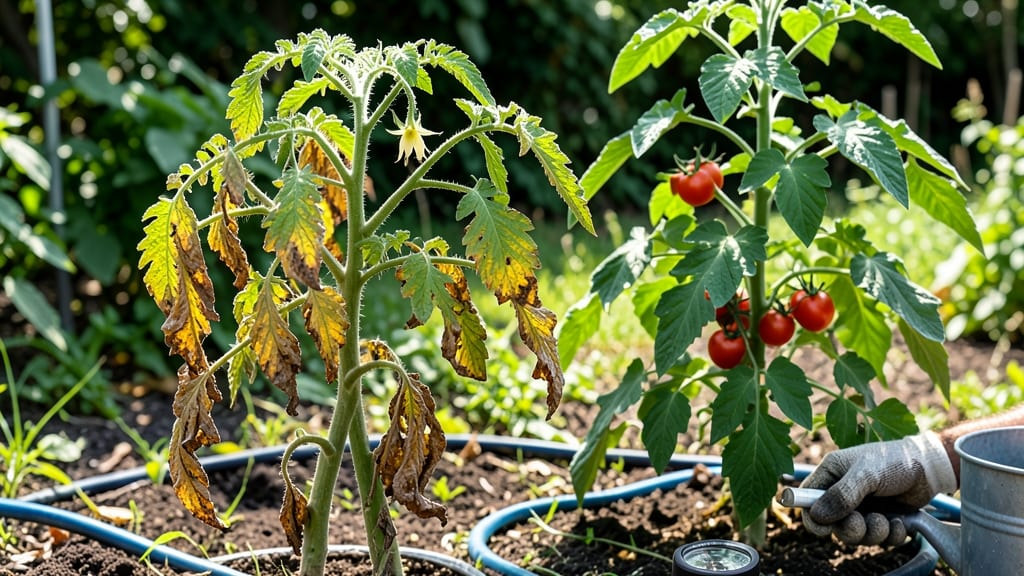
Your tomato plants wilting doesn’t mean they’re done for—it’s often a fixable crisis. 🌱 I’ve brought back drooping plants from overwatering, fungal stress, and even heat shock using simple techniques, and the vinegar solution is my secret weapon for root revival.
The real culprit is usually one of three things: roots struggling from too much water, fungal pressure in the soil, or environmental stress like afternoon heat. Most gardeners panic and overwater, which makes it worse.
The key is checking the soil moisture first—if it’s damp, hold off on watering and focus on airflow and fungal control. Within 24-48 hours of proper care, you’ll see those vines perk up again.
The vinegar solution (1 part vinegar to 3 parts water) helps break down fungal spores while giving roots a quick acid boost. Combine this with better drainage and you’ve got a comeback story.
This works for both container and in-ground tomatoes, and the fix is just as effective in hot climates as it is in cool ones. Let’s get those plants standing tall again—here’s exactly how.
Root Causes Behind Wilting Tomatoes
Understanding why your tomato plants suddenly droop can feel like solving a mystery—especially when the leaves look healthy but the stems sag like overcooked spaghetti. 🍝😅 The truth is, wilting is often a cry for help from your plants, signaling stress from hidden issues.
Below, we break down the science-backed reasons your tomato plants might be wilting, so you can diagnose and fix the problem fast.
Tomatoes hate soggy feet. When roots sit in waterlogged soil, they suffocate—cutting off oxygen and triggering wilting. Here’s why it happens: - Root Rot (Phytophthora): Excess moisture encourages fungal pathogens like Phytophthora to attack roots, turning them mushy and brown.
The plant can’t absorb water, so it wilts despite wet soil. - Compacted Soil: Heavy clay or poorly amended soil traps water, preventing roots from spreading.
Wilting occurs because roots can’t access oxygen or nutrients efficiently. - Overhead Watering: Wet foliage promotes fungal diseases (like early blight), which clog stomata (leaf pores), reducing water uptake.
Actionable Fix: Test soil moisture with your finger—if the top 2 inches are damp, wait. Use raised beds or container pots with drainage holes to improve airflow. Mulch with straw to regulate moisture.
Tomatoes are thirsty plants, especially in hot weather. Wilting here is a desperate survival tactic—the plant conserves water by drooping.
But if ignored, leaves may crisp or scorch. - Insufficient Soil Moisture: Roots can’t pull up water fast enough, causing temporary wilting (often in the afternoon). - Transpiration Overload: High temperatures + dry air = leaves lose water faster than roots can replace it.
This is common in full-sun exposures without shade. - Shallow Root Systems: Young or container-grown tomatoes struggle in dry spells because their roots haven’t established deep enough.
Actionable Fix: Water deeply at the base (1–2 inches per week, more in heatwaves). Use drip irrigation or soaker hoses to avoid leaf wetting. For container tomatoes, check soil moisture daily in extreme heat.
Wilting can also signal hunger—specifically, a lack of key nutrients that keep roots and stems strong. - Potassium Deficiency: Critical for water regulation in cells.
Symptoms include yellowing leaf edges and wilting, especially in older leaves. - Magnesium Deficiency (Chlorosis): Stunts root growth, reducing the plant’s ability to absorb water. Leaves may develop interveinal yellowing before wilting. - Nitrogen Shock: Too much synthetic nitrogen (like over-fertilizing) burns roots, while too little weakens stems.
Both scenarios lead to wilting.
Actionable Fix: Test soil pH (ideal: 6.0–6.8). Apply a balanced fertilizer (like 10-10-10) or compost tea for organic nutrients. For quick fixes, use Epsom salt (magnesium sulfate) or banana peel tea (potassium).
Hidden invaders can sever vascular tissues, disrupting water flow and causing wilting. Watch for: - Aphids/Spider Mites: Pierce leaves and stems, injecting toxins that cause stunted growth and wilting.
Heavy infestations lead to curling leaves and weak stems. - Root-Knot Nematodes: Microscopic worms that gall roots, reducing their ability to absorb water. Infected plants wilt even when soil is moist. - Fungal Pathogens (Verticillium/Wilt): These block xylem vessels (the plant’s "straws" for water transport).
Wilting spreads from oldest leaves downward and often occurs in the late afternoon.
Actionable Fix: Inspect roots and leaves for pests/damage. Use neem oil or insecticidal soap for aphids. For nematodes, solarize soil or plant marigolds (natural repellents). Remove infected plants immediately to prevent spread.
Tomatoes are sensitive to sudden changes in their environment, which can trigger wilting as a stress response.
- Windburn: High winds dry out leaves faster than roots can compensate, causing wilting at the tips.
- Temperature Swings: Cold nights (below 50°F) or heatwaves (above 90°F) disrupt metabolic processes, leading to physiological wilting.
- Salt Buildup: Over-fertilizing or poor-quality water (high sodium) creates a hypertonic soil environment, where roots struggle to absorb water.
Actionable Fix: Provide windbreaks (like burlap screens) or cloche covers for young plants. Mulch to stabilize soil temperature. Flush soil with rainwater to reduce salt buildup.
Accidental harm can sever the plant’s water highways, causing instant wilting.
- Transplant Shock: Roots damaged during repotting struggle to establish, leading to temporary wilting (usually resolves in 1–2 weeks).
- Mechanical Injury: Weeding tools, cultivation, or even squirrels digging can cut roots or stems, disrupting water flow.
- Cracked Pots: Container tomatoes may wilt if roots grow into cracks, drying out unevenly.
Actionable Fix: Handle plants gently during transplanting. Use root stimulators (like mycorrhizal fungi) to encourage regrowth. Inspect containers for cracks and repot if needed.
Pro Tip: 💡 The "Finger Test" – Press a leaf between your fingers. If it springs back, wilting is temporary (likely underwatering). If it stays limp, check roots for rot or pests!
Quick fixes for reviving your plants
When your tomato plants start wilting, it’s time to roll up your sleeves and take action! The good news is that most causes have straightforward solutions—whether it’s a thirsty root system, a fungal infection, or environmental stress.
Below, we’ve mapped out practical, step-by-step fixes for the most common culprits, along with prevention tips to keep your plants thriving long-term.
Signs: Yellowing leaves, mushy stems, or soil that stays soggy for days.
How to Fix It: 🔥 Stop watering immediately—let the top 2–3 inches of soil dry out before watering again. 🍳 Improve drainage by mixing in perlite, sand, or compost to aerate the soil. 👨🍳 Repot if needed—if roots are rotting, transfer the plant to a pot with fresh, well-draining potting mix. 🥘 Prune damaged foliage with clean scissors to prevent further rot. ⏰ Water deeply but less often—tomatoes prefer 1–1.5 inches of water per week, delivered at the base (not overhead).
Prevention Tips: ✔ Use pots with drainage holes—never let plants sit in saucers of standing water. ✔ Test soil moisture with your finger before watering. ✔ Mulch around the base to retain moisture without suffocating roots.
Signs: Crispy, brown leaf edges, wilting that worsens in the afternoon heat.
How to Fix It: 💦 Water deeply in the morning—aim for the roots, not the leaves, to avoid evaporation. 🌿 Provide shade cloth (30–50% coverage) if temps exceed 90°F (32°C). 🌡️ Mist leaves lightly in extreme heat (early morning only to prevent fungal growth). 🔄 Move potted plants to a shadier spot for a few days to recover.
Prevention Tips: ✔ Water at the soil level—use a soaker hose or drip irrigation for efficiency. ✔ Choose heat-tolerant varieties like ‘Solar Fire’ or ‘Heatmaster’ tomatoes. ✔ Avoid overhead sprinklers—they increase humidity, which can lead to disease.
Signs: Dark spots on leaves, wilting despite moist soil, or a foul smell at the base.
How to Fix It (Vinegar Solution Method!): 🔪 Trim infected leaves with sterilized pruners (don’t compost them—dispose in the trash). 🍶 Spray a vinegar solution (1 part white vinegar + 3 parts water + 1 tsp dish soap) on leaves every 5–7 days for 2–3 weeks. 🌱 Apply copper fungicide (follow label instructions) for severe cases. 🌿 Improve airflow by spacing plants 18–24 inches apart and removing lower leaves.
Prevention Tips: ✔ Water at the base—never wet foliage to reduce spore spread. ✔ Rotate crops—don’t plant tomatoes in the same spot yearly. ✔ Solarize soil in fall by covering beds with clear plastic for 4–6 weeks to kill pathogens.
Signs: Sticky residue on leaves, tiny webs, or stunted growth despite proper care.
How to Fix It: 🕷️ Blast pests off with a strong spray of water (early morning). 🌿 Use neem oil spray (2 tsp neem oil + 1 tsp dish soap + 1 quart water) weekly. 🔍 Check roots for nematodes—if soil feels gritty or roots are knobby, replace the top 6 inches of soil. 🐝 Encourage beneficial insects like ladybugs or lacewings by planting marigolds nearby.
Prevention Tips: ✔ Inspect plants weekly—catch infestations early! ✔ Use row covers to block pests before they start. ✔ Interplant with herbs like basil or thyme—they repel many garden pests.
Signs: Wilting that improves at night or after rain, stunted growth near the stem.
How to Fix It: 🌳 Provide windbreaks—use stakes, trellises, or even a temporary fence. 🌱 Stake or cage plants to support weak stems. 🌡️ Acclimate young plants before transplanting—harden them off for 7–10 days in partial shade. 🔥 Mulch heavily (2–3 inches) to protect roots from temperature swings.
Prevention Tips: ✔ Plant in sheltered spots—avoid open, windy areas. ✔ Use black plastic mulch in early spring to warm the soil faster. ✔ Group plants together to create a microclimate with stable humidity.
- Test your soil—pH should be 6.0–6.8 for tomatoes. Adjust with lime (to raise pH) or sulfur (to lower it). - Fertilize lightly—wilting can sometimes be due to over-fertilizing.
Use a balanced 10-10-10 or compost tea instead. - Monitor consistently—keep a gardening journal to track watering, weather, and plant responses.
With these fixes, your tomato plants should perk up within 3–7 days—just give them a little TLC, and they’ll be back to producing juicy, vine-ripened tomatoes in no time! 🍅✨
Frequently asked questions
Why do my tomato plants wilt in the afternoon but recover at night?
This is classic heat stress—your plants are losing water faster than roots can absorb it during peak sun. Tomatoes often wilt temporarily when temperatures exceed 90°F (32°C). The good news? It’s usually not permanent damage. Try watering deeply in the morning and providing 30% shade cloth during the hottest hours to help them recover.
Can I save a tomato plant with root rot? What’s the first sign?
The first sign is yellowing leaves that stay limp even when soil is wet. Root rot blocks water uptake, so the plant wilts despite soggy soil. For early cases, stop watering immediately, improve drainage by adding perlite, and repot in fresh, sterile mix. In advanced cases, you may need to remove the plant entirely to prevent spreading to others.
How often should I use the vinegar solution for fungal issues?
Apply the vinegar spray (1:3 ratio + dish soap) every 5-7 days for 2-3 weeks to break fungal cycles. After that, switch to preventive measures like copper fungicide (monthly) or compost tea (weekly). Always spray in the early morning so leaves dry quickly, preventing further infection.
My tomato plants wilted after transplanting—how long until they recover?
Transplant shock typically causes temporary wilting for 1-2 weeks as roots establish. To speed recovery, water lightly daily (not deeply), provide partial shade for the first week, and avoid fertilizing until new growth appears. Most plants bounce back completely within 10-14 days if roots weren’t damaged.
Are there tomato varieties that wilt less in heat?
Yes! Heat-tolerant varieties like ‘Solar Fire’, ‘Heatmaster’, or ‘Celebrity’ handle 95°F+ temperatures better than standard types. These varieties also have stronger root systems that recover faster from wilting. Pair them with drip irrigation and mulch for best results in hot climates.