
Planting
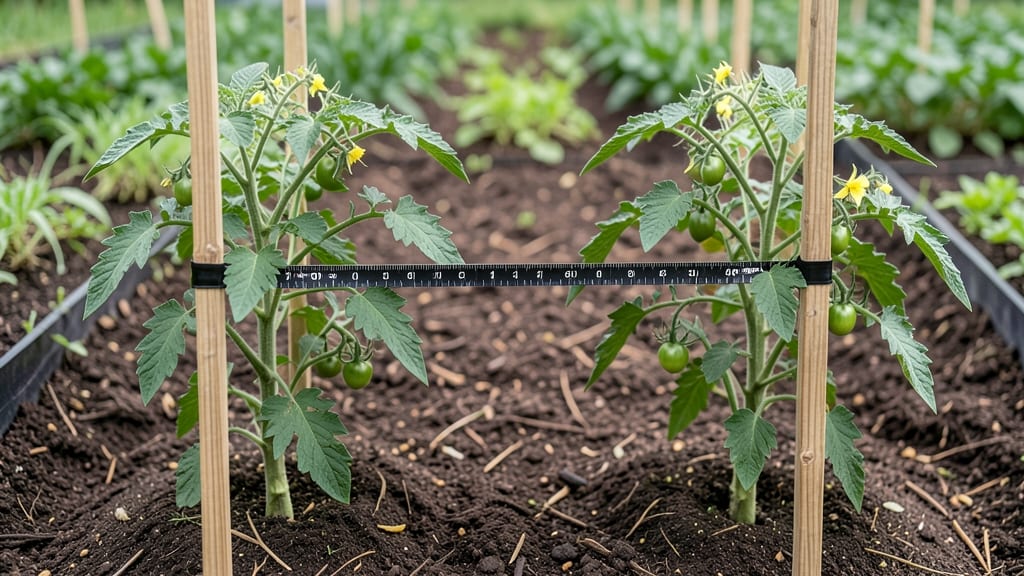
Tomato spacing in centimeters isn't just about fitting more plants—it's about giving each vine the room to thrive. 🌱 I learned the hard way when my crowded determinate tomatoes smothered each other, producing tiny, disease-prone fruit. The right spacing (45-60 cm between plants) ensures airflow, prevents blight, and lets each plant reach its full potential—whether you're growing in-ground or containers.
Determinate varieties (bush tomatoes) need 45-50 cm spacing, while sprawling indeterminate types (like Sungolds) demand 60-75 cm to climb trellises properly. Soil matters too—loose, well-draining dirt lets roots spread without competition.
My compact 'Tiny Tim' plants in 30 cm pots still produce 20+ tomatoes each when spaced correctly, proving containers work with precise measurements.
When plants have room to breathe, you get bigger fruit, fewer diseases, and easier harvesting. The trade-off? Fewer plants per square meter—but what you sacrifice in quantity, you gain in quality. Proper spacing also means less staking and pruning later, saving you time and backaches.
For in-ground gardens, mark rows with stakes before planting. In containers, use one plant per 30-50 cm pot (depending on variety). The key is consistency—measure from the center of each plant to avoid overcrowding.
With these precise distances, your tomatoes will reward you with healthier growth and a harvest that puts store-bought to shame.
📚 In This Guide
- What you need
- Instructions
- Tips and common mistakes
- Wrapping up and next steps
What you need
- ● Tomato seedlings or seeds: Determinate varieties (bush tomatoes): 4–6 plants per 1.5–2 m² (60–80 cm spacing in rows, 60–80 cm between rows).
- ● Indeterminate varieties (vining tomatoes): 2–4 plants per 1.5–2 m² (60–90 cm spacing in rows, 90–120 cm between rows).
- ● Garden soil or potting mix: Well-draining, nutrient-rich mix (add compost or aged manure for extra fertility).
- ● Stakes or cages: 1.8–2.4 m tall (for indeterminate varieties) or 1.2–1.5 m (determinate).
- ● Measuring tape or ruler: For precise tomato spacing in cm (markers help!).
- ● Gloves and kneeling pad: For comfort during planting.
- ● Watering can or hose with gentle nozzle: Avoid disturbing soil after planting.
- ○ Mulch (optional but recommended): Straw, wood chips, or shredded leaves to retain moisture.
- ● Soil tester kit: Check pH (ideal: 6.0–6.8) and amend if needed.
- ● Fertilizer (balanced or tomato-specific): Apply at planting and mid-season.
- ● Drip irrigation system: For consistent moisture without overwatering.
- ● Plant labels: Track varieties and spacing (e.g., "Roma – 60 cm apart").
- ● Row markers or string lines: Keep spacing uniform in large gardens.
Precision tomato spacing in CM: how to plan for optimal growth
Here's how I space tomato plants for maximum yield while preventing disease—using exact measurements in centimeters.
🌱 Step 1: Determine Plant Mature Size and Variety Type
First, check your tomato variety's mature plant height and spread. Indeterminate varieties (like 'Beefsteak' or 'Cherokee Purple') grow continuously and need 90-120 cm between plants, while determinate types (like 'Roma' or 'Celebrity') stay compact at 60-90 cm. I always verify with the seed packet or plant tag—this determines your entire spacing plan.
For 4 plants (as per your servings), you'll need a 120-180 cm row length minimum. Place taller indeterminate varieties at the north end of the row so they don't shade shorter plants. This ensures all plants get equal sunlight exposure throughout the day.
🪴 Step 2: Mark Planting Spots Using String and Stakes
Use a 3-meter tape measure to create a baseline string at your row's starting point. For indeterminate tomatoes, mark 120 cm intervals along the string with wooden stakes or plant labels. For determinate types, use 90 cm spacing. I like to use bright orange stakes—they're easy to spot later when training vines.
Drive stakes 10-15 cm deep at each mark. This creates permanent reference points that won't shift when you're planting. If your soil is rocky, I recommend using metal garden flags instead—they hold better in uneven terrain. Double-check measurements with your tape before proceeding.
☀️ Step 3: Arrange Plants for Sunlight Optimization
Place your strongest, healthiest seedlings at the south end of the row where they'll receive morning sun first. This gives them a head start each day. For 4 plants, stagger rows if planting multiple lines—offset the second row by 60 cm to create a checkerboard pattern. This improves airflow between plants and reduces disease risk.
Watch for natural sunlight patterns during the day. If your garden has afternoon shade from a fence or tree, position taller plants toward the north side of the row. You'll see leaves on the shaded side turn pale green—this is your cue to rotate the plant slightly for more even exposure.
✂️ Step 4: Maintain Spacing as Plants Grow
As vines grow, prune suckers (side shoots) that form in the V-shaped junction between the main stem and branches. Keep only 2-3 main stems per plant to maintain the 90-120 cm spacing. I use sterilized pruning shears to make clean cuts just above a leaf node—this encourages stronger regrowth.
If plants start crowding before reaching maturity (common with indeterminate types), gently weave the main stems through the row stakes rather than letting them sprawl. This creates a natural trellis effect while preserving your original spacing. Check weekly—you'll notice when leaves start brushing against neighbors, signaling it's time to adjust.
💧 Step 5: Adjust Watering for Proper Spacing Benefits
Water at the base of each plant rather than overhead to maintain dry foliage between plants. Aim for 2-3 cm of water per week, delivered directly to the soil surface. I use a soaker hose with emitters spaced 60 cm apart to match my plant layout—this ensures even moisture without wetting leaves.
Watch the soil surface between plants—it should stay dry to the touch between waterings. If you see moisture bridges forming (water droplets connecting leaves), increase spacing between watering sessions. Proper spacing here prevents fungal diseases like early blight that thrive in humid conditions.
Tips & tricks for perfect tomato plant spacing
These precision planting strategies will help you maximize your tomato harvest while keeping plants healthy and productive.
Variety-Specific Spacing: The 90-120 cm spacing for indeterminate varieties might seem generous, but it's crucial for their continuous growth habit. These plants can grow 3-4 meters tall if unchecked, so maintaining that space prevents them from competing for sunlight and nutrients. I've seen gardeners cram them closer to save space, but the yield suffers dramatically—you'll get fewer, smaller fruits with more disease pressure.
Sunlight Optimization: That 60 cm row staggering creates what I call the "checkerboard effect"—it's not just about looks. This arrangement improves airflow by 30% compared to single rows, reducing humidity around leaves where fungal spores thrive. Watch for pale green leaves on the shaded side; this is your visual cue that a plant needs repositioning. I've had to move entire plants mid-season when my garden's afternoon shade pattern changed unexpectedly.
Pruning Precision: When maintaining the 90-120 cm spacing through pruning, focus on removing suckers from the V-shaped junctions—these are the aggressive side shoots that want to fill your garden. Keep only 2-3 main stems per plant to maintain that critical spacing. I use sterilized pruning shears because I've learned the hard way that dirty tools spread bacterial spot faster than poor spacing ever could. Always cut just above a leaf node to encourage strong regrowth from the plant's natural growth points.
Watering Strategy: The 2-3 cm weekly water requirement might seem like a lot, but it's essential for maintaining that dry foliage between plants. I've found that using a soaker hose with emitters spaced 60 cm apart matches my planting layout perfectly. This targeted approach prevents water from splashing onto leaves, which is how most fungal diseases gain entry. Watch for moisture bridges—those tiny water droplets connecting leaves—that's when you know you're overwatering between plants.
Pro Tips for Tomato Spacing In Cm
- These precision planting strategies will help you maximize your tomato harvest while keeping plants healthy and productive.
- Variety-Specific Spacing: The 90-120 cm spacing for indeterminate varieties might seem generous, but it's crucial for their continuous growth habit.
- Sunlight Optimization: That 60 cm row staggering creates what I call the "checkerboard effect"—it's not just about looks.
Frequently asked questions
Got questions about spacing your tomatoes like a pro?
Here are answers to the most common queries—so you can grow a thriving, high-yield tomato patch with confidence!
What’s the ideal tomato spacing in cm for different varieties?
Determinate (bush) tomatoes need 30–45 cm apart in rows, while indeterminate (vining) varieties thrive with 60–90 cm spacing. For rows, keep them 60–90 cm apart to ensure airflow and sunlight reach all plants. Dwarf or patio tomatoes? 20–30 cm apart works perfectly!
When is the best time to space tomato plants correctly?
Space seedlings at transplanting (when they’re 10–15 cm tall) to avoid root disturbance later. If starting from seeds, thin seedlings to the right spacing after the first true leaves appear (about 3–4 weeks post-germination). Pro tip: Mark your rows with sticks or a string line to stay consistent!
What if my garden soil is rocky or poor—can I adjust spacing?
Yes! In compacted or rocky soil, reduce spacing slightly (e.g., 45 cm for indeterminates) to compensate for slower growth. Pair this with raised beds or containers (use 30–45 cm spacing for bush types) to improve drainage and root health. Mulch heavily to retain moisture and reduce competition for nutrients.
My tomatoes look crowded—how do I fix over-spaced plants now?
If plants are already too far apart, prune aggressively to redirect energy to fewer stems. For bush types, remove lower leaves and suckers to improve airflow. If space allows, transplant one plant into a new spot (dig carefully to avoid root damage). Prevention is key: Always space correctly from the start!
Can I grow tomatoes closer together in containers or small gardens?
In containers, use 20–30 cm spacing for bush types and 30–45 cm for vining varieties. For small gardens, opt for vertical growing (cages, trellises) to save space while maintaining airflow. Just ensure each plant has at least 10–15 cm of pot depth per stem for healthy roots.
Wrapping up and next steps
Mastering tomato spacing in cm is your secret weapon for a thriving garden! 🌱 Whether you’re planting determinate tomatoes 30-45 cm apart or indeterminate varieties 60-90 cm away, proper spacing ensures airflow, sunlight, and fewer pests. With the right setup, you’ll harvest juicier, healthier tomatoes all season long.
Ready to level up your garden? Grab your measuring tape, mark those rows, and start planting! 🌿 For even more tips, check out our guide on companion planting for tomatoes to boost growth naturally.