
Planting
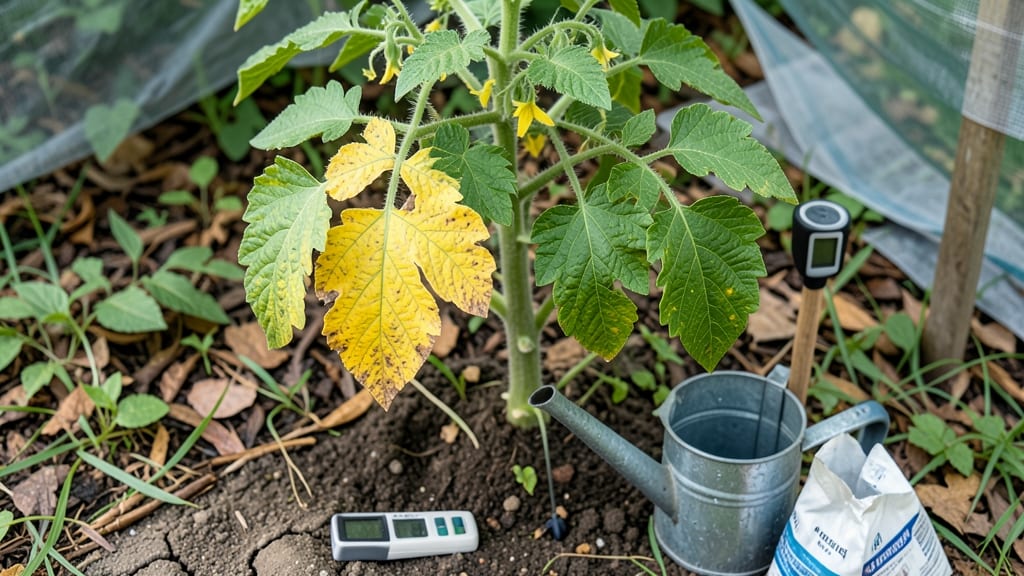
What causes a tomato plant to turn yellow is often a mix of nutrient deficiencies, overwatering, or hidden pests—all of which can be fixed before it’s too late. 🌱 The most common culprits are nutrient deficiencies (especially nitrogen or magnesium), overwatering that drowns roots, or pests silently sucking life from the plant.
I’ve seen this turn around in just days once the right fix is applied, and I’ll show you exactly how. Start by checking the soil moisture—waterlogged roots can’t absorb nutrients, while dry soil starves the plant. Yellowing between the veins? It’s likely magnesium deficiency (Epsom salt fixes this fast).
If the entire leaf turns yellow, nitrogen’s missing—add compost or a balanced fertilizer. Pests like aphids or spider mites also drain nutrients, leaving telltale signs like sticky residue or tiny webs.
Once you identify the root cause, the fix is straightforward: adjust watering, amend the soil, or spray with neem oil for pests. Within a week, you’ll see new green growth pushing out, and those tomatoes will be back on track for a bountiful harvest.
The key is acting fast—yellow leaves won’t fix themselves. Prevention is easier than curing: water deeply but infrequently, mulch to retain moisture, and monitor for pests weekly. A simple soil test can reveal deficiencies before they cause damage, saving you from scrambling mid-season.
I’ve had seasons where I caught yellowing early and still ended up with bushels of ripe tomatoes—while others who ignored it ended up with sad, stunted plants. Don’t panic if you see yellowing—it’s fixable, and often a sign the plant is telling you exactly what it needs.
Whether it’s a nutrient boost, better drainage, or a pest control spray, the solution is always simpler than it seems. Your goal is to get those leaves back to a vibrant green before the plant puts all its energy into fruiting.
Root Causes of Yellow Tomato Leaves
When your tomato plant’s leaves start turning yellow, it’s often a cry for help—your plant is telling you something’s off. Understanding the why behind the yellowing is the first step to saving your harvest.
Below, we break down the most common culprits, backed by science, so you can diagnose and fix the issue before it’s too late.
Yellowing leaves, especially on older, lower leaves, are classic signs of overwatering or soggy roots. When soil stays too wet, roots suffocate from a lack of oxygen, leading to anaerobic conditions—a toxic environment for your plant. This triggers chlorosis (yellowing) as the plant struggles to transport nutrients.
Why it happens:
- Waterlogged soil disrupts root function, preventing the uptake of essential nutrients like nitrogen, iron, and magnesium.
- Fungal infections (e.g., Phytophthora or Pythium) thrive in wet conditions, clogging roots and blocking nutrient flow.
- Salt buildup from over-fertilizing or poor-quality water can further stress roots, worsening yellowing.
Actionable fix: ✅ Check soil moisture—stick your finger 1–2 inches deep; if it’s damp, hold off on watering. ✅ Improve drainage—amend soil with perlite, sand, or compost to create air pockets. ✅ Repot if needed—if roots are rotting, transfer the plant to fresh, well-draining potting mix.
If yellowing starts at the leaf edges and progresses inward (a condition called scorch), your plant is likely thirsty or battling heat stress. Tomato plants need consistent moisture, especially during fruiting.
When soil dries out too much, the plant can’t pull up water efficiently, leading to nutrient deficiencies and leaf burn.
Why it happens:
- Insufficient water causes transpiration stress, where leaves lose more water than they absorb, leading to oxidative damage.
- High temperatures (above 90°F/32°C) increase evaporation rates, making it harder for roots to keep up.
- Shallow root systems (common in container-grown tomatoes) dry out faster, accelerating yellowing.
Actionable fix: 💧 Water deeply and regularly—aim for 1–1.5 inches of water per week, adjusting for heat. 🌿 Mulch heavily—use straw or wood chips to retain soil moisture and cool roots. 🕒 Water in the morning—avoids evening evaporation and fungal risks.
Yellow leaves can also signal specific nutrient deficiencies, each with a unique pattern. Since tomatoes are heavy feeders, they deplete soil nutrients quickly—especially nitrogen, magnesium, and iron.
| Nutrient Deficiency | Yellowing Pattern | Why It Happens |
|---|---|---|
| Nitrogen (N) | Lower leaves turn yellow first | Nitrogen is crucial for chlorophyll production. Older leaves sacrifice themselves to feed new growth. |
| Magnesium (Mg) | Yellow patches between veins (interveinal chlorosis) | Magnesium is the center of chlorophyll molecules. Deficiency disrupts photosynthesis. |
| Iron (Fe) | Young leaves yellow first (often with green veins) | Iron helps produce chlorophyll. Calcium-rich soil binds iron, making it unavailable. |
| Potassium (K) | Leaf edges scorch yellow/brown | Potassium regulates water and nutrient transport. Deficiency weakens cell structure. |
Actionable fix: 🌱 Test your soil—use a DIY soil test kit or send a sample to a lab for precise deficiencies. 🍽️ Fertilize smartly:
- Nitrogen: Use compost, fish emulsion, or a balanced 10-10-10 fertilizer.
- Magnesium: Apply Epsom salt (1 tbsp/gallon of water) as a foliar spray or soil drench.
- Iron: Use chelated iron or iron sulfate—avoid lime if iron levels are low.
- Potassium: Try banana peels (composted) or potassium sulfate.
Not all yellowing is due to water or nutrients—pests and pathogens can also drain your plant’s vitality.
🐛 Sap-Sucking Pests (Aphids, Whiteflies, Spider Mites)
These tiny invaders pierce leaves, injecting toxins that cause yellowing, curling, and stunted growth. They also spread viruses like Tomato Yellow Leaf Curl Virus (TYLCV), which turns leaves brittle and yellow.
Why it happens:
- Pests block nutrient transport by damaging phloem and xylem (the plant’s "veins").
- Their honeydew secretions attract sooty mold, further reducing sunlight absorption.
Actionable fix: 🔍 Inspect leaves—look for sticky residue, webbing, or tiny bugs. 💦 Blast off pests with a strong water spray or neem oil solution (1 tsp neem oil + 1 tsp mild soap per quart of water). 🌿 Encourage predators—ladybugs and lacewings devour aphids naturally.
🍄 Fungal Infections (Early Blight, Late Blight, Powdery Mildew)
Fungal diseases like early blight (Alternaria solani) cause yellowing with brown spots, while late blight (Phytophthora infestans) turns leaves black and mushy. Powdery mildew coats leaves in a white, dusty film, blocking photosynthesis.
Why it happens:
- Poor airflow or overhead watering creates a fungal paradise.
- Cool, wet conditions (60–80°F/15–27°C) are ideal for fungal spores to spread.
Actionable fix: 🌬️ Prune for airflow—remove crowded leaves and space plants 18–24 inches apart. 🌧️ Water at the base—avoid wetting leaves to prevent spore spread. 🍄 Prevent with copper fungicide or baking soda spray (1 tbsp baking soda + 1 tsp soap + 1 gallon water).
If yellowing appears suddenly after repotting or moving plants, your tomato’s roots may be stressed or injured. Even minor root disturbance can disrupt nutrient and water uptake, leading to temporary chlorosis.
Why it happens:
- Root pruning during transplanting can reduce water absorption by up to 30% for weeks.
- Compacted or rocky soil restricts root growth, limiting access to nutrients.
- Overzealous pruning of roots (e.g., cutting too much during repotting) slows recovery.
Actionable fix: 🌱 Handle roots gently—loosen soil around roots with your fingers, not tools. 💧 Keep soil moist for 1–2 weeks post-transplant to encourage root regrowth. 🌿 Use root stimulator—dip roots in mycorrhizal fungi or hydrogel before replanting.
Tomatoes thrive in slightly acidic soil (pH 6.0–6.8). If your soil is too alkaline (high pH), essential nutrients like iron, manganese, and zinc become unavailable, even if they’re present in the soil. This causes yellowing between veins (interveinal chlorosis).
Why it happens:
- High pH (above 7.0) causes iron and micronutrients to bind to soil particles, making them inaccessible.
- Lime or wood ash in soil can raise pH over time, worsening deficiencies.
Actionable fix: 📊 Test your pH—use a digital pH meter or litmus paper for accuracy. 🍋 Lower pH with sulfur—apply elemental sulfur (1–2 lbs per 100 sq ft) and water well. 🌱 Add organic matter—peat moss or compost naturally acidifies
Revive Your Tomato Plant Now
Yellowing tomato leaves don’t have to mean game over—most issues are fixable with the right care! Below, we’ll match each cause to a simple, step-by-step solution so you can restore your plant’s health and keep those juicy tomatoes coming. Prevention tips are included to keep your garden thriving long-term.
Fix: Let the soil dry out between waterings and improve drainage.
- 🔥 Check the Soil: Stick your finger 1–2 inches into the soil. If it’s soggy, hold off on watering.
- 🍳 Adjust Watering: Water deeply but less frequently—tomatoes prefer dry soil between soakings.
- 👨🍳 Upgrade Your Pots (if potted): Add a layer of gravel or perlite to the bottom for better drainage.
- ⏰ Water in the Morning: Avoid evening watering to prevent fungal growth from damp leaves.
💡 Pro Tip: Mulch around the base with straw or wood chips to retain moisture without over-saturating the roots.
Fix: Hydrate properly and protect from extreme heat.
- 💦 Water at the Roots: Aim for 1–2 inches of water per week (more in heatwaves).
- 🌡️ Shade Cloth: Use lightweight shade cloth (30–50%) if temps exceed 90°F (32°C).
- 🥗 Prune for Airflow: Trim dense foliage to reduce heat buildup and improve airflow.
✨ Prevention: Group tomato plants with taller crops (like corn) to create natural shade.
Fix: Feed your plant the right nutrients—fast!
| Symptom | Solution | Prevention |
|---|---|---|
| Yellow lower leaves | 🍳 Nitrogen Boost: Use a balanced fertilizer (10-10-10) or compost tea. | Rotate crops; add compost yearly. |
| Yellow edges/curls | 💪 Potassium Fix: Apply banana peel tea or a potassium-rich fertilizer. | Test soil pH (aim for 6.0–6.8). |
| Yellow veins (magnesium) | 🥗 Epsom Salt Soak: Mix 1 tbsp Epsom salt per gallon of water; drench roots. | Avoid over-fertilizing; mulch to retain nutrients. |
💡 Pro Tip: Fish emulsion (high in nitrogen) is a quick fix for pale, leggy growth.
Fix: Isolate, treat, and prevent reinfection.
- 🔪 Inspect Leaves: Look for tiny bugs, webbing, or black spots.
- 🍎 Natural Sprays:
- Aphids/Mites: Spray with soapy water (1 tsp mild soap + 1 quart water).
- Fungal Blight: Use neem oil or copper fungicide (follow label rates).
- 🌿 Remove Infected Parts: Prune yellowed/diseased leaves immediately and dispose of them.
🎯 Prevention:
- 🌡️ Rotate crops yearly to avoid soil-borne diseases.
- 🌱 Plant resistant varieties (e.g., ‘Celebrity’ tomatoes for blight resistance).
Fix: Give your plant time to recover and protect its roots.
- 🌿 Handle Gently: Avoid disturbing roots when replanting—water thoroughly before and after.
- 💧 Deep Water: Soak the soil for 10–15 minutes to rehydrate roots.
- 🛡️ Support Stems: Use stakes or cages to prevent wind damage while recovering.
💡 Pro Tip: Add mycorrhizal fungi to the soil at planting to boost root health.
🔥 Quick Recap:
- Water wisely (not too much, not too little).
- Feed smart (target the nutrient deficiency).
- Pest-proof your garden with prevention.
- Monitor regularly—catch issues early!
With these fixes, your tomato plant should bounce back in 7–14 days. Keep an eye on progress and adjust as needed—your harvest is worth it! 🍅🌟
Frequently asked questions
Why do my tomato plant's lower leaves turn yellow first?
This is usually a sign of nitrogen deficiency or aging leaves—older leaves sacrifice themselves to feed new growth. Check if the yellowing spreads upward or if the leaves feel soft (overwatering) or brittle (underwatering). A quick fix is adding compost or a balanced fertilizer (like 10-10-10) to the soil.
Can yellow leaves on my tomato plant spread to the fruit?
Not directly, but severe yellowing signals stress that can reduce fruit quality. If caused by nutrient deficiencies or pests, the plant may divert energy away from fruiting. Act fast: address the root cause (watering, soil amendments, or pest control) to ensure healthy tomato development. Yellow leaves won’t harm existing fruit, but they’ll limit future production.
How do I tell if my tomato plant is overwatered vs. underwatered?
Overwatered plants have yellow leaves with soft, mushy stems and may smell foul, while underwatered plants show crispy, dry edges and dry soil. Stick your finger 1–2 inches into the soil—if it’s damp, you’re overwatering; if dry, it’s thirsty. Adjust your watering schedule to 1–1.5 inches per week and improve drainage if needed.
Will pruning yellow leaves help my tomato plant recover?
Yes! Pruning removes energy drains and improves airflow. Cut yellow leaves at the base with clean scissors, but avoid over-pruning—never remove more than 20% of the foliage at once. Focus on diseased or pest-ridden leaves first, then tackle nutrient-related yellowing by addressing soil or water issues.
Can I save my tomato plant if half the leaves are yellow?
Many plants recover fully if you act quickly. Start by diagnosing the cause (water, nutrients, pests?), then implement fixes like adjusting watering, adding fertilizer, or treating pests. With proper care, new green leaves will emerge in 7–14 days. Avoid fertilizing if roots are rotting—focus on drainage first.