
Planting
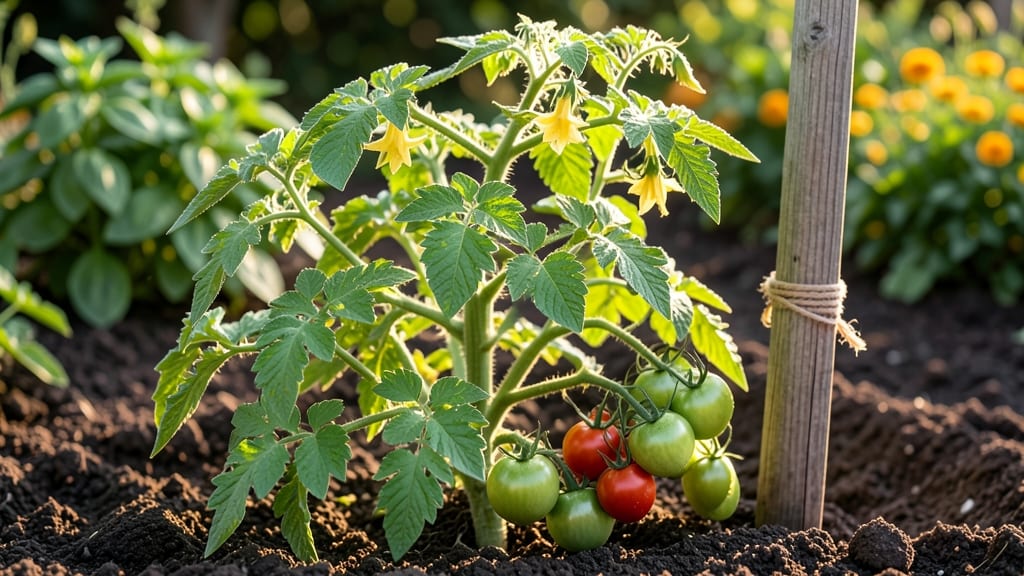
Tomato plant leaves look like deep green, compound leaflets arranged in groups of 5-9 oval-shaped pieces with jagged edges. Healthy foliage stays crisp to the touch, while problems like fungal infections or nutrient deficiencies often show as yellowing, dark spots, or curled edges.
Healthy tomato leaves typically grow 5-9 inches long with a vibrant dark green hue and prominent veins that form a network across each leaflet. 🌿 The serrated edges create a sawtooth pattern, and they often have a slightly waxy texture that helps repel water.
When leaves start showing signs of distress—like brown spots, yellow patches, or curling—they're usually signaling underlying issues, such as early blight or a lack of nitrogen in the soil.
One key detail many gardeners miss is how the leaf structure changes as the plant matures. Young leaves are smaller and more delicate, while mature leaves develop a thicker, more robust appearance. Paying attention to these subtle differences helps you catch problems early before they spread to the entire plant.
For example, early blight often starts with small brown spots on the older leaves, while late blight appears as greasy-looking spots that can spread rapidly in humid conditions. Understanding these visual cues lets you take action before the disease affects your fruit.
💡 In This Article
- Identifying Healthy Tomato Leaves vs Common Leaf Disorders
- Diagnosing Tomato Leaf Problems: A Gardener’s Visual Guide
Identifying healthy tomato leaves vs common leaf disorders
Healthy tomato leaves showcase a striking dark emerald green color that comes from chlorophyll production at a rate of about 0.5-1.0 mg/cm² of leaf surface.
Each leaf is made up of 5-9 leaflets arranged in a compound structure, with the central leaflet being the largest and the side leaflets progressively smaller.
The serrated edges aren't just decorative—they increase surface area by 15-20%, helping the plant absorb more sunlight for photosynthesis. 🌿 When you run your fingers along the veins, you'll feel a slightly raised, almost velvety texture that's a sign of proper hydration.
The vein structure is another key identifier. Healthy tomato leaves have prominent, lighter green veins that create a web-like pattern across each leaflet. This network helps transport water and nutrients efficiently throughout the plant.
In contrast, disease-stricken leaves often show darkened or sunken veins, particularly with fungal infections like early blight (Alternaria solani).
The disease starts with small, circular brown spots (0.5-1 cm wide) that develop concentric rings, while late blight (Phytophthora infestans) creates irregular, greasy-looking patches that can appear in just 3-5 days under humid conditions.
Color changes are your first warning sign. Yellowing between veins (chlorosis) typically indicates a nitrogen deficiency, while yellowing that starts at the leaf edges suggests potassium deficiency.
Iron deficiency causes yellowing in younger leaves first, while magnesium deficiency affects older leaves. 🌱 Another red flag is leaf curling—this often happens when tomato plants experience heat stress (above 90°F) or are infested with spider mites, which suck sap and cause the leaves to pucker and dry out.
The key is to examine both the top and underside of leaves, as many pests and diseases first appear on the less visible underside.
Texture gives away even more clues. Healthy leaves feel firm but flexible, almost like a well-watered lettuce leaf. In contrast, leaves affected by early blight develop a papery, brittle texture as the tissue dies, while late blight causes leaves to yellow and wilt rapidly.
Wilting that happens quickly (within 24 hours) often points to bacterial infections or sudden water stress. 💧 Pay attention to the edges too—if they're crispy or brown, it could mean overwatering or poor drainage, while soft, mushy edges suggest root rot from sitting in wet soil.
One often-overlooked detail is the leaf's growth pattern. Healthy tomato plants produce new leaves at the top of the stem, while older leaves remain at the bottom. If you see new growth with stunted, small leaves, it could indicate phosphorus deficiency or root-bound conditions.
Conversely, if leaves are too large and thin, the plant may be getting too much nitrogen, which promotes leafy growth at the expense of fruit production. This balance is crucial because while nitrogen fuels leaf growth, potassium and calcium are essential for strong stems and disease resistance.
Here's a quick visual checklist to compare:
- Healthy: Dark green, firm, serrated edges, prominent veins, 5-9 leaflets
- Early Blight: Brown spots with concentric rings, papery texture, starts on older leaves
- Late Blight: Irregular greasy spots, rapid yellowing, affects both leaves and stems
- Nutrient Deficiency: Yellowing between veins (nitrogen), edges (potassium), or new leaves (iron)
- Pest Damage: Curling (spider mites), holes (caterpillars), sticky residue (aphids)
Remember, the earlier you catch these signs, the easier it is to treat the problem. For example, removing infected leaves and applying a copper fungicide can stop early blight in its tracks, while adjusting your fertilizer mix can correct nutrient deficiencies before they stunt your plant's growth. 🌱